Back to all blogs
Explore the best Honorlock alternatives in 2026. Compare AI proctoring platforms, second-device detection, live monitoring, and modern integrity tools for exams and interviews.

Abhishek Kaushik
Mar 3, 2026

Remote assessments are no longer protected by simple browser restrictions.
Candidates now have access to real time AI tools, hidden communication channels, and secondary devices that traditional proctoring systems were never designed to detect. Because of this shift, many universities and certification providers are actively searching for Honorlock alternatives that can deliver stronger visibility without damaging the candidate experience.
In this guide, we break down the best options available in 2026 and explain which platforms are built for today’s cheating risks rather than yesterday’s.
Top 15 Honorlock Alternatives
Remote proctoring and integrity verification tools are evolving rapidly to meet the challenges of AI assisted responses, multi device risks, and remote hiring workflows. Below is a curated list of the top alternatives to Honorlock, including platforms ideal for academic testing, professional certification, and remote interviews.
1. Sherlock AI
Sherlock AI is a next generation integrity platform built for remote exams and interviews where AI assistance and second devices are the primary risks. Instead of relying only on browser restriction, it analyzes behavior, attention, and environmental signals in real time. Institutions use it to gain actionable visibility while keeping the experience simple for honest candidates.
Sherlock AI is particularly effective in modern remote environments where candidates may access generative AI, messaging apps, or off screen help that traditional systems cannot see. By focusing on intelligence rather than restriction, it delivers stronger protection with less friction.

Key Features:
AI & Second Device Detection: Continuously evaluates risk signals to identify AI assisted responses, hidden phones, tablets, or external collaboration happening outside the testing interface.
Behavioral & Gaze Analysis: Tracks eye movement, focus drift, reading patterns, and posture anomalies to determine whether activity matches authentic independent work.
Audio & Communication Intelligence: Monitors speech presence, whisper patterns, and environmental sound changes that may indicate prompting or third party involvement.
Environmental Awareness: Detects unusual movement, people entering the space, or shifting lighting and attention patterns that often accompany assistance attempts.
Adaptive Risk Modeling: Uses machine learning to evaluate multiple signals together, reducing false positives while improving accuracy.
Real Time Alerts & Reporting: Provides instant notifications, session level integrity scoring, and structured summaries that eliminate the need to watch full recordings.
Designed for AI Era Threats: Purpose built for challenges introduced by generative AI rather than retrofitted from older browser control models.
Workflow & Platform Integration: Connects smoothly with interview scheduling systems, ATS platforms, and virtual meeting tools, allowing Sherlock AI to activate protection automatically when sessions begin without disrupting existing processes.
Automated Intelligence & Documentation: Produces structured integrity summaries, highlighted risk moments, and reviewer ready insights so teams can make fast, evidence based decisions.
Fairness Driven & Privacy Conscious: Focuses only on high value signals that matter for integrity, avoiding excessive surveillance while maintaining transparency for candidates and institutions.
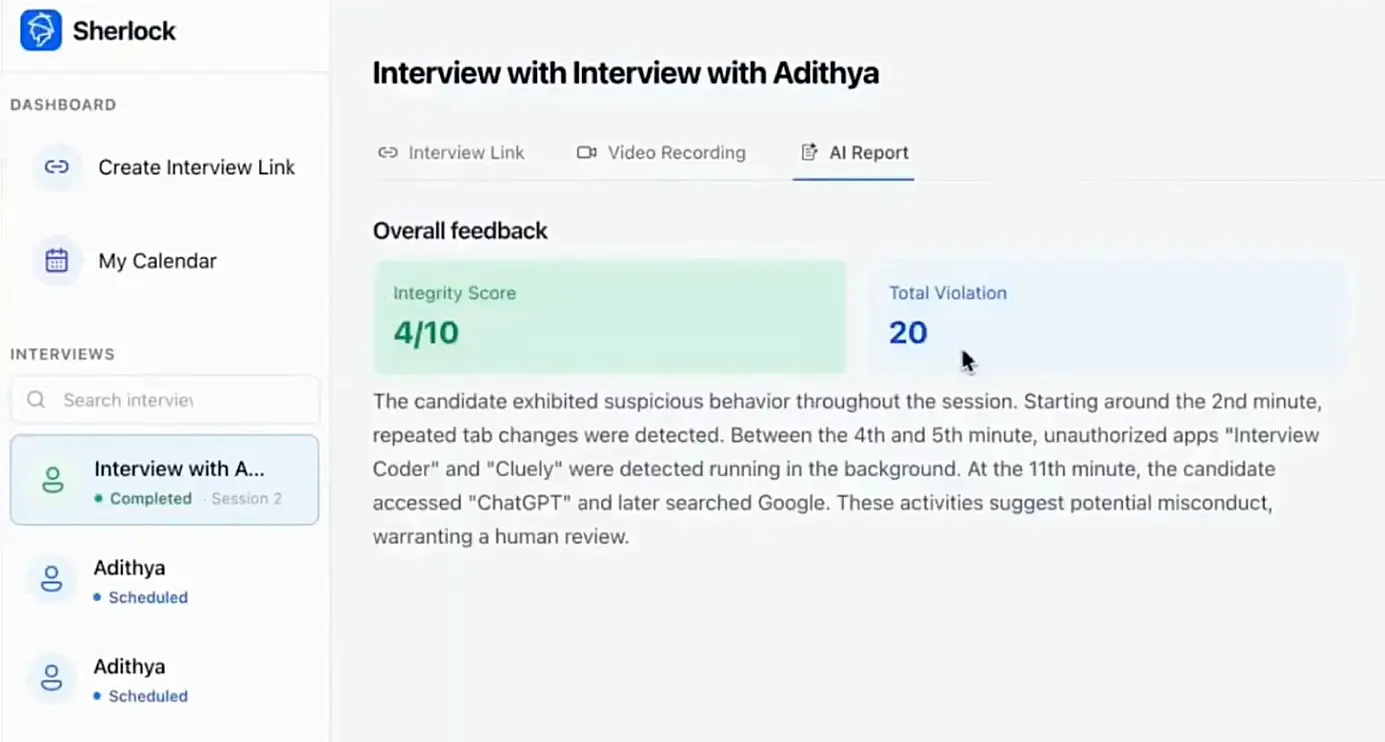
Most proctoring tools collect data. Sherlock AI turns that data into judgment. Its multimodal models interpret patterns, detect intent, and provide context that helps reviewers act quickly and fairly.
By reducing unnecessary alerts and avoiding aggressive restrictions, Sherlock AI protects interview integrity without damaging candidate experience. Organizations gain confidence that outcomes reflect genuine performance, not outside assistance.
👉 Sherlock AI (Anti-Interview-Fraud) Security Overview
2. ProctorU (Meazure Learning)
ProctorU is one of the most established services in remote proctoring, known for its live human invigilation model. Proctors observe candidates in real time and can step in when irregular behavior is detected.

Key Features:
Live Human Proctoring: Certified invigilators supervise candidates throughout the session. They can respond immediately to suspicious behavior and provide active oversight for high stakes testing.
Identity Verification: Test takers confirm who they are using ID checks and authentication procedures. This helps institutions ensure the registered candidate is the one completing the exam.
Room Scans: Candidates are asked to show their physical environment before starting. The scan helps identify unauthorized materials or additional people nearby.
Real Time Intervention: Proctors can warn, pause, or terminate exams if violations occur. This allows issues to be addressed the moment they arise.
LMS Integrations: The platform connects with major learning systems, enabling smoother scheduling and data transfer.
Scheduling & Support: Built in logistics and candidate assistance help manage large testing volumes efficiently.
3. Examity
Examity supports a range of proctoring approaches, allowing institutions to match security levels with exam stakes and budgets.
Key Features:
Multiple Proctoring Modes: Organizations can choose between live supervision, automated monitoring, or post session review. This flexibility supports diverse testing needs.
ID Authentication: Candidates verify their identity prior to beginning. This step reduces impersonation risks.
Video Recording: Sessions are captured for audit purposes. Institutions can revisit footage if concerns arise.
AI Flagging: Automated systems mark potential anomalies. Reviewers can then focus attention where it matters most.
Institutional Integrations: Examity fits into university technology ecosystems without major disruption.
Reporting Dashboards: Administrators receive structured views of incidents, trends, and outcomes.
4. Proctorio
Proctorio provides automated remote proctoring built to scale across large institutions. It emphasizes configurable security, allowing administrators to balance protection with usability.
Key Features:
Browser Lockdown: Prevents access to unauthorized websites, applications, or navigation outside the exam interface. This limits opportunities to search for answers elsewhere.
Automated Identity Verification: Digital authentication methods confirm that the correct candidate is present. These checks occur quickly and reduce manual overhead.
Video & Audio Monitoring: The system records webcam and microphone activity throughout the session. Footage can be reviewed manually or analyzed automatically.
Customizable Rules: Institutions define thresholds, behaviors, and escalation settings. This ensures policies align with academic standards.
LMS Compatibility: Proctorio integrates directly into existing learning environments. Faculty can activate security without complex setup.
Data Analytics: Administrators gain visibility into trends, flags, and outcomes. Insights help improve future exam governance.
👉 Still evaluating Proctorio? Take a look at other Proctorio alternatives.
5. Mercer Mettl
Mercer Mettl combines testing and proctoring into one unified platform. It is widely adopted by universities and enterprises managing high volume programs.
Key Features:
Integrated Testing Platform: Exams, delivery, and monitoring operate in a single ecosystem. This simplifies logistics for administrators.
AI Based Proctoring: Automated analysis identifies behaviors that may indicate risk. Human reviewers can validate results efficiently.
Question Randomization: Content varies between participants to reduce sharing. This protects exam integrity at scale.
Candidate Authentication: Identity verification steps ensure the intended individual is taking the test. It helps prevent proxy participation.
Detailed Reporting: Structured summaries and evidence logs support defensible outcomes. Institutions can audit decisions confidently.
Global Infrastructure: Designed for multi geography delivery, the system supports large candidate pools. Reliability remains consistent across regions.
6. Respondus Monitor
Respondus Monitor extends the LockDown Browser environment with automated video oversight. It is especially popular in institutions already using Respondus tools.
Key Features:
Automated Webcam Monitoring: Video is analyzed for behaviors that warrant attention. Instructors can jump directly to flagged moments.
Browser Restriction: Students are kept within the test interface during the attempt. This reduces access to outside help.
LMS Integrations: The platform works natively inside familiar learning systems. Adoption is easier for both faculty and students.
ID Checks: Participants may be asked to verify themselves with images or documents. This supports authenticity.
Flagged Review: Moments of potential concern are highlighted automatically. Educators save time during evaluation.
Instructor Tools: Dashboards help faculty manage sessions and review outcomes. Oversight becomes more efficient.
7. Talview
Talview offers AI proctoring alongside interviewing and credentialing capabilities. Organizations can manage multiple talent and education workflows in one place.
Key Features:
Automated Proctoring: AI continuously monitors sessions and detects irregular patterns. This reduces reliance on human invigilators.
Video Interviews: Hiring teams can evaluate candidates using built in interview modules. It extends beyond exam scenarios.
Identity Management: Authentication processes confirm the legitimacy of participants. Trust in results improves.
Live & Recorded Options: Institutions can supervise in real time or review later. Flexibility supports different risk levels.
Analytics: Session data becomes structured intelligence for decision makers. Trends are easier to understand.
Enterprise Integrations: Talview connects with HR and academic systems. Workflows remain unified.
👉 Compare top Talview alternatives
8. RPNow (PSI)
RPNow uses a record and review strategy rather than live oversight. This approach is often attractive for programs seeking cost efficiency.
Key Features:
Session Recording: The full exam attempt is captured for documentation. Institutions can revisit incidents if required.
AI Flags: Automated analysis surfaces segments that may need review. Staff can focus on priority areas.
Post Exam Review: Evaluation occurs after completion instead of during the session. This lowers real time staffing needs.
Authentication Tools: Identity steps help confirm authorized participation. Impersonation risks are reduced.
LMS Integration: Fits smoothly into academic systems. Implementation is straightforward.
Scalable Pricing: Often suitable for large cohorts with budget constraints. Oversight can grow with demand.
9. ExamSoft (ExamMonitor)
ExamSoft delivers controlled digital testing environments with AI supported monitoring. It is frequently chosen in regulated or compliance heavy programs.
Key Features:
Secure Testing Application: Exams run inside a managed app that limits outside access. The environment remains consistent.
AI Video Review: Recordings are processed to highlight possible issues. Administrators can act quickly.
Identity Verification: Participants must authenticate before starting. This protects legitimacy.
Incident Reports: Evidence trails help institutions justify outcomes. Documentation supports fairness.
Offline Functionality: Candidates can continue even with unstable internet. Data syncs later.
Institutional Controls: Policies can be configured to match governance requirements. Flexibility is built in.
10. TestReach
TestReach focuses on real time human invigilation for certification providers. The service emphasizes reliability across global operations.
Key Features:
Live Proctor Monitoring: Supervisors watch candidates throughout the session. They can intervene immediately.
Scheduling Tools: Appointment management helps coordinate large numbers. Logistics become simpler.
Candidate Verification: Identity checks confirm who is present. Confidence in participation increases.
Incident Handling: Proctors can escalate or resolve problems as they happen. Risks are managed quickly.
Global Delivery: Supports participants across time zones and regions. Scale is international.
Reporting: Institutions receive formal documentation of oversight. Records aid compliance.
11. Digiexam
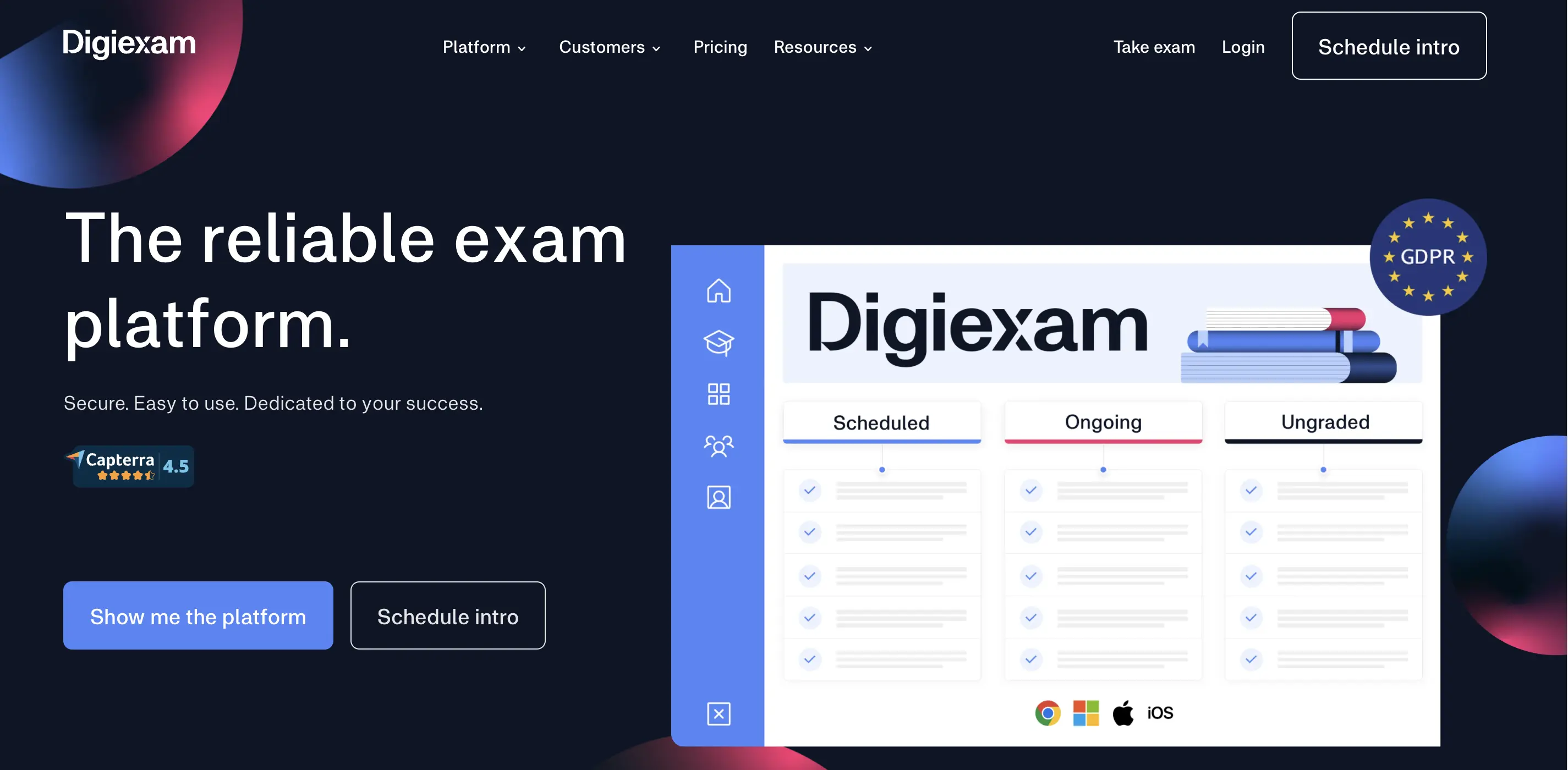
Digiexam supports digital exams with practical security layers. It aims to simplify adoption while maintaining control.
Key Features:
Secure Environment: The interface is structured to reduce misconduct. Students remain focused.
Offline Mode: Work continues during connectivity disruptions. Answers upload once restored.
Simple Deployment: Institutions can roll out quickly. Technical barriers are minimal.
Integrations: Works with administrative ecosystems. Data flows smoothly.
Monitoring Capabilities: Provides visibility into activity during sessions. Oversight remains possible.
Accessibility: Design considerations support varied learner needs. Inclusion is prioritized.
12. TestInvite
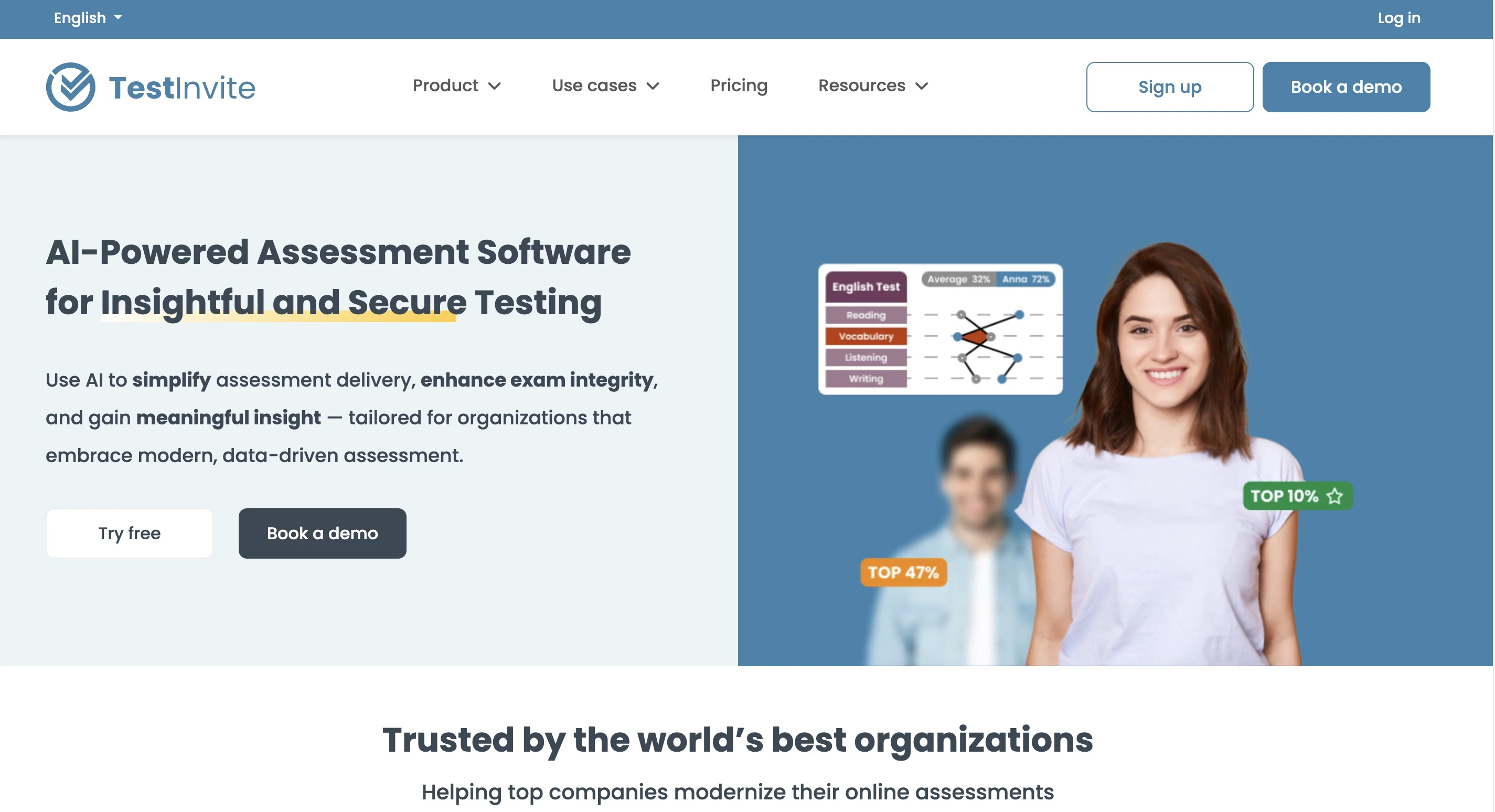
TestInvite provides adaptable integrity workflows for education and business. Organizations can tailor proctoring intensity as required.
Key Features:
Live Proctoring: Supervisors observe in real time when high assurance is needed. Immediate action is possible.
Recorded Monitoring: Sessions can be reviewed afterward. Staffing becomes flexible.
Custom Workflows: Processes can align with internal policies. Adaptability is a strength.
Question Banks:
Reusable structures support repeat programs. Content management improves.
Analytics: Stakeholders receive summarized insights. Decision making is faster.
Integrations: The platform connects with existing tools. Implementation stays efficient.
13. iMocha
iMocha is popular in technical recruitment and skill validation. Integrity measures are embedded into hiring workflows.
Key Features:
Skill Based Testing: Candidates are evaluated on job relevant abilities. Results map to performance.
AI Monitoring: Automation flags unusual behavior patterns. Recruiters gain visibility.
Extensive Library: Pre built assessments speed deployment. Coverage spans many domains.
ATS Integrations: Fits naturally within recruiting systems. Data transfer is seamless.
Reporting: Teams receive comparative analytics. Shortlisting becomes easier.
Remote Setup: Designed for distributed candidates. Access is convenient.
👉 Looking for something beyond iMocha? Check out these iMocha alternatives.
14. ClassMarker
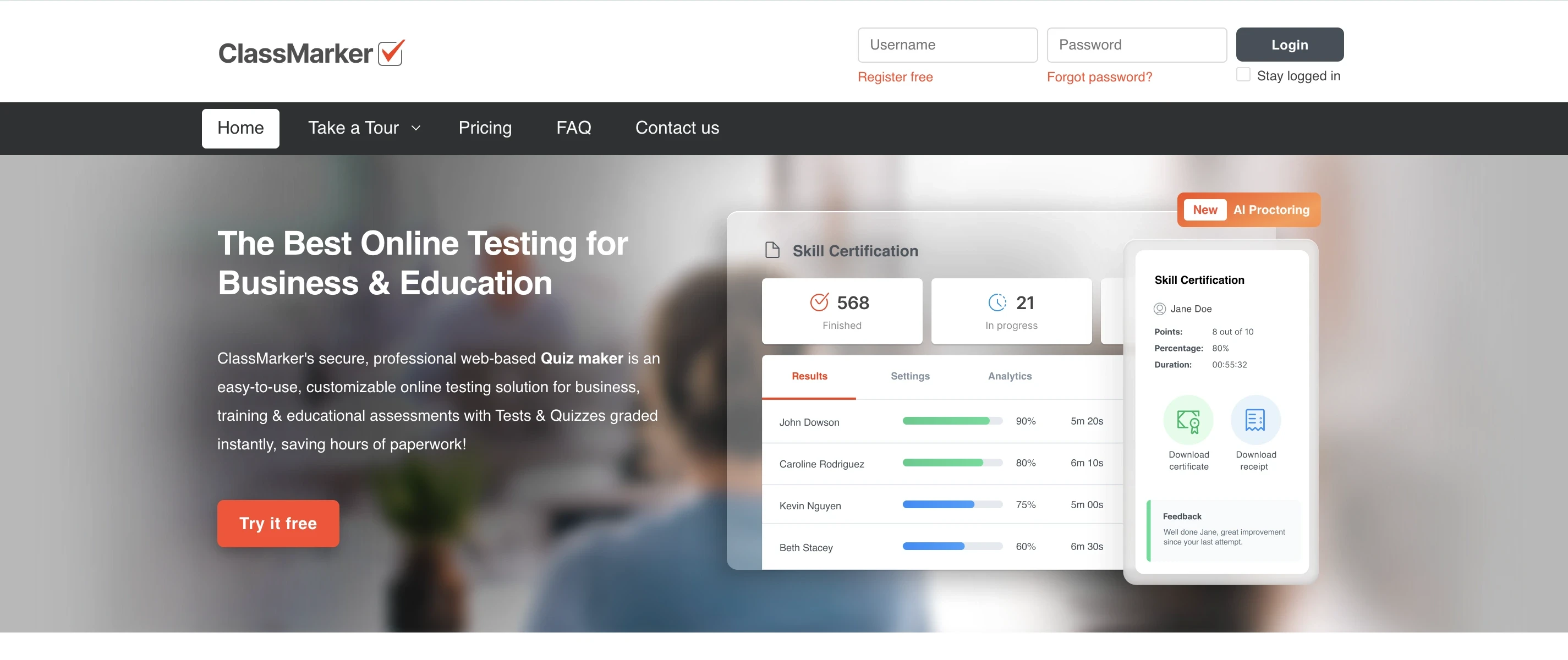
ClassMarker supports secure online quizzes in corporate and training contexts. It emphasizes ease of administration.
Key Features:
Online Testing: Programs can be delivered anywhere digitally. Reach expands.
Access Controls: Permissions determine who participates. Security improves.
Certificates: Completion credentials can be issued automatically. Achievement is documented.
Branding: Organizations customize the experience. Identity remains consistent.
Analytics: Reports highlight engagement and results. Insights guide improvements.
API Access: Systems can integrate programmatically. Flexibility increases.
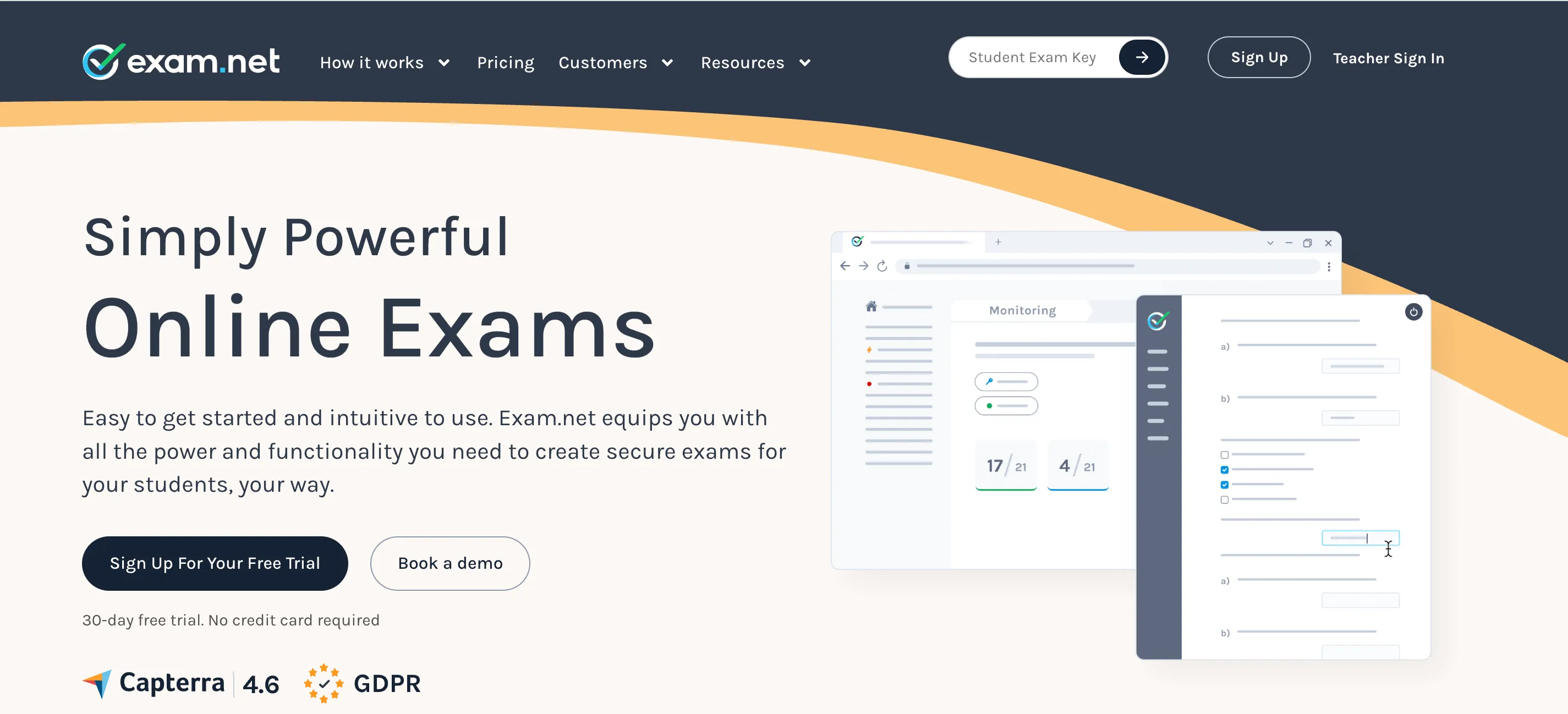
15. Exam.net
Exam.net helps institutions transition from paper to digital exams. Its approach balances usability with foundational safeguards.
Key Features:
Digital Delivery: Testing workflows move online efficiently. Administration modernizes.
Basic Monitoring: Supervision tools help maintain order. Educators retain visibility.
Auto Save: Responses are preserved automatically. Data loss risk drops.
Integration Support: Works alongside other institutional platforms. Ecosystems stay connected.
Teacher Controls: Educators manage timing and access. Authority remains local.
User Friendly Design: Students encounter a simple interface. Stress is reduced.
The big shift: from restriction to intelligence
Most older systems try to prevent cheating by limiting what a candidate can open or access.
But AI assistance, messaging apps, and off screen help make pure restriction ineffective.
Sherlock AI focuses on detecting intent and abnormal patterns, giving institutions actionable visibility instead of just recordings.
Read more: 10 Ways to Prevent AI Cheating in Remote Interviews
Conclusion
Honorlock helped define early remote proctoring.
However, the threat landscape has evolved.
Institutions now require deeper intelligence, broader signal coverage, and faster insight. Among emerging platforms, Sherlock AI stands out for addressing AI era integrity challenges directly while keeping the testing experience smooth for legitimate participants.