

Back to all blogs
Explore the top real-time candidate verification tools used for identity verification, interview monitoring, background checks, technical skill validation, and fraud detection.

Abhishek Kaushik
Jul 13, 2026
Remote hiring has transformed recruitment by making it faster, more scalable, and globally accessible. However, it has also introduced a major challenge for recruiters and hiring teams: verifying whether candidates are genuine. From fake resumes and deepfake interviews to AI-assisted cheating and proxy candidates, companies today face growing risks during the hiring process.
This is exactly why candidate verification tools have become essential for modern recruitment teams. These tools help organizations confirm candidate identity, validate technical skills, monitor suspicious behavior during interviews, and reduce hiring fraud in real time. Whether companies are conducting virtual interviews, coding assessments, or remote onboarding, candidate verification software now plays a critical role in maintaining hiring integrity.
Another report by Checkr revealed that 31% of hiring managers had already interviewed a candidate using a fake identity, while 35% discovered that someone else participated in the interview instead of the actual applicant. According to research highlighted by Study Finds, 72% of recruiters reported seeing fake resumes, portfolios, or credentials generated using AI tools.
As hiring fraud becomes more sophisticated, companies need more than traditional background checks. They need real-time candidate verification tools that can detect impersonation, AI-assisted cheating, suspicious interview behavior, and identity mismatches during the hiring process itself.
Top 11 Real-time Candidate Verification Tools
Real-time candidate verification tools help organizations solve these problems by continuously monitoring candidates throughout the hiring process. These platforms use technologies such as AI-powered interview proctoring, identity verification, behavioral analysis, screen monitoring, coding assessment validation, and fraud detection to ensure hiring integrity.
Some tools specialize in interview monitoring and suspicious behavior detection, while others focus on technical skill validation, coding assessments, background verification, or behavioral evaluation. Together, these solutions help recruiters confidently identify authentic candidates and reduce hiring risks.
Below are the top 11 real-time candidate verification tools that help organizations secure remote hiring, improve candidate authenticity, and prevent interview fraud.
1. Sherlock AI
Sherlock AI is an AI-powered interview verification platform designed to help recruiters detect suspicious activity, prevent interview fraud, and maintain authenticity during remote hiring. The platform continuously monitors candidate behavior throughout virtual interviews to identify impersonation attempts, deepfake usage, AI-assisted responses, and external support during live interview sessions.

Key Features
Real-Time Interview Identity Verification: Sherlock AI continuously verifies whether the same candidate remains present throughout the entire interview session. This helps recruiters prevent proxy interviews where another individual replaces the original applicant during technical or final rounds.
Lip-Sync Mismatch Detection: Sherlock AI analyzes whether a candidate’s facial movement naturally aligns with their speech patterns during video interviews. This helps recruiters identify possible deepfake videos, manipulated interview feeds, or synthetic video overlays.
Eye Movement Tracking During Interviews: The platform monitors unusual eye movement patterns such as repeated off-screen glances or constant side viewing. This may indicate candidates reading answers, using hidden prompts, or receiving external support during interviews.
AI-Generated Answer Detection: Sherlock AI identifies response structures and communication patterns commonly associated with AI-generated or scripted interview answers. This helps recruiters distinguish genuine candidate responses from assisted answers.
Multiple Person Detection in Interview Frames: The system detects additional individuals appearing within the interview environment. This helps organizations identify cases where another person may be assisting or guiding the candidate during the interview.
Background Voice Analysis: Sherlock AI monitors interview audio for secondary voices, whispers, or coaching cues in the background. This allows recruiters to detect hidden assistance during live interview sessions.
Interview Screen Activity Monitoring: The platform tracks suspicious activity such as excessive tab switching, hidden browser usage, and unauthorized screen behavior during virtual interviews and online assessments.
Suspicious Response Delay Detection: Sherlock AI analyzes unusually long pauses before answers, inconsistent response timing, and unnatural conversational flow that may indicate external answer generation or delayed assistance.
Interview Risk Alerts in Real Time: Recruiters receive instant notifications whenever suspicious interview behavior is detected. This enables hiring teams to review potential fraud signals immediately instead of after the interview is completed.
Post-Interview Fraud Analysis Reports: After the interview, Sherlock AI generates detailed reports summarizing suspicious behaviors, identity inconsistencies, interview anomalies, and risk indicators to support better hiring decisions.
Sherlock AI helps organizations secure remote interviews by providing deeper visibility into candidate behavior and interview authenticity. Its AI-powered interview monitoring capabilities make it especially valuable for companies conducting remote technical interviews, virtual hiring drives, and high-volume online recruitment.
2. HireVue
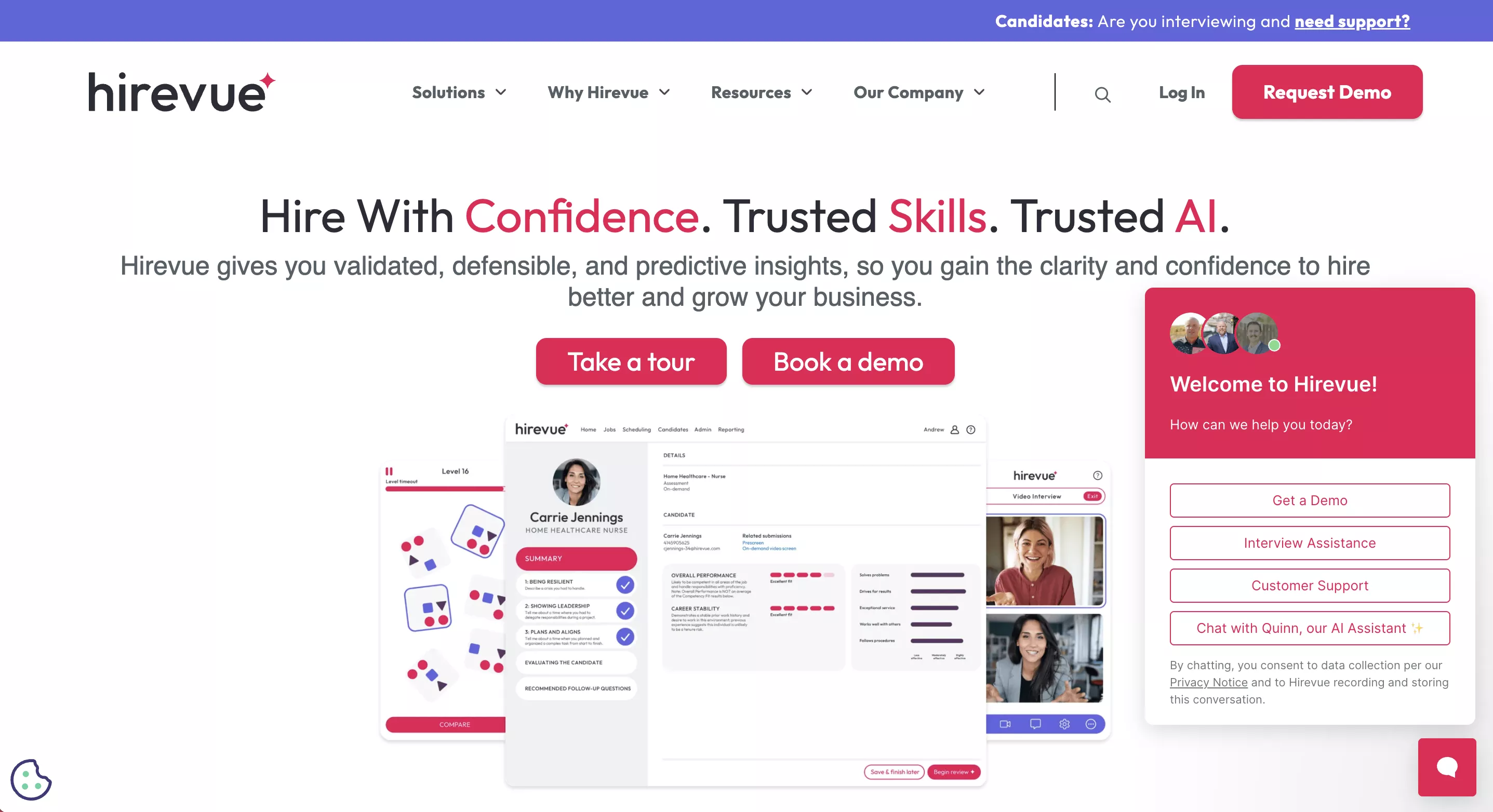
HireVue is a video interviewing and hiring platform that helps organizations streamline remote recruitment through virtual interviews, automated scheduling, and candidate assessments. The platform supports enterprise hiring teams by enabling structured interviews and identity verification workflows during the recruitment process. HireVue is commonly used for high volume hiring where companies need faster screening and more consistent candidate evaluation.
The platform allows recruiters to conduct both live and on demand interviews while maintaining a standardized hiring process across multiple locations. HireVue also supports assessment based hiring, helping organizations validate candidate skills and improve decision making during recruitment.
Key Features
On-Demand Video Interviews: Allows candidates to complete recorded interviews remotely while recruiters review responses at their convenience.
Live Virtual Interviewing: Supports real-time video interviews with scheduling and collaboration features for hiring teams.
Identity Verification Checks: Confirms candidate identity during interview workflows through integrated verification processes.
Automated Interview Scheduling: Reduces manual coordination by automating interview invitations and scheduling workflows.
Structured Candidate Assessments: Provides role-based assessments to evaluate candidate skills and job readiness.
HireVue helps organizations improve remote hiring efficiency by combining interview management, candidate verification, and structured assessment capabilities within a single platform.
👉 Looking for more options? Explore HireVue alternatives. |
3. Veremark
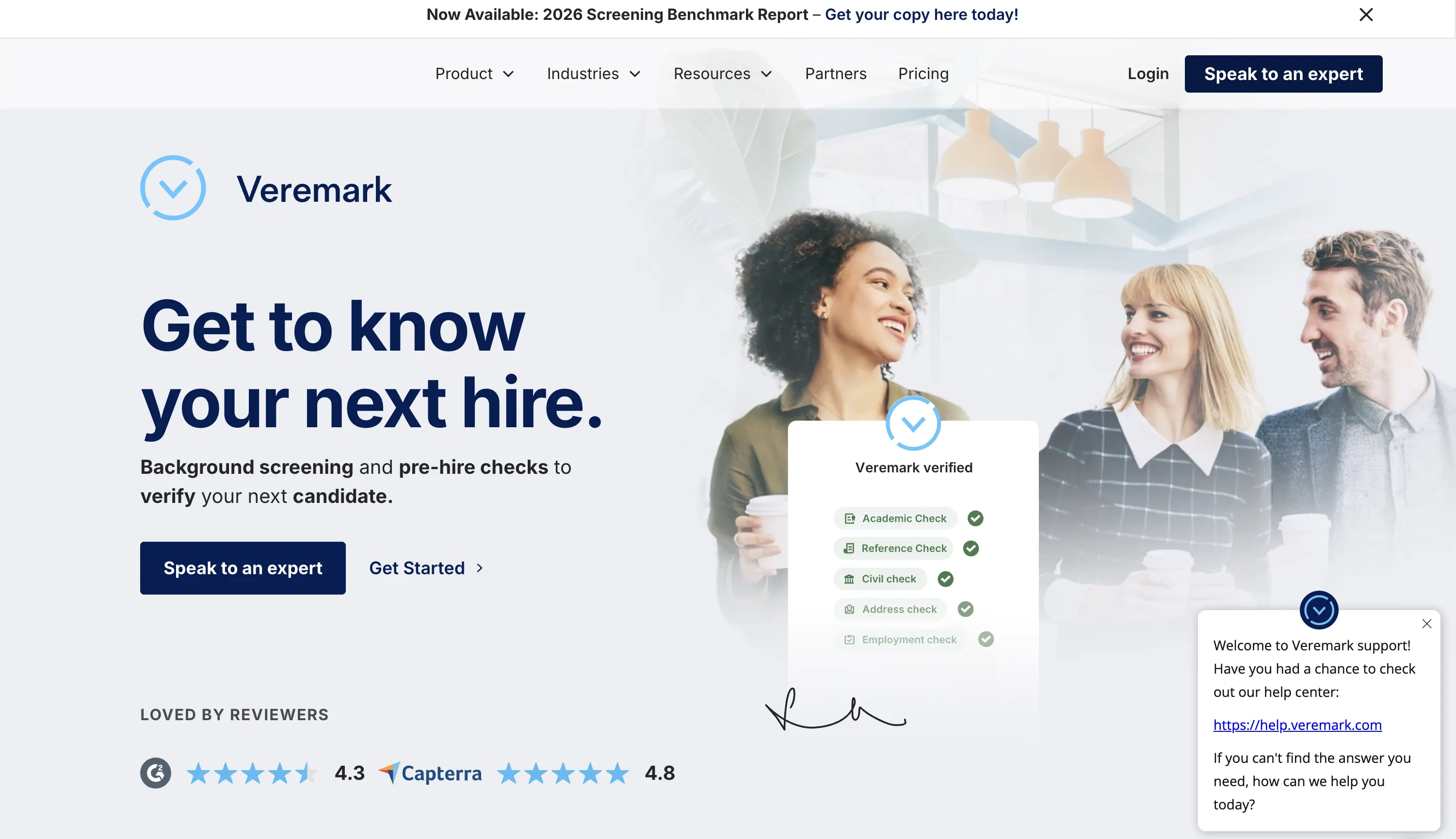
Veremark is a background verification platform designed to help organizations validate candidate credentials, employment history, identity records, and professional references in real time. The platform automates pre employment screening workflows and helps recruiters reduce delays associated with manual verification processes.
Veremark is widely used by global hiring teams and remote recruitment organizations that require scalable candidate verification systems across different countries and industries. The platform provides centralized visibility into verification progress, making it easier for recruiters to manage hiring compliance and candidate authenticity.
Key Features
Employment History Verification: Validates previous work experience, job titles, and employment duration shared by candidates.
Education Credential Checks: Confirms academic qualifications, certifications, and institutional records during recruitment.
Digital Identity Verification: Verifies government-issued identity documents through secure online verification workflows.
Automated Reference Checks: Collects and manages professional references digitally to speed up candidate screening.
Global Background Screening Support: Supports international verification workflows and compliance checks across multiple regions.
Veremark helps companies strengthen hiring accuracy by automating candidate verification and minimizing the risks associated with false credentials and incomplete background checks.
4. SpringVerify
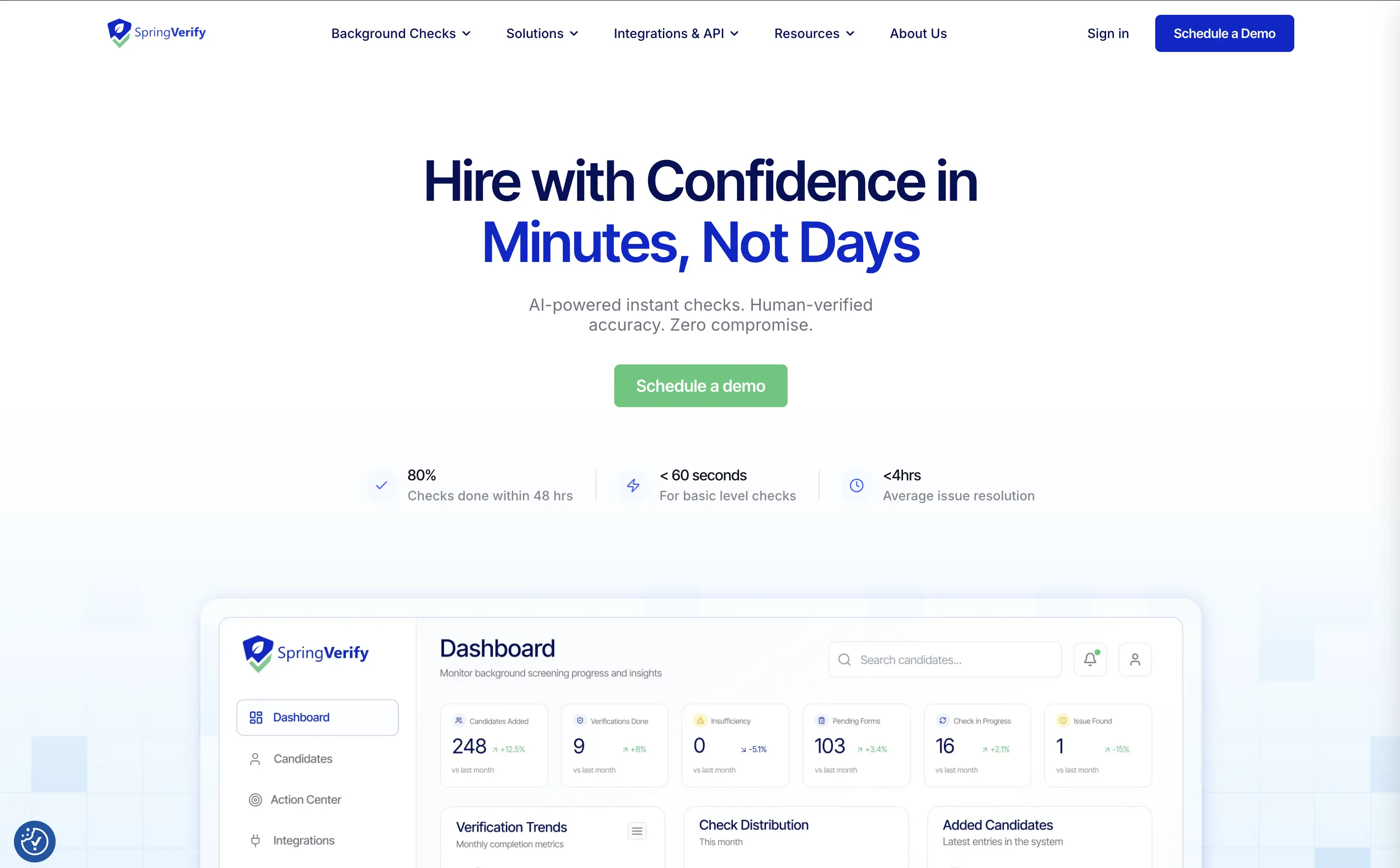
SpringVerify is a candidate background verification platform that helps recruiters validate employment records, educational qualifications, identity documents, and compliance information. The platform simplifies pre employment screening through digital verification workflows and automated reporting systems.
SpringVerify is commonly used by organizations looking to improve recruitment reliability and accelerate onboarding timelines. Its centralized verification dashboard helps hiring teams manage candidate screening efficiently while maintaining transparency throughout the verification process.
Key Features
Employment Verification Workflows: Confirms previous employment details and work history provided by candidates.
Education Verification Support: Validates educational qualifications, certifications, and academic credentials.
Identity and Address Verification: Verifies candidate identity documents and residential address information digitally.
Criminal Background Screening: Conducts compliance and criminal record checks as part of pre-employment verification.
Verification Tracking Dashboard: Provides centralized visibility into verification progress and candidate screening reports.
SpringVerify helps organizations reduce manual verification effort while improving trust and accuracy during candidate screening and hiring.
5. Mercer Mettl
Mercer Mettl is an online assessment and remote proctoring platform that helps organizations validate candidate skills and maintain assessment integrity during remote hiring. The platform supports technical assessments, aptitude testing, behavioral evaluations, and large scale online recruitment processes.
Mercer Mettl combines assessment technology with AI powered monitoring capabilities to help recruiters detect suspicious behavior during online tests and interviews. The platform is widely used for secure hiring workflows where candidate verification and assessment authenticity are critical.
Key Features
AI-Powered Remote Proctoring: Monitors candidate behavior during assessments using webcam tracking and AI-based fraud detection.
Secure Browser Monitoring: Restricts unauthorized browser activity and prevents external application usage during tests.
Technical Skill Assessments: Supports coding tests, aptitude evaluations, and domain-specific skill assessments.
Live and Automated Interview Monitoring: Enables recruiters to conduct monitored live interviews and recorded assessments.
Detailed Assessment Analytics: Generates reports on candidate performance, suspicious behavior, and assessment integrity.
Mercer Mettl helps organizations improve remote hiring security by combining skill verification, assessment monitoring, and AI driven fraud detection capabilities.
👉 Take a look at other Mettl alternatives |
6. CodeSignal
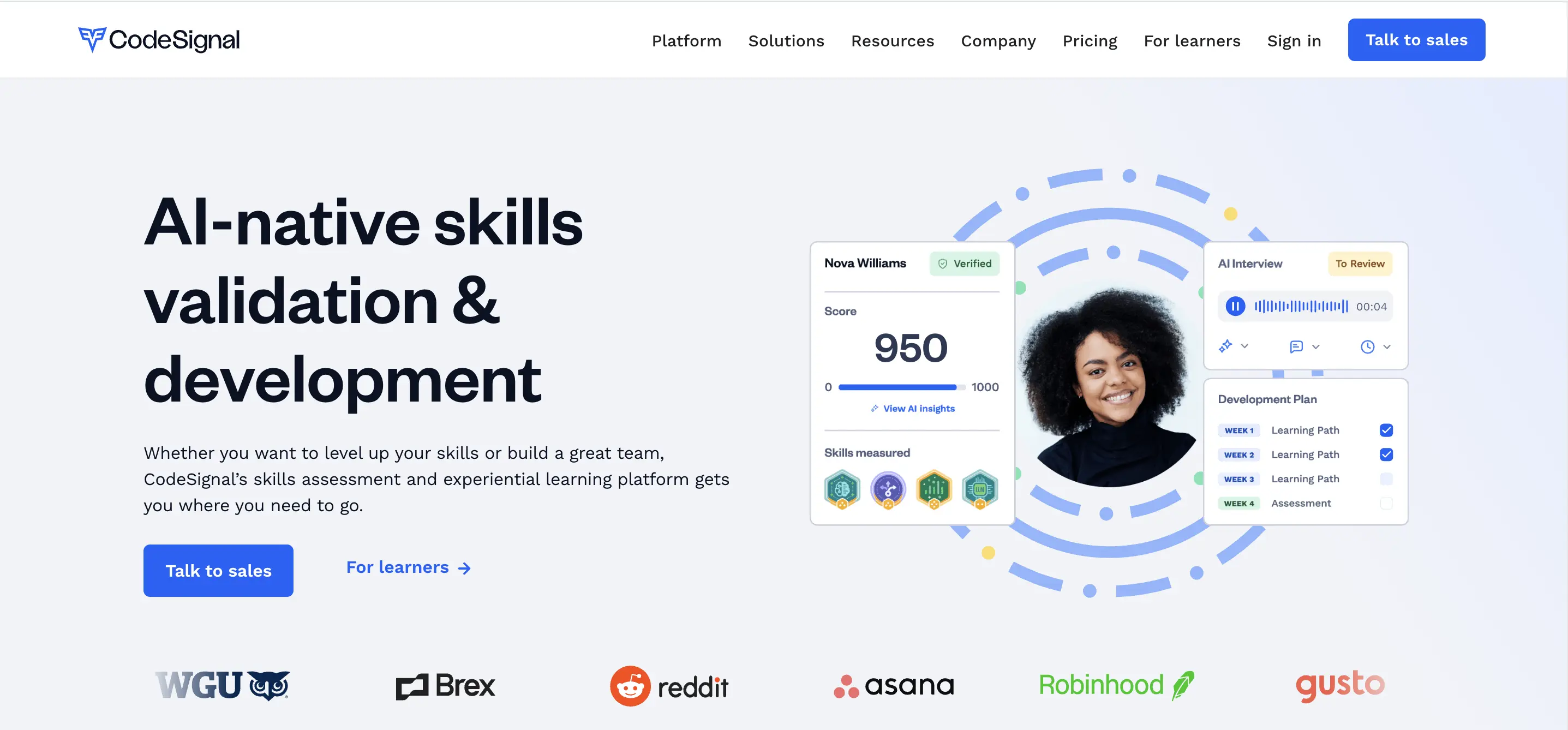
CodeSignal is a technical assessment platform that enables recruiters to verify programming skills through coding challenges, structured technical evaluations, and standardized skill assessments. The platform is commonly used by engineering teams and technology companies to assess developer capabilities in controlled testing environments.
CodeSignal focuses on validating practical coding ability rather than relying only on resumes or self reported experience. Its assessment framework helps organizations compare candidates consistently while reducing the risk of plagiarism and external assistance during technical hiring.
Key Features
Standardized Coding Assessments: Evaluates programming skills through structured technical coding challenges.
Real-World Coding Environment: Provides an IDE-like environment for candidates to complete coding tasks practically.
Automated Candidate Scoring: Generates coding scores based on accuracy, efficiency, and technical performance.
Proctoring and Plagiarism Detection: Detects suspicious behavior and copied code during technical assessments.
ATS and Hiring Platform Integrations: Connects with recruitment systems to streamline technical hiring workflows.
CodeSignal helps organizations strengthen technical recruitment by verifying real coding skills through secure and scalable assessment workflows.
7. HackerRank
HackerRank is a developer assessment platform that helps companies evaluate technical candidates through coding challenges, role based tests, and live programming interviews. The platform supports technical hiring across software development, data science, cloud engineering, and DevOps roles.
HackerRank enables recruiters to assess practical problem solving ability and coding performance using customizable technical assessments. Its remote testing infrastructure also supports assessment integrity and candidate verification during online hiring.
Key Features
Multi-Domain Coding Challenges: Supports technical assessments across programming, data science, cloud, and DevOps roles.
Live Coding Interviews: Allows recruiters to evaluate candidate coding ability during collaborative real-time interviews.
Automated Code Evaluation: Scores candidate submissions using predefined test cases and performance benchmarks.
Integrity and Plagiarism Monitoring: Detects copied code and suspicious activities during technical assessments.
Custom Technical Test Creation: Enables recruiters to build role-specific coding assessments based on hiring needs.
HackerRank helps organizations streamline technical recruitment by combining coding verification, live interview collaboration, and automated evaluation workflows.
👉 Not the right fit? See HackerRank alternatives. |
8. CoderPad
CoderPad is a live coding interview platform that helps recruiters and engineering teams verify candidate programming skills during technical interviews. The platform enables interviewers to observe how candidates approach problems, write code, and explain technical decisions in real time.
CoderPad is widely used for developer hiring because it creates a collaborative interview environment that closely reflects actual coding workflows. Recruiters can assess communication skills, debugging ability, and problem solving approaches while interacting with candidates during the interview process.
Key Features
Real-Time Collaborative Coding Interviews: Allows interviewers to observe how candidates solve coding problems live.
Multi-Language Programming Support: Supports coding interviews across multiple programming languages and frameworks.
Live Code Execution and Debugging: Enables candidates to run, test, and debug code during interviews.
Interview Recording and Playback: Records technical interviews for later review and evaluation by hiring teams.
Recruitment Workflow Integrations: Integrates with hiring platforms and Applicant Tracking Systems for streamlined recruitment.
CoderPad helps organizations improve technical hiring accuracy by enabling real time skill verification and collaborative developer interviews.
👉 Looking for something beyond CoderPad? Check out these CoderPad alternatives. |
9. TestGorilla
TestGorilla is a pre employment assessment platform that helps recruiters verify candidate skills, cognitive ability, communication, and job readiness through structured online tests. The platform enables hiring teams to evaluate applicants beyond resumes by using role specific assessments and practical skill evaluations.
TestGorilla supports recruitment across technical, operational, customer support, marketing, and business roles. The platform is widely used for remote hiring because it allows recruiters to assess candidates consistently while reducing manual screening effort.
Key Features
Role-Specific Skill Assessments: Provides customized tests for technical, operational, and business job roles.
Cognitive Ability Testing: Evaluates logical reasoning, analytical thinking, and problem-solving capabilities.
Video Response Verification: Allows recruiters to assess communication skills through recorded candidate responses.
Anti-Cheating Mechanisms: Includes browser monitoring, randomized questions, and plagiarism prevention features.
Automated Candidate Ranking: Generates candidate performance reports and rankings based on assessment results.
TestGorilla helps organizations improve candidate verification by combining skill validation, behavioral evaluation, and structured assessment workflows.
10. Vervoe
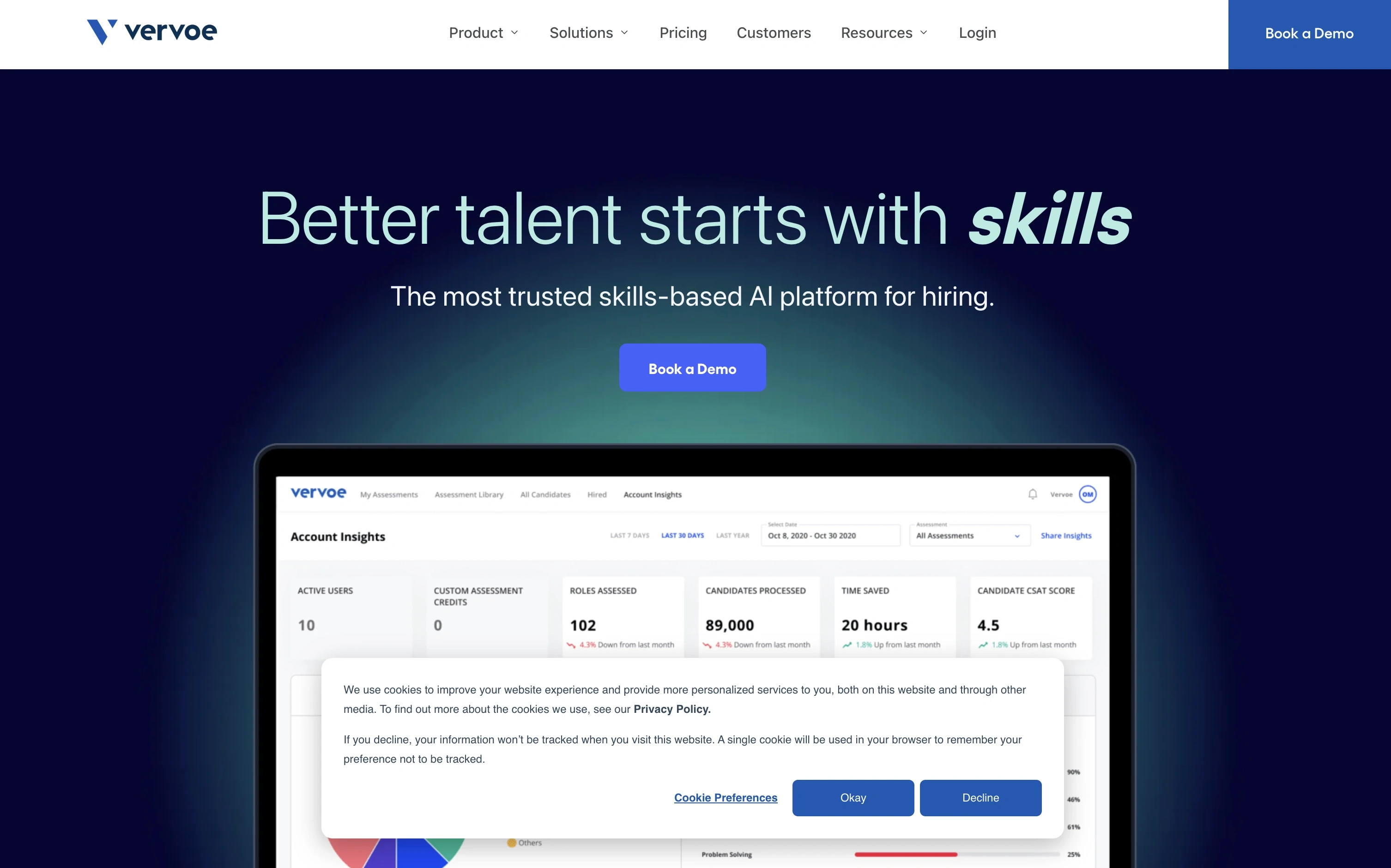
Vervoe is an AI powered hiring platform that helps companies verify candidate skills through role specific tasks, simulations, and automated assessments. Instead of relying only on resumes, the platform evaluates how candidates perform in realistic work situations related to the job role.
Vervoe is commonly used for remote hiring, technical recruitment, customer service hiring, and operational roles where practical skill validation is important. Recruiters can customize assessments according to job requirements and compare candidates using performance based evaluation methods.
Key Features
Role-Specific Skill Assessments: Allows recruiters to create customized evaluations based on real job responsibilities.
Automated Candidate Grading: Uses AI powered scoring to rank candidates according to assessment performance.
Video and Written Responses: Supports video, audio, written, and multiple-choice assessment formats.
Custom Hiring Workflows: Enables organizations to manage screening and evaluation processes efficiently.
Collaborative Candidate Evaluation: Allows hiring teams to review assessments and compare candidate performance together.
Vervoe helps organizations strengthen hiring accuracy by validating practical skills through structured and job relevant assessments.
11. Willo
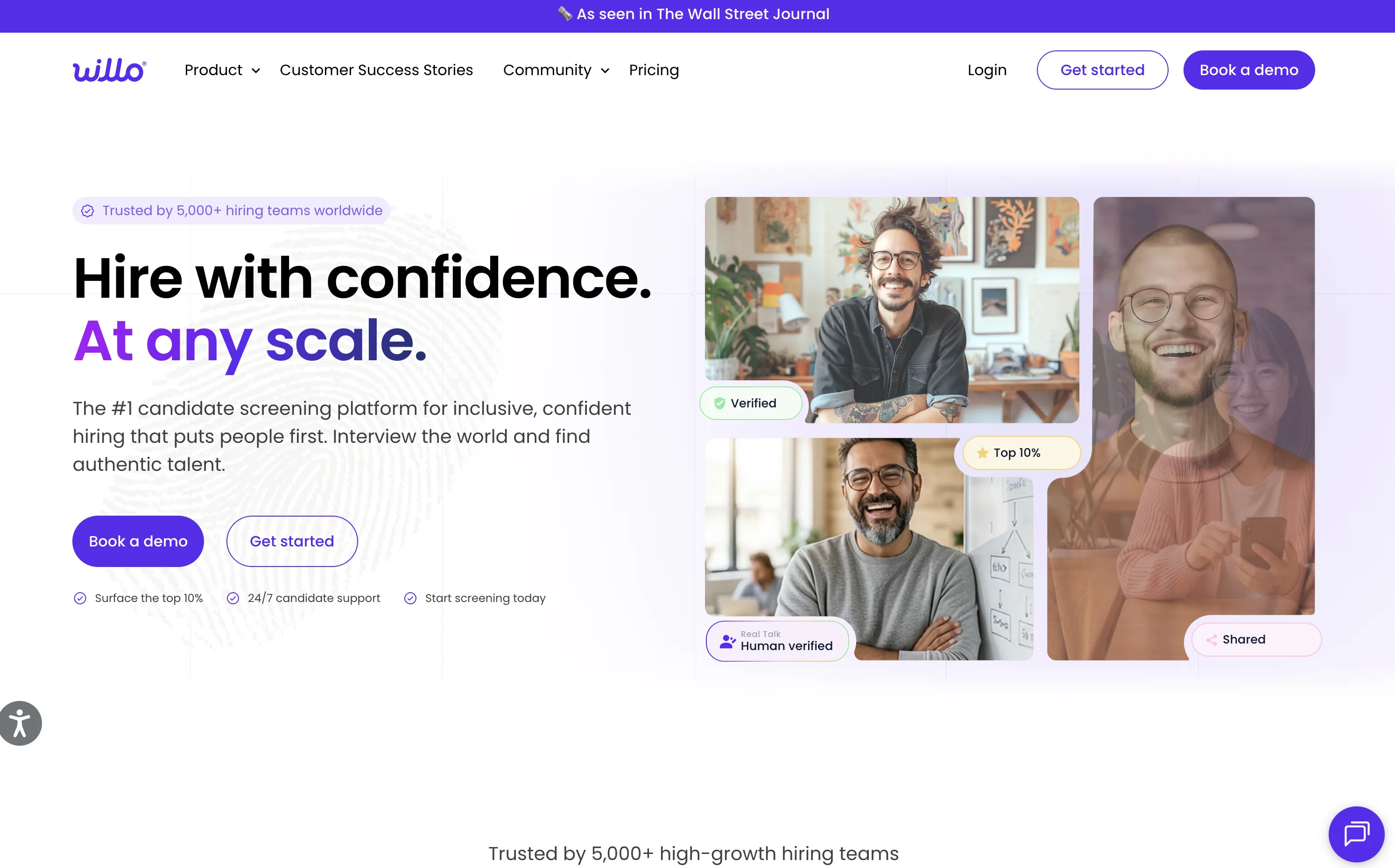
Willo is a video interviewing platform that helps recruiters screen candidates remotely through asynchronous video interviews and structured hiring workflows. The platform enables organizations to evaluate communication skills, response quality, and candidate authenticity during early stage recruitment.
Willo is commonly used for remote and global hiring because it allows candidates to complete interviews at flexible times while giving recruiters a consistent interview evaluation process. The platform also supports candidate verification by helping hiring teams identify scripted or non-authentic interview responses.
Key Features
Asynchronous Video Interviews: Allows candidates to record interview responses remotely without scheduling live calls.
Structured Interview Templates: Helps recruiters standardize interview questions and evaluation criteria across hiring processes.
Candidate Response Review Tools: Enables hiring teams to review, share, and evaluate candidate interview recordings collaboratively.
Interview Workflow Automation: Simplifies candidate invitations, reminders, and interview management tasks.
AI-Assisted Interview Insights: Supports recruiters with insights into candidate responses and interview consistency.
Willo helps organizations streamline remote recruitment by combining flexible video interviewing with structured candidate evaluation workflows.
Final Thoughts on Real-Time Candidate Verification Tools
Real-time candidate verification tools have become essential for modern hiring, especially as remote interviews and virtual recruitment continue to grow across industries. Organizations are no longer relying only on resumes and traditional interviews to evaluate candidates. Recruiters now need platforms that can verify identity, validate skills, monitor suspicious behavior, and reduce hiring fraud in real time.
Sherlock AI helps organizations strengthen hiring security through AI-powered interview monitoring, identity verification, behavioral analysis, and fraud detection capabilities. The platform enables recruiters to identify suspicious activities during virtual interviews and make more confident hiring decisions based on real-time verification insights.
As interview fraud techniques become more advanced, companies need smarter verification systems that can adapt to evolving hiring risks. Sherlock AI helps recruiters maintain recruitment integrity by continuously monitoring candidate authenticity throughout the interview process. By combining real-time analysis with post-interview fraud reporting, organizations can improve hiring accuracy, reduce impersonation risks, and create a more secure remote hiring experience for both recruiters and candidates.