Back to all blogs
Explore the remote hiring process, recruitment tools, global hiring trends, remote interview challenges, and AI-powered fraud detection solutions for secure hiring.

Abhishek Kaushik
Jun 29, 2026
Remote hiring has transformed the way companies recruit talent. Instead of limiting recruitment to a specific city or country, businesses can now hire skilled professionals from anywhere in the world using digital tools, virtual interviews, and AI-powered recruitment platforms.
The shift toward remote hiring accelerated after the pandemic, but it has now become a long-term hiring strategy for startups, enterprises, and global organizations. Companies are increasingly adopting remote hiring to access a wider talent pool, reduce recruitment costs, improve hiring speed, and build distributed teams that can work across different time zones.
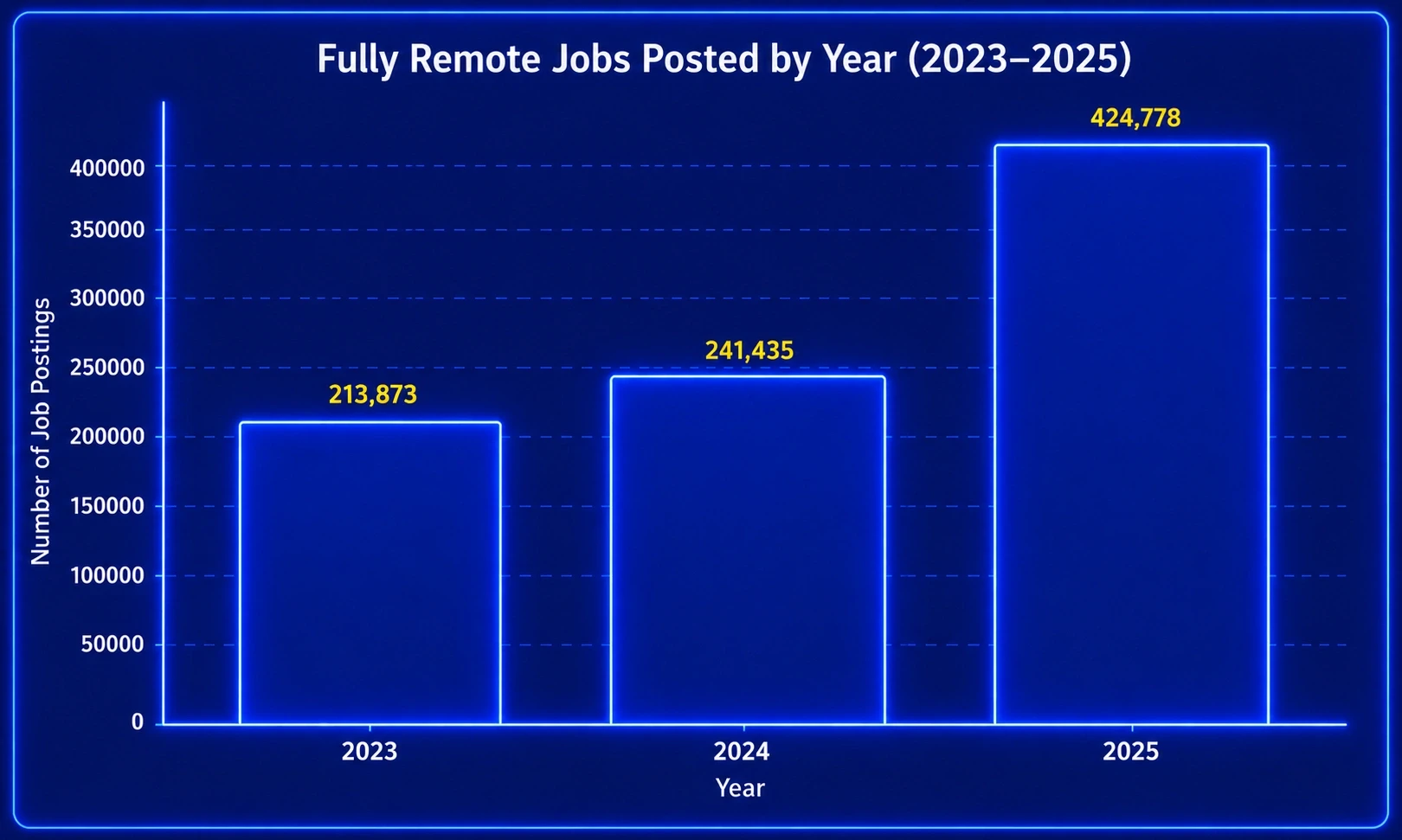
However, remote hiring also introduces new challenges. Recruiters must deal with identity fraud, proxy interviews, deepfake candidates, fake resumes, compliance issues, and online assessment cheating. As remote recruitment scales globally, companies need stronger hiring verification systems and AI-driven fraud detection tools to maintain hiring integrity. A 2025 remote job report recorded over 424,778 remote jobs posted in a single year, highlighting sustained employer demand for remote talent across industries.
However, remote hiring also introduces new challenges. Recruiters must deal with identity fraud, proxy interviews, deepfake candidates, fake resumes, compliance issues, and online assessment cheating. As remote recruitment scales globally, companies need stronger hiring verification systems and AI-driven fraud detection tools to maintain hiring integrity.
In this guide, we will cover everything you need to know about remote hiring, including its definition, hiring process, benefits, challenges, tools, use cases, and how companies can build secure and scalable remote recruitment systems in 2026.
Remote Hiring Statistics and Trends Shaping the Future of Recruitment
Remote job availability rose steadily from 2023 to 2024 and then accelerated in 2025. This upward trend reflects sustained employer demand for remote talent, as well as improvements in surfacing remote opportunities that meet Virtual Vocations’ remote criteria.
Source: https://www.virtualvocations.com/
What Is Remote Hiring?
Remote hiring is the process of recruiting, assessing, interviewing, selecting, and onboarding candidates entirely through virtual and digital methods without requiring in-person interactions. Companies use online hiring platforms, video interviews, AI-powered assessments, communication tools, and remote onboarding systems to hire employees from different cities, countries, or regions.
Unlike traditional recruitment, remote hiring removes geographical limitations and allows organizations to access a much larger talent pool. Employers can hire the best candidates based on skills, experience, and cultural fit rather than location.
Remote hiring has become a major workforce strategy across industries including technology, finance, healthcare, customer support, marketing, education, and engineering. Businesses are increasingly building distributed teams to improve scalability, reduce operational costs, and support flexible work environments.
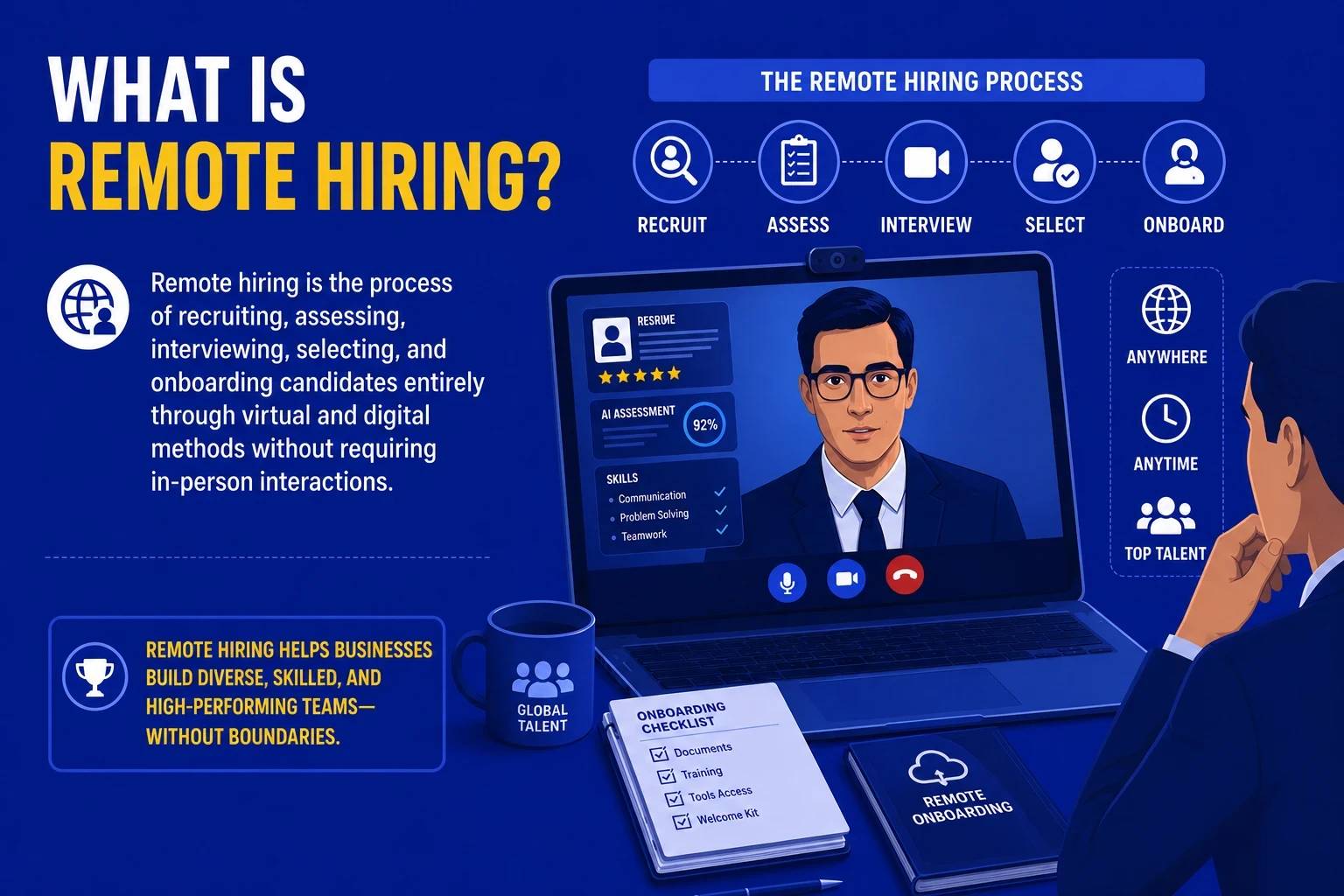
Today, remote hiring goes far beyond simple virtual interviews. Modern recruitment teams now use AI-driven hiring technologies for:
Candidate screening
Online technical assessments
Identity verification
Video interview analysis
Fraud detection
Behavioral monitoring
Automated onboarding
As remote hiring expands globally, companies are also facing new recruitment risks such as deepfake interviews, proxy candidates, AI-assisted cheating, fake resumes, and identity fraud. This has increased the need for secure hiring infrastructure and intelligent verification systems.
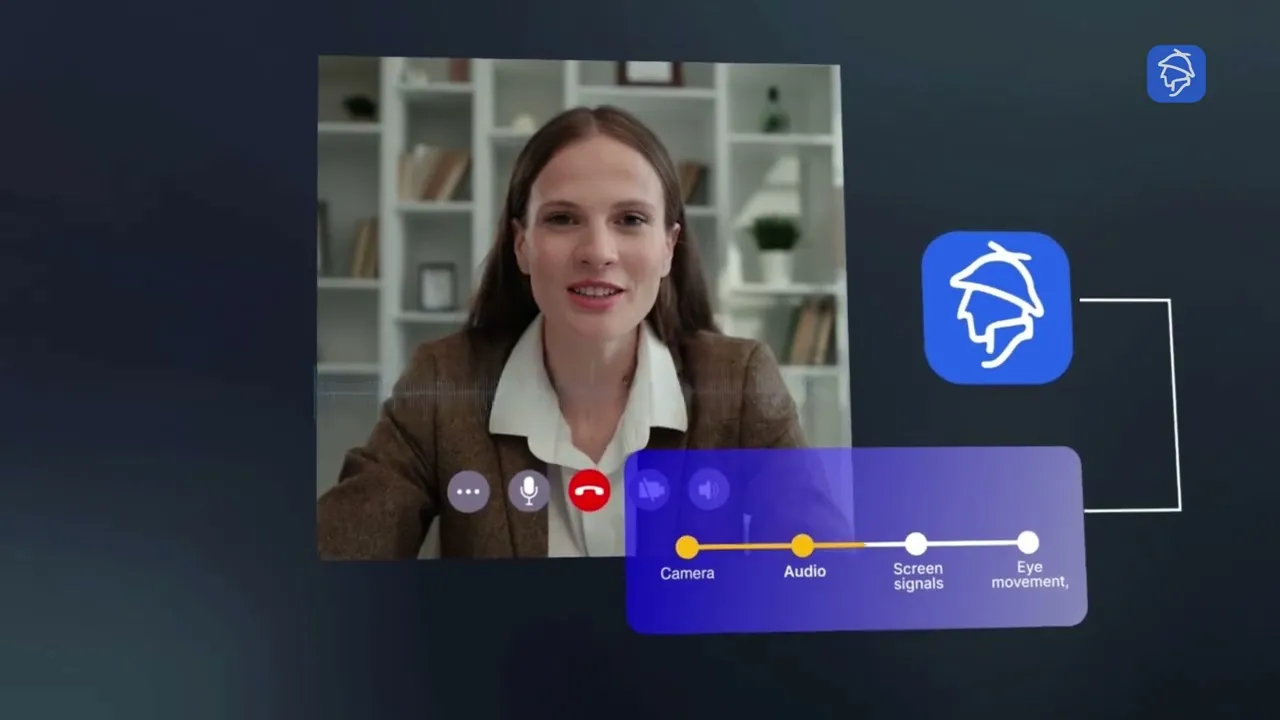
Sherlock AI helps organizations secure remote recruitment by detecting suspicious interview behavior, verifying candidate authenticity, monitoring lip-sync mismatches, and preventing interview fraud during virtual hiring processes.
Remote hiring is now considered a long-term recruitment model rather than a temporary trend. Organizations adopting remote-first hiring strategies gain access to global talent, faster recruitment cycles, improved workforce flexibility, and stronger scalability for future growth.
How Does the Remote Hiring Process Work?
The remote hiring process enables companies to recruit, assess, interview, and onboard candidates completely online. Businesses use digital hiring platforms, AI powered recruitment tools, and virtual communication technologies to streamline the hiring journey.
Step 1: Identify Hiring Requirements
The process begins with defining the role and hiring objectives. Recruiters and hiring managers determine:
Job responsibilities
Required skills and qualifications
Experience level
Remote work expectations
Salary range
Time zone requirements
A clear job description is then created to attract suitable candidates.
Step 2: Source Candidates Online
Companies promote remote job openings through multiple online channels, including:
Job portals
Company career websites
LinkedIn
Social media platforms
Employee referrals
Remote job boards
Recruitment agencies
Many organizations also use AI powered sourcing tools to identify qualified talent faster.
Step 3: Screen Applications
Recruiters review resumes and shortlist candidates based on:
Skills and certifications
Previous work experience
Technical expertise
Portfolio quality
Communication skills
Applicant Tracking Systems (ATS) and AI recruitment tools often automate this screening process.
Step 4: Conduct Online Assessments
Shortlisted candidates may complete remote assessments to evaluate their abilities. These assessments can include:
Technical tests
Coding challenges
Aptitude tests
Psychometric assessments
Language proficiency tests
Secure testing platforms help companies maintain assessment integrity.
Step 5: Schedule Virtual Interviews
Recruiters arrange online interviews using video conferencing tools such as:
Zoom
Google Meet
Microsoft Teams
The interview process may involve:
HR screening rounds
Technical interviews
Managerial discussions
Behavioral interviews
Final leadership interviews
Step 6: Verify Candidate Identity
To reduce remote hiring fraud, employers verify candidate authenticity through:
Government ID verification
Facial recognition checks
Credential verification
Employment history validation
AI powered monitoring systems can also detect suspicious interview behavior.
Step 7: Evaluate Candidate Performance
Hiring teams assess candidates based on:
Technical knowledge
Problem solving ability
Communication skills
Cultural fit
Role suitability
Structured interview scorecards help ensure fair and consistent evaluations.
Step 8: Conduct Background Verification
Before finalizing the hire, companies perform background checks such as:
Employment verification
Education verification
Criminal background screening
Reference checks
This step helps organizations reduce hiring risks.
Step 9: Send Digital Offer Letter
Selected candidates receive digital offer letters containing:
Compensation details
Benefits information
Joining date
Work policies
Employment terms
Electronic signatures are commonly used for approvals.
Step 10: Complete Remote Onboarding
The final stage involves onboarding employees remotely through:
Online documentation
Virtual orientation sessions
Training programs
IT setup and tool access
HR policy briefings
This ensures employees can start working smoothly from any location.
A well structured remote hiring process helps companies hire faster, improve candidate experience, access global talent, and maintain recruitment efficiency in a digital first workplace.
What Are the Benefits of Remote Hiring for Employers?
Remote hiring helps organizations improve recruitment efficiency, reduce operational limitations, and access skilled talent from across the world.
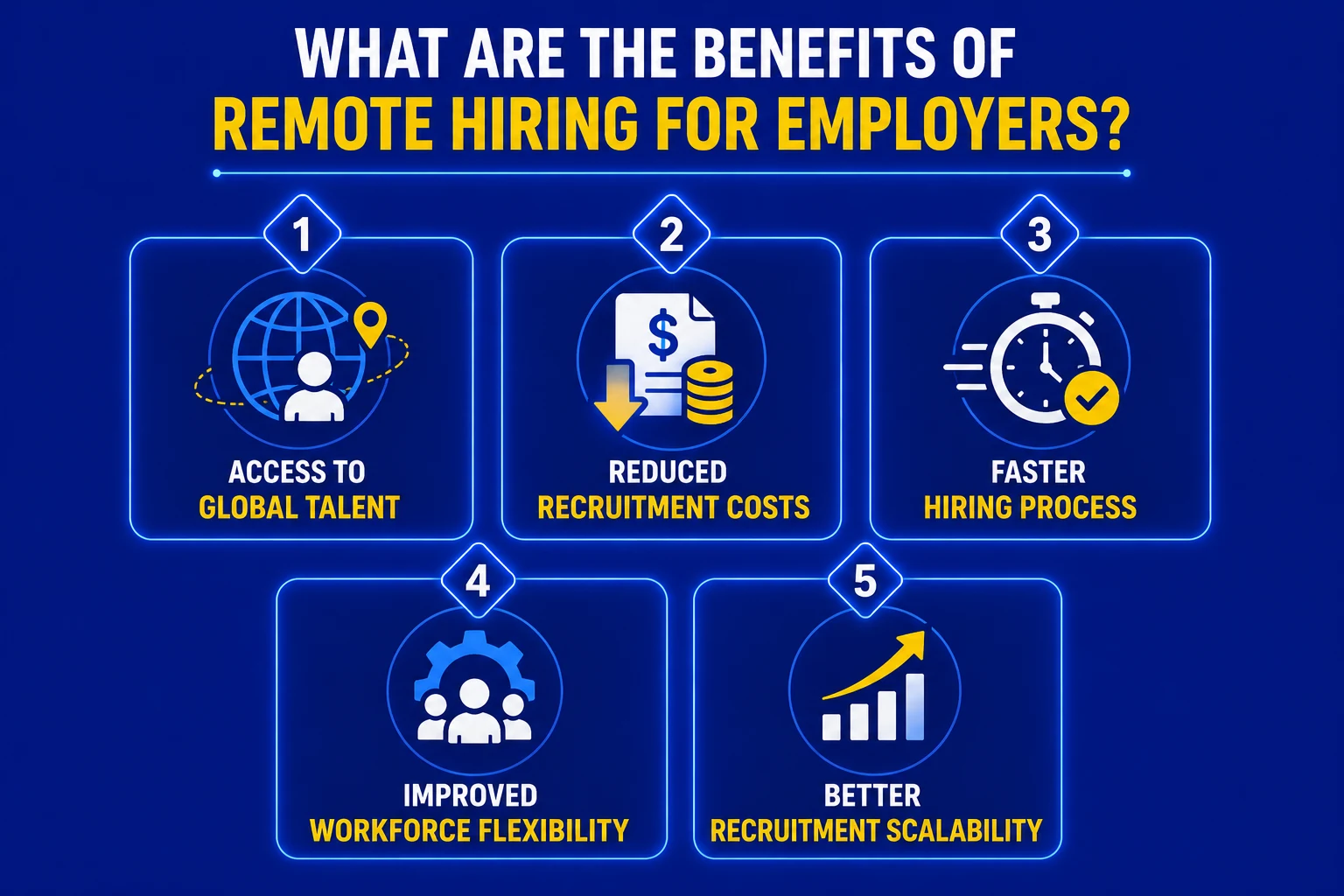
1. Access to Global Talent
Remote hiring allows employers to recruit candidates from different cities, countries, and regions without geographic restrictions. This helps companies find specialized skills faster and build more diverse teams.
2. Reduced Recruitment Costs
Companies can lower expenses related to office interviews, candidate travel, relocation support, and physical hiring infrastructure. Digital recruitment processes make hiring more cost effective.
3. Faster Hiring Process
Virtual interviews, online assessments, and automated screening tools help businesses speed up recruitment cycles and reduce overall time to hire.
4. Improved Workforce Flexibility
Remote hiring supports distributed teams that can work across different time zones, helping businesses improve operational flexibility and maintain productivity.
5. Better Recruitment Scalability
Organizations can expand hiring operations quickly during growth periods without being limited by office space or location based recruitment challenges.
Remote hiring enables employers to build flexible, scalable, and efficient recruitment strategies while improving access to high quality talent worldwide.
What Are the Benefits of Remote Hiring for Candidates?
Remote hiring provides candidates with greater career flexibility, improved access to job opportunities, and a more convenient recruitment experience.
1. Access to Global Job Opportunities
Candidates can apply for jobs with companies across different cities and countries without needing to relocate, increasing career opportunities significantly.
2. Reduced Commuting and Relocation Stress
Remote hiring eliminates the need for frequent travel, office visits, and relocation during the recruitment process, saving both time and money.
3. Faster and More Convenient Hiring Experience
Virtual interviews, online assessments, and digital communication make the hiring process quicker and easier for candidates to manage from any location.
4. Better Work Life Balance
Remote job opportunities often provide more flexibility, helping candidates maintain a healthier balance between personal and professional responsibilities.
5. Increased Career Flexibility
Remote hiring allows professionals to explore freelance, hybrid, contract, and fully remote roles across multiple industries and global markets.
Remote hiring helps candidates access broader career opportunities while offering greater flexibility, convenience, and freedom in the modern digital workplace.
What Tools and Technologies Are Used in Remote Hiring?
Remote hiring relies on digital tools and recruitment technologies that help companies manage hiring processes efficiently, securely, and at scale.
1. Video Interview Platforms
Companies use virtual meeting tools to conduct online interviews and communicate with candidates remotely.
Common platforms include:
Zoom
Google Meet
Microsoft Teams
Skype
These tools help recruiters conduct HR, technical, and final interview rounds virtually.
2. Applicant Tracking Systems (ATS)
Applicant Tracking Systems help recruiters manage recruitment workflows, including:
Resume screening
Candidate tracking
Interview scheduling
Application management
Recruitment reporting
ATS platforms improve hiring organization and efficiency.
3. Online Assessment Platforms
Employers use digital assessment tools to evaluate candidate skills remotely through:
Coding tests
Aptitude assessments
Psychometric evaluations
Language tests
Technical challenges
These platforms help recruiters assess candidates accurately before interviews.
4. AI Powered Recruitment Tools
AI driven hiring technologies help automate and optimize recruitment activities such as:
Resume parsing
Candidate matching
Automated screening
Interview analysis
Fraud detection
AI tools improve hiring speed and decision making.
5. Identity Verification Systems
Remote hiring often requires candidate verification tools to confirm identity and reduce interview fraud risks.
These systems may include:
Government ID verification
Facial recognition
Credential validation
Biometric authentication
6. Communication and Collaboration Tools
Recruitment teams use collaboration platforms to coordinate hiring activities and communicate with candidates efficiently.
Popular tools include:
Slack
Microsoft Teams
Trello
Asana
These systems improve team collaboration during recruitment.
7. Remote Onboarding Platforms
Digital onboarding tools help companies onboard employees remotely through:
Online documentation
Virtual training
Policy sharing
IT setup management
Employee orientation
This ensures a smooth transition for remote employees.
8. AI-Powered Interview Proctoring Platform like Sherlock AI
Some organizations use AI-powered interview proctoring platforms to detect suspicious interview behavior such as:
Proxy interviews
Multiple faces on screen
Voice inconsistencies
External assistance
AI proctoring tools like Sherlock AI help companies improve hiring integrity, strengthen candidate verification, and reduce remote recruitment fraud through real-time monitoring and intelligent behavioral analysis.
Modern remote hiring technologies help organizations streamline recruitment, improve candidate evaluation, and maintain secure hiring processes in digital work environments.
Smarter Remote Hiring Starts with Sherlock AI |
What Challenges Does Remote Hiring Present?
Remote hiring offers flexibility and access to a wider talent pool, but it also introduces several challenges for employers. Since the entire recruitment process takes place online, organizations may face difficulties related to candidate verification, communication, technical issues, cultural fit assessment, and recruitment fraud. Managing interviews across different time zones and ensuring smooth virtual collaboration can also make hiring more complex. To overcome these challenges, companies need secure hiring technologies, structured recruitment processes, and effective communication strategies.
Remote hiring reduces personal interaction between recruiters and candidates, making it harder to evaluate communication skills, professionalism, and overall personality through virtual interactions alone.
Employers may face increased risks of identity fraud, fake resumes, forged documents, and proxy interviews because the hiring process takes place entirely online without physical verification.
Coordinating interviews across different time zones can create scheduling difficulties, communication delays, and longer hiring timelines when recruiting global remote talent.
Technical issues such as poor internet connectivity, software glitches, and audio or video disruptions can negatively affect interviews, assessments, and the overall candidate experience.
Assessing cultural fit and team compatibility can be challenging in remote hiring environments, as virtual interviews may not fully reflect how candidates collaborate and adapt within an organization.
Remote hiring provides companies with access to a broader talent pool and greater flexibility, but organizations must also manage challenges related to communication, verification, technology, and collaboration. Using secure hiring platforms and structured recruitment processes can help businesses improve the effectiveness of remote hiring.
How Companies Overcome Remote Hiring Challenges
Companies are adopting advanced technologies and structured hiring strategies to overcome the challenges associated with remote recruitment. By using secure digital platforms, standardized interview processes, identity verification tools, and effective communication systems, organizations can improve hiring accuracy and candidate experience. Businesses also focus on strengthening collaboration, reducing fraud risks, and ensuring smooth remote onboarding to make remote hiring more efficient and reliable.
Companies use structured virtual interview processes and standardized evaluation methods to better assess communication skills, professionalism, and candidate suitability during remote hiring.
Organizations implement identity verification tools, background screening solutions, and secure assessment platforms to reduce the risks of fake resumes, forged documents, and proxy interviews.
Recruiters overcome time zone and communication barriers by using scheduling tools, flexible interview timings, and collaborative platforms that support global hiring operations.
Businesses invest in reliable digital hiring technologies, video conferencing platforms, and technical support systems to minimize disruptions caused by connectivity or software issues.
Employers improve cultural fit assessment by conducting multiple virtual interview rounds, team interactions, and collaborative assessments to better understand how candidates align with company values and work environments.
By combining secure hiring technologies, clear communication, and structured recruitment strategies, companies can successfully address remote hiring challenges while accessing a wider and more diverse talent pool.
Top 10 fastest-growing roles For Remote Hires
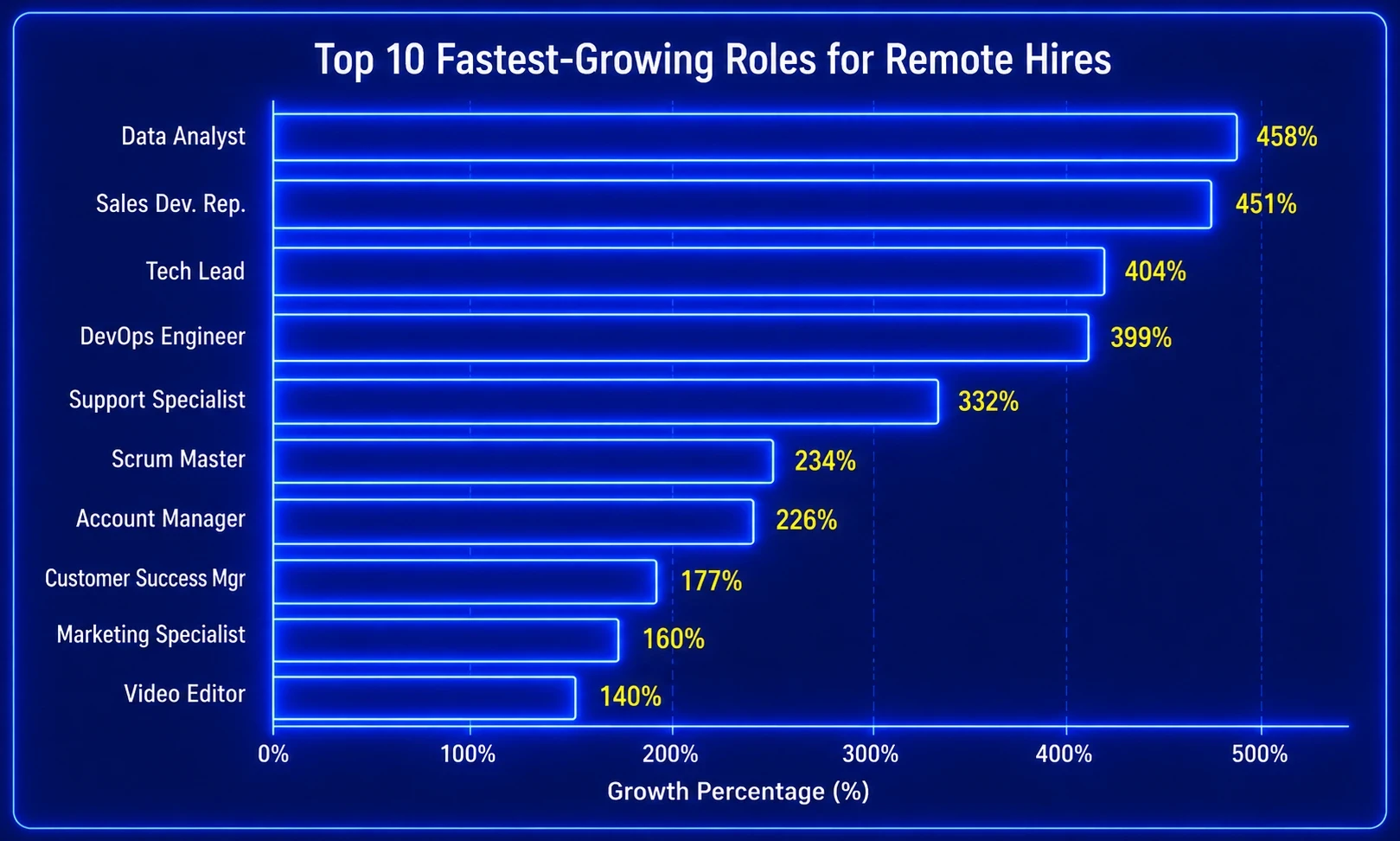
Source: Remotepass
Which Industries Use Remote Hiring Most Effectively?
Remote hiring has become widely adopted across many industries as businesses seek access to global talent, reduce recruitment costs, and support flexible work models. Industries that rely heavily on digital communication, technology, and online collaboration have been particularly successful in implementing remote hiring practices. These sectors use virtual recruitment tools, online assessments, and remote onboarding processes to efficiently attract and hire talent from different locations.
1. Information Technology (IT)
The IT industry widely uses remote hiring to recruit software developers, engineers, cybersecurity specialists, and cloud professionals from global talent pools. Most technical roles can be performed remotely, making virtual hiring highly effective.
2. Healthcare
Healthcare organizations use remote hiring for telemedicine professionals, medical coders, healthcare support staff, and virtual consultants who can provide services remotely through digital platforms.
3. E-Commerce
E-commerce companies frequently hire remote employees for customer support, digital operations, inventory coordination, marketing, and online sales management roles.
4. Digital Marketing
Digital marketing agencies and businesses use remote hiring to recruit content writers, SEO specialists, social media managers, graphic designers, and digital advertising professionals who can work effectively online.
5. Education and E-Learning
The education sector increasingly relies on remote hiring for online tutors, trainers, instructional designers, and virtual educators as digital learning platforms continue to grow globally.
6. Finance and Accounting
Many finance and accounting firms use remote hiring to recruit accountants, financial analysts, auditors, and payroll specialists who can manage digital financial operations securely from remote locations.
Remote hiring continues to transform industries by enabling businesses to access skilled professionals worldwide while improving flexibility, scalability, and operational efficiency.
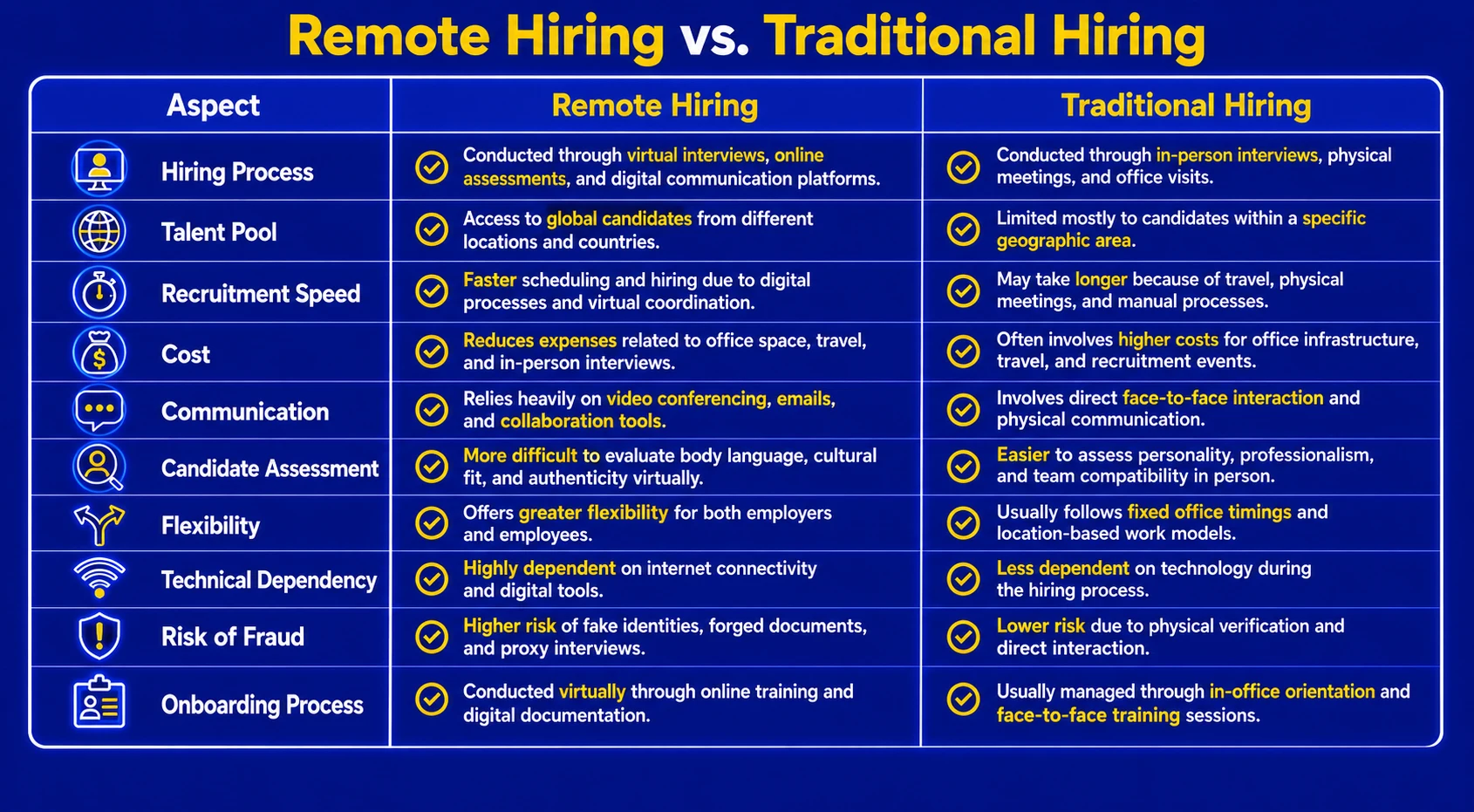
Remote Hiring vs. Traditional Hiring
How Sherlock AI Helps Solve Remote Hiring Challenges
Sherlock AI helps organizations strengthen remote hiring by using advanced AI-powered monitoring, verification, and fraud detection technologies. As remote recruitment becomes more common, companies face increasing risks related to identity fraud, proxy interviews, fake documents, and assessment cheating. Sherlock AI helps recruiters create a secure, transparent, and reliable hiring process while improving overall recruitment efficiency and candidate trust.
1. Invisible AI Assistance Detection
Sherlock AI helps organizations identify candidates using hidden AI copilots, live answer generators, browser-based assistance tools, and unauthorized AI support during virtual interviews. The platform analyzes behavioral signals, response patterns, screen activity, and interaction inconsistencies to detect suspicious AI-assisted interview behavior in real time. This helps recruiters maintain fairness and prevent candidates from relying on external AI tools during technical or non-technical interviews.
2. Live Interview Integrity Monitoring
Sherlock AI continuously monitors interview sessions to identify suspicious candidate behavior such as unusual eye movement, delayed response timing, screen switching, hidden prompting, off-camera distractions, and external support during conversations. Real-time monitoring allows recruiters to conduct more secure interviews without interrupting the interview experience or affecting candidate communication.
3. Candidate Identity and Authenticity Verification
The platform helps organizations confirm that the actual candidate is attending the interview by validating identity consistency, facial activity, voice behavior, and interaction patterns throughout the recruitment process. Sherlock AI reduces the risks of proxy interviews, impersonation attempts, deepfake participation, and identity fraud commonly associated with remote hiring.
4. Intelligent Remote Interview Proctoring
Sherlock AI provides advanced AI-powered proctoring capabilities designed specifically for remote interviews and online hiring assessments. The system can detect multiple faces on screen, voice mismatches, suspicious background activity, unauthorized assistance, device switching, and abnormal interview environments. This helps companies maintain interview transparency and ensure authentic candidate participation.
5. Behavioral Analysis and Fraud Risk Detection
Sherlock AI uses intelligent behavioral analysis to identify unusual candidate activity that may indicate interview malpractice or recruitment fraud. The platform evaluates interaction consistency, response behavior, communication patterns, and environmental signals to generate fraud risk indicators that help recruiters quickly identify suspicious interview sessions.
6. AI-Driven Interview Insights and Recruiter Support
Sherlock AI automatically generates interview summaries, behavioral insights, risk alerts, and monitoring reports that help recruiters make faster and more informed hiring decisions. Automated insights reduce manual review effort while improving hiring accuracy, interview transparency, and overall recruitment efficiency.
Sherlock AI enables businesses to conduct secure, transparent, and trustworthy remote interviews by combining AI-powered proctoring, candidate verification, behavioral monitoring, and fraud detection capabilities. As remote hiring continues to evolve, organizations are increasingly using intelligent interview monitoring solutions like Sherlock AI to improve hiring integrity, reduce recruitment fraud, and ensure authentic candidate evaluations.
Conclusion
Remote hiring has transformed modern recruitment by enabling organizations to access global talent, improve workforce flexibility, and streamline hiring operations. Businesses across industries are increasingly adopting virtual recruitment strategies to attract skilled professionals without geographical limitations. However, remote hiring also introduces challenges such as identity fraud, proxy interviews, fake resumes, technical disruptions, communication barriers, and difficulties in assessing candidate authenticity and cultural fit.
To address these challenges, companies are investing in advanced hiring technologies, secure verification systems, and AI-powered recruitment platforms that improve the reliability and security of remote hiring processes. Structured interview methods, secure online assessments, automated background verification, and digital collaboration tools help organizations create more efficient and transparent hiring environments.
Sherlock AI plays a critical role in strengthening remote hiring by providing AI-powered identity verification, real-time interview monitoring, fraud detection, and secure assessment solutions. The platform helps organizations prevent impersonation, detect suspicious activities, reduce recruitment fraud, and improve hiring accuracy throughout the recruitment process. By automating monitoring and verification tasks, Sherlock AI also helps recruiters save time, improve operational efficiency, and make more confident hiring decisions.
As remote work continues to grow globally, organizations that adopt secure and technology-driven hiring strategies will be better equipped to build trustworthy, scalable, and high-performing remote teams.