Back to all blogs
Learn how to prevent real-time AI answer copilots in interviews. Explore common copilot tactics, warning signs interviewers miss, and proven ways to protect interview integrity in remote hiring.

Abhishek Kaushik
Feb 11, 2026
Artificial intelligence is reshaping not just how candidates prepare, but how they perform in interviews, sometimes in ways that undermine assessment integrity.
According to a survey of 3,000 hiring managers, 59% have suspected candidates of using AI tools to misrepresent themselves during the hiring process, and 35% reported that someone other than the stated applicant participated in a virtual interview. Only 19% of managers felt highly confident that their current systems could catch fraudulent behaviors.
With AI copilots now capable of feeding instant answers or suggestions during live interactions, traditional measures like video calls and standard questioning formats aren’t enough to ensure fairness.
Understanding how real-time AI answer copilots work, the risks they pose, and how to prevent them is now essential for maintaining trust, transparency, and accuracy in remote interview evaluation.
What “Real-Time AI Answer Copilots” Actually Are
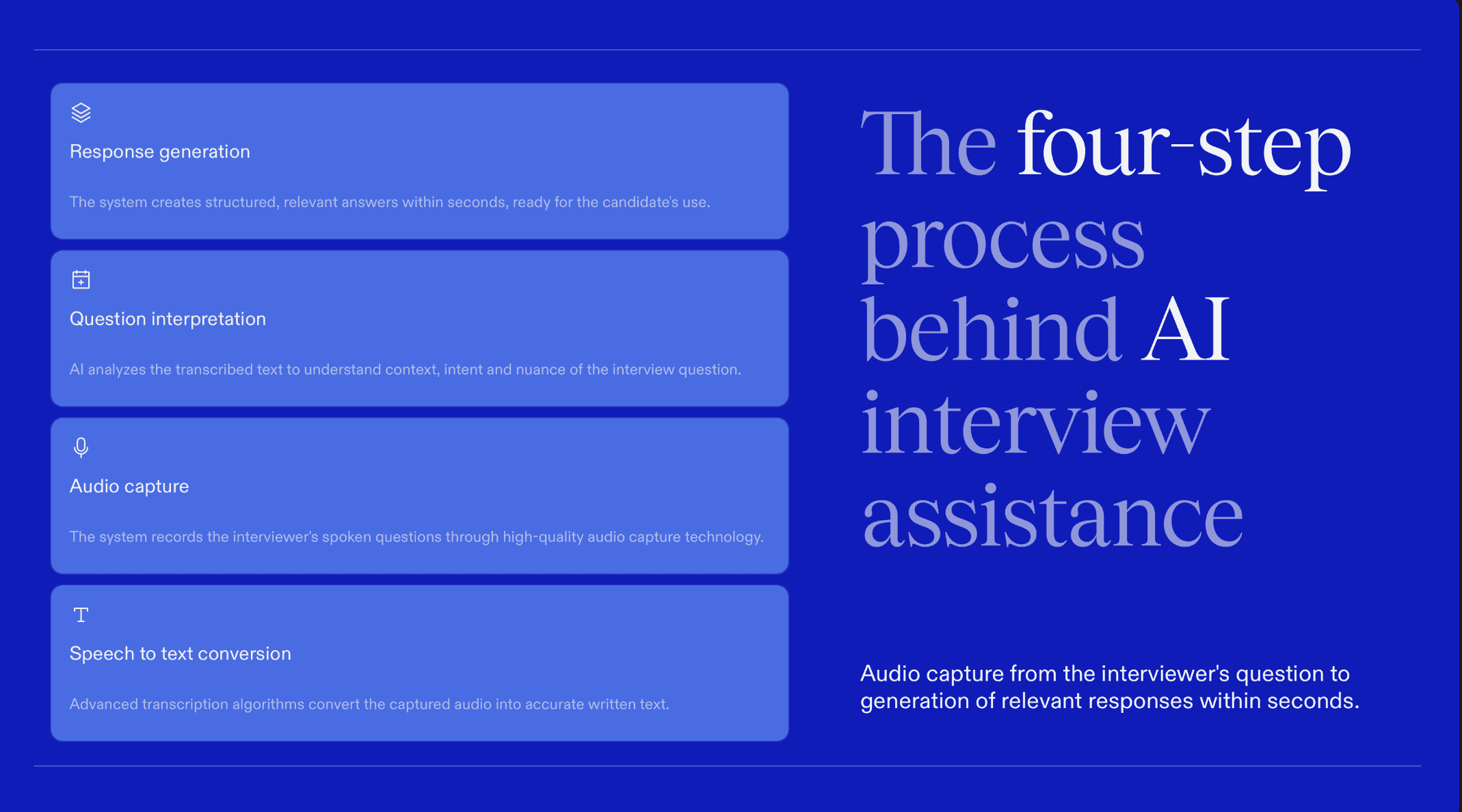
At their core, these copilots combine live transcription with instant answer generation. As soon as an interviewer asks a question, the AI:
Captures the audio
Converts it to text
Interprets intent and context
Generates a structured, relevant response within seconds
To the interviewer, the reply sounds fluent, confident, and well-reasoned, often indistinguishable from a strong human answer.
How They Operate During Live Interviews
Real-time AI copilots typically show up in a few common ways:
AI listening and generating responses in seconds, especially during technical or behavioral questions where structure matters.
Second-screen or hidden-window copilots, running on another monitor, browser tab, or device outside the camera’s view.
Voice-based copilots, where answers or prompts are discreetly fed through earbuds or audio channels while the candidate speaks.
Because these tools work quietly in the background, candidates can maintain eye contact, appear engaged, and respond smoothly, masking the AI’s involvement.
Interview Stages Where AI Copilots Are Used Most
Real-time AI assistance is most effective and most commonly used during:
Initial screening calls, where fast, polished answers create a strong first impression.
Technical interviews, where AI can quickly generate explanations, algorithms, or frameworks.
Behavioral interviews, where structured storytelling and competency-based responses are easy for AI to produce.
These stages rely heavily on verbal fluency and reasoning, making them especially vulnerable to AI intervention.
👉 How Recruiters Can Detect AI Copilot Usage in Interviews
How This Differs from Interview Prep or Note-Taking
Interview prep tools help candidates practice before the interview. Note-taking tools support memory after questions are asked. Real-time AI answer copilots are different, they replace the candidate’s thinking during evaluation.
Instead of recalling knowledge or reasoning independently, candidates may rely on AI to:
Interpret the question
Decide what to say
Structure the response
Provide examples or terminology
This turns the interview into a collaboration between human and machine without the interviewer’s knowledge.
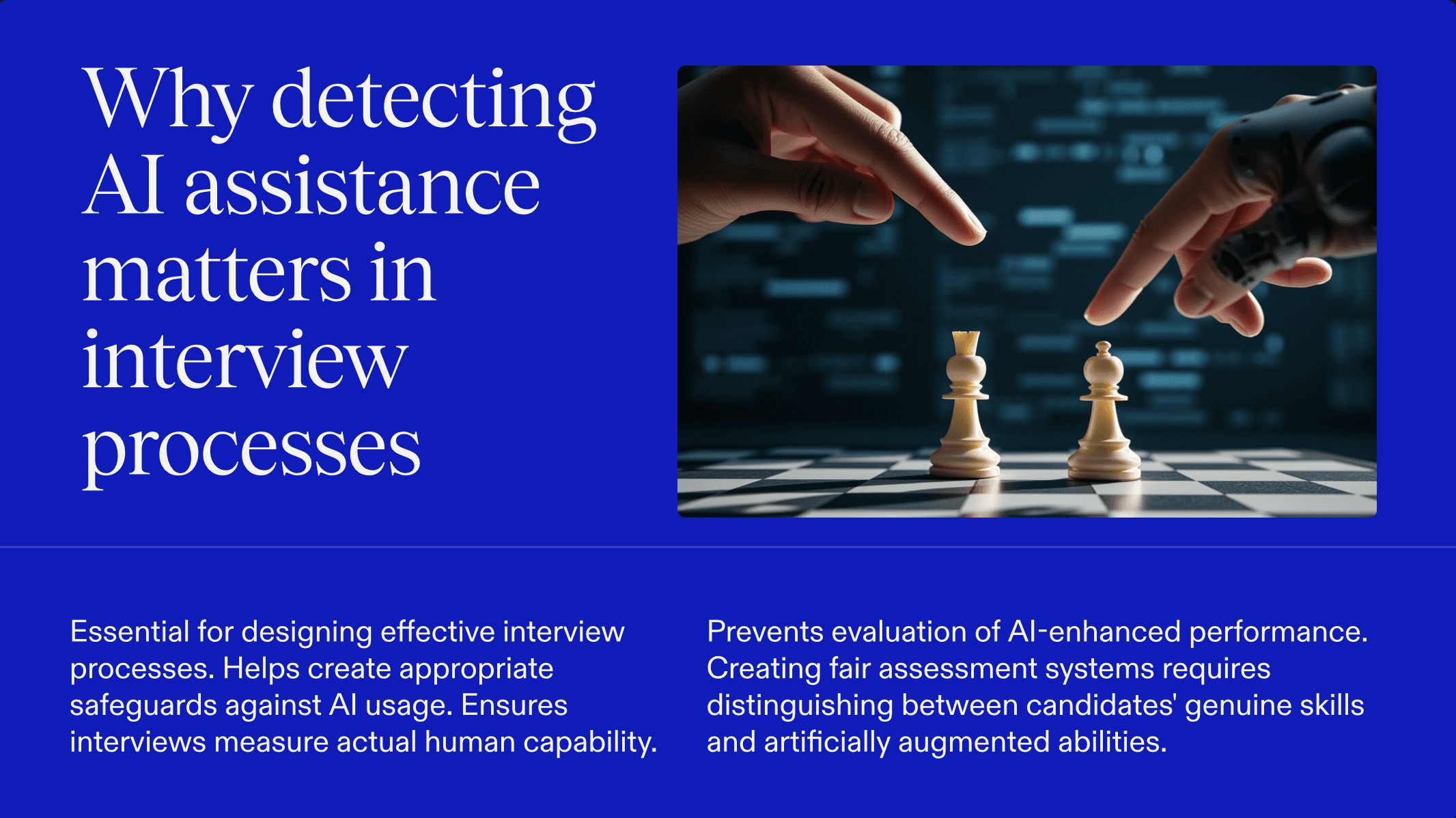
Recognizing what real-time AI answer copilots look like is essential for designing interviews and safeguards that ensure interviews evaluate real capability, not AI-assisted performance.
Strategies to Disrupt and Detect AI Answer Copilots
Even as real-time AI answer copilots become more capable, interviews can still be designed in ways that expose assisted performance and reward genuine thinking.
The key is to shift interviews from predictable, output-focused exchanges to dynamic, reasoning-driven conversations that are difficult for AI to support invisibly.
1. Force Real-Time Reasoning, Not Polished Conclusions
AI copilots excel at delivering clean, structured answers. They struggle when candidates must think aloud in real time.
Use prompts that require:
Step-by-step problem solving rather than final solutions
Verbalizing assumptions, trade-offs, and uncertainties
Explaining why an approach was chosen over alternatives
Ask candidates to pause and narrate their thinking before responding fully. AI-assisted answers often skip this messy middle.
👉 How to Detect and Prevent Cluely AI in Interviews
2. Break Predictability with Dynamic Follow-Ups
Real-time AI relies on stable input to generate coherent responses. Unplanned follow-ups disrupt that flow.
Effective techniques include:
Changing constraints mid-answer (“What if the timeline was cut in half?”)
Asking counterfactuals (“What would fail if this assumption is wrong?”)
Interrupting with clarification questions before the answer is complete
These moments reveal whether the candidate is adapting naturally or waiting on AI output.
3. Switch Contexts Rapidly During the Interview
AI copilots perform best within a single, well-defined format. Switching contexts exposes dependency.
Rotate between:
Conceptual explanation → real-world application
Past experience → hypothetical scenario
High-level overview → low-level implementation detail
Candidates relying on AI often show hesitation, loss of coherence, or generic filler when formats shift suddenly.
4. Anchor Answers in Verifiable Personal Experience
AI can generate plausible stories, but it struggles with specific, lived detail under pressure.
Probe for:
Exact timelines, decisions, and trade-offs
People involved and conflicting viewpoints
Mistakes made and lessons learned
Follow up on small details. Authentic experience deepens; AI-generated narratives flatten.
5. Watch for Response Timing and Interaction Patterns
AI-assisted answers often introduce subtle but consistent delays or unnatural pacing.
Red flags may include:
Long pauses before simple questions
Rapid, perfectly structured responses to complex prompts
Consistent cadence regardless of question difficulty
These patterns are easy to miss unless interviewers consciously track interaction flow.
6. Ask Candidates to Reflect, Not Just Respond
Reflection requires judgment, not recall, something AI copilots don’t handle well in real time.
Try prompts like:
“What would you do differently now?”
“What part of that decision still feels uncertain?”
“What advice would you give your past self?”
Reflection reveals ownership of decisions, not just knowledge of frameworks.
Why This Approach Has Limits
These strategies significantly raise the difficulty of using AI answer copilots undetected, but they depend on interviewer consistency, attention, and experience.
As AI becomes faster and more adaptive, manual detection alone doesn’t scale, which is why many teams ultimately complement strong interview design with systems built to continuously detect AI-assisted behavior at a deeper level.
Sherlock AI: Built to Stop Real-Time AI Answer Copilots in Interviews
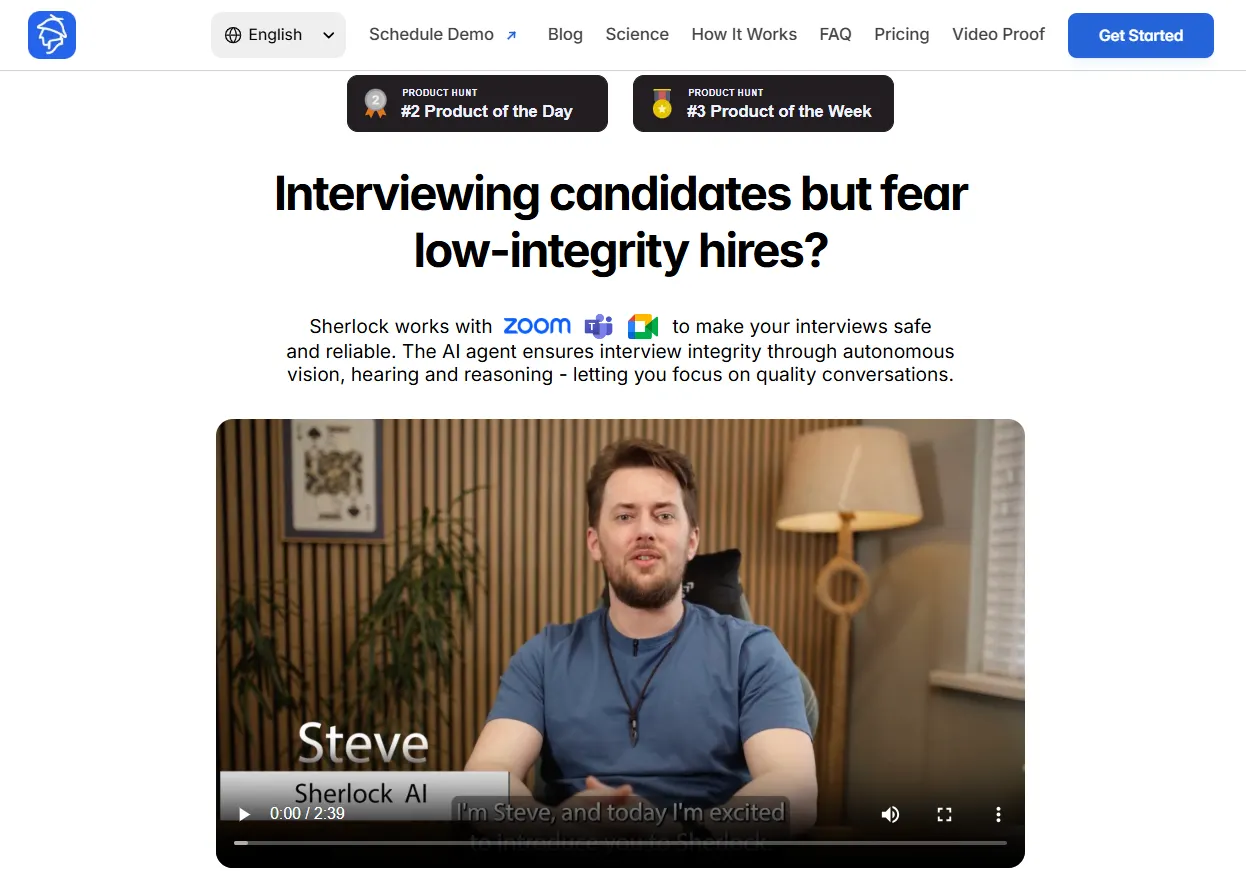
Sherlock AI is designed specifically to surface AI copilots operating in the background, proxies feeding answers, and AI-generated responses presented as human reasoning.
Below are the key features that make Sherlock AI effective against real-time AI assistance:
1. Real-Time AI Copilot Detection
Sherlock AI continuously monitors interviews for behavioral and response patterns that signal live AI answer generation, including:
Unnatural response latency followed by highly structured answers
Consistent clarity regardless of question complexity
Reasoning-output mismatch typical of AI-generated responses
This helps surface AI copilots that listen, think, and answer in seconds.
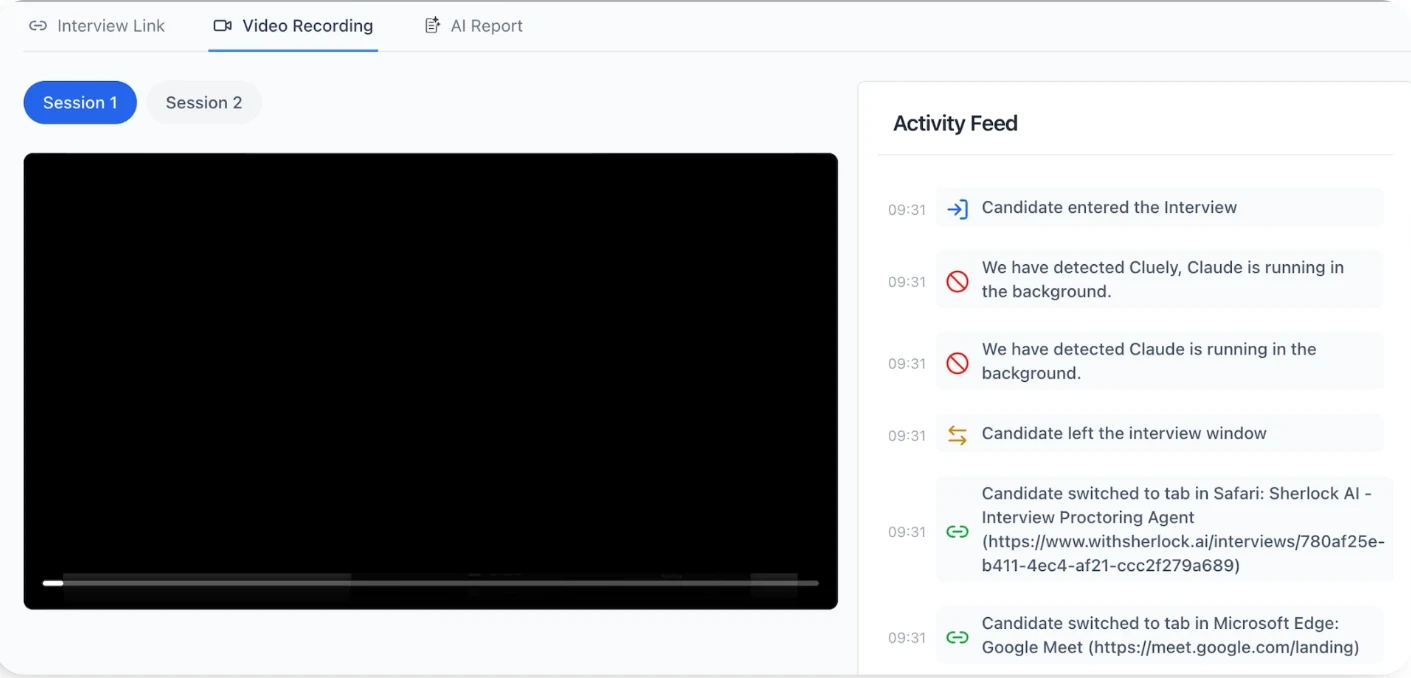
2. Behavioral Intelligence, Not Just Voice or Video
Instead of relying on any single signal, Sherlock AI combines:
Response timing and pacing
Reasoning depth and coherence
Interaction flow across questions
This behavior-first approach makes it harder for AI copilots to hide behind fluent delivery.
3. Proxy & Assisted Interview Detection
Sherlock AI flags signs of proxy participation or off-screen assistance, including:
Sudden shifts in knowledge depth
Changes in response style mid-interview
Inconsistencies between claimed experience and live reasoning
This is critical when AI copilots are paired with human proxies.
4. Deepfake & Synthetic Interaction Signals
When AI copilots are combined with voice manipulation or deepfake techniques, Sherlock AI analyzes:
Audio continuity and speech dynamics
Behavioral alignment with spoken responses
Interaction patterns inconsistent with natural human speech
This helps detect AI-assisted or synthetic interview behavior, not just isolated anomalies.
5. Continuous Monitoring Across the Interview
Sherlock AI treats interview integrity as a continuous process, not a one-time check:
Tracks behavior from first question to last
Identifies evolving AI assistance patterns
Detects late-stage copilot usage that often appears during complex questions
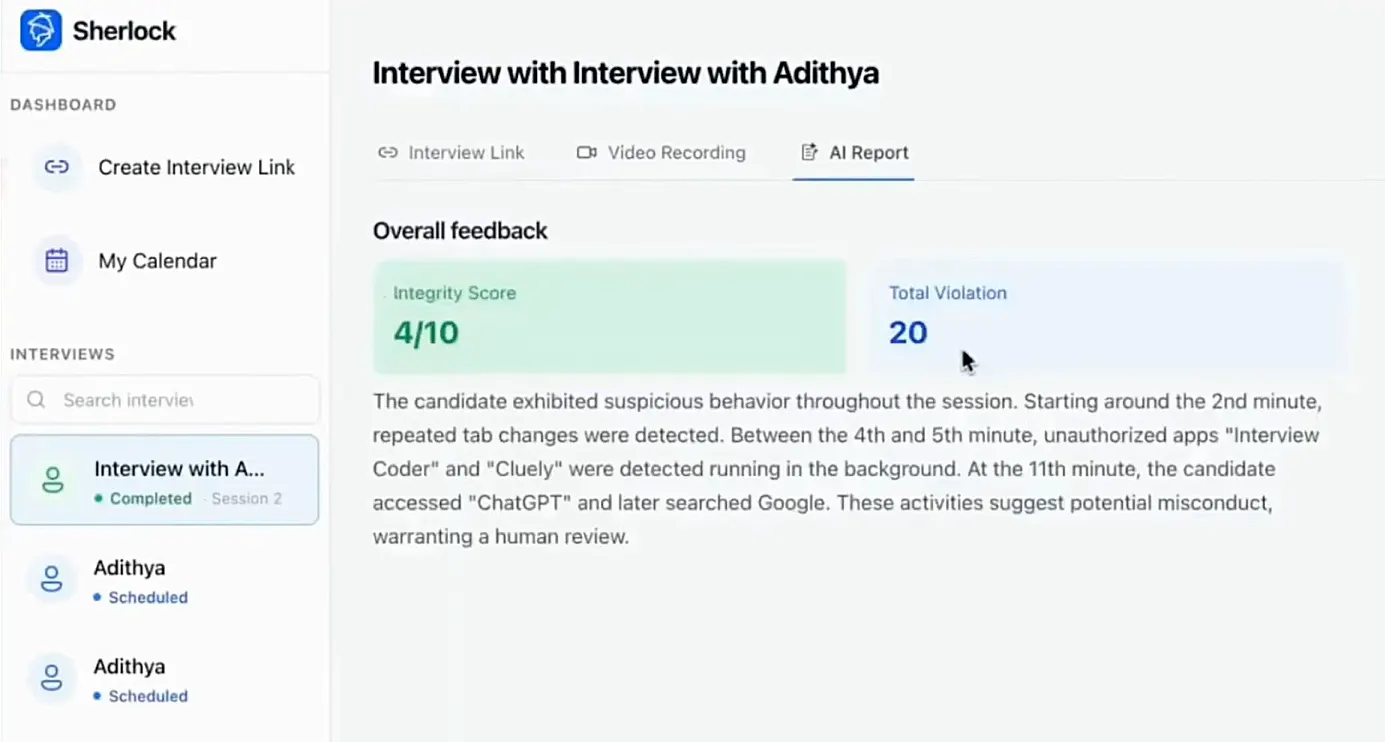
6. Clear, Actionable Signals for Interviewers
Instead of disrupting interviews, Sherlock AI provides:
Real-time indicators of possible AI assistance
Context on why a response looks suspicious
Guidance on when to probe deeper
This keeps interviewers in control while removing guesswork.
By combining behavioral intelligence, continuous monitoring, and AI-native detection, Sherlock AI ensures interviews measure real thinking, real skill, and real candidates and not AI-assisted performance.
Conclusion
Real-time AI answer copilots have fundamentally changed the interview landscape. When AI can listen, think, and generate answers instantly, fluency and confidence are no longer reliable indicators of real skill. Without the right safeguards, interviews risk evaluating AI-assisted performance instead of human capability.
While strong interview design and probing techniques can raise the barrier, they can’t keep pace with AI that adapts in real time. This is why hiring teams are increasingly turning to AI-native interview integrity solutions like Sherlock AI. By detecting AI copilots, proxy behavior, and synthetic interaction patterns as interviews unfold, Sherlock AI restores trust in what interviews are meant to measure.
With the right approach and the right systems in place, organizations can continue to hire confidently, fairly, and based on genuine ability.