Back to all blogs
Discover how Sherlock AI detects invisible interview cheating, silent AI copilots, and hidden assistance to protect trust, fairness, and integrity in remote hiring.

Abhishek Kaushik
Mar 5, 2026
Remote interviews have become the default hiring method for many organizations. While this shift has expanded access to global talent, it has also introduced a serious and growing risk. Interview cheating has evolved. It is no longer obvious or easy to detect.
Today, candidates can receive real time assistance during interviews using AI tools, hidden devices, or third party helpers. These methods leave no visible trace for interviewers. As a result, hiring teams often make decisions based on performance that does not reflect real ability. In broader hiring fraud data, 59 percent of hiring managers suspect candidates are using AI to misrepresent themselves, and more than one in three reported encountering impostors during interviews.
Sherlock AI was built to address this exact problem. It focuses on detecting and preventing invisible interview cheating without disrupting the candidate experience.
What Is Invisible Interview Cheating
Invisible interview cheating refers to unfair assistance that cannot be easily observed during a live interview.
Common examples include:
Using mobile AI assistants on a second device
Reading answers from hidden screens
Receiving live coaching through earphones
Having another person assist off camera
Using unauthorized software to generate responses
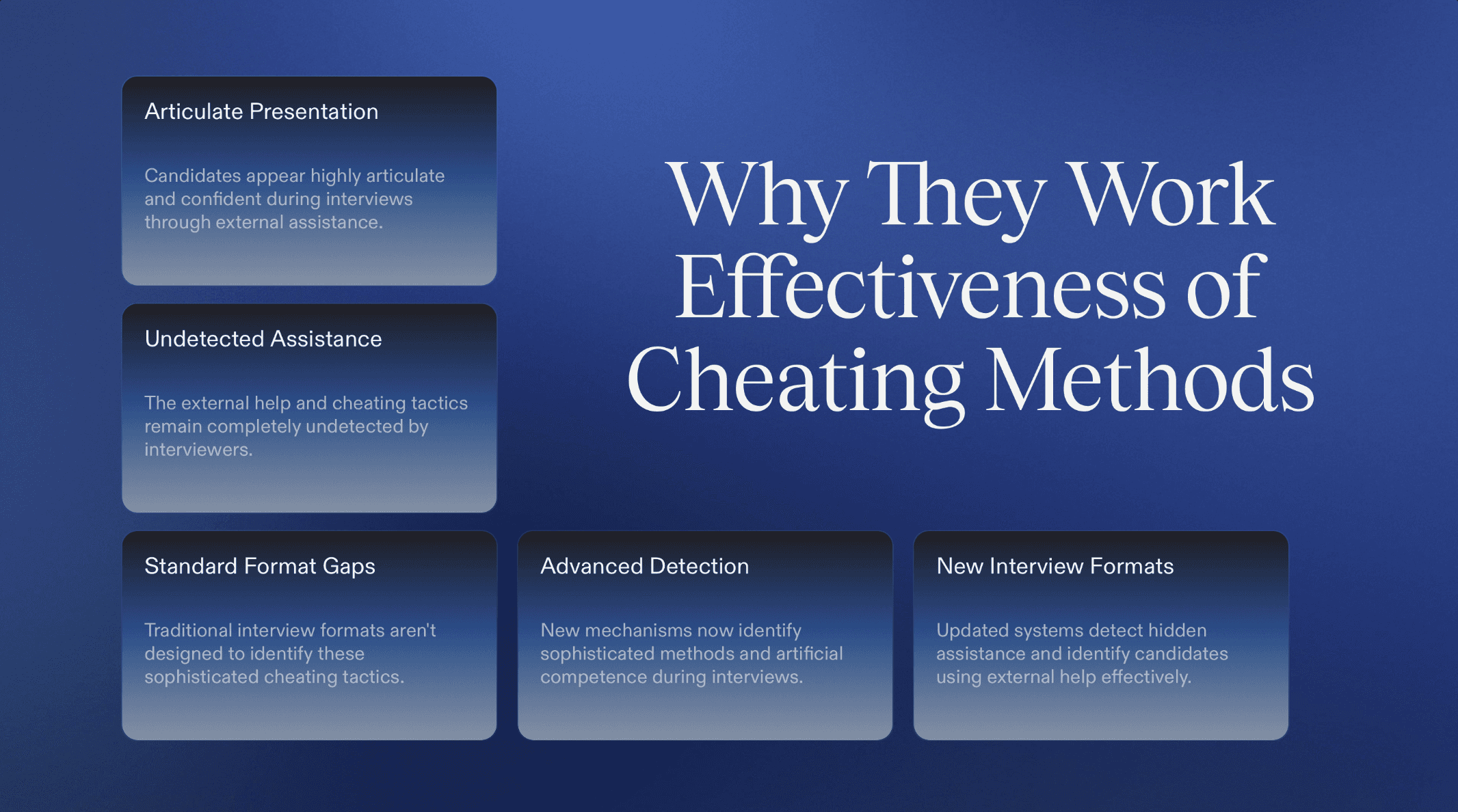
These methods allow candidates to appear confident, articulate, and technically strong while relying on external support. Traditional interview setups are not designed to catch this behavior.
The Rise of Copilots and Hidden Assistance
AI Copilots are tools designed to assist users in problem solving, coding, writing, and research. These tools are powerful and helpful in legitimate contexts. However, during interviews, some candidates may misuse AI Copilots that listen to questions and generate live suggested answers to gain an unfair advantage
Examples include:
Using Copilots to write responses to interview questions in real time
Pasting interview prompts into an AI tool for instant answers
Reading Copilot generated answers while on camera
Relying on Copilots instead of demonstrating personal knowledge
This misuse is a form of invisible cheating because it can look natural to a human observer. Recruiters may think the candidate is solving problems on their own when the responses are generated by an AI tool.
Sherlock AI identifies and stops Copilots usage that affects interview integrity. It does not block the use of Copilots generally outside of interviews. The focus is on detecting when Copilots are influencing interview responses.
Why Silent AI Copilots Change Everything
Remote interviews are changing in ways most hiring teams did not anticipate. AI copilots are no longer preparation tools used before interviews. They are now active participants during interviews, operating quietly in real time. Here is what hiring teams need to understand.
What Is Actually Happening in Interviews Today
Candidates are increasingly supported by silent AI copilots that listen, process questions, and generate responses during live interviews
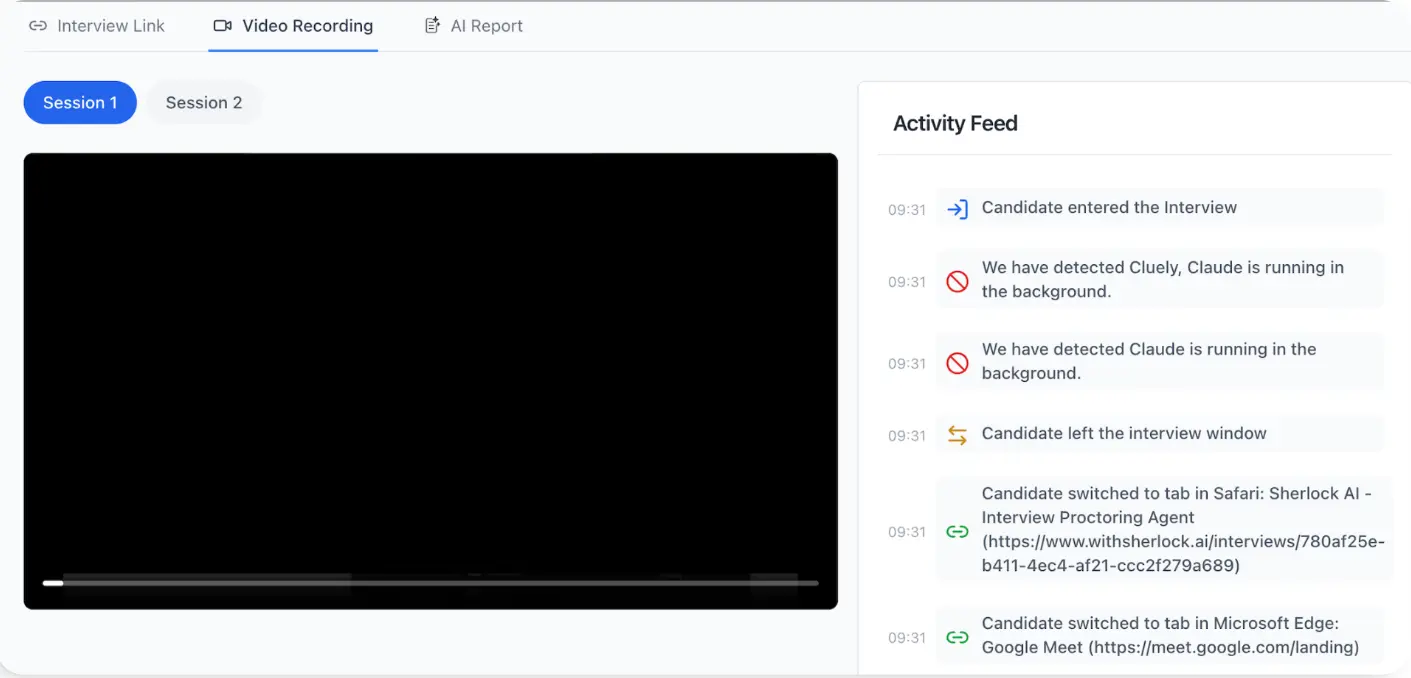
Tools like Cluely, Interview Coder, Parakeet AI, LockedIn AI, and similar assistants are designed to remain invisible while providing real time guidance
From an interviewer’s perspective, nothing appears unusual and the candidate looks confident, articulate, and well prepared
This does not only affect fairness in hiring but directly undermines trust in remote interviews
Traditional interview signals such as fast responses, structured answers, and polished explanations no longer reliably reflect genuine skill
Webcam monitoring and screen recording were built to catch visible cheating and cannot detect hidden cognitive assistance
These shifts mean that surface level monitoring is no longer enough. What matters now is how candidates think, respond, and interact under real interview conditions.
Read more: How to Detect & Prevent Final Round AI in Interviews
How Sherlock AI Stops Invisible Interview Cheating
Sherlock AI is built to protect the integrity of interviews by using advanced artificial intelligence and machine learning. The system analyzes multiple aspects of candidate behavior to detect signs of cheating that traditional monitoring tools miss.
1. Behavioral Analysis
Sherlock AI studies how a candidate interacts with the interview platform. It looks at eye movement, response time, facial expressions, and head motion. Over time, the AI learns to spot patterns that do not match the expected behavior of a genuine candidate.
For example, if a candidate’s eye focus shifts repeatedly off screen or responses arrive with unusually consistent timing, Sherlock AI flags these patterns for review.
2. Voice and Speech Verification
The platform analyzes voice patterns and speech consistency. When someone else is coaching or influencing responses, there are subtle changes in tone, pitch, pacing, and phrasing. Sherlock AI compares these signals across the interview to identify inconsistencies.
It also detects responses that appear overly structured or polished relative to the interview context, which may indicate external assistance.
3. Detection of Silent AI Copilots
Modern AI assistants such as Cluely, Interview Coder, Parakeet AI, LockedIn AI, and similar tools are designed to operate quietly during live interviews. From an interviewer’s perspective, nothing appears unusual. The candidate looks prepared, articulate, and confident.
Sherlock AI detects the behavioral and response patterns left behind by these tools. Instead of looking for the tools themselves, it analyzes how answers are formed, how quickly they appear, and how interaction flow changes when external cognitive assistance is present.
This allows Sherlock AI to identify AI assisted interviews even when the assistance remains invisible.
4. Real Time Monitoring
Sherlock AI performs real time analysis during the interview rather than relying only on post interview reviews. When unusual patterns emerge, recruiters receive timely insights that help them take informed action while maintaining a natural interview flow.
This real time approach preserves trust without disrupting candidates.
5. Environment Awareness
Sherlock AI monitors audio and visual context for unusual signals such as background voices, sudden sound changes, or unexpected movement. It also observes lighting and motion consistency to identify signs of hidden devices or additional participants.
These signals help validate whether the interview environment aligns with a genuine one person interaction.
Benefits for Recruiters
Sherlock AI provides value in many ways:
Accurate Assessment: Recruiters get reliable feedback on candidate authenticity.
Reduced Risk: The system lowers the risk of hiring a candidate who cheated.
Fairness in Hiring: All candidates are judged by the same standards.
Time Savings: Automated analysis saves hours of manual review.
Scalability: The system works for large hiring events as well as individual interviews.
Benefits for Candidates
Sherlock AI also helps honest candidates. By reducing cheating, more qualified candidates are recognized for their real abilities. Candidates who prepare and perform authentically will rise to the top.
Use Cases
Here are the key scenarios where organizations benefit the most:
High Volume Hiring: When many candidates are reviewed in a short period.
Technical Interviews: Where outside help can be disguised.
Executive and Leadership Roles: Where trust and skill matter most.
Global Remote Hiring: Where candidates join from different locations.
Signals Sherlock AI analyzes during interviews
Sherlock AI evaluates multiple signals in parallel to build a complete picture.
Behavioral signals include:
Eye movement and focus consistency
Response timing and pacing
Changes in delivery style
Audio signals include:
Secondary or overlapping voices
Whispered instructions
Delays caused by listening
Environmental signals include:
Off screen interaction patterns
Unusual hand or posture movement
Background activity during critical questions
No single signal triggers a flag. Risk is identified only when multiple indicators align.
Designed to Protect Candidates, Not Penalize Them
A common concern with interview monitoring tools is whether they create stress or unfairly penalize candidates. Sherlock AI is built with the opposite goal. It is designed to support fair hiring without disrupting the candidate experience.
Sherlock AI does not interrupt interviews, prompt candidates, or change how questions are asked. Candidates do not need to install extra software or change their behavior. Interviews run exactly as they normally would.
The system focuses on identifying clear patterns of external assistance, not natural nervousness, pauses, or thinking time. Honest candidates who answer in their own words are not affected.
This approach ensures that genuine talent is protected, not questioned.
How Sherlock AI Helps Interviewers Make Better Decisions
Interviewers already juggle many responsibilities during live interviews. They listen for technical accuracy, communication skills, problem solving ability, and cultural fit. At the same time, they are expected to detect cheating that is becoming increasingly subtle.
Sherlock AI removes this burden.
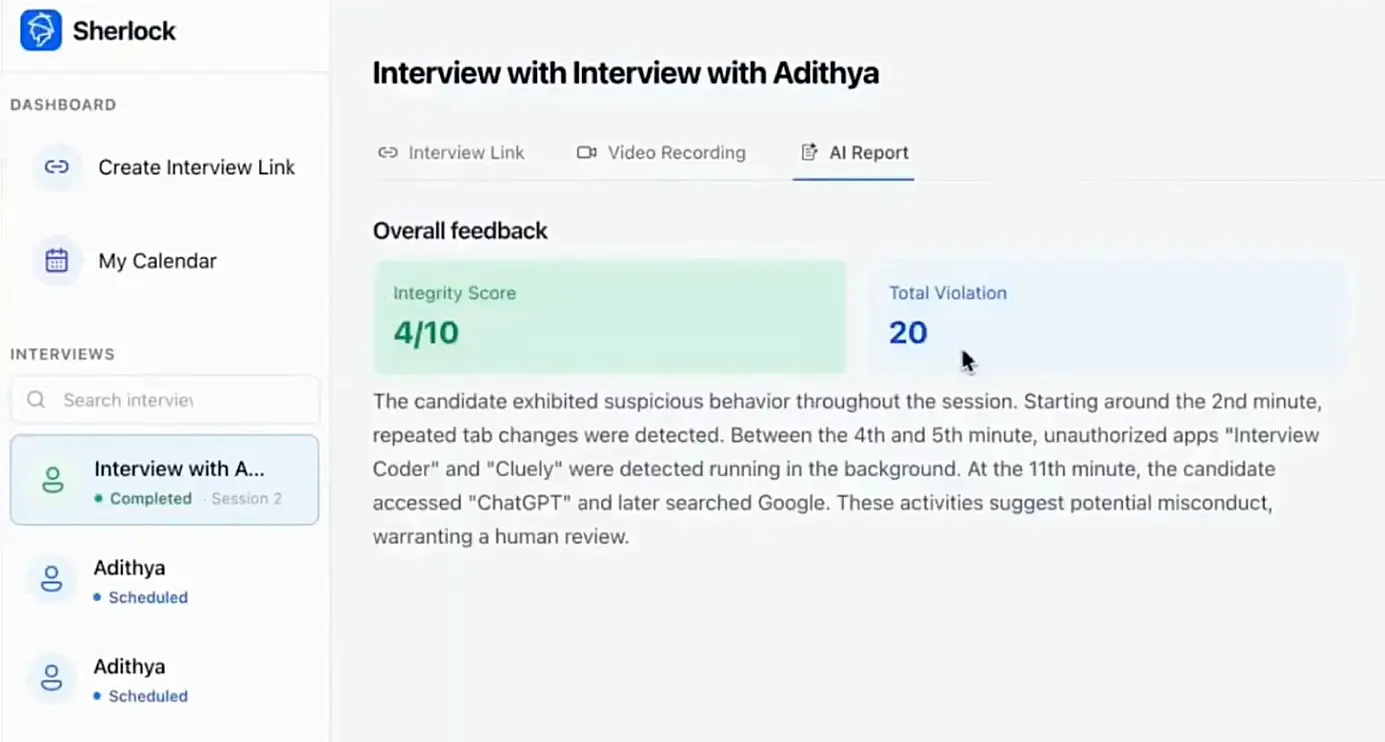
Instead of asking interviewers to act as investigators, Sherlock AI works quietly in the background and provides objective insights after the interview. Interviewers receive clear signals only when something truly unusual occurs.
This allows interviewers to:
Stay fully focused on the conversation
Ask deeper follow up questions
Evaluate candidates based on real skills
Avoid unconscious bias or guesswork
Make confident hiring decisions backed by data
Sherlock AI does not replace human judgment. It strengthens it.
Conclusion
Remote interviews are here to stay, but the way they are exploited is changing fast. Invisible interview cheating powered by silent AI copilots and hidden assistance has quietly eroded trust in traditional hiring signals. What once indicated skill and preparedness can now be the output of real time external help.
Sherlock AI addresses this new reality by shifting the focus from surface level monitoring to meaningful signal detection. By analyzing behavior, speech, timing, and environment together, Sherlock AI identifies patterns that reveal when assistance is influencing an interview, even when nothing looks unusual on screen.
This approach protects honest candidates, supports interviewers, and restores confidence in remote hiring decisions. Sherlock AI is not about surveillance or disruption. It is about clarity, fairness, and trust at scale.
For organizations that hire remotely, adapting to this shift is no longer optional. With Sherlock AI, teams can continue to hire globally while ensuring interviews reflect real ability and authentic performance.