Back to all blogs
Learn how to prevent AI cheating in remote interviews, detect AI-assisted answers, proxy interviews, and reduce hiring fraud.

Abhishek Kaushik
Jan 29, 2026
Remote interviews now account for a majority of early and mid-stage hiring across technology, finance, and global services. At the same time, the misuse of AI during interviews has increased sharply.
According to industry estimates, interview fraud and AI-assisted misrepresentation now affect more than one in four remote hiring processes, leading to costly mis-hires and post-hire performance failures. 72% of recruiters reported encountering fake resumes, portfolios, or credentials created with AI, and 15% have seen deepfake face or voice manipulation in video interviews, showing that fraud extends beyond simple answer generation.
According to research, 28% of candidates use AI to generate interview answers, highlighting the scale of AI-assisted responses in hiring processes.
To prevent AI cheating in remote interviews, organizations must move beyond surface-level controls and adopt intelligence that can evaluate authenticity, reasoning, and behavioral consistency. Sherlock AI addresses this challenge by focusing on how candidates think and interact rather than simply how they appear on camera.
What Is AI Cheating in Remote Interviews?
AI cheating occurs when candidates use artificial intelligence or external assistance to manipulate interview outcomes. This includes:
Using AI tools to generate answers in real time
Relying on pre-scripted or memorized AI-generated responses
Receiving external coaching during live interviews
Participating in proxy or impersonated interviews
Exploiting predictable interview formats
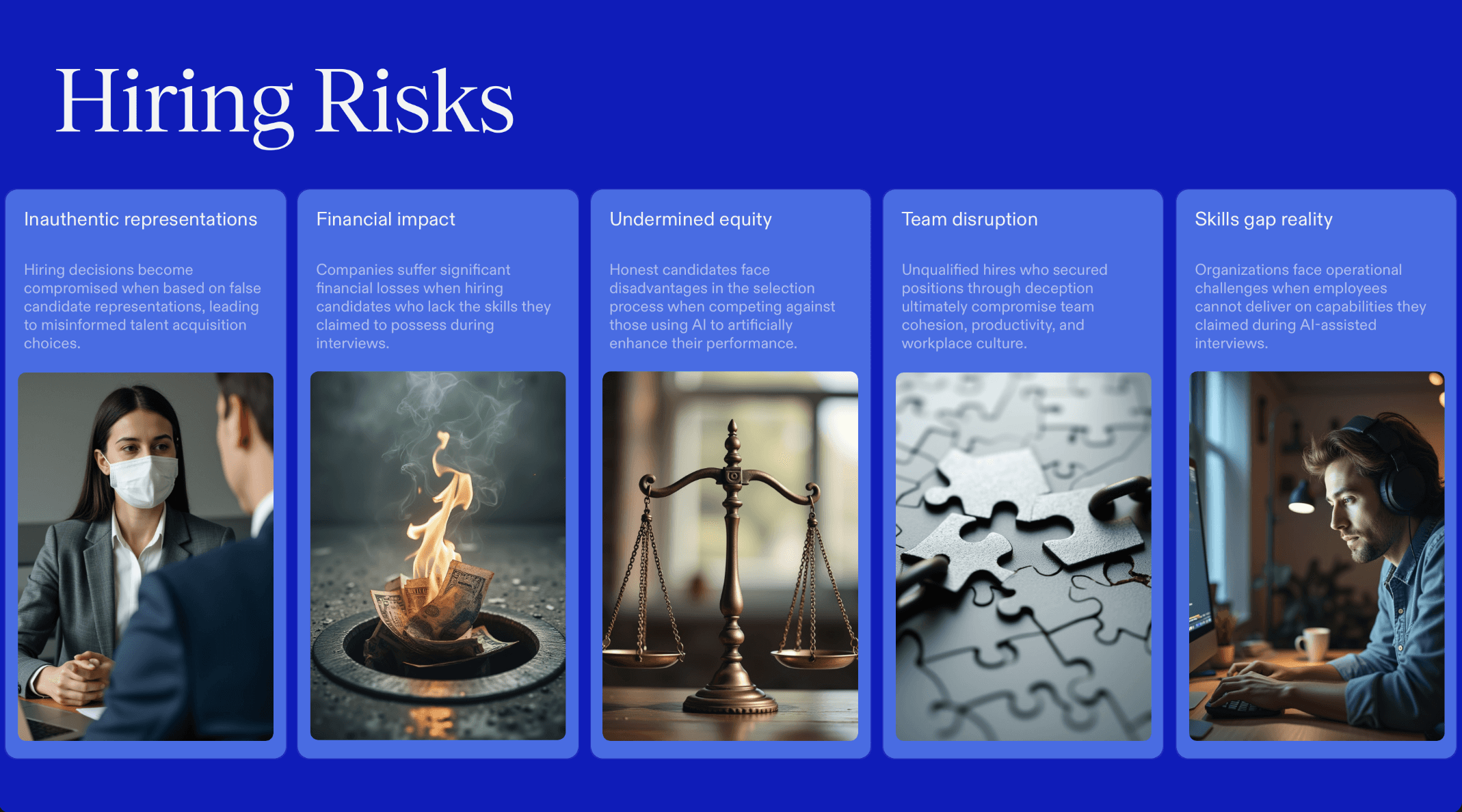
These practices undermine hiring fairness and lead to costly mis-hires.
How to Prevent AI Cheating in Remote Interviews
Preventing AI cheating requires a shift from monitoring surface behavior to evaluating authenticity over time. Effective prevention strategies focus on understanding how candidates think, reason, and behave across interview stages rather than relying on visual supervision or one-time checks. Sherlock AI supports this approach by continuously analyzing reasoning patterns, behavioral consistency, and interaction signals to help recruiters identify authenticity risks without compromising candidate experience.
1. Analyze Reasoning Instead of Final Answers
AI-generated responses often sound polished but lack genuine reasoning depth. Evaluating how candidates arrive at answers, respond to follow-up questions, and explain trade-offs reveals whether knowledge is authentic. Sherlock AI analyzes reasoning flow and response structure to identify patterns associated with AI-assisted or scripted answers.
2. Track Behavioral Consistency Across Interview Stages
Candidates relying on external help often show inconsistencies in communication style, confidence, or expertise across rounds. Sherlock AI compares interaction patterns across multiple interview stages to detect sudden behavioral shifts that may indicate proxy participation or impersonation.
3. Detect Scripted and AI-Assisted Responses
AI-generated answers frequently follow predictable linguistic and structural patterns that differ from spontaneous human reasoning. Sherlock AI detects AI-assisted responses by examining pacing, logical continuity, and contextual alignment rather than relying on keyword matching.
4. Identify Proxy Interviews and Identity Risks
Proxy interviews remain one of the most damaging forms of hiring fraud. Even small variations in response behavior, technical depth, or interaction style can indicate that a different individual is participating. Sherlock AI flags proxy interview risks by correlating identity and interaction markers across sessions.
5. Use Explainable Risk Insights Instead of Binary Decisions
Effective prevention does not rely on pass or fail judgments. Recruiters need context to make defensible decisions. Sherlock AI provides explainable risk insights that clarify why a response or interaction was flagged, helping teams act with confidence while protecting genuine candidates.
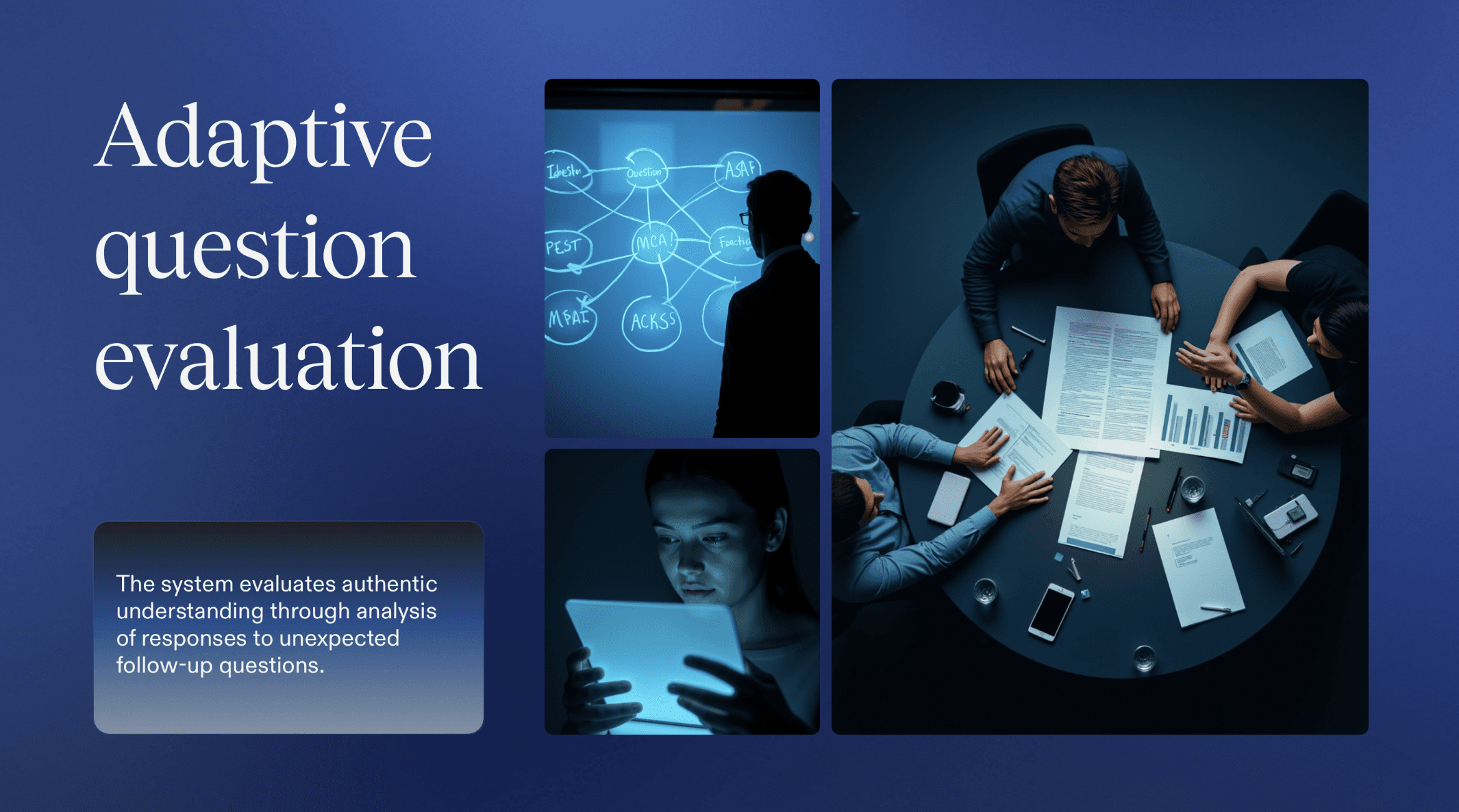
6. Use Adaptive Follow-Up Questioning
Static questions are easier for AI tools to anticipate. Adaptive follow-up questions that build on earlier responses require genuine understanding and reduce the effectiveness of real-time AI assistance. Sherlock AI evaluates how candidates handle unexpected changes in questioning.
7. Introduce Multi-Stage Interviews with Shorter Sessions
Splitting interviews into multiple sessions increases friction for AI-assisted cheating and proxy participation. Maintaining consistent performance across stages requires real expertise. Sherlock AI tracks behavioral and reasoning consistency across sessions.
8. Evaluate Decision-Making and Trade-Off Thinking
AI-generated responses often struggle to explain why one approach was chosen over another. Asking candidates to justify decisions or discuss alternatives reveals depth of understanding. Sherlock AI analyzes decision logic and explanation quality to detect superficial reasoning.
9. Monitor Response Timing and Cognitive Flow
AI-assisted responses may introduce unnatural pauses or overly uniform timing. These patterns can indicate external input rather than spontaneous reasoning. Sherlock AI examines response pacing and cognitive flow to surface potential risks.
10. Reduce Predictability in Interview Formats
Highly predictable interview structures make it easier to prepare AI-assisted scripts. Varying question styles and sequencing reduces reliance on memorized or generated answers. Sherlock AI adapts its analysis across different interview formats.
How Sherlock AI Prevents AI Cheating in Remote Interviews
Sherlock AI prevents AI cheating in remote interviews by shifting the focus from surface-level monitoring to deep authenticity evaluation. Instead of watching what candidates do on screen, it analyzes how they think, reason, and behave across interview stages.
Key Features of Sherlock AI for Preventing AI Cheating
Reasoning Flow Analysis
Evaluates how candidates structure answers, explain logic, and respond to follow-ups to detect AI-generated or scripted responses.Behavioral Consistency Tracking
Compares communication style, confidence, and interaction patterns across interview rounds to identify inconsistencies linked to external assistance or proxies.AI-Assisted Response Detection
Identifies linguistic, pacing, and structural patterns commonly associated with real-time AI usage without relying on keyword matching.Proxy Interview and Identity Risk Detection
Correlates identity and interaction signals across sessions to flag impersonation and proxy participation risks.Explainable Risk Insights
Provides recruiters with clear context on why a response or behavior was flagged instead of issuing black-box pass or fail decisions.Adaptive Question Response Evaluation
Measures how candidates handle unexpected follow-up questions that require genuine understanding rather than memorized answers.Cross-Session Correlation
Connects insights across roles, interviews, and stages to surface long-term authenticity patterns.Non-Invasive Candidate Experience
Prevents AI cheating without intrusive surveillance, preserving fairness, transparency, and candidate trust.Scalable for High-Volume Hiring
Designed to support remote hiring at scale where manual review and traditional proctoring are impractical.
Read more: How to Prevent Cheating With AI During The Hiring Process
Final Thoughts
Preventing AI cheating in remote interviews is no longer about catching isolated signals or enforcing rigid controls. As AI tools become more accessible and sophisticated, hiring integrity depends on authenticity intelligence rather than surveillance.
Organizations that rely solely on static questions, one-time interviews, or visual monitoring will continue to face mis-hires and post-hire performance failures. The most effective prevention strategies evaluate candidates over time and focus on reasoning depth, behavioral consistency, and decision-making quality.
Sherlock AI enables this shift by giving recruiters explainable, longitudinal insights into interview authenticity. This helps teams make confident hiring decisions while maintaining fairness and trust. As remote hiring becomes the default, platforms like Sherlock AI will play a critical role in ensuring that talent selection remains accurate, ethical, and resilient against AI-driven fraud.