Back to all blogs
Webcam only interviews are no longer enough. Learn how Sherlock AI ensures authenticity, detects AI cheating, and evaluates skills and cultural fit.
Abhishek Kaushik
Feb 10, 2026
In the evolving world of recruitment, relying solely on webcam interviews is becoming increasingly insufficient. While video interviews offer convenience and quick access to talent across the globe, they often fail to capture a candidate’s full range of skills, authenticity, and cultural fit. Subtle non-verbal cues, stress responses, and engagement levels can be easily missed on a small screen, and technical issues such as poor internet or low-quality cameras can unfairly impact candidate performance.
The rise of AI-powered cheating and impersonation has further exposed the risks of relying exclusively on webcam interviews. According to a 2025 survey, 59% of hiring managers suspected candidates of using AI tools to misrepresent themselves, and 31% reported incidents where someone other than the applicant participated in the interview. These numbers highlight how traditional video interviews are vulnerable to manipulation and may provide an incomplete picture of a candidate’s true capabilities.
Modern recruitment challenges demand smarter, more comprehensive solutions. Platforms like Sherlock AI are transforming the hiring process by combining real-time candidate verification, behavioral analysis, and cultural fit evaluation. These tools ensure interview integrity, help recruiters make informed decisions, and create a fair, engaging experience for candidates, going far beyond the capabilities of a simple webcam setup.
What Are Webcam Only Interviews?
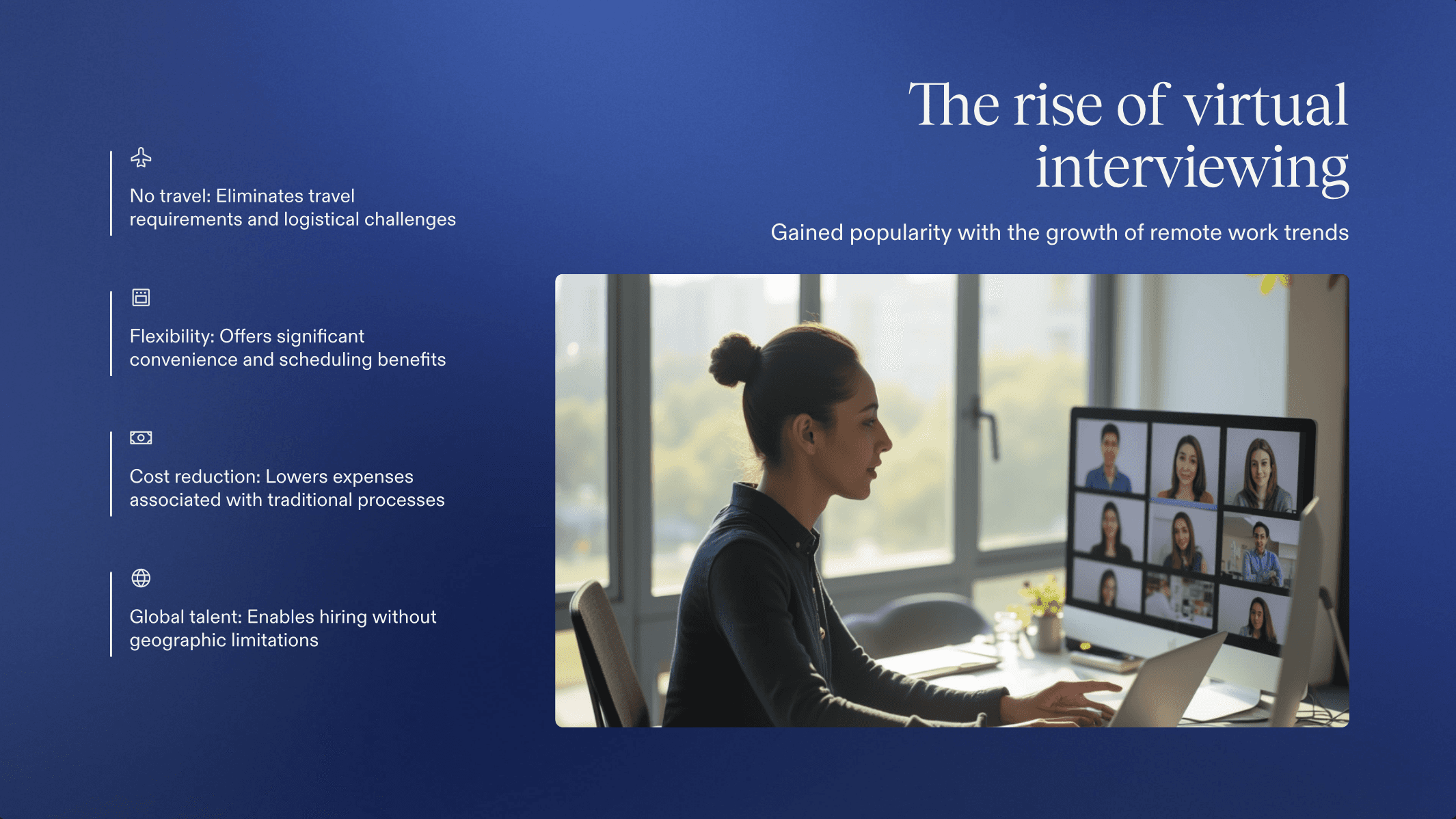
Webcam only interviews are remote interviews conducted entirely over video conferencing platforms such as Zoom, Microsoft Teams, or Google Meet. In this format, both the interviewer and the candidate interact through a camera and microphone, without any in-person presence.
These interviews became popular due to the rise of remote work and global hiring, offering convenience, flexibility, and cost savings. Recruiters can connect with candidates anywhere in the world, schedule interviews quickly, and reduce travel or logistical challenges.
While webcam only interviews are convenient, they often fail to provide a complete picture of a candidate’s authenticity, skills, and suitability.
The Growing Limitations of Webcam Only Interviews
Below are some of the key limitations of webcam only interviews
1. Rising Threat of AI-Powered Cheating
Cheating in interviews today looks very different from the past. Candidates no longer need notes taped to a wall. Instead, they may rely on:
Real-time AI tools generating answers during the interview
Hidden earpieces with external coaching
Second devices or browsers running in parallel
Someone else taking the interview on their behalf
Because these behaviors are subtle, human interviewers often miss them, especially when conducting many interviews at scale. This is where AI becomes essential: not as an enforcer, but as an early-warning system to flag potential anomalies and ensure interview integrity.
2. Incomplete Assessment of Non-Verbal Communication
Understanding a candidate’s true capabilities requires observing more than words. Non-verbal cues can be critical indicators of engagement, confidence, and problem-solving ability.
Micro-expressions that reveal stress or uncertainty
Gestures and posture that indicate confidence and clarity
Eye contact and facial reactions that reflect active listening
Webcam only formats provide only a limited view of these behaviors, making it difficult to fully assess a candidate’s interpersonal skills or authenticity. AI-powered analysis can help by detecting subtle behavioral patterns that might go unnoticed.
3. Limited Evaluation of Cultural Fit
Hiring decisions today go beyond skills and experience. Cultural alignment, adaptability, and soft skills are just as important.
Webcam interviews do not allow candidates to experience the team or workplace culture firsthand
Interaction with colleagues is limited, making it harder to gauge teamwork and collaboration potential
Subtle behavioral cues that indicate values alignment are often missed
Intelligent interview platforms can simulate scenarios or evaluate behavior in ways that reflect cultural fit more accurately than a simple video call.
4. Inequities Caused by Technology
Not all candidates have access to the same resources for video interviews, which can introduce unintentional bias.
Poor internet connections or low-quality cameras can disrupt the interview
Technical issues may unfairly affect candidate performance
Accessibility challenges can disadvantage otherwise qualified candidates
AI can help standardize evaluations by factoring in technical limitations and focusing on genuine candidate behavior rather than equipment quality.
5. Candidate Experience Challenges
Webcam-only interviews can feel impersonal, increasing stress and reducing engagement.
Candidates may struggle to make a strong, genuine impression
Limited interaction reduces the ability to showcase personality and soft skills
A poor experience can lead top talent to prefer other organizations with more immersive hiring processes
Advanced platforms enhance candidate experience by providing structured and interactive methods, creating a positive impression while still maintaining integrity.
Why Organizations Need Advanced Interview Solutions
To address the challenges of webcam-only interviews, organizations are turning to intelligent hiring platforms. These solutions not only ensure the authenticity of candidates but also provide actionable insights into skills, behavior, and cultural alignment.

1. Real-Time Candidate Verification
Platforms like Sherlock AI verify a candidate’s identity during the interview. By detecting impersonation, AI-assisted responses, and other anomalies, these tools prevent fraudulent hiring practices and safeguard organizational trust.
2. Comprehensive Behavioral Analysis
Advanced AI tools analyze both verbal and non-verbal behavior. Recruiters gain a clear picture of communication skills, problem-solving abilities, confidence, and stress levels. This multidimensional evaluation helps make hiring decisions that are fair, accurate, and predictive of success.
3. Deeper Cultural Fit Evaluation
Sherlock AI enables scenario behavioral analysis that reflect how candidates might operate within the company environment. Organizations can identify candidates who align with company values and team dynamics, reducing turnover and enhancing long-term performance.
4. Enhanced Security and Fairness
By automating candidate verification and behavior analysis, intelligent platforms reduce biases caused by technical issues or human judgment. This creates a more equitable and reliable hiring process for every candidate.
How Sherlock AI Transforms the Interview Process
While webcam only interviews provide convenience, they fall short in ensuring authenticity, fairness, and comprehensive candidate evaluation. Sherlock AI bridges this gap by offering advanced solutions that go far beyond traditional video interviews.
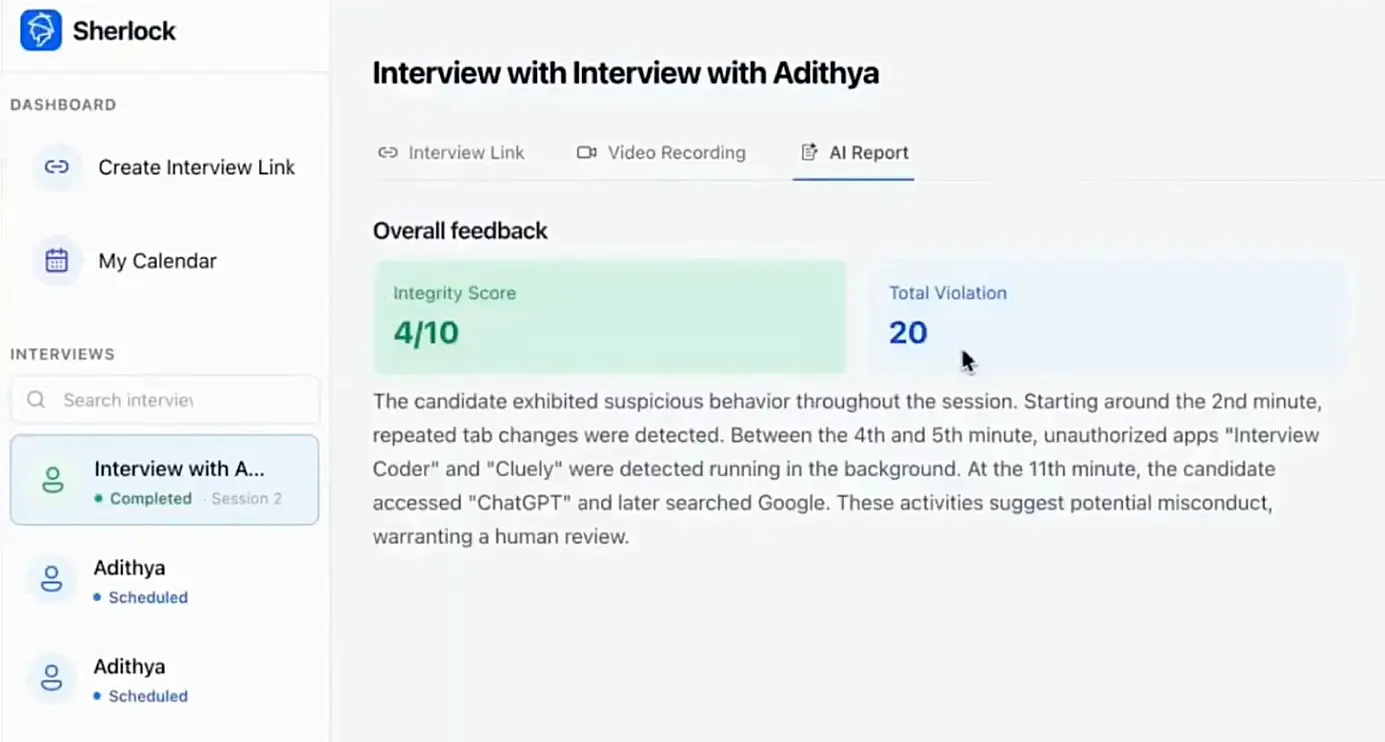
With Sherlock AI, organizations can:
Verify Candidate Identity in Real Time: Detect impersonation, AI-assisted responses, and other anomalies during the interview.
Analyze Behavior Intelligently: Assess verbal and non-verbal cues such as micro-expressions, gestures, and engagement levels for a deeper understanding of candidate capabilities.
Evaluate Cultural Fit: Use scenario-based assessments and behavioral insights to determine how well candidates align with company values and team dynamics.
Ensure Fair and Reliable Hiring: Minimize bias caused by technical issues or subjective evaluations, creating a consistent and equitable process for every candidate.
By integrating Sherlock AI, companies can enhance interview integrity, make more informed hiring decisions, and provide a professional and engaging experience for candidates.
Conclusion
Webcam only interviews are no longer sufficient for modern recruitment. They often fail to detect AI-assisted cheating, capture subtle behavioral cues, or assess cultural fit, which can lead to incomplete or inaccurate hiring decisions.
Platforms like Sherlock AI provide a smarter approach, offering real-time candidate verification, behavioral insights, and cultural fit evaluation. By integrating Sherlock AI into the hiring process, organizations can ensure interview integrity, make more informed decisions, and deliver a fair and engaging experience for candidates.