Back to all blogs
Upgrade your hiring process with the top TestDome proctoring alternatives in 2026. Discover features, AI fraud detection, and workflow-friendly tools that ensure authentic candidate evaluations.

Abhishek Kaushik
Feb 19, 2026

Remote assessments used to be simple. A webcam, a screen recording, maybe a browser restriction, and teams felt confident they could trust the result. In recent high‑stakes recruitment exams, authorities discovered candidates using high‑tech loopholes to enable remote solvers, triggering investigations and cancellations of test sessions.
Today candidates can access real-time assistance from generative AI, hidden collaborators, remote desktops, or even professional proxy test takers. Traditional controls often detect rule breaking but struggle to confirm who is actually solving the problem. Recruiters are now asking a deeper question: is this person genuinely demonstrating their own ability?
Platforms built for earlier hiring models, including TestDome, were not designed for the speed and sophistication of AI-enabled deception. As a result, organizations are actively searching for modern solutions that focus on behavioral authenticity, authorship validation, and live risk visibility.
Top 10 TestDome Proctoring Alternatives in 2026
In this guide, we review the strongest TestDome proctoring alternatives in 2026 and explain how they differ in approach, depth of detection, and suitability for remote hiring.
1. Sherlock AI
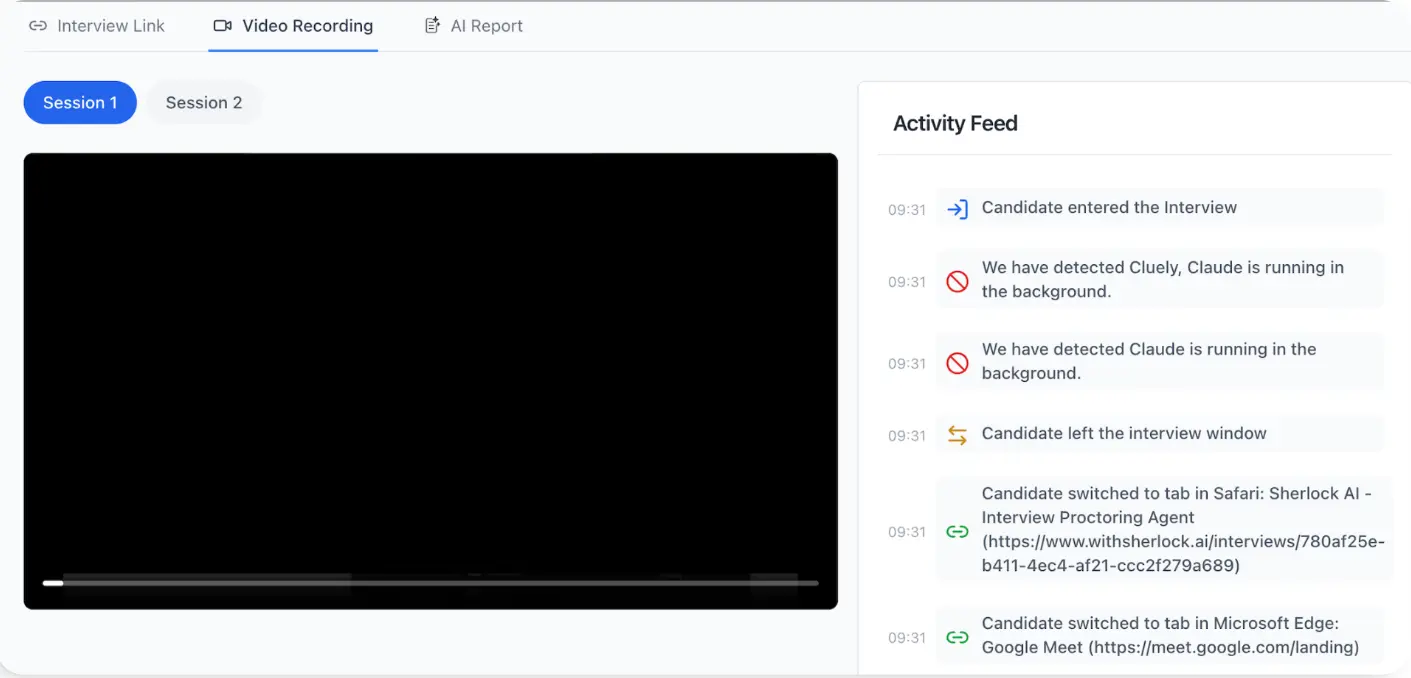
Sherlock AI is an advanced interview integrity platform built for modern remote hiring. Instead of relying on restrictive controls or heavy manual supervision, the system interprets behavioral and technical signals to understand whether the person in the interview is truly the one performing the work.

By combining video, voice, system telemetry, and interaction data, Sherlock evaluates authenticity at a session level. The goal is not to punish minor movements or nervous habits but to surface coordinated patterns that reveal outside assistance, impersonation, or automation.
Where legacy proctoring looks for violations, Sherlock focuses on proof of authorship.
Key Features
Instant AI assistance detection: Recognizes linguistic structures, pacing irregularities, and answer formations that commonly appear when external tools generate or shape responses.
Identity continuity checks: Tracks facial presence, vocal traits, and participant persistence from start to finish to prevent substitute test takers.
Synthetic media defense: Spots abnormalities linked to manipulated video streams, overlays, or replay attacks.
Cross-session behavioral modeling: Builds a view of how a candidate reasons, pauses, reacts, and progresses through problems across the interview timeline.
Non-intrusive system visibility: Highlights suspicious environment signals such as virtualization or hidden utilities while allowing candidates to work naturally.
Acoustic environment awareness: Listens for cueing, secondary speakers, or unnatural background intervention.
Technical authorship mapping: Matches verbal explanations with actual execution behavior in coding or problem-solving tasks.
Interviewer guidance in the moment: Provides dynamic risk indicators that help interviewers decide when to ask deeper follow-up questions.
Structured integrity summaries: Produces clear documentation and severity insights to support consistent hiring decisions.
Optional AI collaboration measurement: For companies that allow AI, evaluates how effectively and transparently candidates use those tools.
Recruiter-controlled outcomes: The platform recommends, humans decide. Every signal remains advisory.
Candidate-respectful methodology: Prioritizes intelligence derived from patterns rather than aggressive surveillance tactics.
Security and governance readiness: Includes permission controls, activity traceability, and configurable retention frameworks.
Workflow compatibility: Connects with interview scheduling and ATS environments so teams can activate protection without changing their process.
Best For
Distributed engineering and knowledge-worker interviews
Rapid scaling where manual monitoring is not practical
Evaluations where originality and live reasoning matter most
Companies moving beyond browser restrictions toward authenticity validation
Sherlock AI helps hiring teams transition from rule enforcement to evidence-based trust. By interpreting behavior instead of single events, organizations gain a clearer understanding of who is genuinely qualified while still delivering a comfortable and fair candidate experience.
Read More: Sherlock AI (Anti-Interview-Fraud) Security Overview
2. TestGorilla
TestGorilla helps recruiters streamline early-stage screening through standardized pre-hire assessments. The platform is designed for quick deployment and minimal training, making it popular among teams handling high applicant volumes. Its strength lies in breadth of testing rather than deep interview intelligence. Many organizations use it to compare candidates objectively before moving to live rounds.
Key Features
Large assessment catalog: Includes a wide variety of tests for technical ability, cognitive skills, languages, and workplace behaviors.
Automated candidate ranking: Builds instant score-based comparisons to accelerate shortlisting.
Integrity protections: Uses webcam snapshots, randomized questions, and plagiarism detection.
Flexible test builder: Lets hiring teams create customized combinations or insert their own questions.
ATS integrations: Simplifies workflows from invitations to result reviews.
3. HackerRank
HackerRank is a widely adopted solution for evaluating programming skills through structured challenges and live technical interviews. It is trusted by many technology organizations to measure coding ability in environments that resemble real work. The platform is particularly strong for standardized developer benchmarking across large talent pipelines.
Key Features
Extensive language support: Enables assessments across numerous programming languages and frameworks.
Real-world coding environments: Gives candidates practical problems instead of theoretical quizzes.
Similarity and plagiarism detection: Flags potentially copied submissions using pattern comparison.
Live interview tools: Includes collaborative coding, debugging, and whiteboard functionality.
Performance analytics: Provides detailed reports that help teams compare strengths and gaps.
4. Mercer | Mettl
Mercer | Mettl is an enterprise-focused assessment provider supporting both hiring and certification use cases. It is frequently selected for large-scale or high-stakes testing where standardization and compliance are critical. The platform combines psychometrics, technical evaluations, and remote proctoring capabilities for global programs.
Key Features
AI and live proctoring options: Offers automated monitoring along with human invigilation when required.
Candidate authentication: Uses identity verification steps to confirm participant legitimacy.
Wide assessment portfolio: Covers aptitude, behavioral traits, domain knowledge, and technical skills.
High-volume readiness: Built to support large concurrent testing populations.
Governance and audit support: Provides structured controls useful for regulated environments.
5. iMocha
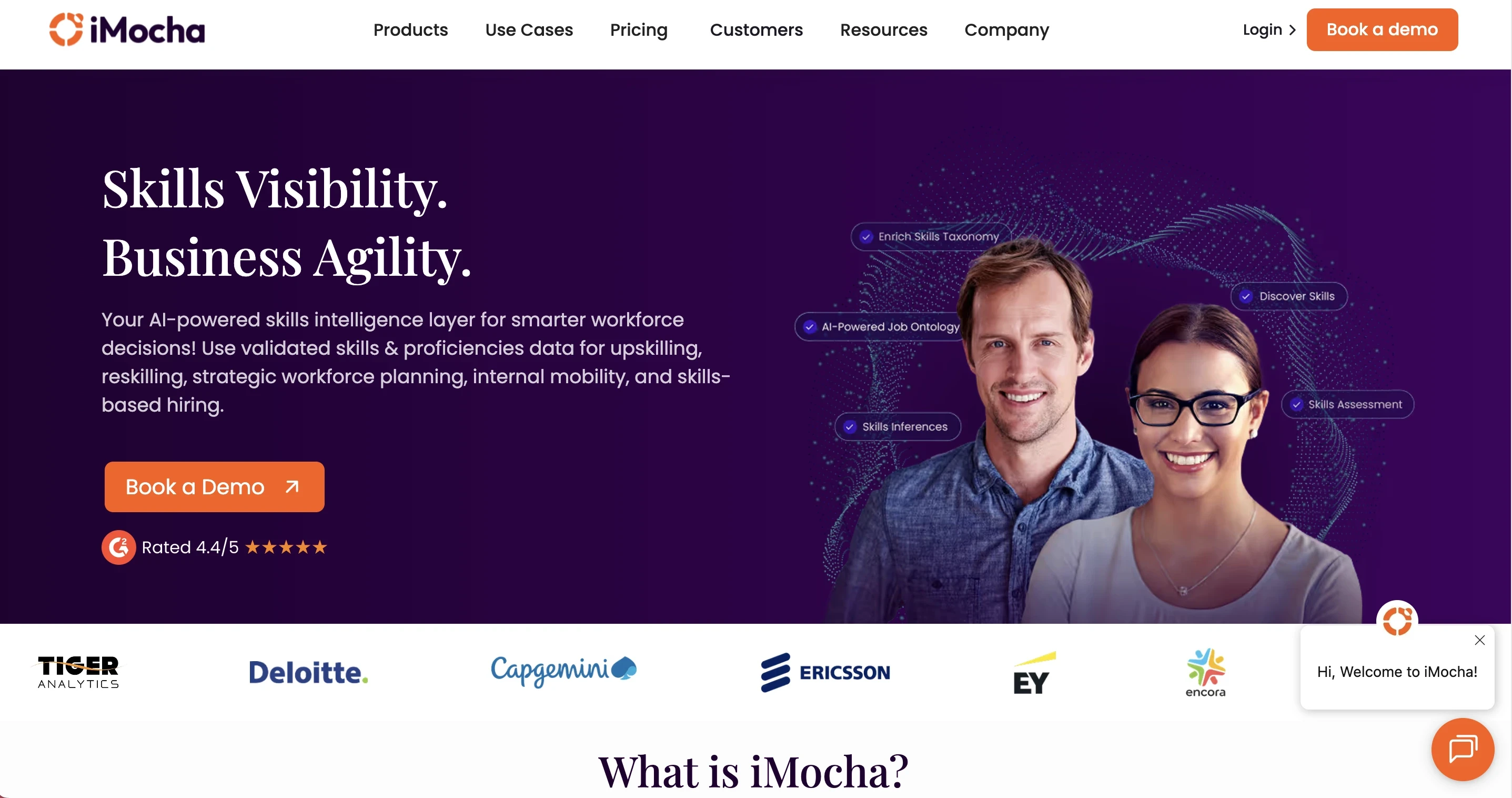
iMocha delivers skill validation across a broad spectrum of technical and functional roles. Enterprises often use it to benchmark talent, certify capabilities, and support internal mobility in addition to hiring. Its taxonomy-driven structure makes it attractive for organizations that want alignment between recruiting and workforce planning.
Key Features
Comprehensive skills library: Covers thousands of competencies across IT, digital, and business domains.
AI-enabled proctoring: Applies automated monitoring, anomaly detection, and browser supervision.
Benchmark mapping: Compares candidate performance against industry or role standards.
Assessment customization: Allows employers to adapt tests to match internal frameworks.
Workforce analytics: Offers dashboards that reveal strengths, gaps, and readiness levels.
6. Codility
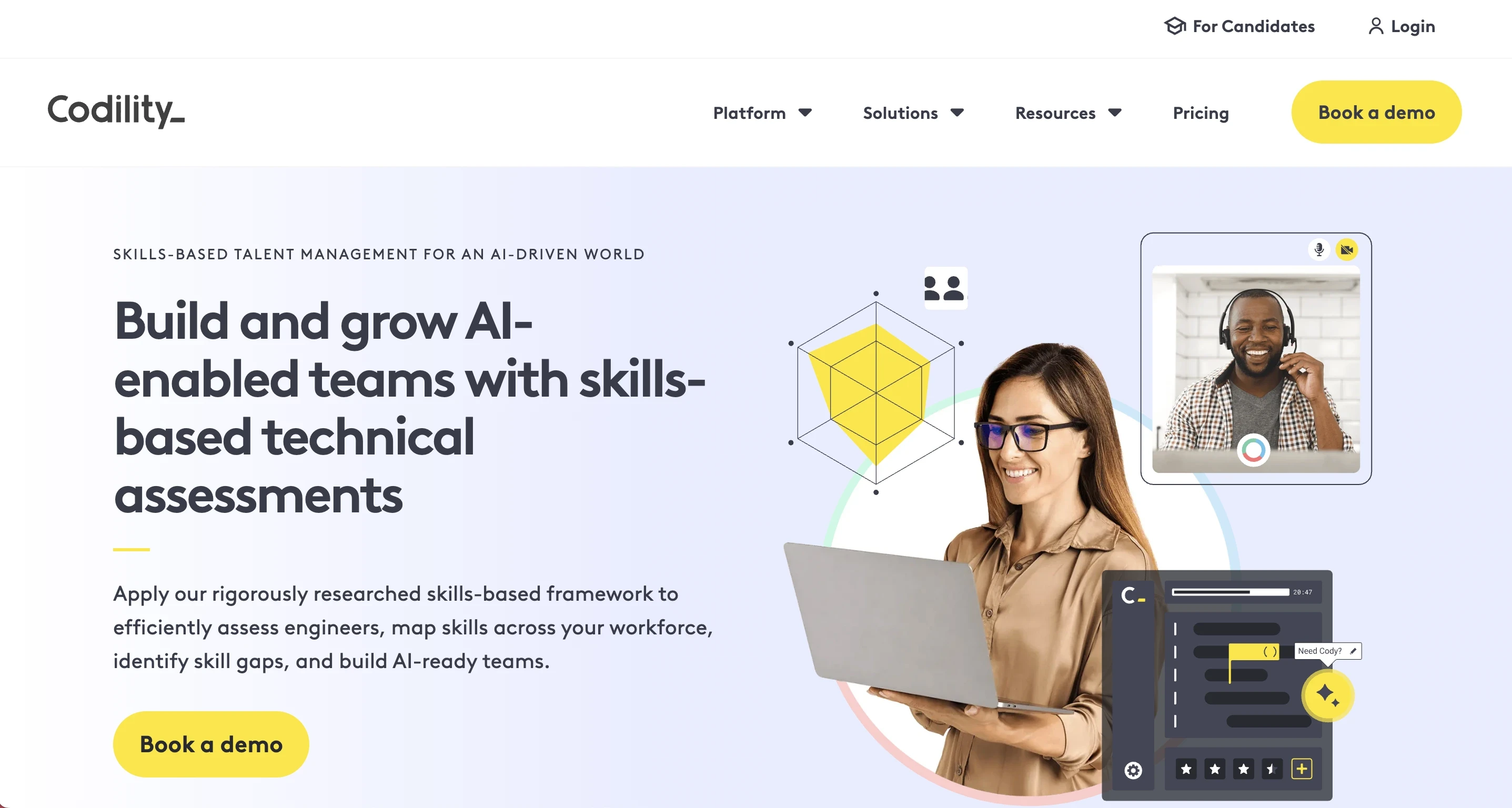
Codility is designed to help organizations evaluate engineers through practical coding tasks and structured interview workflows. It is widely used for algorithmic assessments and role-relevant challenges before or during live interviews. Companies often rely on it to standardize technical evaluation across distributed teams.
Key Features
Job-relevant programming challenges: Focuses on exercises that mirror real engineering responsibilities.
Automated evaluation engine: Scores submissions for correctness, performance, and quality.
Integrity monitoring: Uses similarity analysis and activity tracking to reduce misconduct.
Structured interview framework: Provides repeatable formats that improve fairness and calibration.
Pipeline insights: Helps teams understand conversion rates and benchmark results.
7. Vervoe
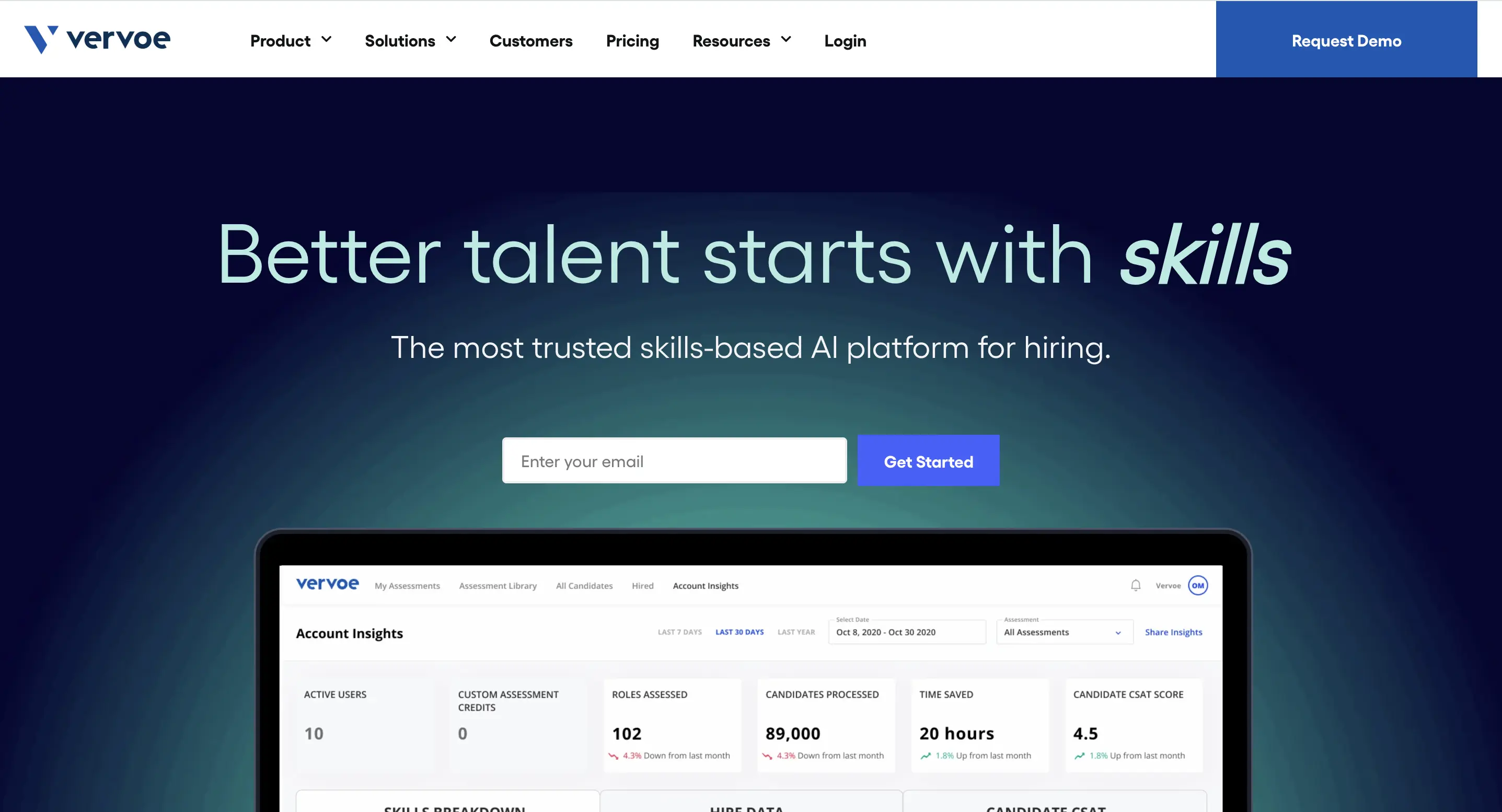
Vervoe focuses on measuring how candidates perform in tasks that resemble real work situations. Instead of relying heavily on resumes, recruiters evaluate practical output and decision making. The platform uses automated grading to help teams manage large volumes efficiently while keeping assessments job relevant.
Key Features
Role-based simulations: Presents candidates with activities aligned to day-to-day responsibilities.
AI scoring assistance: Grades responses automatically using predefined success criteria.
Skill prioritization: Allows employers to weight critical competencies more heavily.
Instant candidate ranking: Highlights top performers as soon as assessments finish.
Recruitment stack integrations: Connects with ATS systems to maintain workflow continuity.
8. Xobin
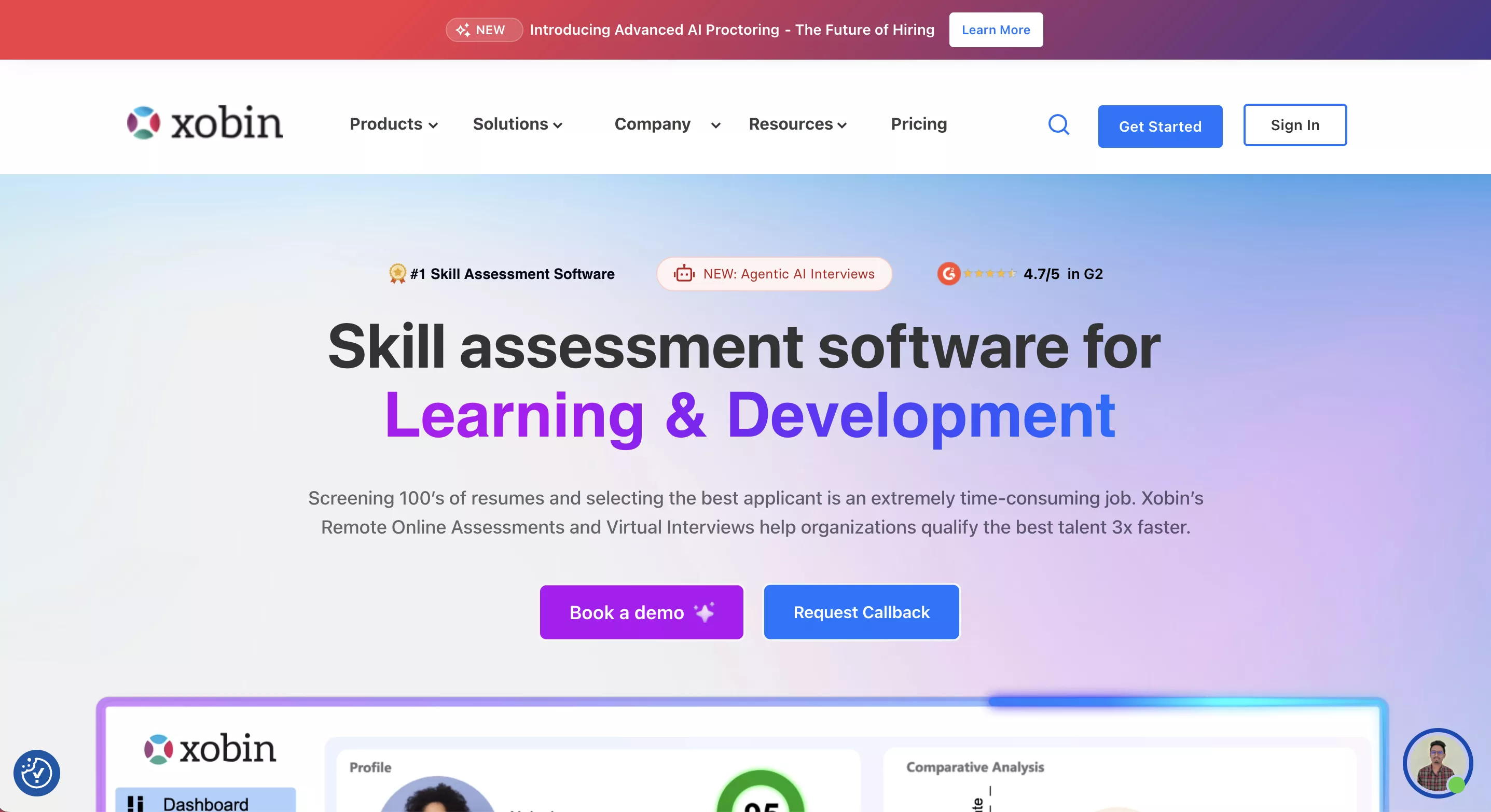
Xobin provides a broad hiring toolkit that combines technical tests, aptitude measurement, and video-based evaluations. It is often selected by organizations that want multiple assessment types within a single subscription. The platform balances affordability with functional coverage for growing teams.
Key Features
Extensive question bank: Supports technical, cognitive, and behavioral evaluations.
Remote proctoring tools: Applies webcam monitoring, browser supervision, and activity signals.
Automated shortlisting: Ranks applicants based on performance thresholds.
Video interviewing capability: Lets recruiters merge testing with asynchronous responses.
ATS integrations: Helps synchronize data across recruiting workflows.
9. Coderbyte
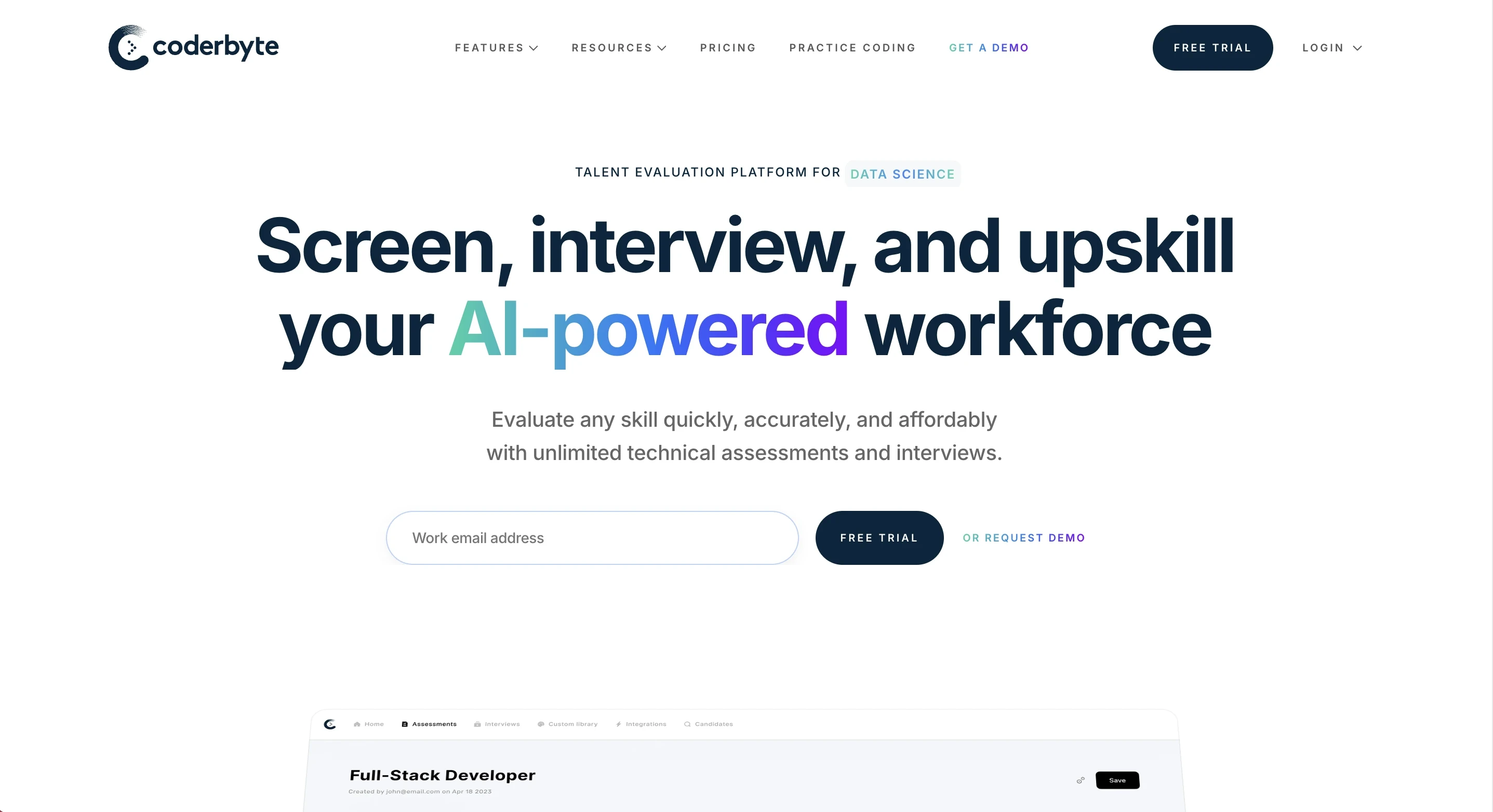
Coderbyte is popular with startups and scaling teams that want fast, flexible coding evaluations. It offers prebuilt challenges along with the ability to tailor assessments to internal standards. The platform is typically used to screen engineering applicants before deeper interviews.
Key Features
Ready-made coding challenges: Provides exercises for common developer roles and seniority levels.
Custom question creation: Enables companies to design proprietary or role-specific problems.
Plagiarism detection: Flags duplicate or highly similar submissions.
Structured interview kits: Supports consistent evaluation during technical conversations.
Integration support: Connects with recruiting systems for smoother coordination.
10. HireVue
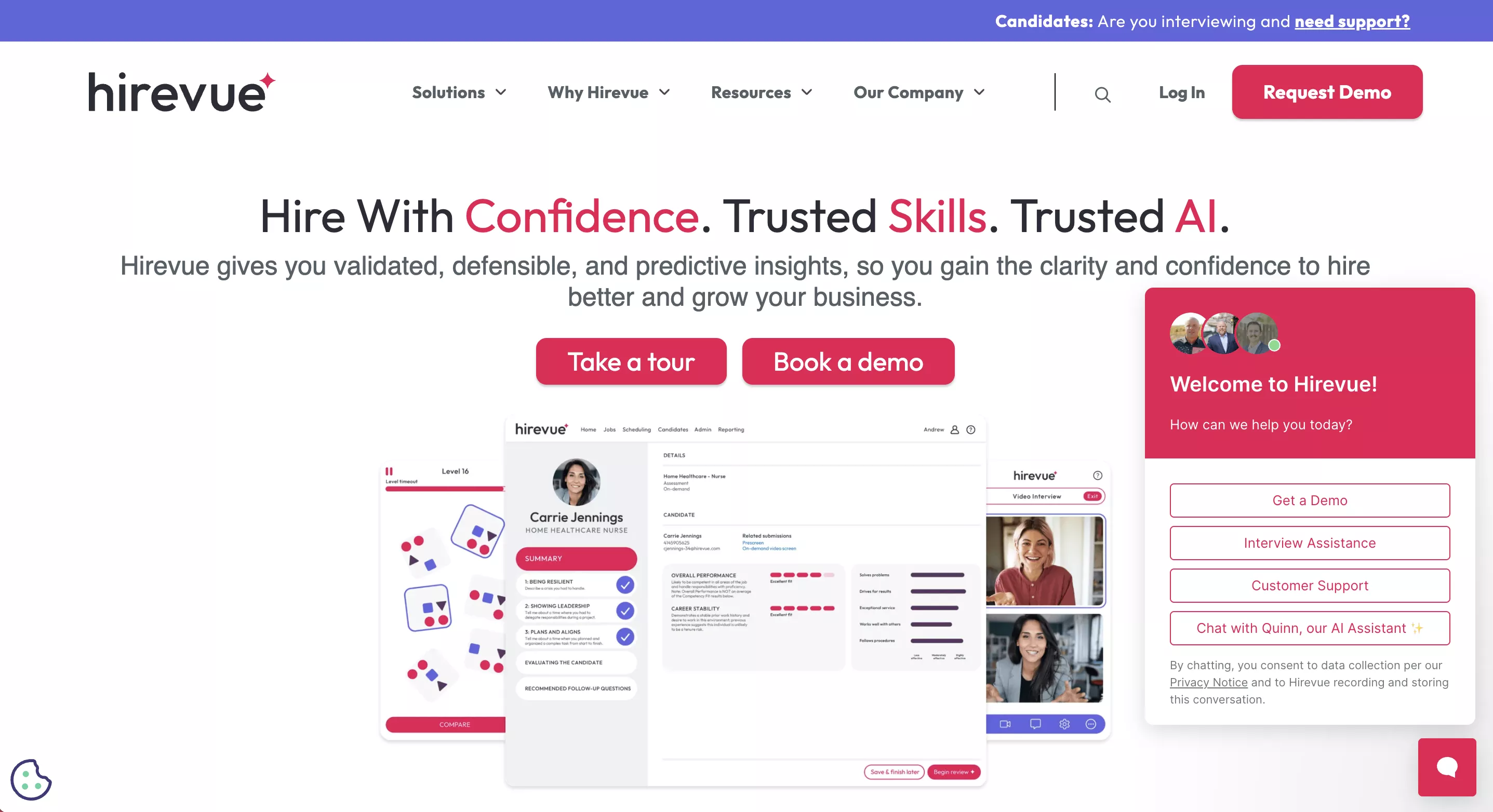
HireVue is a leading solution for digital interviews and structured candidate evaluations. Enterprises often rely on it to manage large volumes of applicants while maintaining consistency in scoring. It combines on-demand video with AI-driven insights to help recruiters prioritize candidates efficiently.
Key Features
On-demand video interviews: Allows candidates to record responses at their convenience, reducing scheduling friction.
Structured evaluation framework: Ensures consistent scoring across all applicants.
AI-assisted insights: Provides data-driven analysis to highlight strengths and potential concerns.
High-volume automation: Handles large applicant pools without overloading hiring teams.
Enterprise integrations: Seamlessly connects with ATS and HR platforms for workflow efficiency.
Conclusion
The landscape of remote hiring and assessment has changed dramatically. Traditional platforms like TestDome provide structured evaluations but often fall short when candidates can use AI, hidden collaborators, or other sophisticated assistance. Modern hiring requires more than rule enforcement. It demands authorship verification, behavioral authenticity, and real-time fraud detection.
Among the top alternatives, Sherlock AI stands out by focusing on intelligent pattern analysis instead of just surveillance. Its multimodal behavioral engine, AI-driven cheating detection, and authorship validation ensure recruiters know exactly who is performing the work. At the same time, it preserves a fair and candidate-friendly experience and integrates seamlessly into existing workflows.
For organizations that prioritize trust, transparency, and accurate assessment, Sherlock AI offers a comprehensive solution for high-stakes remote hiring. By combining real-time insights, post-interview reporting, and AI fluency measurement, it enables teams to make confident, evidence-based hiring decisions at scale.
Moving beyond browser lockdowns and isolated proctoring checks to a behavioral authenticity approach is the key to maintaining integrity in modern assessments. Sherlock AI is designed to lead this shift while keeping the process fair, reliable, and efficient.