Back to all blogs
Learn why interview integrity is a security risk in 2026 and how Sherlock AI ensures every candidate is real, verified, and free from hidden AI assistance.
Abhishek Kaushik
Feb 10, 2026
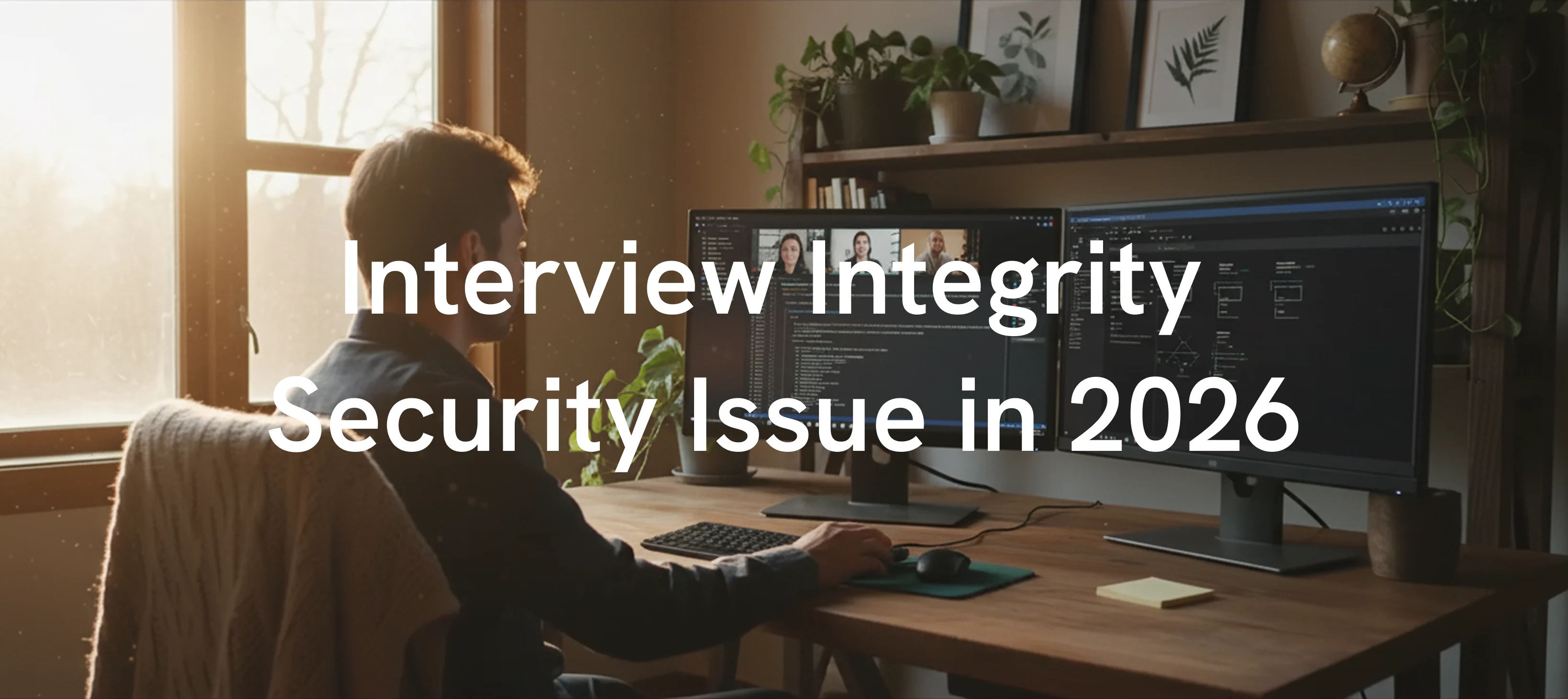
In 2026, the biggest risk in hiring is no longer just finding qualified talent. It is ensuring the person you interview is genuinely who they claim to be and is not using hidden assistance. As interviews move online and AI tools become more advanced, the hiring process has quietly become a new attack surface.
Organizations now need structured interview integrity frameworks that can verify identity, detect real time manipulation, and prevent unauthorized access risks before an offer is ever made. 91% of U.S. hiring managers have encountered or suspected AI‑generated interview answers during online meetings, and 65% have seen deceptive AI use by candidates. This highlights how prevalent AI‑assistance challenges are.
Recruiters today operate in an environment where candidates can use AI tools to generate answers live, receive prompts from unseen collaborators, or even have another person complete parts of the interview. These issues do more than affect hiring quality. They create security exposure.
When a candidate misrepresents identity or skill and still gets hired, the organization may unknowingly grant system access to someone unqualified or even malicious. Industry reports show that a growing number of companies have experienced post hire issues linked to inaccurate candidate representation, leading to operational disruption and security investigations.
In this guide, you will learn why interview integrity is now directly connected to organizational security, what risks originate during live interviews, and how Sherlock AI helps companies secure interviews with real time authenticity protection.
What Is Interview Integrity?
Interview integrity means ensuring that:
The person attending the interview is the real candidate
The answers given are genuinely their own
No unauthorized tools or hidden assistance are being used
The evaluation reflects the candidate’s true skills and identity
In a remote and AI-driven world, all four of these can be manipulated.
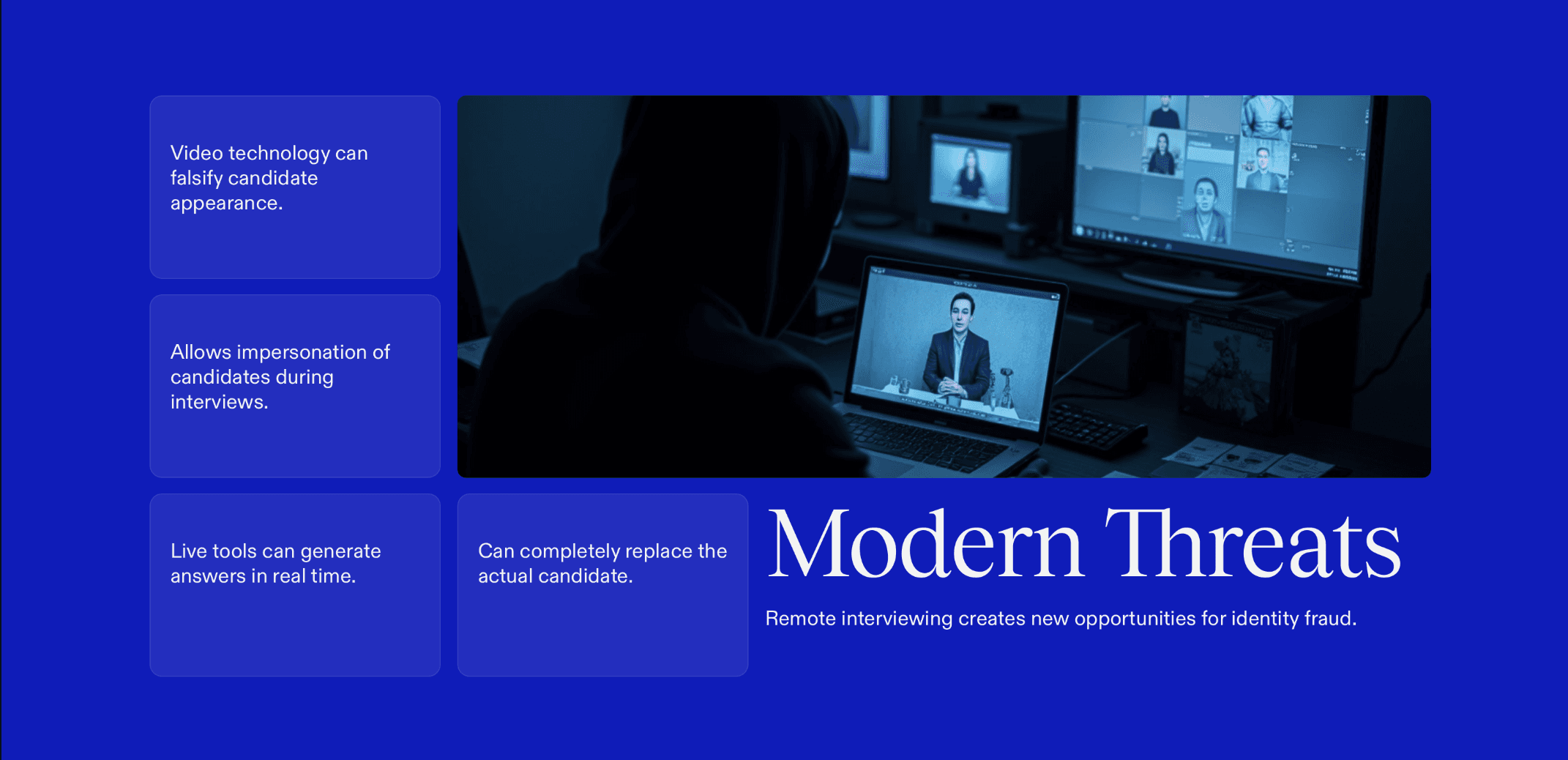
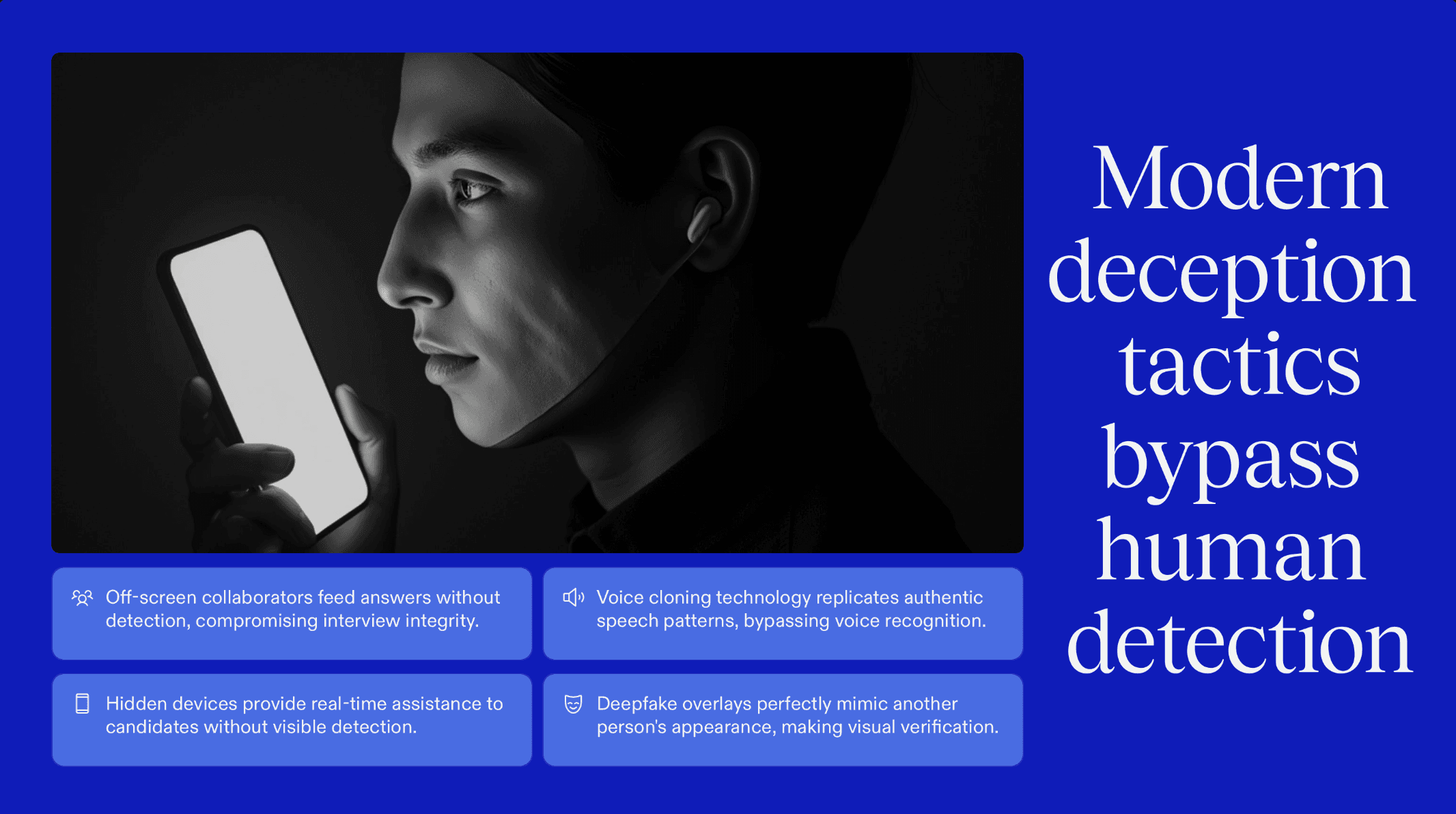
Candidates today can use deepfake video, voice cloning, live AI answer generators, and even remote human proxies. Without proper safeguards, interviewers may be assessing someone who is not actually the person being hired.
That is where this stops being a recruiting issue and becomes a security threat.
Why Interview Integrity Is a Security Issue
Recruiting the right talent is one of the most important tasks for any organization. Interviews are designed to evaluate a candidate’s skills, experience, and cultural fit. However, maintaining the integrity of interviews has become a serious challenge. When interview integrity is compromised, it affects more than just fairness. It creates operational, financial, and security risks for organizations.
1. Misrepresentation of Skills
Candidates may exaggerate their skills or rely on external help during interviews. This can happen through:
Using AI tools for real-time assistance
Getting guidance from proxies or other experts
Presenting falsified work experience or credentials
When a candidate’s actual capabilities do not match their interview performance, organizations risk hiring someone who cannot perform the required tasks.
2. Operational and Business Risks
Hiring someone based on compromised interview results can lead to operational inefficiencies:
Projects may be delayed or poorly executed
Teams may face increased workload due to skill gaps
Mistakes may lead to loss of client trust or revenue
Operational risks arising from poor hiring decisions can have long-lasting consequences on a company’s performance and reputation.
3. The Challenge of Modern Interview Fraud
With remote interviews and advanced technology, maintaining integrity has become more difficult:
AI tools provide candidates with instant answers or guidance
Proxy candidates can attend interviews in place of the original applicant
Remote interviews reduce the ability to verify identity and behavior
Traditional methods of evaluation, such as video observation or resume checks, are often insufficient to detect these sophisticated forms of fraud.
4. Ensuring Interview Integrity
Organizations must adopt proactive measures to protect the hiring process:
Implement AI-driven tools for identity verification and interview monitoring
Use practical, skill-based assessments in addition to standard interviews
Train HR and technical teams to detect anomalies or assisted responses
Maintain structured evaluation processes to reduce bias and errors
Read more: Why Interview Integrity Matters More Than Ever in Remote Hiring
Interview Integrity: Manual vs AI-Driven Monitoring
Feature | Manual Interview Monitoring | Sherlock AI Monitoring |
|---|---|---|
Identity Verification | Based on visual confirmation and ID checks | Real-time, AI-driven identity verification with continuous presence checks |
Detection of AI Assistance | Difficult to detect | Monitors behavioral patterns and environmental cues for external assistance |
Deepfake Detection | Not possible | Detects manipulated video, voice cloning, and synthetic media |
Continuous Monitoring | Single snapshot during interview | Maintains integrity checks throughout entire session |
Evidence & Audit Trail | Limited documentation | Provides data-driven insights and compliance-ready records |
How Sherlock AI Protects the Interview as a Security Layer
Sherlock AI approaches interviews the way security teams approach access control.
1. Real-Time Identity and Presence Verification
Sherlock AI continuously analyzes visual and audio signals during the interview to ensure the candidate is physically present and not being replaced or digitally altered.
2. Detection of Deepfakes and Synthetic Media
Advanced AI models help identify signs of manipulated video, face swaps, and synthetic audio that may not be visible to human interviewers.
3. Monitoring for External Assistance
Sherlock AI detects behavioral and environmental signals that suggest a candidate may be receiving help from off-screen tools, devices, or other individuals.
4. Continuous Integrity, Not Just a Snapshot
Instead of a one-time check, Sherlock AI maintains integrity monitoring throughout the session. This reduces the risk of mid-interview switching or hidden AI support.
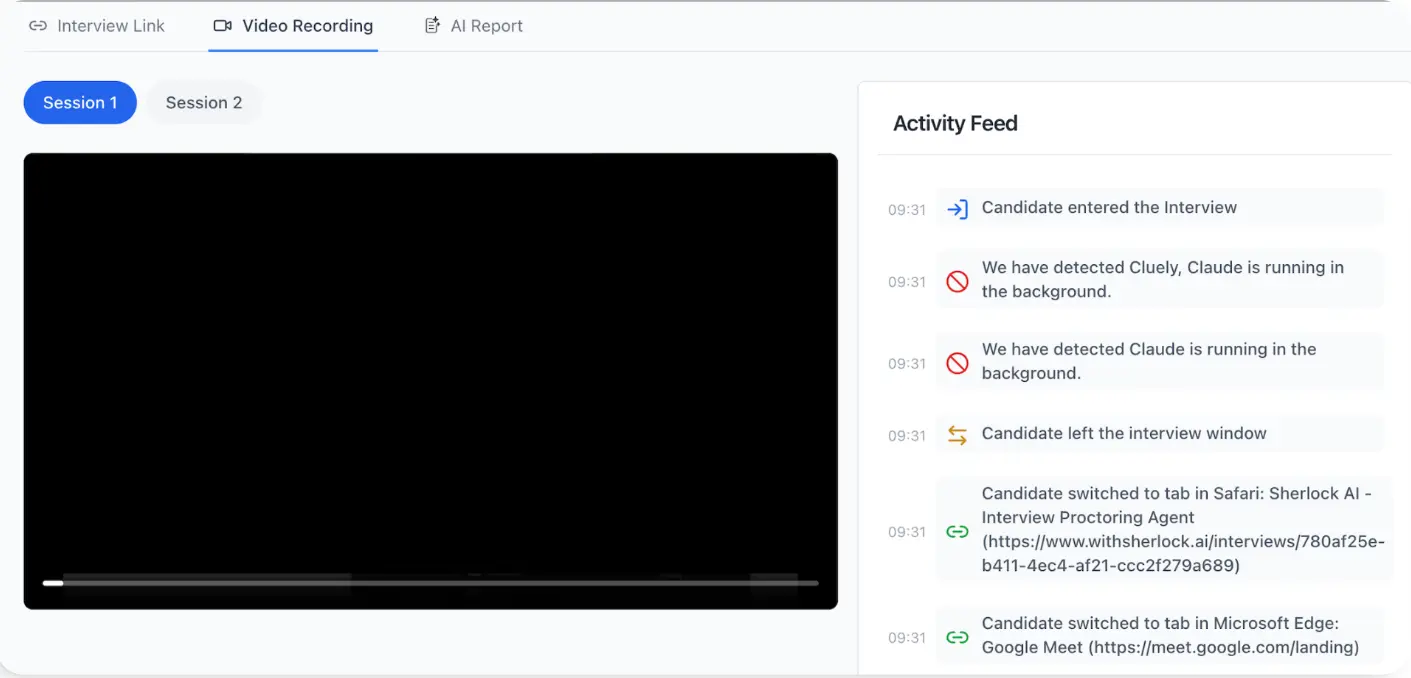
By adding an integrity layer to interviews, Sherlock AI helps organizations treat hiring like what it has become: a frontline security function
Why Traditional Interview Monitoring Is No Longer Enough
Basic video calls and human observation cannot detect:
Deepfake face overlays
Voice cloning or audio injection
Hidden second devices providing live assistance
Off-screen collaborators feeding answers
Recruiters and hiring managers are not trained to detect advanced digital manipulation. Even if they suspect something, they rarely have evidence.
Manual processes simply cannot keep up with AI-driven deception.
Conclusion
In 2026, interview integrity is no longer just an HR concern. It is a security imperative. Organizations that fail to verify candidate identity, detect AI-assisted responses, and monitor interviews in real time risk operational disruption, financial loss, and regulatory exposure.
Sherlock AI bridges this gap by offering continuous, AI-driven monitoring, identity verification, and real-time fraud detection, ensuring that every interview is authentic, secure, and reliable. Hiring is no longer just about talent it’s about trust, verification, and organizational safety.