Back to all blogs
Understand how to monitor interviews ethically, ensuring fairness and transparency throughout the hiring process.

Abhishek Kaushik
Dec 9, 2025
Monitoring in interviews should never feel like surveillance.
The goal is not to catch candidates.
The goal is to ensure:
The person interviewing is the real candidate
The thinking presented is their own
Every candidate is evaluated consistently and respectfully
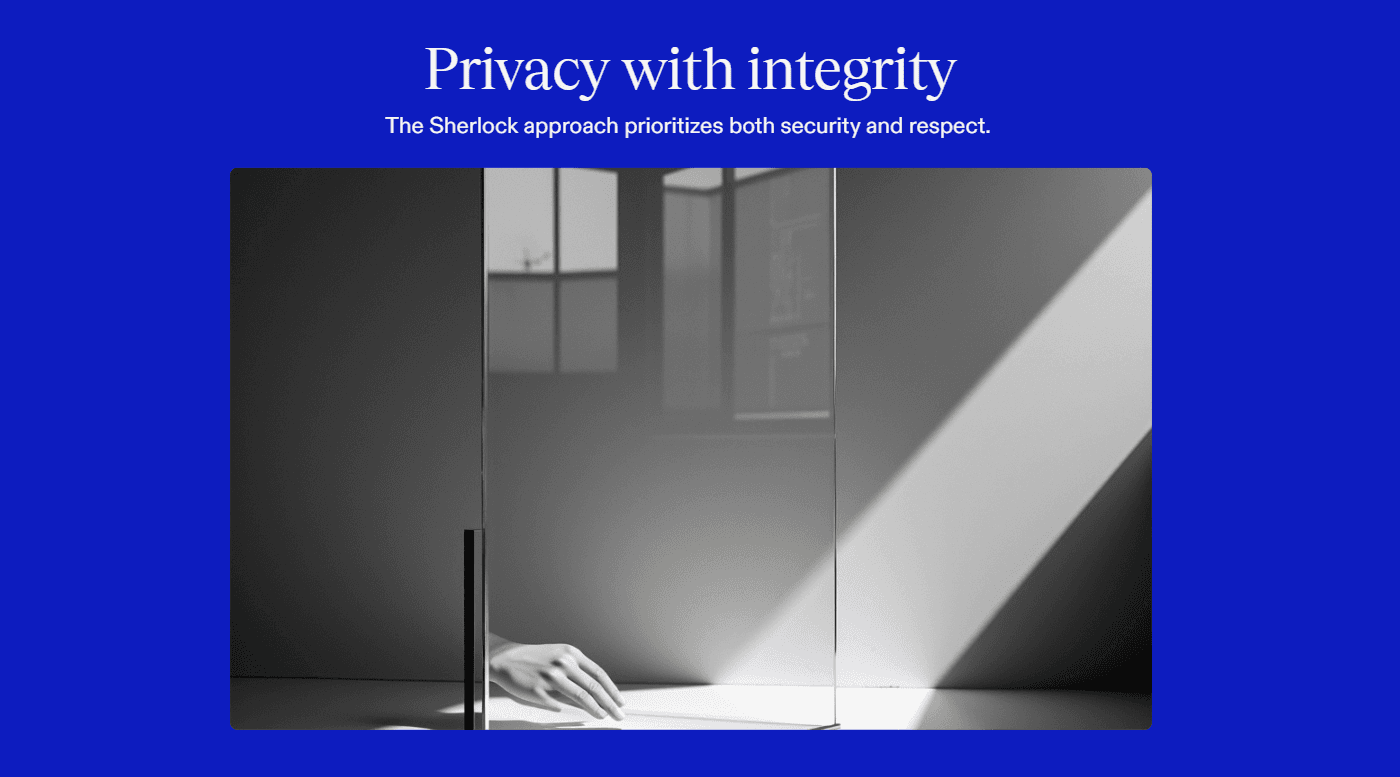
Ethical monitoring is:
Transparent
Minimal
Respect-based
Focused on identity and authenticity, not behavior or facial expression
Sherlock AI enables this through quiet, contextual integrity signals rather than invasive tracking.
Why Monitoring Has Become Necessary
Remote and AI-enabled interviews introduced risks that did not exist before:
Hidden whisper coaching
Proxy or lookalike interviewers
Answer prompting from off-screen devices
AI-generated behavioral and technical responses
These risks:
Distort hiring signal
Disadvantage honest candidates
Increase performance-management failures post-hire
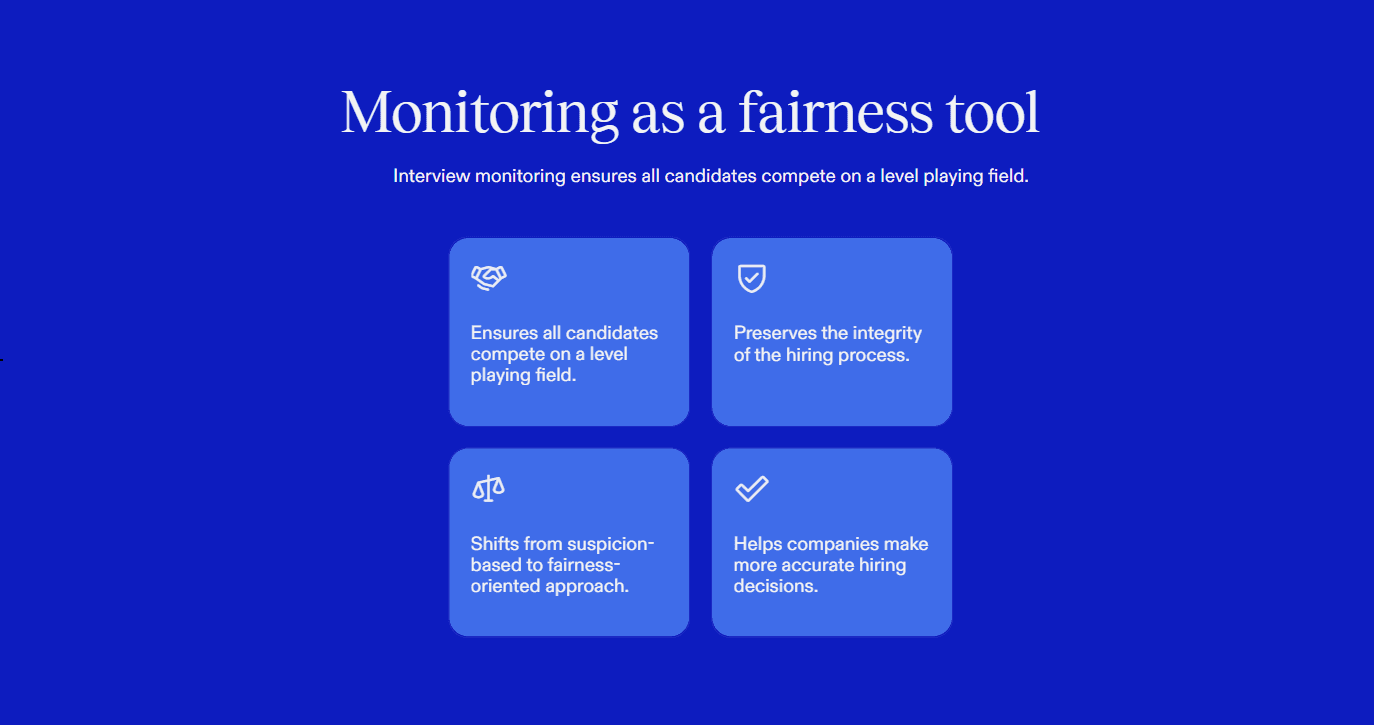
Monitoring is now a fairness tool, not a suspicion tool.
When candidates understand that monitoring exists to protect them, it directly improves how much they trust the final hiring decision.
Read more: How Interview Monitoring Builds Trust in Hiring Decisions
The Difference Between Ethical and Unethical Monitoring
Unethical Monitoring | Ethical Monitoring |
|---|---|
Secret data capture | Transparent explanation to candidate |
Continuous surveillance | Context-based integrity checks |
Analyzing facial expressions | Analyzing reasoning continuity |
Looking for “gotcha” moments | Ensuring fairness and identity consistency |
Creates anxiety | Creates trust |
Unethical monitoring focuses on control.
Ethical monitoring focuses on fairness.
The Four Principles of Ethical Monitoring
1. Transparency First
Tell candidates:
What is being monitored
Why it exists
How it protects fairness
Example script:
We use light identity and authorship verification to ensure every candidate is evaluated on their own thinking. This protects fairness across all applicants.
This lowers anxiety and builds trust.
2. Monitor Identity, Not Emotion or Personality
Do not monitor:
Eye contact
Facial expression
Tone of voice
Body language
These vary across:
Culture
Neurotype
Language background
Stress response style
Do monitor:
Voice consistency across sessions
Device and presence continuity
Authorship patterns in reasoning
Sherlock AI focuses on consistency, not performance style.
3. Monitor Authorship, Not Behavior
Real experience shows up in:
Tradeoff explanations
Adaptability when constraints shift
Ability to paraphrase in new words
Fabricated experience collapses under follow-up.
Sherlock AI analyzes reasoning patterns, not gestures.
4. Automate Documentation Instead of Scrutiny
Use structured AI notes and scorecards to calibrate interview panels, not to over-scrutinize candidates.
They help:
Reduce bias
Reduce inconsistent interviewer memory
Improve audit defensibility
Improve post-hire alignment
Monitoring should support interviewers, not force them into policing roles.
Sherlock AI frees them to listen.
What Ethical Monitoring Looks Like in Practice
The interviewer session should feel:
Calm
Respectful
Low-pressure
Thoughtful
The monitoring layer should be:
Silent
Background
Predictable
Evidence-based
Example Flow:
Pre-interview fairness explanation
Normal video call
Sherlock verifies identity and authorship quietly
Interviewer focuses on curiosity and reasoning
Notes and scorecard generated automatically
No stress. No suspicion. No performance traps.
Why This Matters for Employer Brand
Candidates talk.
Groups share interview experiences.
The employer brand is shaped by how interviews feel, not just what is evaluated.
Balanced, ethical monitoring:
Builds trust
Signals maturity
Attracts high-agency candidates
Reduces candidate drop-off
This is a competitive advantage in hiring.
Conclusion
Monitoring does not need to feel adversarial.
It can feel fair, transparent, and respectful when:
Identity is verified quietly
Authorship is confirmed through reasoning patterns
Interviewers are supported with automated structure
Candidates understand the purpose
Sherlock AI makes interview integrity invisible where it should be and supportive where it matters.