Back to all blogs
Learn how structured interview monitoring improves fairness, boosts trust, and supports more reliable hiring outcomes.

Abhishek Kaushik
Dec 9, 2025

Interview monitoring is often misunderstood as surveillance or suspicion.
Done correctly, it actually increases trust for everyone involved.
Monitoring is not about catching candidates. It is about:
Confirming identity and authorship
Ensuring interviews reflect real reasoning
Reducing bias and inconsistent evaluation
Creating defensible, evidence-based hiring decisions
Sherlock AI enables this by keeping monitoring quiet, respectful, and fairness-oriented.
The Problem: Hiring Has Always Been Trust-Based and Subjective
Before remote interviewing, trust was implied through:
Physical presence
Shared workspaces
Informal assessment
Gut feel
Now:
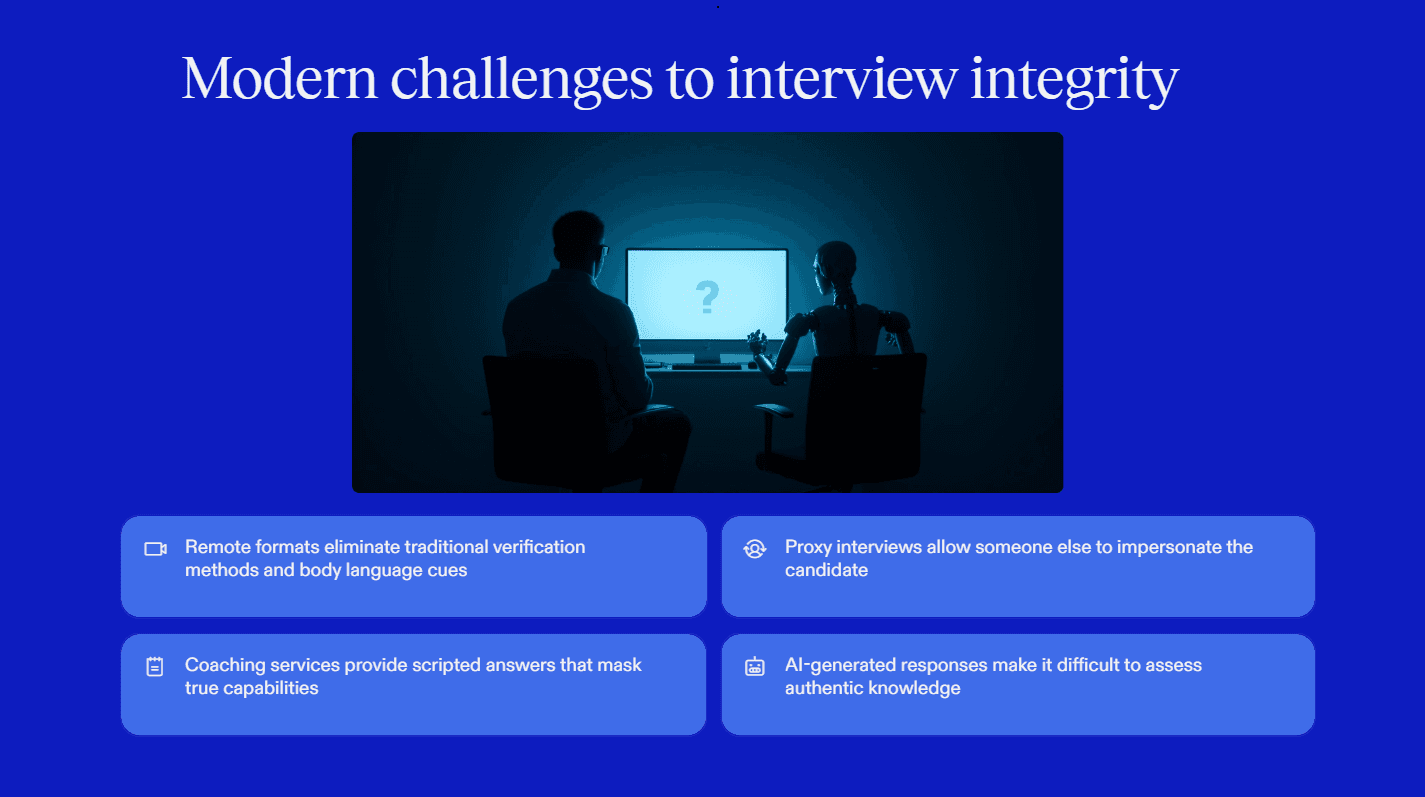
Candidates interview remotely
AI-generated answers are common
Proxy interviews are possible
Coaching factories sell prepared scripts
This breaks the assumption:
The interview reflects the candidate’s own thinking.
Once this assumption breaks, trust in the hiring process collapses.
How Monitoring Restores Trust
Interview monitoring, when ethical and transparent, ensures that:
The person interviewing is the applicant
The reasoning reflects their real skill
Every candidate is treated consistently
Interviewers are supported with structured evidence
This does not restrict candidates.
It protects fairness and accuracy.
Trust is Built in Three Directions
Stakeholder | What They Need to Trust | How Monitoring Helps |
|---|---|---|
Candidates | The process is fair and unbiased | Transparent integrity rules and consistent evaluation |
Interviewers | Their judgments will be respected and defensible | Automated notes and structured reasoning insights |
Leadership | The hiring process supports business performance | Evidence-based decisions and identity-authenticated hires |
Monitoring builds shared confidence in the outcome.
What Ethical Interview Monitoring Looks Like
1. Identity Verification Without Interruption
The candidate should never feel interrogated or challenged.
Sherlock AI confirms:
Voice continuity
Device continuity
Session-to-session identity stability
This prevents proxy interviews without affecting the candidate experience.
2. Authorship Integrity Through Reasoning Analysis
Instead of analyzing:
Facial expression
Eye movement
Tone of voice
Sherlock AI analyzes:
Adaptability to follow-up questions
Tradeoff reasoning depth
Pattern shifts that suggest external prompting
This is cognitive, not behavioral.
It avoids bias and protects fairness.
3. Structured, Neutral Interview Documentation
Most disagreement in hiring comes from:
Inconsistent note-taking
Memory distortion
Reviewer bias
Sherlock AI automatically:
Transcribes key reasoning moments
Summarizes answers neutrally
Aligns interviewers on shared evidence
This creates audit-ready trust, not opinion-based debate.
Real Example of Trust Restored
A global engineering team had recurring disagreement in debriefs:
One interviewer said “Strong”
Another said “Weak”
No one could articulate why
After introducing Sherlock AI:
Every interviewer saw the same reasoning summary
Evidence replaced impression
Panel alignment increased significantly
Offer decisions became faster and more confident
Why This Matters for Culture
When interview outcomes are trusted:
Teams welcome new hires confidently
High performers stay because standards are clear
Managers feel supported instead of frustrated
Candidates feel respected even when rejected
When trust is missing:
Hiring feels political
Performance concerns escalate quietly
Retention suffers
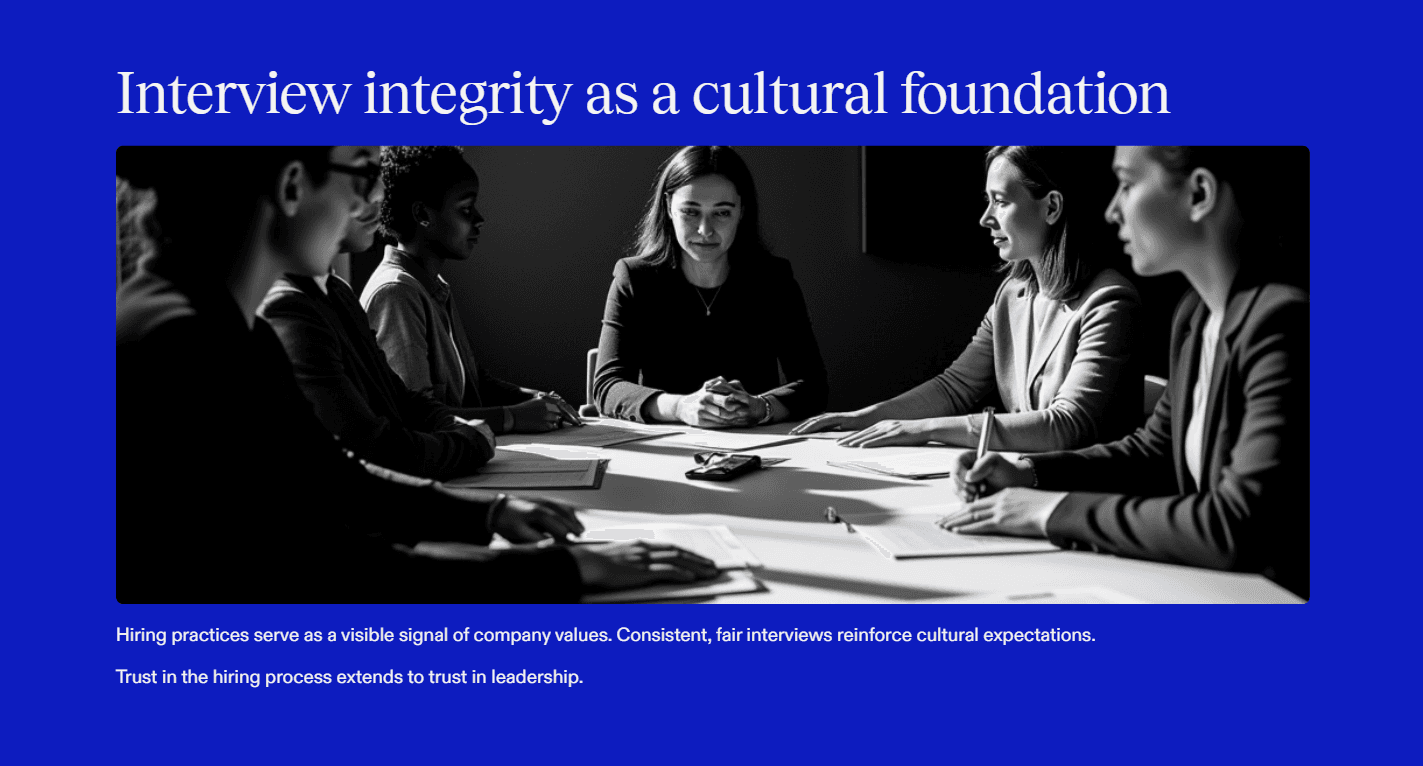
Interview integrity is a foundational cultural signal.
Conclusion
Monitoring does not diminish human judgment.
It supports it.
It ensures:
The candidate being evaluated is the candidate being hired
Their thinking is their own
Decisions are based on evidence, not personality or polish
This protects:
Team performance
Candidate fairness
Employer brand
Leadership confidence
Sherlock AI is not surveillance. Sherlock AI is trust infrastructure for hiring.