Back to all blogs
Learn how to prevent voice cloning fraud in hiring interviews. Explore real risks, warning signs, and how AI-led interview integrity platforms like Sherlock AI help detect synthetic voices and protect remote hiring.
Abhishek Kaushik
Feb 11, 2026
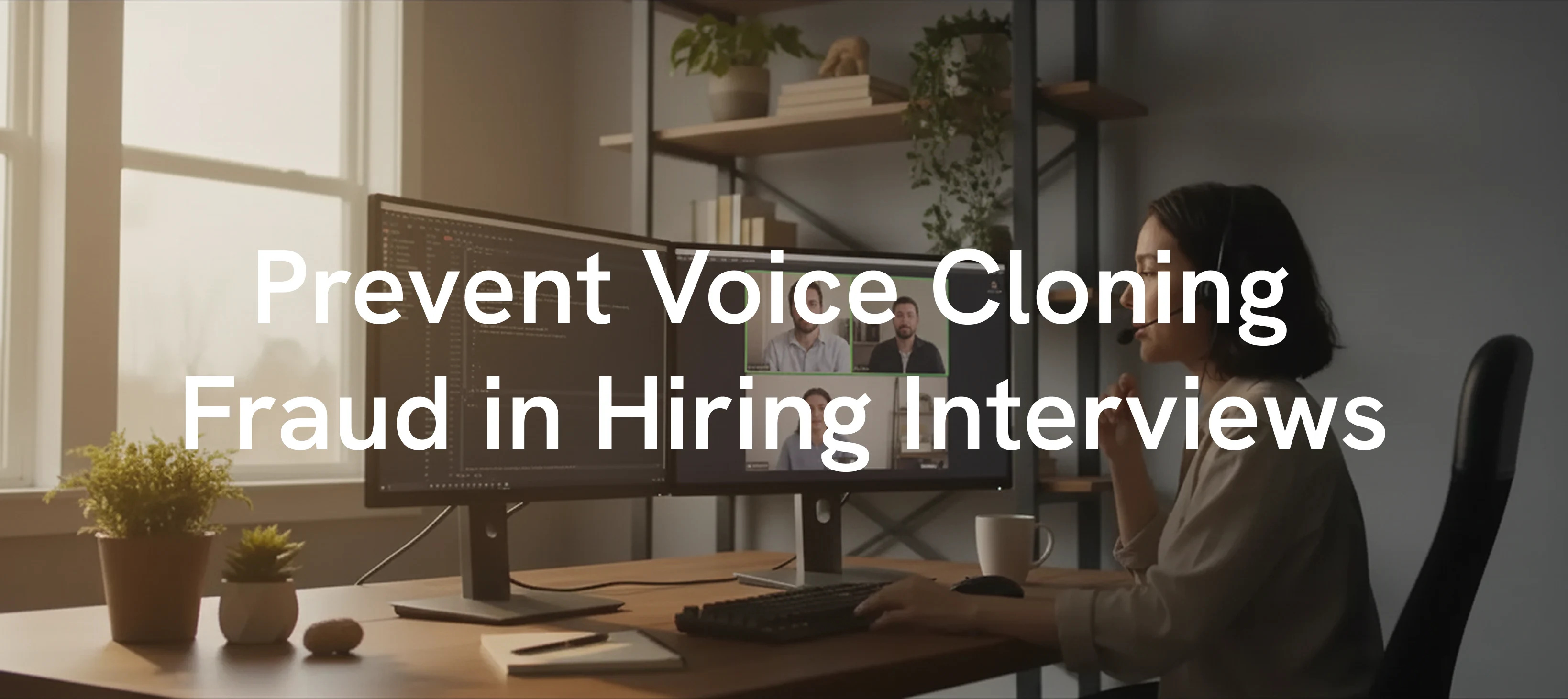
In an era where artificial intelligence can generate eerily realistic voices from just a few seconds of audio, hiring teams face a growing and often underestimated threat of voice cloning fraud in job interviews. In a recent survey of nearly 900 hiring professionals, 17% reported encountering deepfake manipulation, including voice cloning or altered interview audio, during remote screening processes and that’s only the cases recruiters actually noticed.
For organizations that depend on trust and authenticity in hiring, these trends are a clear signal that traditional interview safeguards aren’t enough. Understanding how voice cloning fraud works and how to stop it is now essential to protecting recruitment integrity, candidate experience, and corporate security.
How AI Voice Cloning Works in Interviews
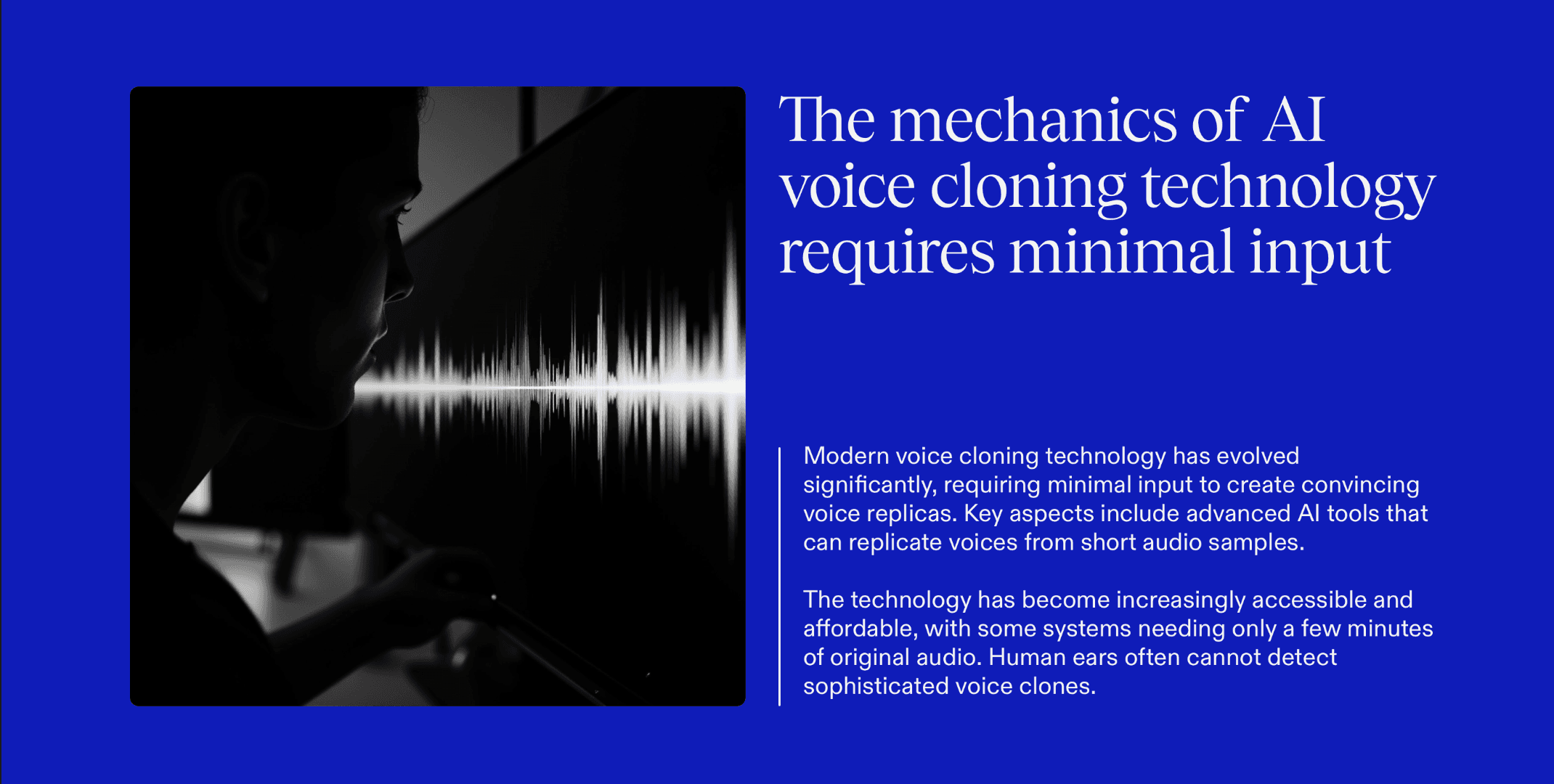
Modern voice cloning tools can replicate a person’s voice using a short audio sample, sometimes just a few minutes long. In hiring interviews, this shows up in a few key ways:
Real-time voice conversion: A proxy speaker answers questions live while software transforms their voice to sound like the actual candidate.
Replay attacks: Pre-recorded responses, generated using the candidate’s cloned voice, are played during phone or audio interviews.
Pre-recorded answers stitched together: AI-generated responses are triggered dynamically based on interview questions, giving the illusion of a live conversation.
These techniques are increasingly accessible, low-cost, and hard to detect with the human ear alone.
Common Voice Cloning Fraud Scenarios in Hiring
Recruiters most often encounter voice cloning fraud in scenarios like:
Phone screenings with cloned voices, where there’s no visual verification and limited behavioral context.
Proxy interviews, where a more experienced speaker answers questions while the system outputs the candidate’s synthesized voice.
Voice cloning combined with scripted AI responses, resulting in fluent but shallow answers that sound polished yet lack genuine personal depth.
In many cases, the fraud isn’t obvious until later stages, when the hired candidate fails technical tasks or behaves inconsistently on the job.
Why Voice Familiarity and Human Intuition No Longer Work
AI-cloned voices are designed to sound natural, emotionally neutral, and consistent. Recruiters may feel reassured by a clear, confident voice, but that confidence can be synthetically generated. Human intuition struggles because:
People are poor at distinguishing real speech from high-quality synthetic audio.
Cloned voices don’t exhibit traditional stress cues like nervousness or hesitation.
Interviewers often prioritize clarity and fluency, exactly what AI voices optimize for.
As a result, familiarity becomes a false signal of authenticity.
Where Traditional Interview Methods Fall Short
Several standard hiring practices create blind spots that AI-driven fraud exploits:
Phone and audio-only interviews:
Without visual context, interviewers lose access to facial expressions, lip movement, and real-time behavioral cues. This makes audio channels the easiest entry point for voice cloning attacks.
Static identity checks before interviews:
Verifying identity once, through an ID upload or basic background check, assumes the same person remains present throughout the process. Voice cloning breaks this assumption by enabling identity substitution during live interviews.
One-time verification instead of continuous monitoring:
Most hiring workflows treat verification as a checkbox rather than an ongoing process. Once the interview starts, there’s often no mechanism to detect voice manipulation, AI assistance, or proxy participation.
The Cost of False Confidence in Hiring
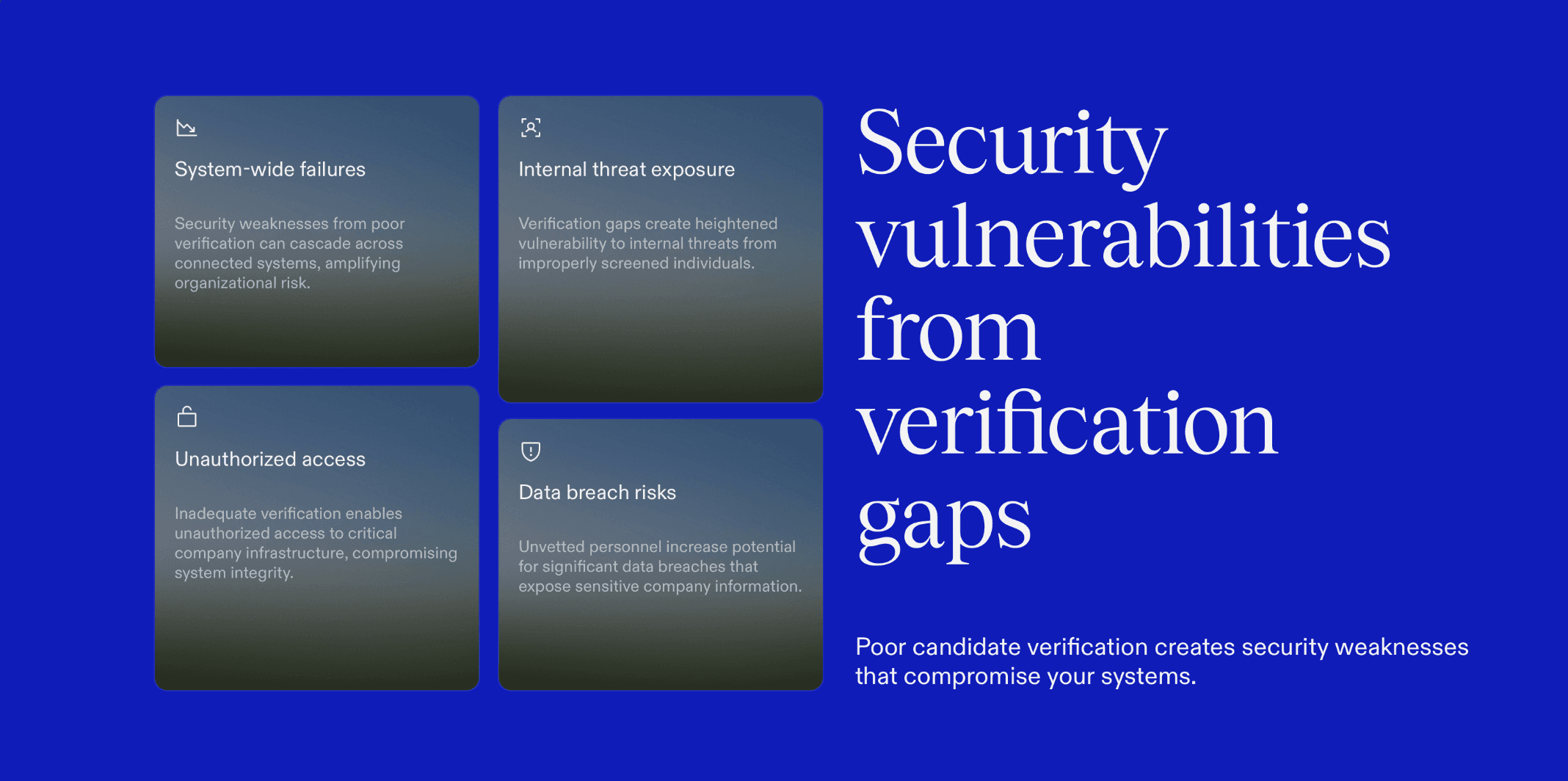
Trusting outdated methods doesn’t just lead to bad interviews, it leads to bad outcomes:
Mis-hires that fail performance expectations
Security risks when unauthorized individuals gain system access
Compliance and audit issues when hiring integrity can’t be proven
Reputational damage when fraud is discovered post-hire
These costs often surface long after the interview, when reversing decisions is far more expensive.
Why This Matters
Preventing voice cloning fraud requires AI-native detection and continuous verification, not just sharper instincts or better training.
Recognizing these limitations is what pushes hiring teams toward smarter, technology-driven interview integrity systems.
Preventing Voice Cloning Fraud with AI-Led Interview Integrity Systems
As voice cloning becomes more sophisticated, preventing fraud requires more than sharper ears or stricter policies. Hiring teams need AI-led interview integrity systems that are built to detect synthetic behavior in real time, while interviews are actually happening.
Key Capabilities Hiring Teams Should Look For:
Real-time voice authenticity analysis: Instead of relying on post-interview review, AI models analyze speech signals live, flagging anomalies that suggest voice transformation, replay attacks, or artificial modulation.
Detection of synthetic or transformed speech patterns: AI can identify characteristics common in cloned or generated voices, such as unnatural frequency stability, compressed dynamics, or timing artifacts, that are difficult for humans to perceive.
Cross-checking voice consistency across interview stages: Comparing voice characteristics from screening calls, technical rounds, and follow-ups helps detect identity substitution or proxy participation over time.
Behavioral and audio signal analysis together: The most reliable systems don’t look at voice alone. They correlate speech patterns with response timing, reasoning depth, and behavioral consistency to build a fuller picture of authenticity.
Best Practices for Reducing Voice Cloning Risk
Alongside technology, hiring teams can strengthen defenses with smarter interview design:
Mix interview formats, combining audio discussions with live problem-solving or reasoning exercises.
Use dynamic, follow-up questioning that forces candidates to explain thinking in real time, disrupting pre-generated or scripted answers.
Adopt purpose-built interview integrity platforms designed specifically to detect AI assistance and identity manipulation, rather than relying on generic video or conferencing tools.
Voice cloning fraud thrives when interviews depend on trust without verification. AI-led interview integrity systems close that gap by providing continuous, objective validation of authenticity.
Sherlock AI: A Tailored Solution for Preventing Voice Cloning Fraud
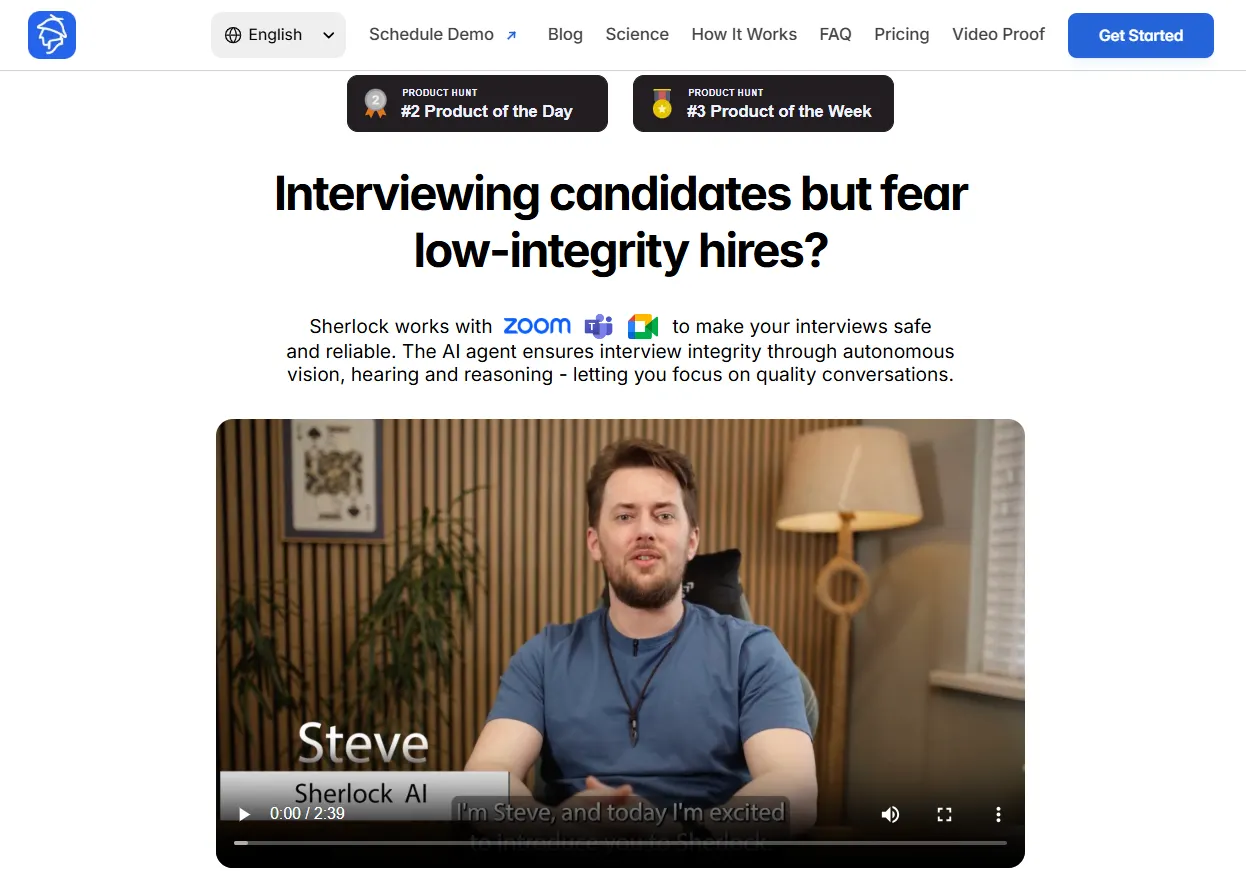
When the threat of voice cloning and AI-enabled fraud enters the hiring funnel, traditional safeguards aren’t enough. This is where Sherlock AI steps in as a solution designed specifically to uphold interview integrity in the age of AI.
Multimodal Fraud Detection That Goes Beyond Surface Signals
Sherlock AI doesn’t just listen to what’s being said, it understands how it’s being said.
Sherlock AI can:
Analyze voice texture and continuity to spot signs of synthetic or transformed speech.
Compare behavioral cues like pacing, gaze flow, and response timing, against known authentic interaction patterns.
Detect inconsistencies not just in voice, but in the context of how responses unfold during an interview.
These capabilities make it much harder for cloned voices or AI-generated responses to slip through undetected.
Real-Time Alerts and Continuous Monitoring
Rather than relying on a one-off pre-interview check, Sherlock AI operates throughout the entire session.
When suspicious patterns arise such as unnatural pauses followed by polished answers, off-screen assistance signals, or behavioral anomalies, Sherlock AI provides real-time alerts to interviewers so they can probe in the moment.
This continuous monitoring approach captures how candidates behave and adapt as the interview unfolds, making it difficult for voice clones or external AI tools to maintain consistency.
Forensic Continuity and Identity Verification
One of Sherlock AI's strengths is that it tracks identity across the hiring journey, not just at a single point.
By matching biometric and behavioral signals from screening to interview stages, the platform builds a forensic profile of authenticity. This helps confirm that the same individual who applied, took assessments, and joined the interview is truly present throughout.
This continuity is especially valuable for catching impersonation or proxy situations where a cloned voice might otherwise fool a recruiter in a single interaction.
Designed for Trust and Candidate Experience
Importantly, Sherlock AI balances security with candidate dignity. Its analyses focus on behavioral patterns and contextual signals and not invasive surveillance. That means interviews remain respectful and natural while still being protected against sophisticated fraud.
Interviewers get insights that enhance their judgment, and hiring teams can move confidently from suspicion to informed decision-making without compromising experience or fairness.
Why Sherlock AI Matters in the Fight Against Voice Cloning Fraud
Sherlock AI bridges the gap between growing AI threats and the need for trustworthy hiring. By integrating continuous monitoring, multimodal analysis, real-time alerts, and identity continuity tracking, it turns interview integrity from a checklist into a dynamic, evidence-based process.
In doing so, Sherlock AI it helps teams make hiring decisions with clarity and confidence in a world where voice alone is no longer proof enough.
Conclusion
Voice cloning fraud has become a present-day challenge that is redefining interview integrity. As AI makes it easier to manipulate voices, identities, and real-time responses, traditional safeguards like recruiter intuition, phone screenings, and one-time identity checks are no longer enough.
Preventing this type of fraud requires a clear shift toward continuous, AI-led interview monitoring that can detect identity manipulation as it happens. This is where platforms like Sherlock AI play a critical role. By combining real-time voice authenticity analysis with behavioral and contextual signals across interview stages, Sherlock AI helps hiring teams move beyond guesswork and protect the hiring process from sophisticated AI-enabled fraud.
As remote hiring continues to scale, tools that are purpose-built for interview integrity will become essential, not optional. With solutions like Sherlock AI, organizations can confidently evaluate real candidates, reduce risk, and ensure that hiring decisions are based on genuine ability rather than synthetic performance.