Back to all blogs
Interview fraud is rising in remote hiring. Discover common warning signs, risks, and proven ways to prevent online and remote interview fraud.
Abhishek Kaushik
Mar 17, 2026

Interview fraud has become one of the most serious threats to modern hiring. As organizations increasingly rely on virtual interviews, fraudulent candidates are finding new ways to manipulate hiring processes. What once required physical deception can now be executed remotely using technology, impersonation, and coordinated assistance. 31% of hiring managers reported interviewing someone later revealed to be using a fake identity, and 35% said someone other than the listed applicant participated in a virtual interview.
This shift has made online interview fraud and remote interview fraud widespread challenges for recruiters, talent leaders, and security teams. Interview fraud is no longer limited to isolated incidents. It is now a scalable problem affecting global hiring.
This article explains how interview fraud works, why it is increasing, how it manipulates hiring outcomes, and how organizations can protect themselves using structured processes and tools like Sherlock AI.
What Is Interview Fraud?
Interview fraud refers to any deliberate attempt to deceive recruiters during an interview. This includes misrepresenting identity, skills, experience, or using unauthorized assistance to pass interviews.
In traditional hiring, fraud was limited by physical presence. In virtual hiring, interview fraud happens silently during live conversations, making it more difficult to detect and far more damaging.
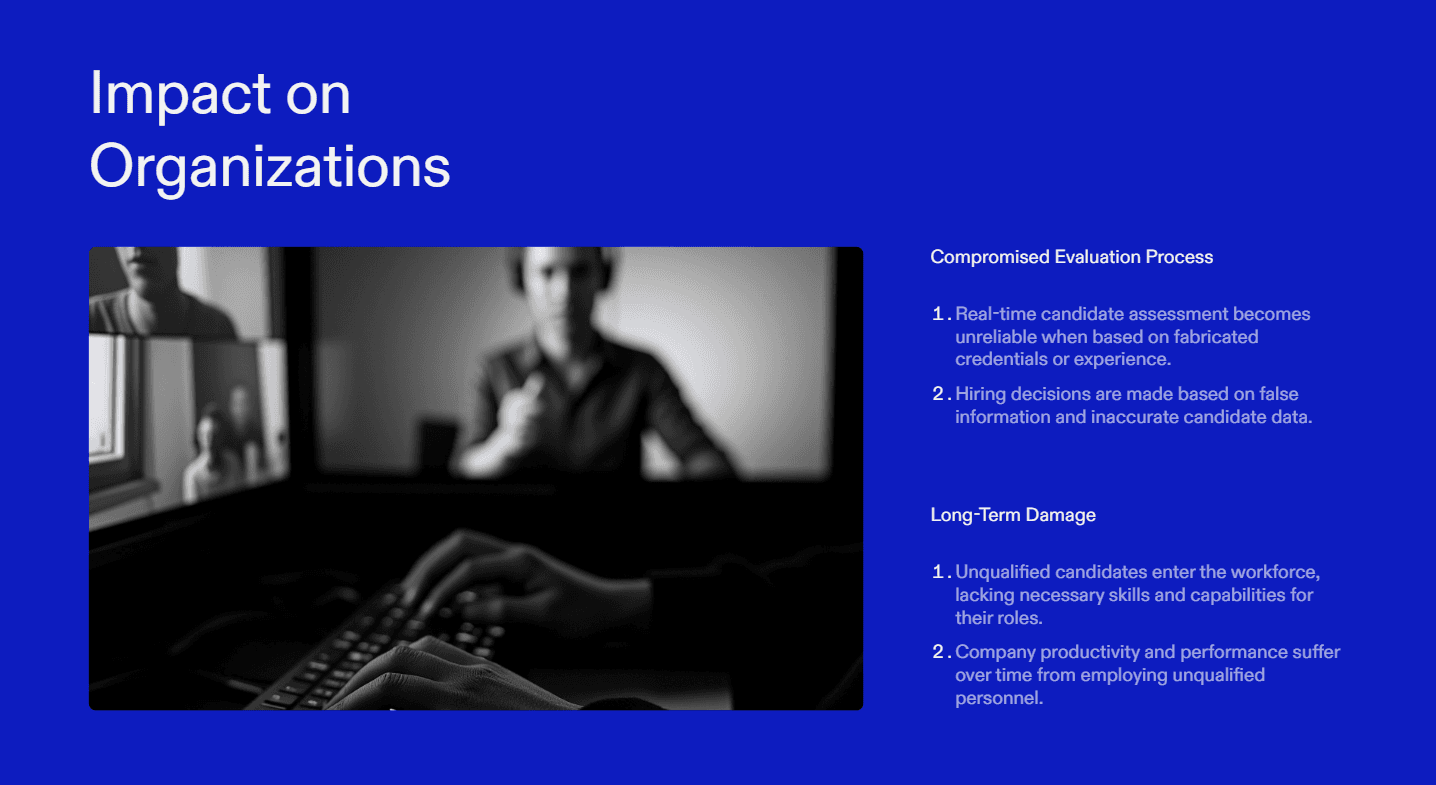
Online interview fraud directly compromises real time evaluation. Hiring decisions are made based on false signals, which leads to unqualified hires entering organizations.
Why Interview Fraud Is Increasing in Online and Remote Hiring
Interview fraud has grown rapidly as hiring models shift toward virtual and distributed work environments. Online interview fraud and remote interview fraud are not caused by a single factor. They are the result of structural changes in how hiring is conducted, combined with technology and economic pressure.
1. The Expansion of Remote Work
Remote and hybrid work models have made virtual interviews the default for many organizations. While this change allows companies to hire from a broader talent pool, it also removes several natural verification steps that existed in in person interviews. Recruiters can no longer easily confirm physical presence, environment, or real time identity.
In remote settings, candidates control their interview space, devices, and surroundings. This makes it easier to conceal external help, use secondary devices, or allow another person to assist off camera. As a result, remote interview fraud has increased across industries and job levels.
2. Easy Access to Advanced Tools
Technology has significantly lowered the barrier to committing interview fraud. AI answer generators can produce real time responses during interviews. Teleprompter tools display scripted answers while maintaining camera focus. Remote desktop tools allow external individuals to guide or control responses without appearing on screen.
These tools operate quietly and integrate seamlessly into virtual interviews. This makes online interview fraud harder to detect using traditional observation methods alone.
3. Lack of Interview Fraud Awareness
Most hiring teams are trained to evaluate technical skills, communication ability, and cultural alignment. Very few recruiters receive formal training on detecting interview fraud. As a result, suspicious behavior may be misinterpreted as nervousness, technical delay, or communication style.
Without awareness of modern fraud tactics, recruiters may unknowingly advance candidates who rely on external assistance. This gap in training allows interview fraud to persist and scale.
4. Economic Pressure and High Competition
In highly competitive job markets, especially for remote roles, candidates face significant pressure to perform well in interviews. Some candidates rationalize dishonest behavior as a necessary step to secure employment.
High paying remote positions attract global competition, increasing the incentive to use unfair methods. This pressure has normalized interview fraud attempts in certain roles where demand greatly exceeds supply.
5. Global Hiring Without Local Verification
Global hiring allows companies to recruit talent across regions and time zones. While this improves access to skills, it also complicates identity verification and enforcement.
Fraud networks can operate across borders, offering impersonation and proxy interview services at scale. Differences in legal systems, time zones, and documentation standards make it harder to investigate and prevent interview fraud in remote hiring.
Common Types of Interview Fraud Recruiters Face Today
1. Candidate Impersonation
A different individual attends the interview instead of the actual applicant. This form of interview fraud is common in technical and senior roles. The impersonator clears interviews while the real candidate joins after hiring.
2. Proxy Interviews and External Assistance
Candidates receive real time help from another person through audio cues, chat tools, or remote access. This is one of the most frequent forms of online interview fraud.
3. AI Generated Interview Responses
Real time AI tools generate answers during interviews. These responses sound fluent but often lack personal experience or depth.
4. AI Teleprompters
Scripts appear on screen while candidates maintain eye contact with the camera. This makes remote interview fraud harder to detect visually.
5. Deepfake Interview Fraud
Deepfake interview fraud uses manipulated video or audio to impersonate another individual during an interview, allowing fraudulent candidates to bypass identity checks. This creates serious security and compliance risks, especially in remote hiring. Sherlock AI helps reduce this risk by strengthening identity verification and detecting behavioral inconsistencies that may indicate manipulated audio or video during interviews.
Read More: How to Stop Interview Proxy Fraud
How Interview Fraud Manipulates Hiring Decisions
Interview fraud distorts the core purpose of interviews. Recruiters assume that strong interview performance reflects genuine capability. Fraud breaks this assumption. Fraudulent candidates may:
1. Pass Interviews but Fail Job Tasks
Fraudulent candidates may perform well during interviews due to external assistance or AI tools, but once hired, they struggle to complete real job responsibilities independently. This gap quickly exposes the mismatch between interview performance and actual capability.
2. Require Constant Support After Hiring
Because their skills were overstated during interviews, fraudulent hires often depend heavily on managers or teammates for guidance. This increases team workload and slows down overall productivity.
3. Increase Attrition and Rehiring Costs
When performance issues persist, organizations are forced to terminate employment or experience early attrition. This results in additional hiring cycles, onboarding costs, and lost time invested in the initial hire.
4. Create Security Risks by Accessing Internal Systems
In remote roles, unverified individuals may gain access to internal tools, customer data, or sensitive systems. If the person hired is not the same individual who was interviewed, accountability and security risks increase significantly.
5. Scale Rapidly in Remote Hiring Environments
Interview fraud spreads easily in remote hiring when safeguards are weak. Fraud tactics are often reused across multiple candidates, allowing the problem to grow silently as hiring volume increases.
Warning Signs of Online Interview Fraud
Recruiters should focus on patterns, not isolated moments. When several indicators appear together, the likelihood of online interview fraud increases.
Key Indicators Recruiters Should Watch For
Unnatural pauses before answers
Repeated delays, especially for basic or role related questions, may indicate external assistance or AI generated responses rather than genuine thinking.Overly polished or generic responses
Answers that sound rehearsed, lack personal examples, or mirror textbook language can suggest scripted or assisted delivery.Difficulty answering follow up questions
Candidates involved in online interview fraud often struggle to explain, adapt, or apply their answers when questioned further.Repeated off screen eye movement
Frequent glances away from the camera in the same direction may signal the use of prompts, secondary devices, or off screen help.Inconsistent identity or behavior across interviews
Changes in voice, confidence, communication style, or technical depth between interview rounds can indicate impersonation or proxy interviews.
These warning signs rarely appear alone. When multiple indicators are present, recruiters should investigate further to protect interview integrity and hiring outcomes.
Why Traditional Interview Methods Are No Longer Enough
Traditional interviews rely heavily on trust, intuition, and in person observation. These methods fail in remote settings where assistance and impersonation are invisible.
Without dedicated interview integrity checks, even experienced interviewers struggle to identify fraud. Remote interview fraud requires a combination of human judgment and intelligent technology.
How Sherlock AI Helps Prevent Interview Fraud
Sherlock AI is designed to address interview fraud in modern hiring environments. It supports recruiters by adding visibility and intelligence to online interviews.
Sherlock AI helps by the following ways:
Verifies candidate identity throughout online interviews to prevent impersonation and proxy interviews
Detects behavioral patterns commonly associated with interview fraud
Flags suspicious response timing, pauses, and inconsistencies in answers
Identifies potential AI assisted or off screen support during interviews
Provides interview integrity signals without interrupting candidate flow
Supports recruiters with data backed insights for better hiring decisions
Scales securely across remote and global hiring environments
Reduces online interview fraud while maintaining a fair candidate experience
Best Practices to Reduce Remote Interview Fraud
Reducing remote interview fraud requires a combination of process, awareness, and technology. The following practices help recruiters protect interview integrity while maintaining a positive candidate experience.
1. Verify Identity Early
Confirming candidate identity at the beginning of the interview helps prevent impersonation and proxy interviews. Early verification sets clear expectations and discourages fraudulent behavior before the interview progresses.
2. Use Structured Interview Formats
Structured interviews with standardized questions make it easier to compare responses across candidates. This consistency helps recruiters spot unusual patterns, inconsistencies, or scripted answers linked to interview fraud.
3. Ask Experience Based Questions
Questions that require candidates to describe personal experiences, decision making, or problem solving are harder to fake. Follow up questions further test authenticity and reduce the success of assisted or AI generated responses.
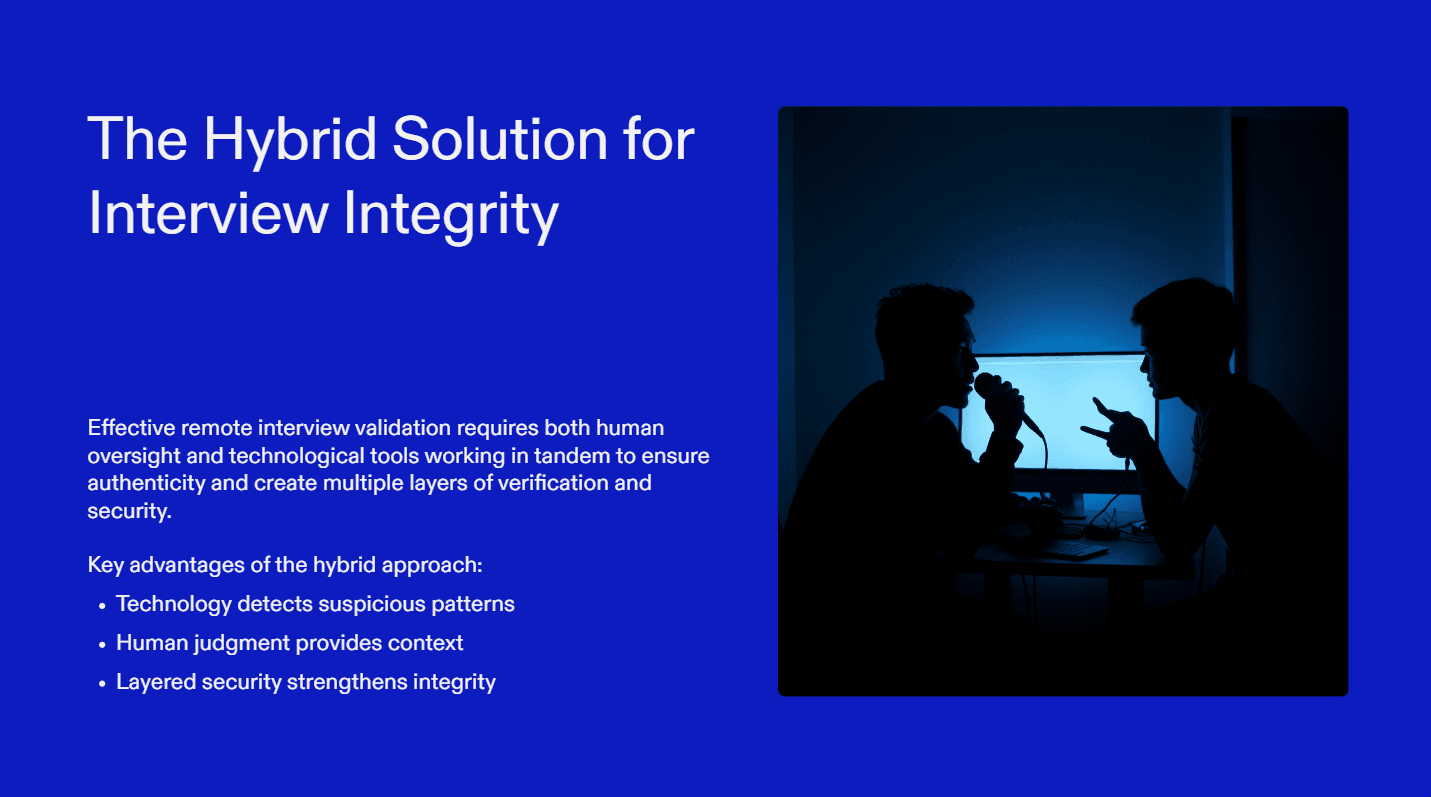
4. Combine Technology With Human Oversight
Technology alone is not enough. Recruiter judgment combined with tools like Sherlock AI provides stronger protection against online interview fraud by pairing human intuition with data driven insights.
5. Train Teams on Interview Fraud Awareness
Recruiters who understand common fraud tactics are better prepared to detect warning signs. Ongoing training ensures hiring teams stay alert as remote interview fraud methods continue to evolve.
The Cost of Ignoring Interview Fraud
Organizations that overlook interview fraud expose themselves to long term operational and financial risks. When fraudulent candidates pass interviews, the impact extends far beyond a single bad hire.
Poor quality hires reduce team productivity, place additional burden on managers, and increase attrition and rehiring costs. Over time, this weakens confidence in the hiring process and damages employer credibility.
In remote first companies, interview fraud scales rapidly with hiring volume. Without proper visibility and verification, the same weaknesses are exploited repeatedly across roles and regions.
This is where Sherlock AI becomes critical. By adding identity verification and interview integrity insights to remote hiring, Sherlock AI helps organizations detect fraud early, prevent costly hiring mistakes, and maintain trust in scalable online interview processes.
Final Thoughts
Interview fraud is no longer a fringe issue. As online interview fraud and remote interview fraud continue to evolve, hiring teams must adapt their processes.
Companies that combine structured interviews, trained recruiters, and intelligent tools like Sherlock AI are better equipped to protect hiring integrity. By addressing interview fraud proactively, organizations can build stronger teams, reduce hiring risk, and hire with confidence in a remote first world.