Back to all blogs
Learn how to prevent background AI assistance in remote interviews. Discover common AI copilot tactics, warning signs recruiters miss, and how hiring teams can protect interview integrity in an AI-driven hiring landscape.

Abhishek Kaushik
Feb 11, 2026
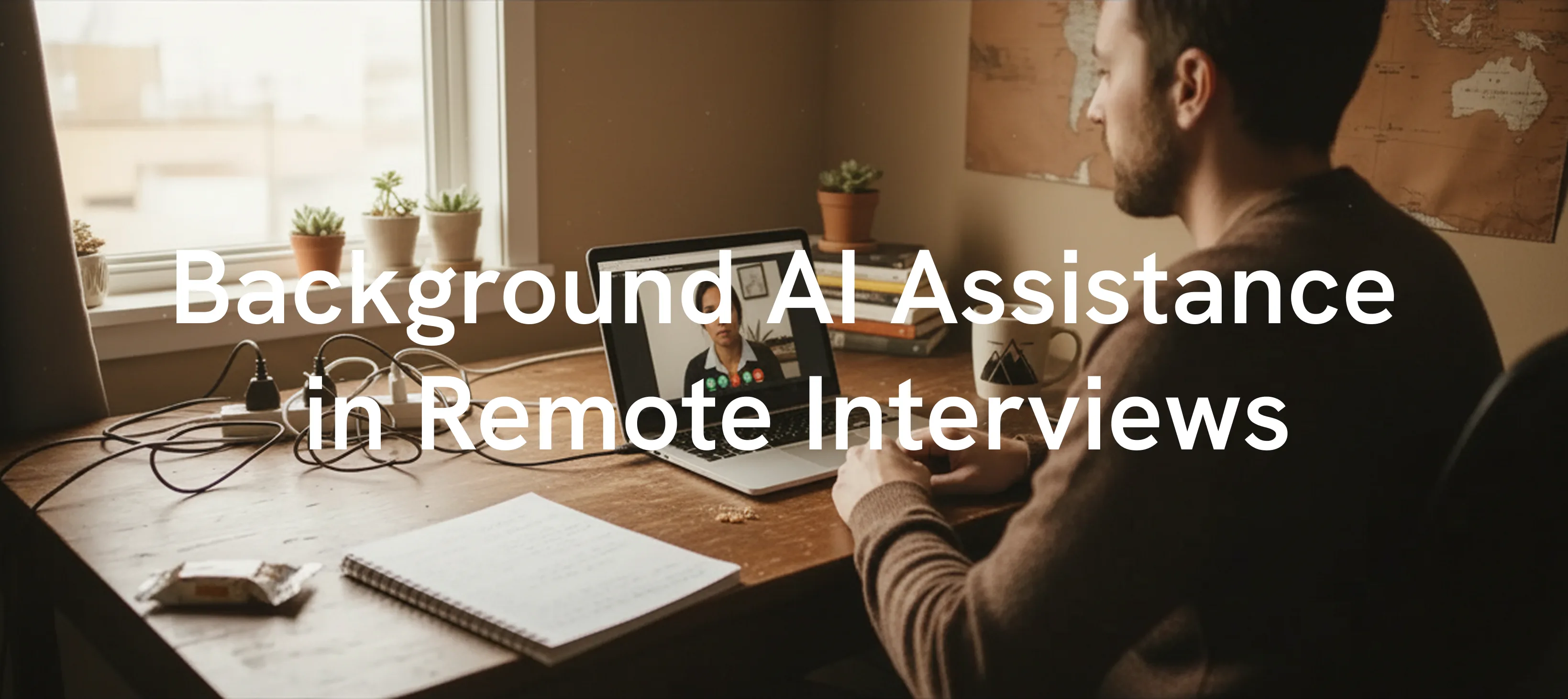
The rise of artificial intelligence has brought convenience and new risks to job interviews. In one industry survey, 72% of hiring professionals reported encountering AI-generated resumes or job materials, and a significant minority observed candidates leveraging AI or deepfake technology during interviews.
According to a 2025 survey of 3,000 hiring managers, 59% say they’ve suspected candidates of using AI tools or fake identities during interviews, and 35% confirmed someone other than the listed applicant participated in a virtual interview. Only 19% feel “extremely confident” that their current process could catch a fraudulent applicant.
As hiring teams strive to identify authentic talent in a distributed workforce, understanding and preventing background AI assistance in remote interviews has become essential to protecting the integrity and fairness of the recruitment process.
What Background AI Assistance Looks Like in Remote Interviews
Background AI assistance refers to AI tools actively helping a candidate during the interview itself, not before it. Unlike preparation tools used for practice or resume polishing, these systems operate silently in real time.
In remote interviews, background AI assistance typically includes:
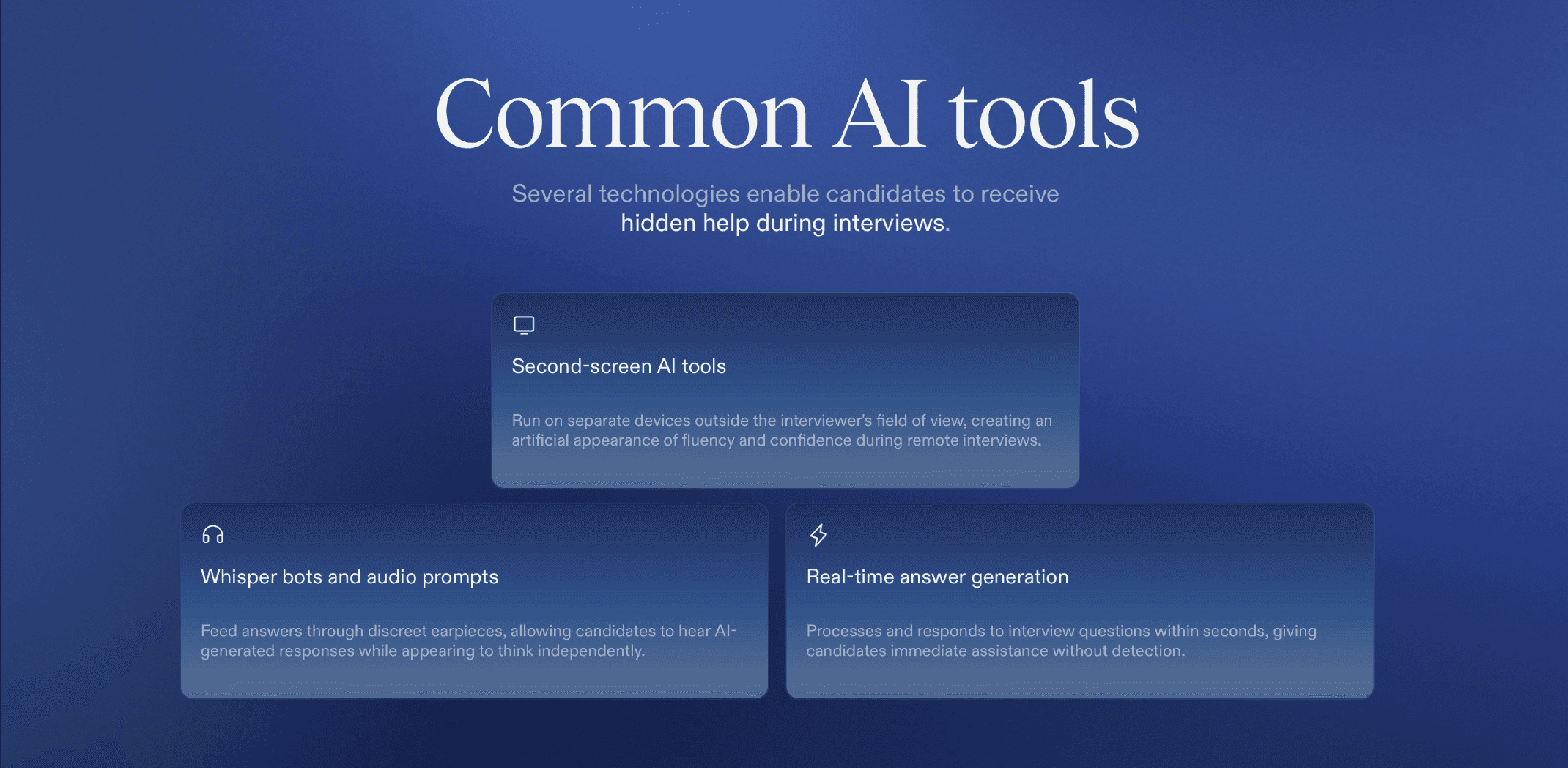
Real-time answer generation, where interview questions are transcribed, processed, and answered by AI within seconds.
Whisper bots or audio prompts that discreetly suggest talking points through an earpiece or secondary audio channel.
Second-screen AI tools, running on another device or hidden window, out of the interviewer’s view.
These tools are designed to stay invisible, allowing candidates to appear fluent, confident, and well-prepared, even when the reasoning isn’t their own.
Common Ways Candidates Use AI During Interviews
Hiring teams most often encounter background AI assistance in forms such as:
Live AI copilots feeding answers, especially during technical or behavioral questions.
Hidden chat windows or voice-to-text prompts, where spoken questions are instantly converted into AI-generated responses.
AI summarizing questions and producing structured answers in real time, resulting in polished, logically organized replies that sound rehearsed but generic.
Because the assistance happens in parallel, responses often arrive quickly and smoothly, raising few immediate red flags.
Read more: How to Detect Cheating in a Video Interview
How This Differs from Traditional Cheating or Interview Prep
Traditional interview prep focuses on rehearsing answers, studying concepts, or practicing delivery before the interview. Background AI assistance changes the equation by participating in the evaluation itself.
Instead of recalling knowledge or reasoning through problems, candidates may rely on AI to:
Interpret the question
Decide what to say
Structure the response
Suggest examples or terminology
This turns the interview from an assessment of individual capability into a test of how effectively AI tools can be used in real time.
Background AI assistance reframes the problem from “candidates preparing well” to AI intervening during evaluation. When AI actively shapes answers in real time, hiring decisions risk being based on synthetic performance rather than real skill.
How to Reduce Background AI Assistance
While AI-driven assistance is becoming harder to detect, interviewers can still reduce its effectiveness through intentional interview design and behavior-led techniques. These methods don’t eliminate the risk entirely, but they raise the difficulty of using AI discreetly during live interviews.
1. Use Live Reasoning Instead of Final Answers
Shift interviews from outcome-based questions to thinking-in-motion prompts.
Ask candidates to explain how they would approach a problem, why they chose a particular path, or what trade-offs they considered.
Real-time reasoning is harder for AI to generate seamlessly without noticeable delays or generic responses.
2. Ask Follow-Up Questions That Break Predictability
Background AI works best when questions are expected or easily parsed.
Unplanned follow-ups such as “Why that approach?” or “What would you do differently if this constraint changed?” force candidates to adapt instantly, making AI-generated responses more obvious or less coherent.
3. Change Question Formats Mid-Conversation
Switching between behavioral, situational, and practical questions disrupts pre-generated or templated answers.
For example, moving from a technical explanation to a personal decision-making scenario can expose reliance on structured AI outputs rather than genuine experience.
4. Observe Response Timing and Interaction Flow
AI-assisted answers often introduce subtle delays or unnaturally consistent pacing.
Pay attention to long pauses before simple questions, perfectly structured responses delivered too quickly, or answers that don’t quite align with the question’s intent.
5. Require Verbal Walkthroughs of Past Experience
Ask candidates to narrate specific moments such as what they did first, who was involved, what went wrong.
Personal, detail-rich storytelling is more difficult for AI to fabricate convincingly in real time, especially under probing follow-ups.
While these methods help interviewers reduce background AI assistance, they rely heavily on attention, experience, and consistency.
As AI becomes faster and more adaptive, human-led techniques alone don’t scale or provide objective proof. Dedicated interview integrity tools become essential to continuously detect patterns and signals that aren’t visible to the human eye, without increasing interviewer burden.
Sherlock AI: A Comprehensive Solution to Background AI Assistance
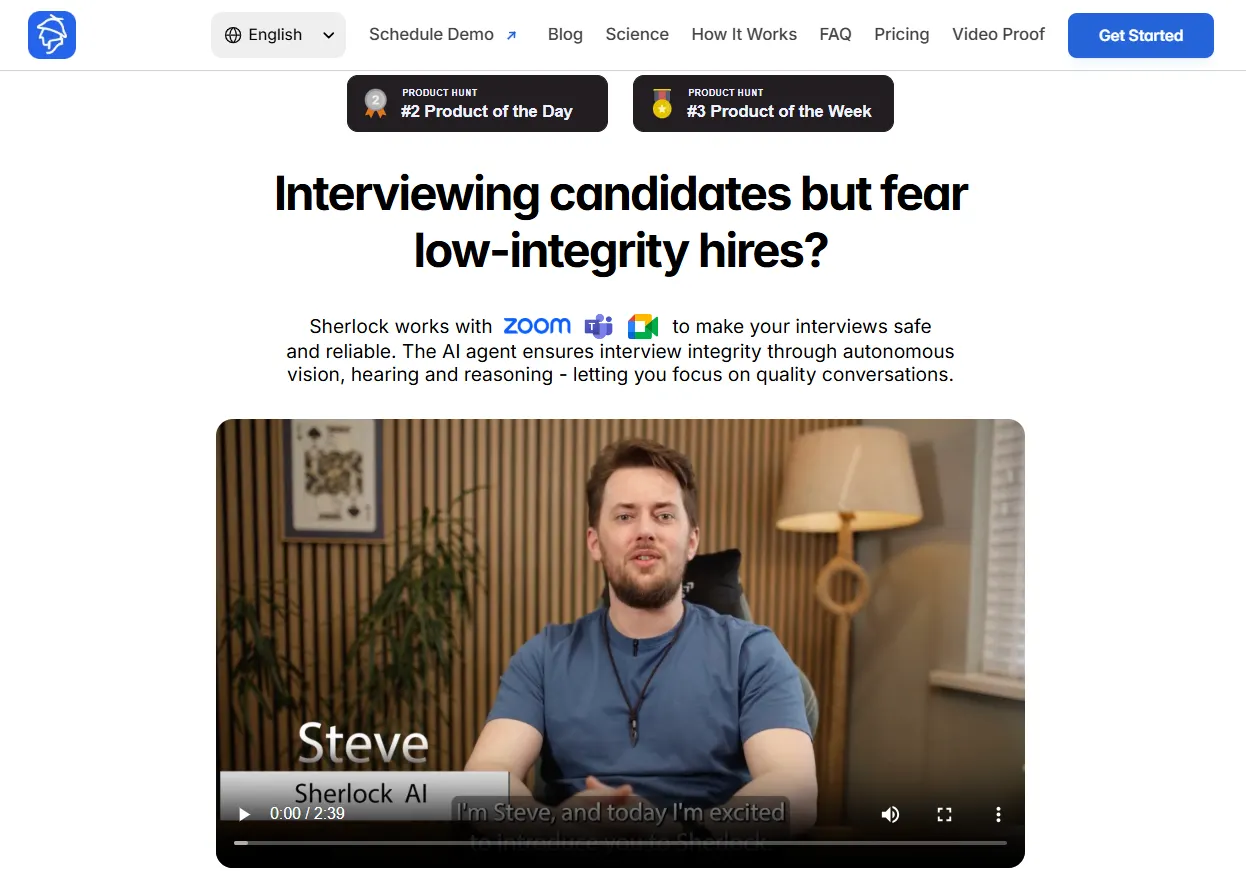
Sherlock AI is built specifically to defend interviews against AI copilots, deepfakes, and proxy-driven fraud, the exact threats traditional interview formats can’t reliably catch. Its capabilities focus on real-time detection, behavioral intelligence, and identity continuity, not surface-level monitoring.
Key Features for Stopping Background AI Assistance in Interviews:
1. Real-Time AI Copilot Detection:
Sherlock AI continuously analyzes response timing, structure, and reasoning flow to identify signs of live AI copilots feeding answers during interviews.
It flags patterns such as unnaturally polished responses, delayed reaction times, and AI-like answer structuring that often accompany background assistance.
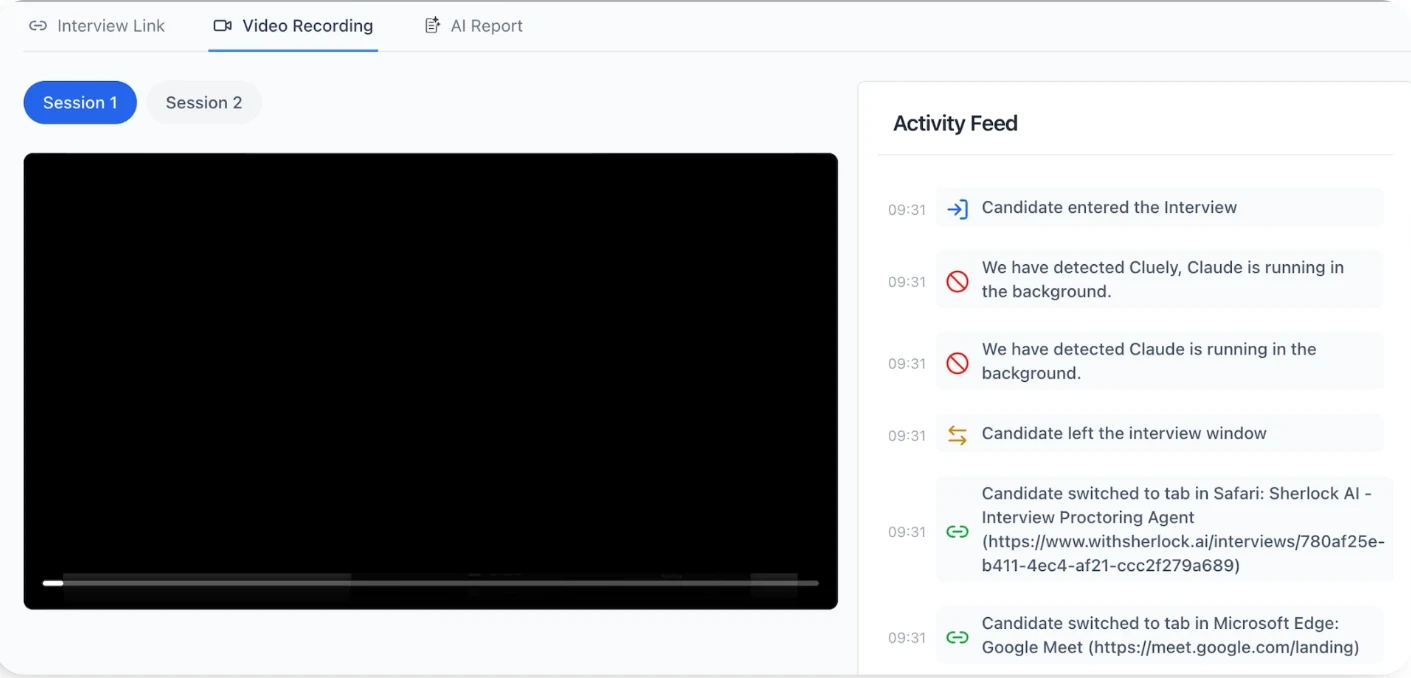
2. Deepfake & Synthetic Behavior Analysis:
Beyond just voice or video, Sherlock AI detects deepfake-driven manipulation by correlating audio signals with behavioral cues.
This helps surface cases where candidates rely on synthetic speech, AI-generated explanations, or altered interaction patterns that don’t align with human reasoning.
3. Proxy & Identity Substitution Detection:
Sherlock AI tracks behavioral and interaction consistency across interview stages to uncover proxy candidates, whether it’s a different person answering questions or someone being actively guided off-screen.
Sudden shifts in knowledge depth, response style, or interaction behavior are flagged in real time.
4. Behavioral + Contextual Intelligence:
Instead of relying on voice or video alone, Sherlock AI combines behavioral signals, response dynamics, and contextual understanding.
This multi-layered approach makes it harder for AI assistance to hide behind fluent speech or confident delivery.
5. Continuous Interview Monitoring
Sherlock AI treats interview integrity as a continuous process, not a one-time check.
From the first question to the last, it monitors for AI copilots, scripted responses, and external intervention, closing the gaps where fraud typically slips through.
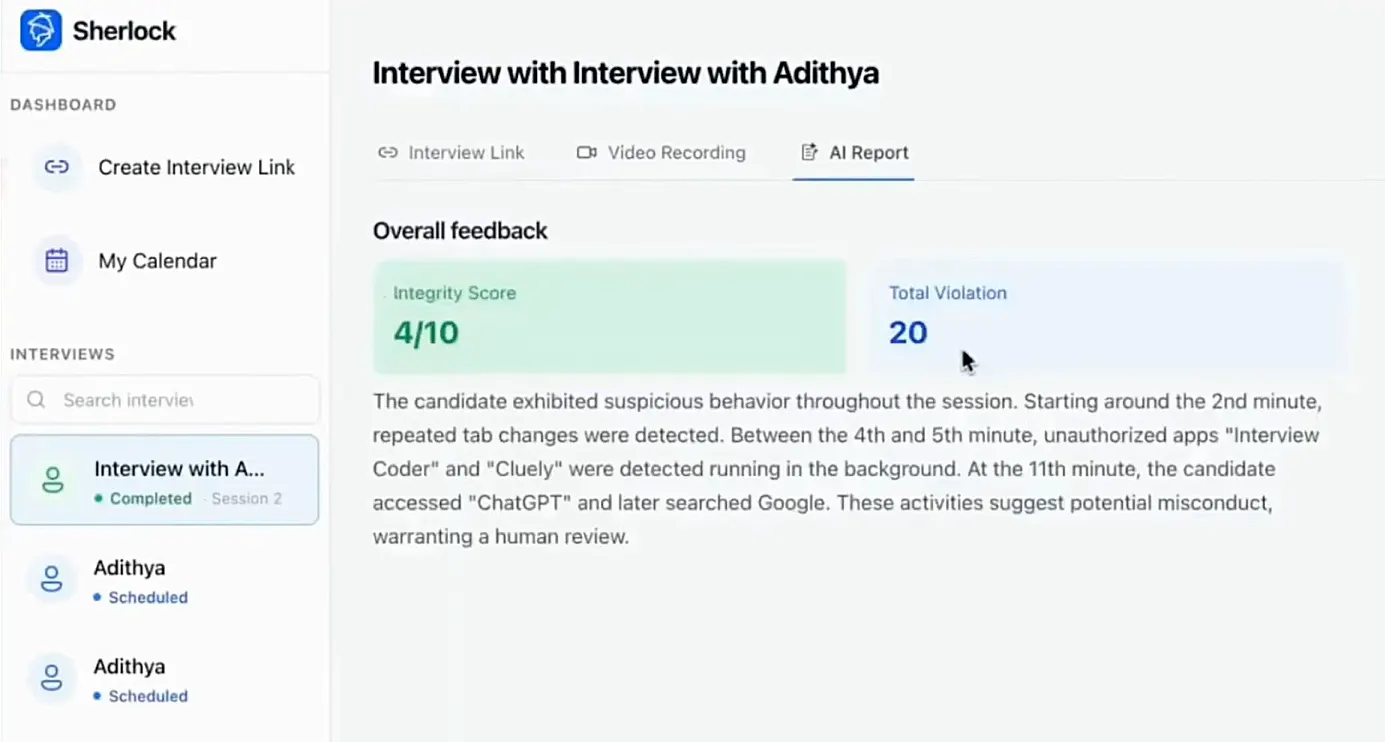
6. Actionable, Real-Time Signals for Interviewers
Rather than interrupting interviews, Sherlock AI provides clear, actionable indicators when AI assistance, deepfake usage, or proxy behavior is suspected.
This allows interviewers to probe deeper at the right moment and validate real capability.
Sherlock AI gives hiring teams the visibility, ensuring interviews measure real skill and real people, not AI-assisted performance.
Conclusion
Background AI assistance has quietly redefined what “strong interview performance” looks like. With AI copilots generating answers in real time, proxies stepping in off-screen, and deepfakes blurring candidate identity, remote interviews can no longer rely on confidence, fluency, or intuition as proof of real capability.
While interviewer-led techniques such as live reasoning and dynamic follow-ups help raise the bar, they don’t scale against fast, adaptive AI. This is where Sherlock AI becomes critical. By continuously monitoring interviews for signals of AI assistance, proxy behavior, and synthetic interaction patterns, Sherlock AI gives hiring teams objective visibility into what’s actually happening during an interview.