Back to all blogs
Explore the top 10 Codility proctoring alternatives to prevent cheating in technical assessments. Compare features, AI monitoring, and integrity tools for secure remote hiring.

Abhishek Kaushik
Feb 19, 2026

Remote technical assessments have become a core part of modern hiring, but ensuring their integrity remains a growing challenge. While platforms like Codility provide strong coding environments, their native proctoring capabilities often fall short when it comes to detecting sophisticated cheating tactics such as proxy test-takers, AI-assisted coding, screen mirroring, and remote desktop usage.
Recruiters today need more than just basic webcam monitoring; they need behavioral analysis, environment validation, and real-time risk detection to confidently evaluate candidate authenticity. This has led many talent teams to look for specialized proctoring solutions that integrate seamlessly with coding assessments while providing deeper visibility into candidate behavior.
In this blog, we’ll explore the top 10 Codility proctoring alternatives that help organizations secure their technical interviews, prevent impersonation, and maintain trust in remote hiring without disrupting the candidate experience.
Top 10 Codility Proctoring Alternatives
Choosing the right proctoring tool for technical assessments requires capabilities beyond standard webcam monitoring.
Here’s a handpicked list of 10 alternatives designed to secure coding interviews while fitting seamlessly into developer hiring workflows:
1. Sherlock AI
Sherlock AI is a purpose-built AI interview integrity and proctoring platform designed specifically for remote hiring workflows. Unlike traditional exam proctoring tools that rely on rigid browser lockdowns or passive webcam recording, Sherlock AI uses a multimodal behavioral intelligence engine that analyzes how candidates think, respond, and interact in real time.
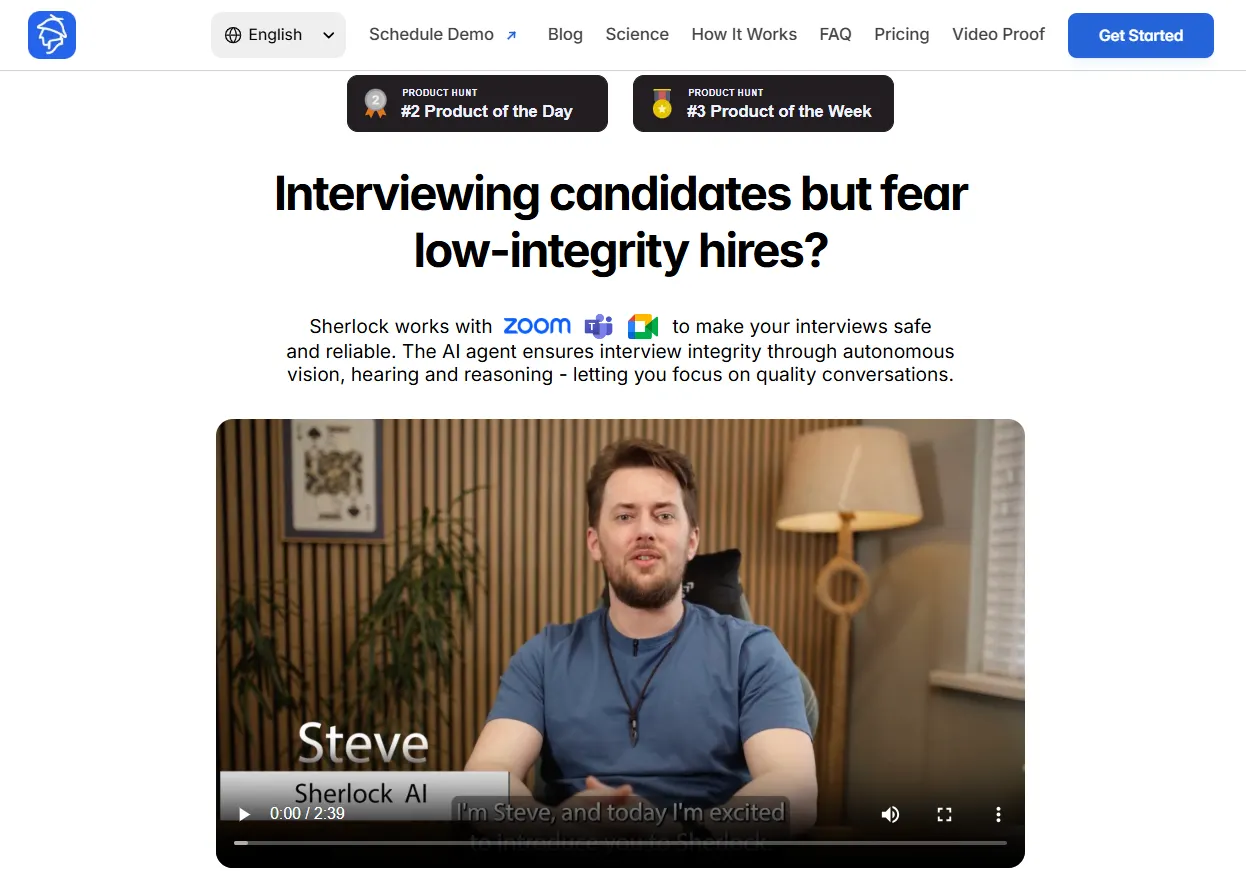
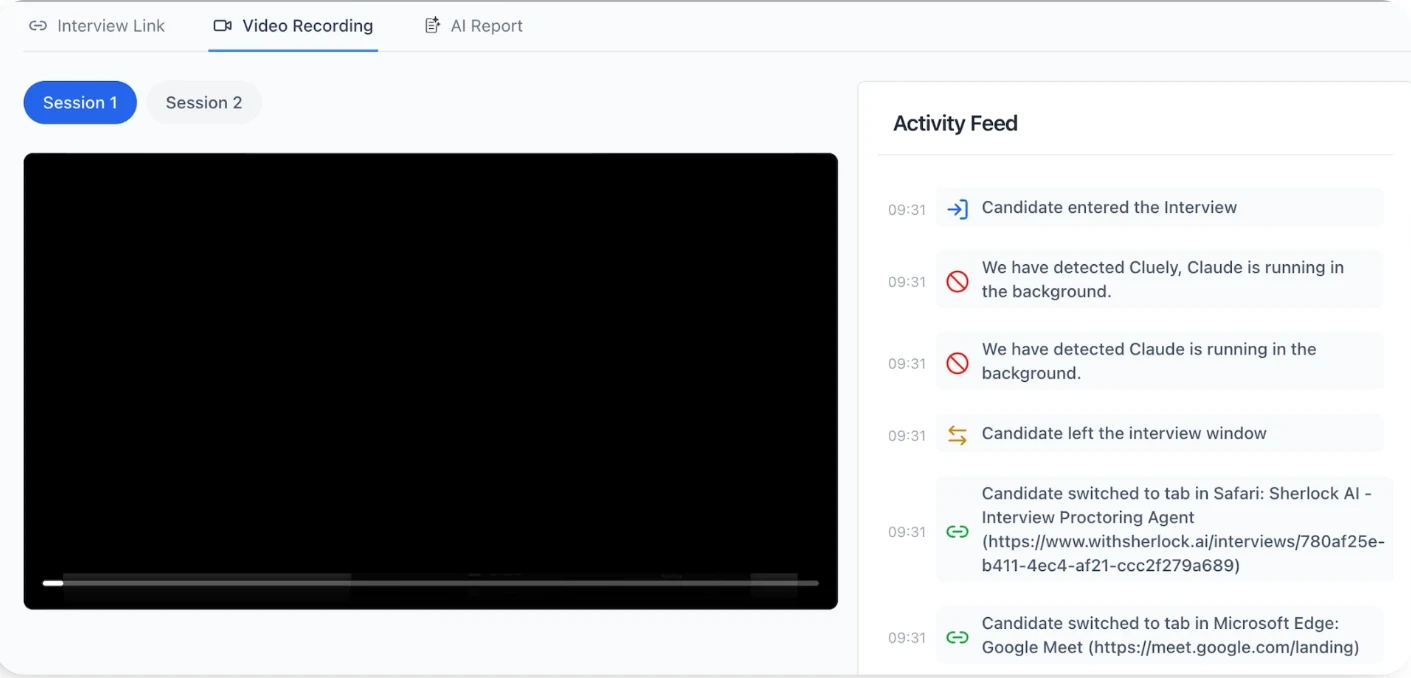
Sherlock AI's pattern-based detection approach evaluates consistency in reasoning, speech, gaze, and response timing across the entire interview rather than flagging isolated actions. This reduces bias and prevents penalizing normal behaviors like looking away while thinking.
Key Features
Real-time AI cheating detection
Identifies AI-generated responses, external assistance patterns, and suspicious timing anomalies during live interviews.Proxy and impersonation detection
Uses facial continuity, voice pattern matching, and presence verification to ensure the same candidate remains throughout the session.Deepfake and synthetic identity protection
Detects face masking, overlays, and liveness inconsistencies indicative of manipulated video feeds.Behavioral intelligence engine
Analyzes reasoning flow, language consistency, gaze patterns, and response latency instead of relying on rule-based flags.Device and system activity monitoring
Tracks tab switches, hidden applications, screen behavior, and unusual interaction patterns without intrusive lockdowns.Environmental and audio context analysis
Detects overlapping voices, whisper patterns, or background anomalies that may indicate external help.AI fluency scoring (optional)
Evaluates how effectively candidates use allowed AI tools, helping companies assess real-world AI collaboration skills.Live risk alerts for interviewers
Provides real-time signals during interviews so interviewers can probe deeper when integrity risks appear.Automated interview notes and insights
Generates structured summaries, behavioral observations, and integrity scores for faster decision-making.Human-in-the-loop decision model
Flags are advisory only—final hiring decisions remain with recruiters to ensure fairness.Privacy-first architecture
Avoids excessive surveillance and focuses on high-signal behavioral data to maintain candidate trust and compliance.Audit logs and enterprise controls
Supports role-based access, activity logging, and region-specific data residency for regulated environments.Seamless calendar and ATS integration
Auto-joins scheduled interviews and fits into existing hiring workflows without additional setup for candidates.
Best For
Remote technical interviews and live coding rounds
High-volume hiring where manual monitoring isn’t scalable
Organizations concerned about AI-assisted cheating and proxy candidates
Teams that want strong integrity checks without harming candidate experience
Sherlock AI stands out as a modern, interview-native proctoring solution that moves beyond surveillance to behavioral authenticity verification. With real-time fraud detection, AI fluency insights, and seamless integration into existing interview stacks, it enables hiring teams to make confident, evidence-based decisions while preserving a fair and candidate-friendly experience.
👉 Explore How Sherlock AI Detects AI Interview Cheating in Remote Hiring
2. HackerRank
HackerRank is a developer assessment platform that offers built-in proctoring capabilities for remote coding tests. While its primary strength lies in structured coding challenges and automated evaluation, it also provides basic integrity controls to help recruiters monitor candidate behavior during online assessments.
Key Features
Webcam snapshots and candidate monitoring during test sessions
Tab switch detection to flag potential external assistance
Plagiarism detection engine that compares code similarity across submissions
IP and location tracking to identify suspicious access patterns
Full-screen enforcement to reduce multitasking during assessments
👉 Find better options with HackerRank proctoring alternatives.
3. CodeSignal
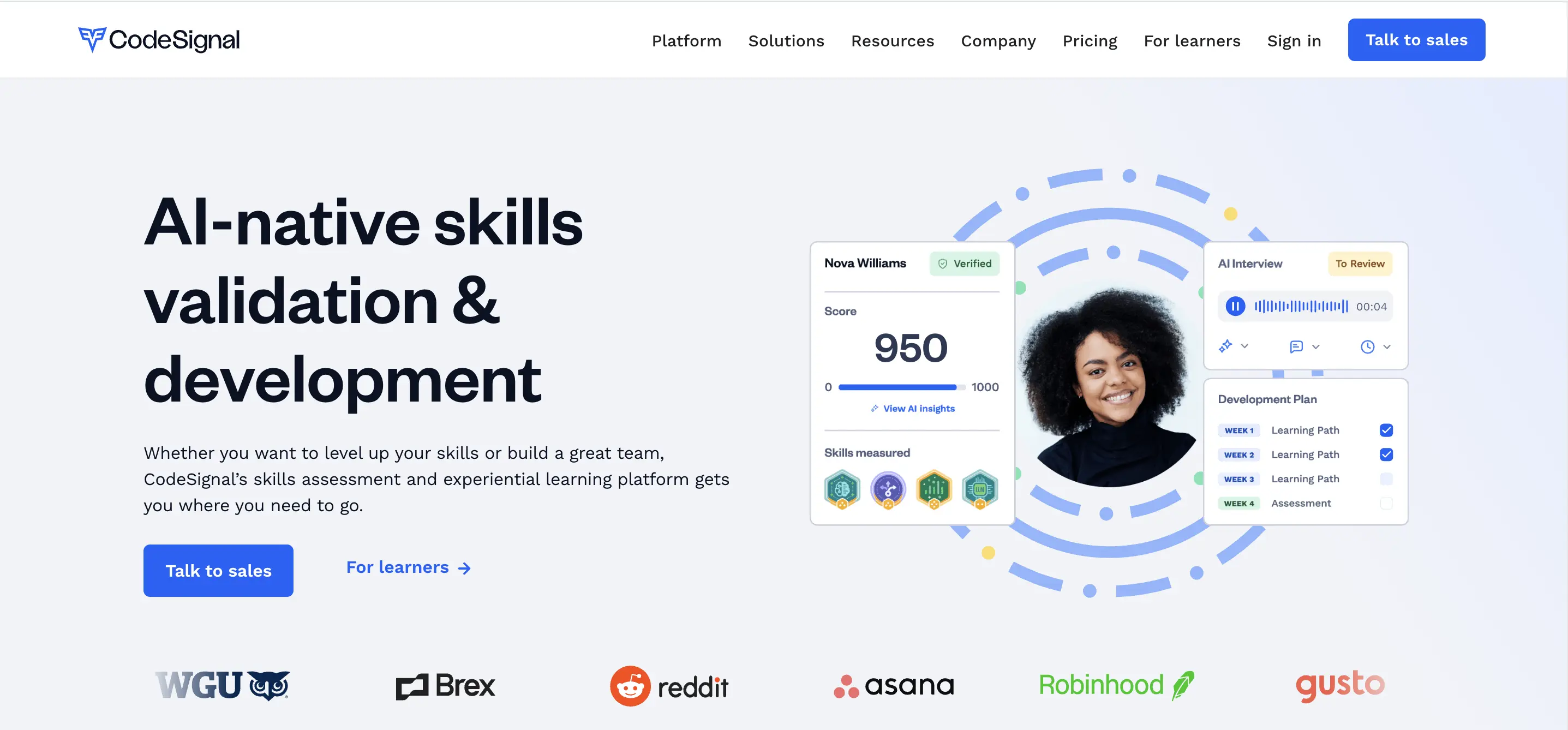
CodeSignal is a developer assessment platform known for its standardized coding tests and strong benchmarking capabilities. It includes native proctoring features that help organizations validate candidate identity and monitor test behavior during remote technical evaluations.
Key Features
ID verification and webcam monitoring for candidate authentication
Screen recording during assessments for post-test review
Tab switching and focus tracking to flag suspicious activity
Keystroke and coding behavior analysis to detect anomalies
Plagiarism detection through code similarity matching
4. Coderbyte
Coderbyte is a developer assessment platform focused on pre-screening candidates through coding challenges and take-home projects. It offers lightweight proctoring and integrity controls that help recruiters monitor candidate activity without creating a heavily restricted test environment.
Key Features
Plagiarism detection using code similarity analysis
Time tracking and activity logs for candidate sessions
Webcam snapshots (optional) for basic identity verification
Question randomization to reduce answer sharing
Custom test links with expiration controls to limit unauthorized access
5. TestGorilla
TestGorilla is a pre-employment testing platform that combines skills assessments with built-in anti-cheating measures. It focuses on asynchronous screening and provides automated integrity checks to help recruiters identify suspicious behavior during remote tests.
Key Features
Webcam snapshots throughout the test for identity verification
Browser activity monitoring to detect tab switching
Full-screen enforcement to reduce multitasking
Question randomization and large test libraries to prevent sharing
Plagiarism detection for text-based and coding responses
👉 Not sure about TestGorilla? Explore some of the best TestGorilla alternatives
6. DevSkiller
DevSkiller is a technical assessment platform built around real-world coding tasks and project-based evaluations. Its proctoring capabilities focus on session monitoring and activity tracking to help recruiters verify candidate authenticity during remote technical tests.
Key Features
RealLifeTesting™ environment that simulates actual development workflows
Screen recording and session playback for post-assessment review
IP monitoring and access tracking to detect anomalies
Time tracking and activity logs for candidate behavior analysis
Plagiarism detection for code similarity and reuse patterns
7. iMocha
iMocha is a skills assessment platform that offers technical, cognitive, and language tests with built-in proctoring controls. It provides automated monitoring and AI-based flagging to help organizations detect suspicious behavior during remote hiring assessments.
Key Features
AI-based proctoring with webcam and audio monitoring
Browser activity and tab switch detection
Full-screen enforcement for controlled test environments
Candidate image capture at intervals for identity validation
Plagiarism detection for coding and text responses
👉 Looking for more options? Explore iMocha alternatives.
8. Qualified.io
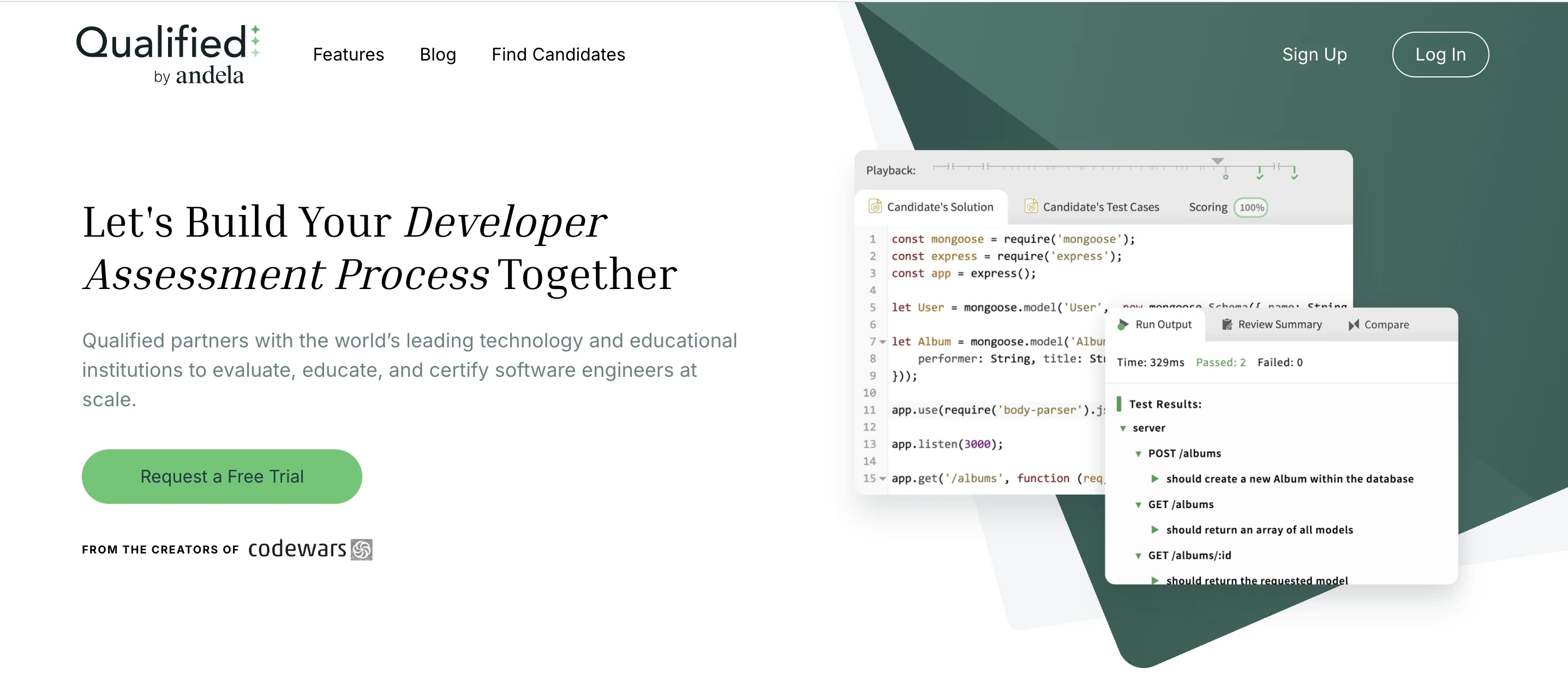
Qualified.io is a hands-on technical assessment platform designed for realistic coding evaluations and pair-programming style tests. Its proctoring approach is lightweight, focusing on activity tracking and structured environments to help recruiters review candidate performance with context.
Key Features
Realistic coding environments with project-based tasks
Session playback and activity timelines for reviewer analysis
Time tracking per challenge to identify irregular patterns
Code playback to review solution development step-by-step
Plagiarism detection through code comparison mechanisms
9. TestTrick
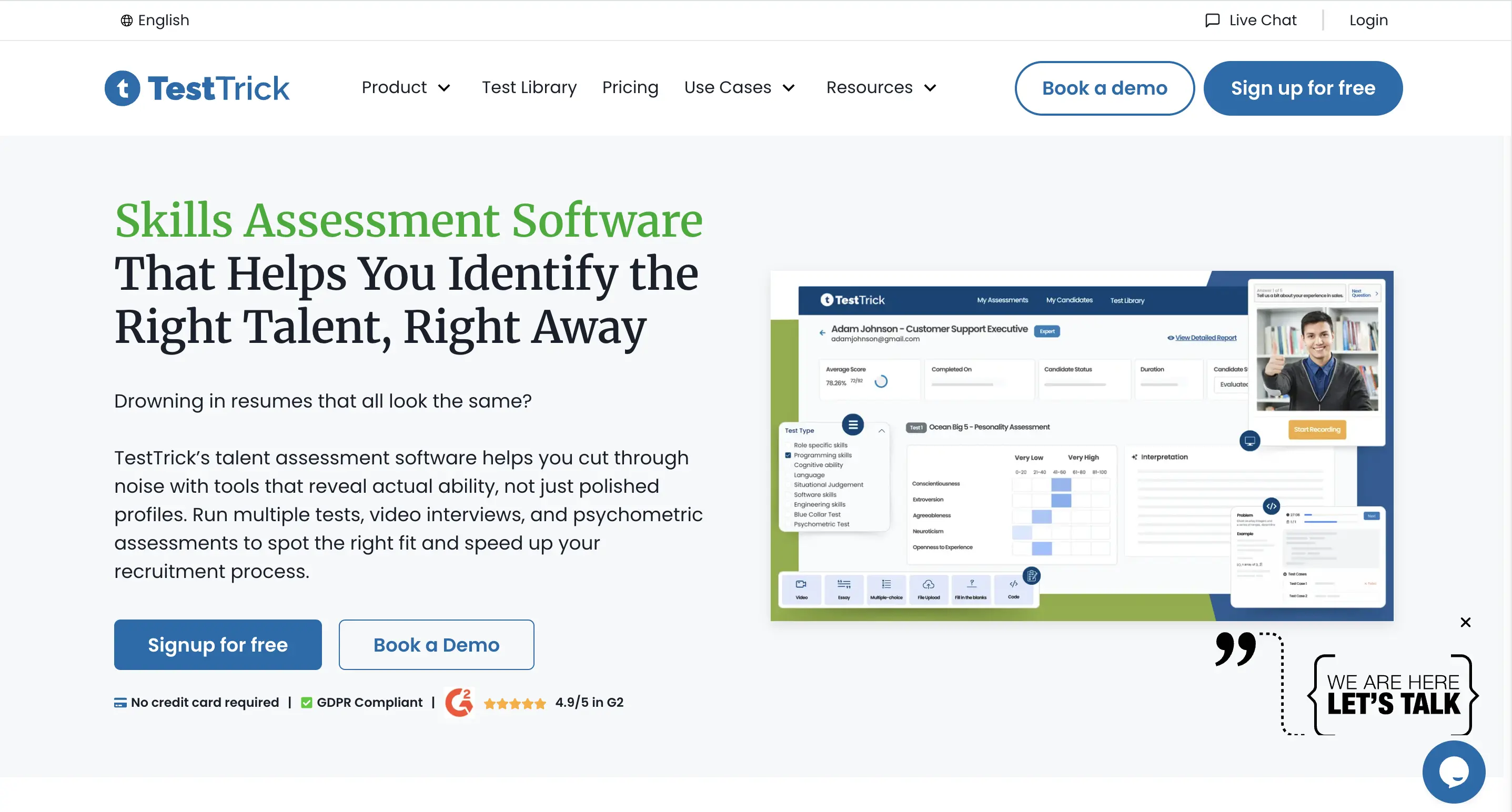
TestTrick is an online assessment platform that offers automated proctoring features for remote hiring and academic testing. It focuses on AI-based monitoring and browser controls to help organizations maintain test integrity without requiring manual invigilation.
Key Features
AI webcam proctoring with candidate face detection
Browser lockdown and full-screen enforcement
Tab switch and window activity monitoring
Automated flagging of suspicious behavior in test sessions
Question shuffling and randomization to reduce answer sharing
10. TestDome
TestDome is a pre-employment testing platform that offers coding, aptitude, and skill-based assessments with built-in anti-cheating controls. It emphasizes automated evaluation and structured test environments while providing basic monitoring features to help recruiters review candidate authenticity.
Key Features
Webcam snapshots during tests for identity verification
IP and location tracking to detect suspicious access patterns
Question randomization to prevent answer sharing
Time limits per question to reduce external assistance
Plagiarism detection for coding and written responses
Conclusion
Choosing the right Codility proctoring alternative depends on how deeply you need to validate candidate authenticity. While many assessment platforms offer basic measures like webcam snapshots, tab-switch detection, and plagiarism checks, these controls are often reactive and limited to post-test review. For modern technical hiring where AI assistance, proxy candidates, and real-time collaboration tools are increasingly common, recruiters need solutions that analyze behavior, context, and authorship in real time.
Platforms that combine coding environments with integrity signals can help, but the strongest approach is to add a dedicated interview-focused proctoring layer such as Sherlock AI, which verifies who is solving the problem and how they are reasoning through it during live technical rounds. This ensures fair evaluations, protects hiring quality, and maintains candidate trust without creating an overly restrictive test experience.
Ultimately, the best choice is one that fits seamlessly into your technical hiring workflow, scales with remote interviews, and provides actionable insights rather than just recordings, so your team can make confident, evidence-based hiring decisions.