Back to all blogs
Learn what video proctoring is, its types, benefits, and how it works. Discover how AI-powered proctoring prevents cheating, ensures exam integrity, and enables secure remote assessments.
Abhishek Kaushik
May 18, 2026
As education and recruitment move increasingly online, ensuring the credibility of assessments has become a critical challenge. Traditional exam supervision methods are no longer sufficient in a remote environment. Without proper monitoring, exams can be vulnerable to impersonation, collaboration with others, or use of unauthorized resources.
Video proctoring addresses these challenges by allowing candidates to be monitored through webcams, microphones, and screen activity during exams. It not only prevents cheating but also ensures a fair and standardized testing environment for all participants, regardless of location. According to industry reports, 78 percent of universities and colleges now use some form of online proctoring, while 66 percent of certification providers rely on automated or AI-driven proctoring tools to uphold exam integrity.
Beyond maintaining integrity, video proctoring also offers practical benefits. It allows institutions and organizations to conduct assessments at scale, reduces logistical costs associated with physical exam centers, and provides detailed reporting for post-exam analysis.
With video proctoring, remote assessments can achieve the same reliability and credibility as traditional in-person exams, while offering flexibility, convenience, and efficiency for both administrators and candidates.
What is Video Proctoring?
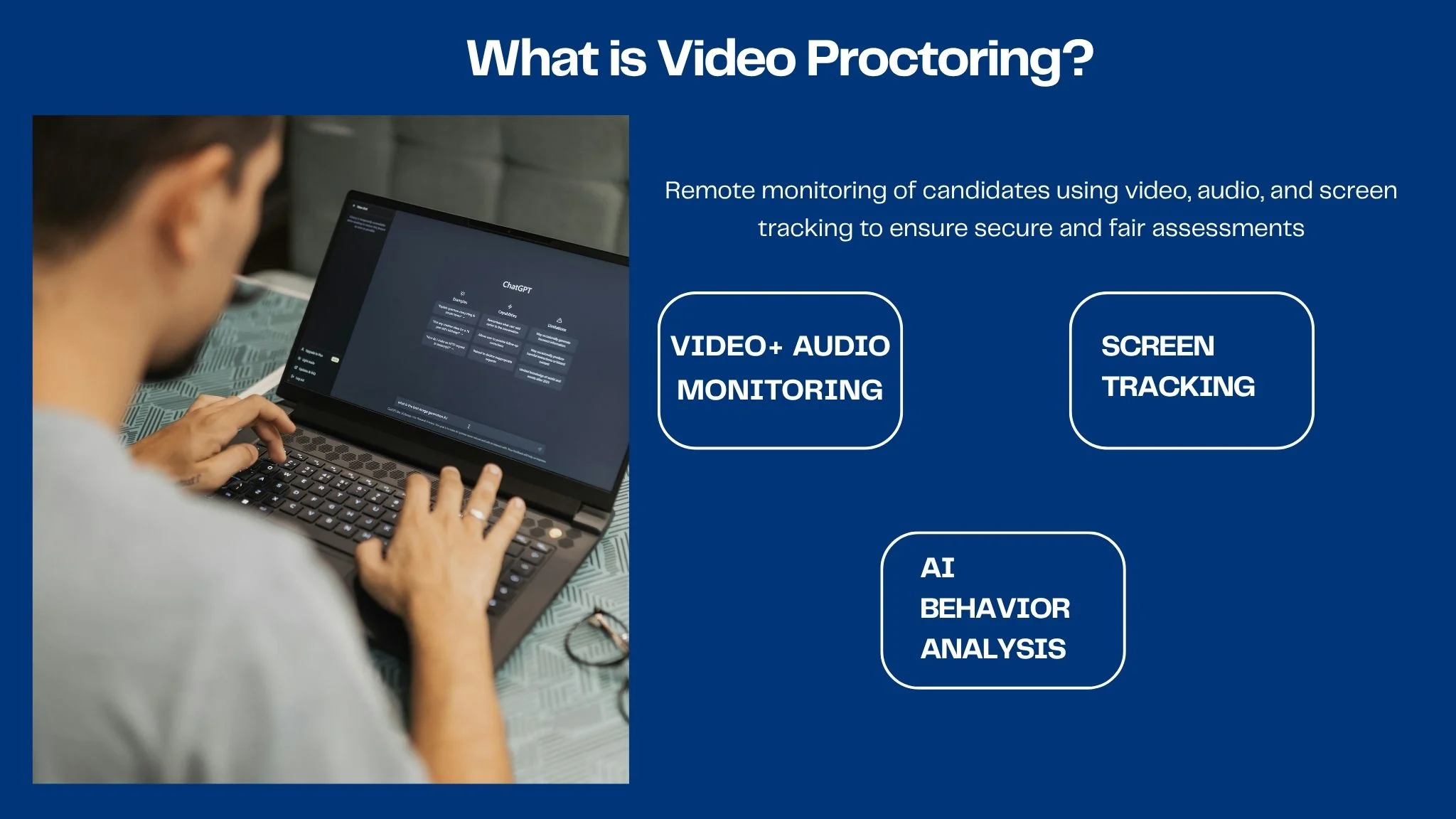
Video proctoring, also called online or virtual proctoring, is the process of supervising candidates during exams using video, audio, and screen monitoring technologies. It helps ensure the integrity of the exam by detecting and preventing cheating, impersonation, and unauthorized assistance.
Unlike traditional in-person supervision, video proctoring allows exams to be conducted remotely while maintaining a secure and controlled environment. Candidates are observed in real time or through recorded sessions, and their behavior, surroundings, and actions during the test are analyzed to ensure compliance with exam rules.
This approach not only increases exam security but also provides flexibility for candidates and administrators, making it suitable for educational institutions, certification bodies, and recruitment processes.
Types of Video Proctoring
Video proctoring comes in several formats to meet different exam and organizational needs. Each type offers unique features, benefits, and levels of supervision.
1. Live Proctoring
Live proctoring involves real-time monitoring of exam sessions by trained proctors through webcam feeds and screen sharing. This approach enables proctors to directly intervene if they detect any form of cheating or suspicious activity, ensuring the integrity of the exam process.
Use: Ideal for high-stakes exams where maintaining the utmost integrity is critical.
Pros:
Immediate intervention in case of misconduct
Personalized monitoring adds a human element, potentially deterring cheating
High level of security and trustworthiness
2. Recorded Proctoring
Recorded proctoring captures the candidate’s video, audio, and screen activity during the exam for later review by proctors. This method allows detailed analysis of the session without requiring real-time supervision.
Use: Suitable for exams with flexible schedules or large candidate volumes.
Pros:
Allows review of multiple candidates at once
Reduces live supervision costs
Provides detailed records for post-exam auditing
3. Automated AI Proctoring
AI proctoring uses artificial intelligence to monitor the candidate’s behavior, screen activity, and environment in real time. It can detect suspicious patterns such as multiple faces, unusual movements, or attempts to use external aids.
Use: Best for large-scale exams requiring continuous monitoring with minimal human intervention.
Pros:
Scalable and cost-effective
Detects advanced cheating techniques like proxy candidates or AI-assisted assistance
Provides real-time alerts for faster decision-making
4. Hybrid Proctoring
Hybrid proctoring combines AI monitoring with live human oversight. AI handles routine observation while human proctors review flagged incidents or ambiguous situations.
Use: Ideal when balancing scalability with a need for human judgment.
Pros:
Ensures both efficiency and accuracy
Reduces workload on human proctors
Combines strengths of AI and human oversight
5. Lockdown Browser Proctoring
Lockdown browsers restrict the candidate’s computer functions during the exam, preventing navigation to other websites, opening applications, or accessing unauthorized materials.
Use: Suitable for exams requiring strict control over the test environment.
Pros:
Prevents digital cheating attempts
Ensures compliance with exam rules
Integrates easily with other proctoring methods
Advantages of Video Proctoring
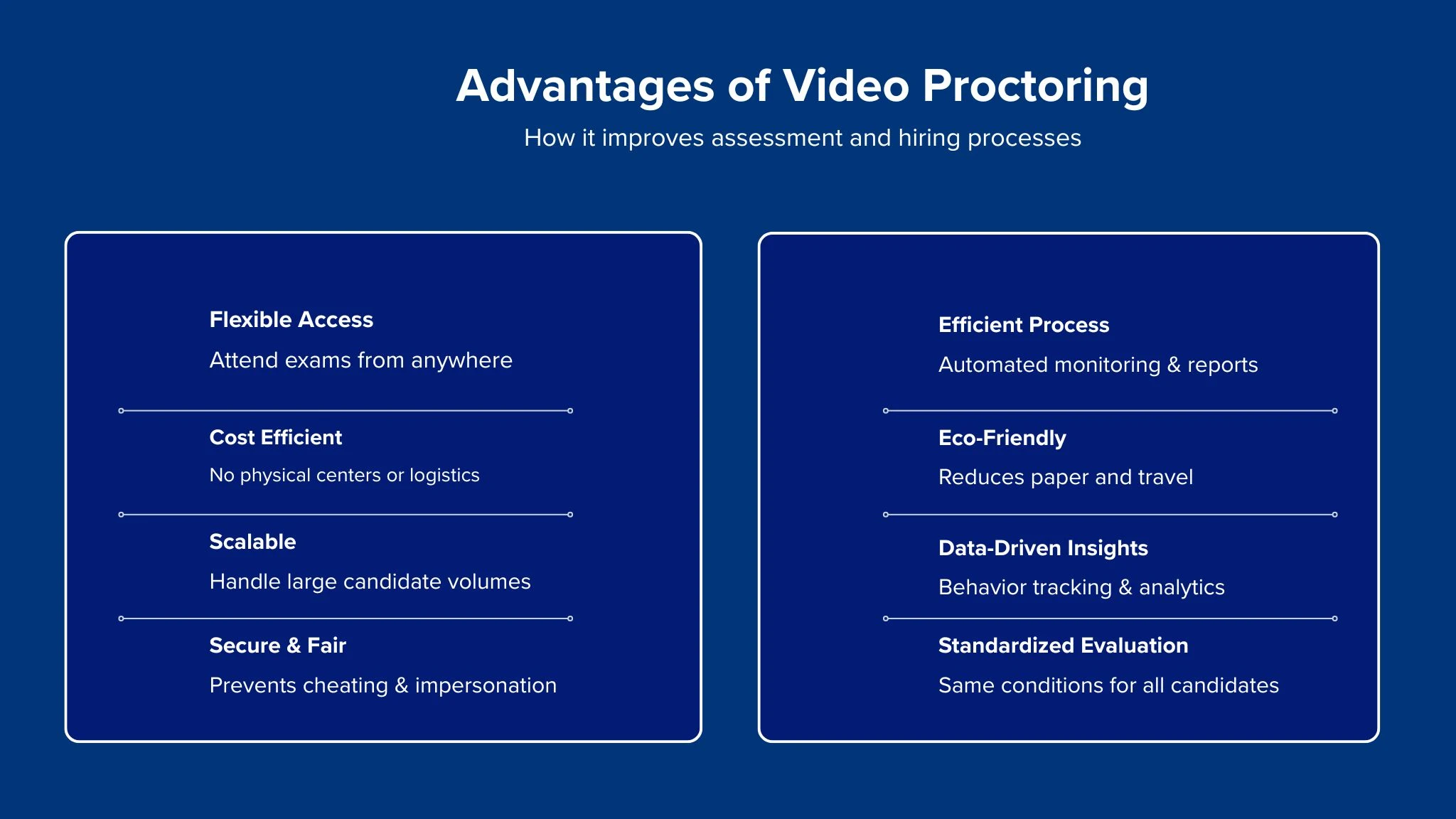
To better understand how video proctoring can transform your assessment and recruitment process, let's explore its key benefits. This will help illustrate how it simplifies and enhances each step of evaluating candidates while maintaining exam integrity.
Geographical Flexibility
Video proctoring removes geographical limitations, allowing candidates from remote or distant locations to take exams without traveling to a physical center. This expands the talent pool for organizations and provides equal opportunities to candidates who may be restricted by location.
It encourages inclusivity and allows companies to access a wider spectrum of potential talent. Candidates can participate comfortably from their own environment, reducing logistical barriers and ensuring a smoother examination experience.
Cost-Effectiveness
By eliminating the need for physical exam venues, printed materials, and in-person proctors, video proctoring significantly reduces the cost of conducting assessments. Organizations can allocate resources more efficiently, saving money on logistics while still maintaining high standards of supervision and security.
Additionally, the reduced reliance on manual oversight or travel expenses allows companies to reinvest resources into improving the candidate experience or scaling recruitment efforts.
Scalability
Video proctoring enables organizations to manage large-scale exams effortlessly. Hundreds or even thousands of candidates can be monitored simultaneously, without compromising the quality or reliability of the supervision.
This makes it ideal for institutions or companies conducting mass assessments or recruitment drives. With AI-assisted monitoring, scaling up exams no longer means increasing manual supervision proportionally.
Integrity and Security
Ensuring exam fairness is the core of video proctoring. Advanced monitoring prevents cheating, impersonation, and unauthorized assistance, maintaining the credibility of assessments.
With AI and behavioral analysis, suspicious activities can be detected in real time. This gives organizations confidence in the validity of the results and ensures that only qualified candidates succeed.
Convenience and Efficiency
Video proctoring simplifies the entire assessment process. Scheduling, monitoring, and reporting are streamlined, reducing administrative effort.
Automated systems generate detailed insights, flag anomalies, and make reviewing candidate behavior faster and more efficient. This convenience improves both the administrator’s workflow and the candidate’s experience.
Environmentally Friendly
Video proctoring reduces reliance on paper-based exams and physical exam centers, cutting down on printing, travel, and resource consumption.
This digital-first approach supports sustainable practices while promoting a modern, technology-driven assessment culture.
Data-Driven Insights
Another significant advantage of video proctoring is its ability to provide data-driven insights into candidate behavior and performance. By recording and analyzing video, audio, and screen activity, organizations can better understand how candidates approach assessments.
This allows examiners to identify patterns, detect potential issues, and refine evaluation strategies for future assessments. Over time, these insights help create a more precise, effective, and fair recruitment or evaluation process.
Standardization and Compliance
Video proctoring ensures that every candidate is evaluated under the same conditions, promoting standardization and fairness across assessments. This consistency reduces bias and enhances the credibility of results, especially for large-scale exams or recruitment drives.
Additionally, digital records and detailed reports provide a clear audit trail. This helps organizations meet compliance requirements, address disputes, and maintain transparency in the assessment process.
How Does Video Proctoring Work?
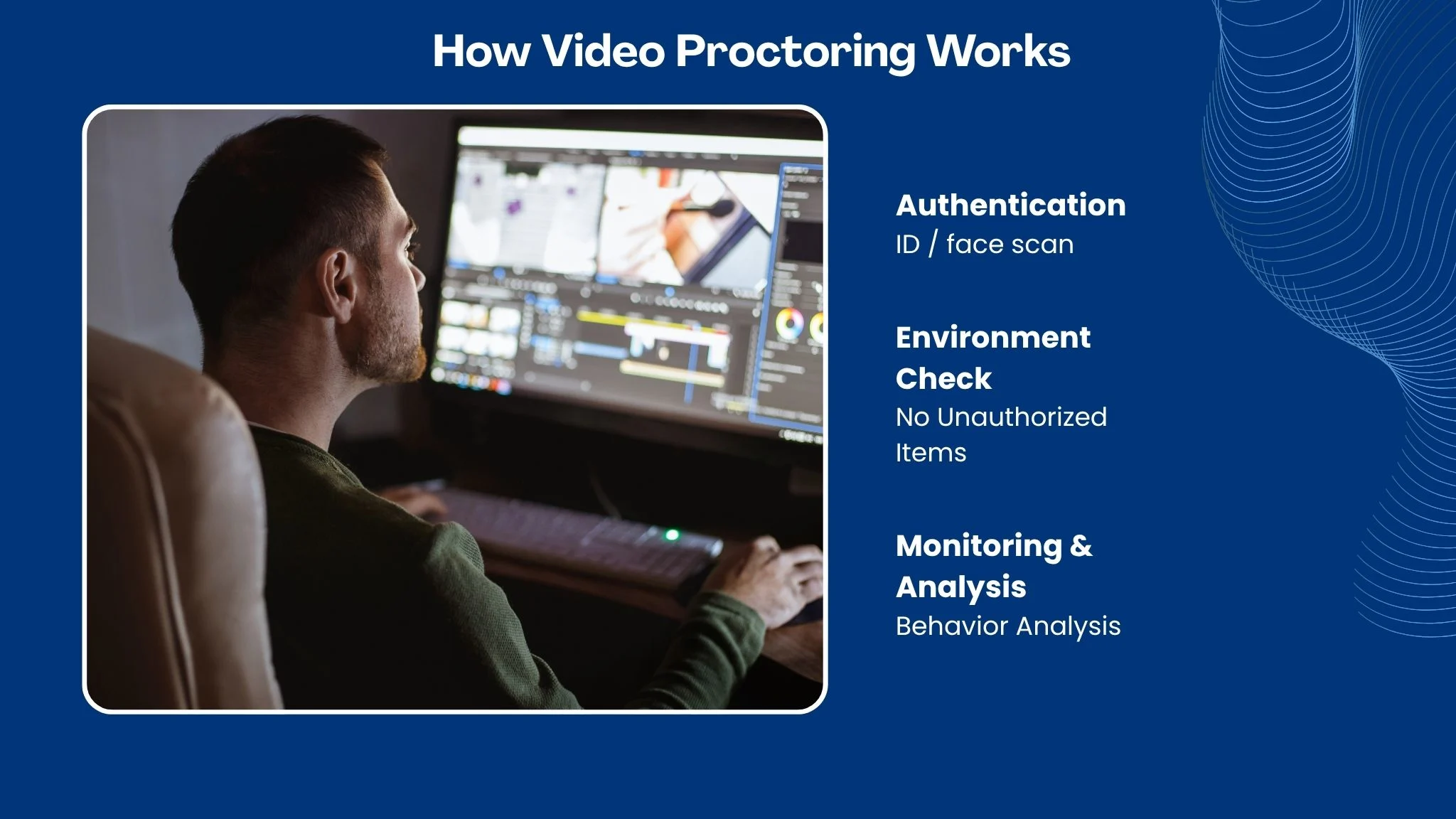
Video proctoring works by combining technology, monitoring, and analysis to ensure the integrity and fairness of online assessments. The process typically begins with candidate authentication, where the system verifies the identity of the test-taker using government ID checks and facial recognition to prevent impersonation. Once authenticated, candidates may be asked to perform an environment check, scanning their room to ensure no unauthorized materials or individuals are present.
Candidate Authentication
Before the exam begins, candidates are verified using official ID documents, facial recognition, or biometric checks. This prevents impersonation and ensures that only the registered candidate can access the test. Advanced systems can also detect inconsistencies in appearance, lighting, or multiple faces in the frame.
Environment Check
Candidates are asked to scan their surroundings with their webcam. This step ensures that no unauthorized books, notes, devices, or people are present in the room. Some systems use AI to automatically detect objects or movement in the background that could indicate cheating attempts.
Device and Browser Security
Many video proctoring platforms include lockdown browsers or system checks that restrict the candidate from opening new tabs, copying content, or accessing external applications during the exam. This adds an extra layer of exam security.
Live Monitoring
In live proctoring, trained human proctors monitor candidates in real time. Proctors can intervene immediately if suspicious behavior is detected, such as looking away repeatedly, using unauthorized devices, or receiving outside assistance.
Recorded Proctoring
Exams are recorded for later review. This allows proctors to carefully analyze flagged behavior, screen activity, or anomalies that may require further investigation. It is particularly useful for large-scale exams or when real-time supervision is not possible.
Automated AI Proctoring
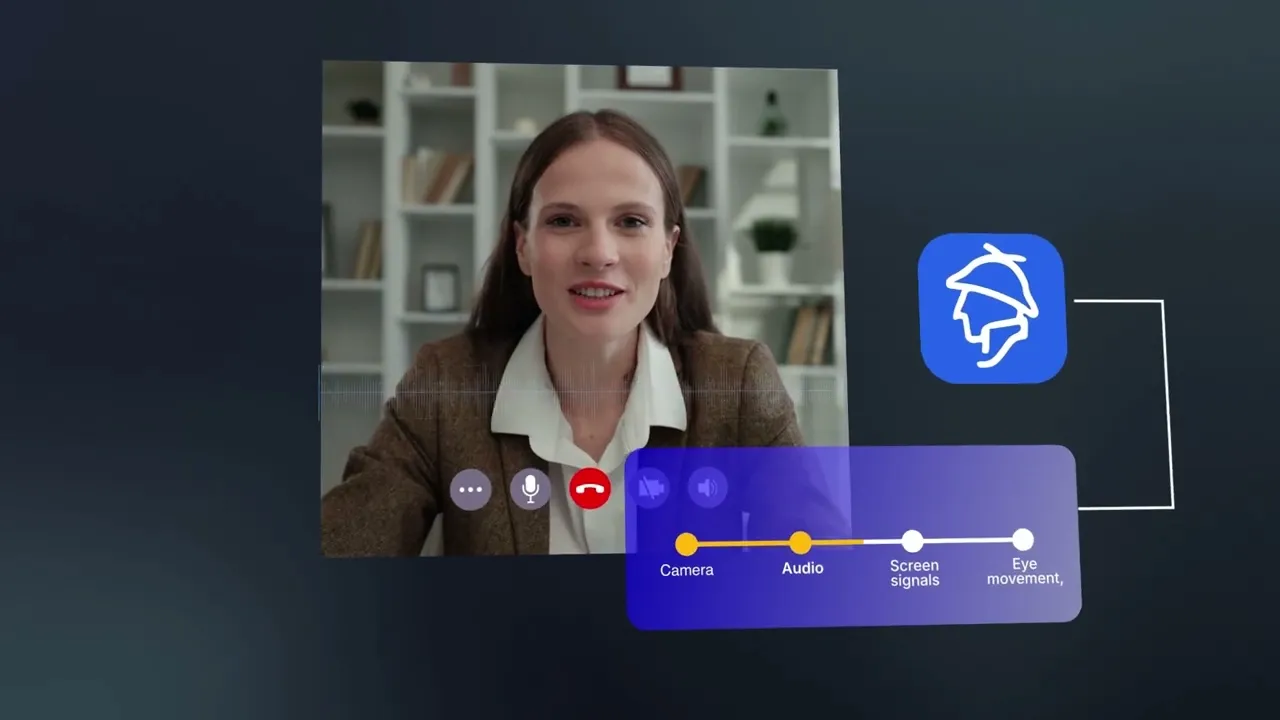
AI monitors candidates continuously using video, audio, and screen activity. It can detect behaviors such as unusual eye movement, multiple faces, background noise, or attempts to use AI-assisted tools. The system can generate real-time alerts for any suspicious activity, making the process faster and more accurate than manual observation alone.
Behavior and Pattern Analysis
Advanced systems analyze patterns across multiple candidates or sessions. This helps identify coordinated cheating attempts or repeated suspicious behaviors that might otherwise go unnoticed.
Report Generation
After the exam, detailed reports are created summarizing candidate behavior, suspicious activity, and any incidents flagged by AI or human proctors. These reports allow administrators to make informed decisions and maintain the integrity of the exam process.
Post-Exam Review and Follow-Up
In case of flagged incidents, examiners can review recordings or reports in detail. Organizations can take appropriate actions, such as invalidating results or requesting additional verification, to uphold exam standards.
How Video Proctoring Enhances Hiring
Video proctoring has become an essential tool for organizations looking to maintain integrity and fairness during the hiring process. By monitoring candidates in real time or through recorded sessions, companies can prevent impersonation, detect proxy interview fraud, and reduce the risk of external assistance or AI-driven cheating. This ensures that assessments accurately reflect a candidate’s skills and abilities, leading to better hiring decisions.
Beyond security, video proctoring streamlines recruitment by automating supervision, flagging irregular behavior, and generating detailed reports for easy review. Recruiters no longer need to spend hours manually observing or analyzing candidate performance. Additionally, remote proctoring allows organizations to assess talent from anywhere in the world, expanding the candidate pool and promoting inclusivity.
By integrating video proctoring into hiring workflows, companies can maintain credibility, reduce administrative burden, and make faster, more informed decisions. It also enhances the candidate experience, providing a transparent and standardized process that reassures applicants about fairness and consistency throughout the assessment.
Why Sherlock AI Video Proctoring is a Game-Changer for Hiring
Video proctoring has become an essential tool for organizations looking to maintain integrity and fairness during the hiring process. With Sherlock AI, companies can monitor candidates in real time or through recorded sessions, preventing impersonation, detecting proxy candidates, and reducing the risk of external assistance or AI-driven cheating.
Key Features of Sherlock AI in Video Proctoring
Real-Time AI Monitoring – Continuously observes candidate behavior, facial expressions, and screen activity to detect suspicious actions immediately.
Proxy Candidate Detection – Identifies attempts where someone else tries to take the interview on behalf of the registered candidate.
Deepfake and AI-Assisted Cheating Prevention – Detects advanced cheating techniques, including AI-generated videos, voice manipulation, or unauthorized AI tools.
Facial Recognition and Authentication – Verifies candidate identity before and during the interview to ensure authenticity.
Environment and Device Scanning – Checks the candidate’s surroundings and device usage for unauthorized materials or multiple people in the room.
Automated Alerts and Notifications – Flags irregular or suspicious behavior instantly, allowing recruiters or proctors to take timely action.
Detailed Reporting and Analytics – Generates comprehensive post-interview reports highlighting potential issues, candidate performance, and integrity metrics.
Hybrid Proctoring Support – Combines AI-driven monitoring with optional human oversight for maximum reliability and accuracy.
Scalable and Secure – Handles large-scale interviews without compromising security or performance, making it suitable for global hiring campaigns.
Improved Candidate Experience – Provides a seamless and transparent interview process that reassures candidates about fairness and credibility.
👉 Explore How Sherlock AI Stops Invisible Interview Cheating
Conclusion
Video proctoring has become a critical solution for ensuring the integrity, scalability, and efficiency of modern assessments. As organizations continue to shift toward remote hiring and online evaluations, the need for secure and reliable proctoring methods is more important than ever. By leveraging video, audio, and AI-driven monitoring, video proctoring creates a fair and standardized testing environment that matches the credibility of traditional in-person exams.
From enabling global access to reducing operational costs and enhancing security, video proctoring transforms how assessments are conducted. It not only protects against cheating and impersonation but also streamlines the entire evaluation process, making it faster and more efficient for both administrators and candidates.
With advanced solutions like Sherlock AI, organizations can take this a step further by detecting sophisticated threats such as AI-assisted cheating, hidden real-time AI copilot tools such as Cluely and Parakeet AI and proxy candidates. As technology evolves, video proctoring will continue to play a vital role in building trust, improving hiring outcomes, and ensuring that assessments truly reflect candidate capabilities.