Back to all blogs
Sherlock AI monitors remote interviews to detect AI assistance, copilots, and suspicious behavior without disrupting candidates or recruiters.

Abhishek Kaushik
Mar 5, 2026
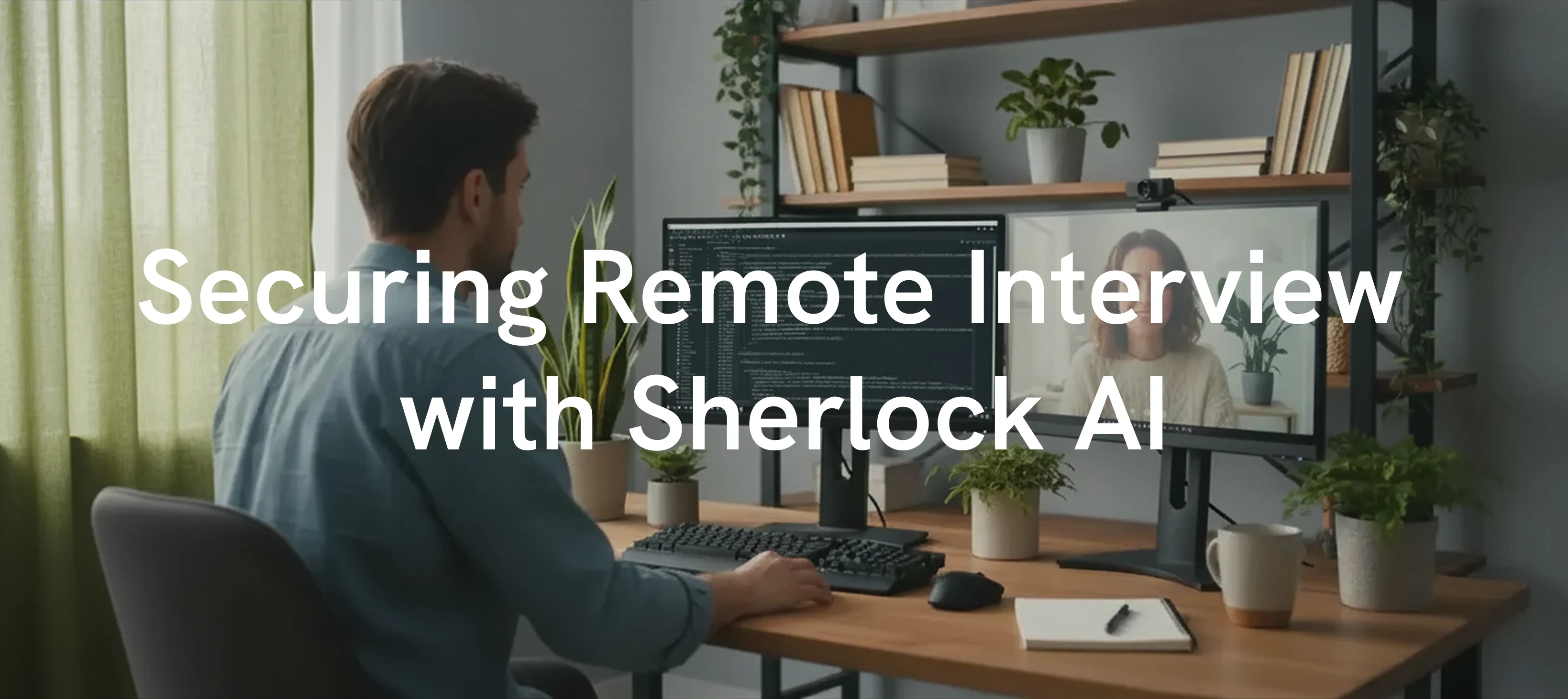
In today’s world, technology continues to evolve at a rapid pace. Artificial intelligence tools have fundamentally changed the way people work, learn, and communicate. From drafting content and writing code to answering complex questions in seconds, AI has become deeply embedded in everyday workflows. While these tools deliver significant productivity gains, they also introduce new challenges in high trust environments such as hiring. As remote interviews become standard, candidates now have access to real-time AI assistants and secondary devices that can quietly support them during live conversations, producing polished responses that are difficult to distinguish from genuine human reasoning.
For organizations hiring remotely, this creates a growing integrity gap. Interviews are designed to evaluate real skills, critical thinking, and communication under pressure, yet real-time AI assistance and other unfair methods can undermine these signals. Traditional interview formats and basic monitoring tools were not built to detect this new category of assistance. Surveys suggest that 72 % of recruiters encounter fake resumes, portfolios, or credentials generated with AI, and 45 % of developers admitted using AI during coding assessments, a signal that AI influence in hiring is widespread beyond just interview conversations.
This is where Sherlock AI comes in. Sherlock AI is a real-time AI monitoring and detection platform built to secure remote interviews and protect the integrity of candidate evaluation. It is used by organizations across engineering, finance, healthcare, and IT services that rely on remote interviews and require strong assurance of interview authenticity.
What Is Sherlock AI
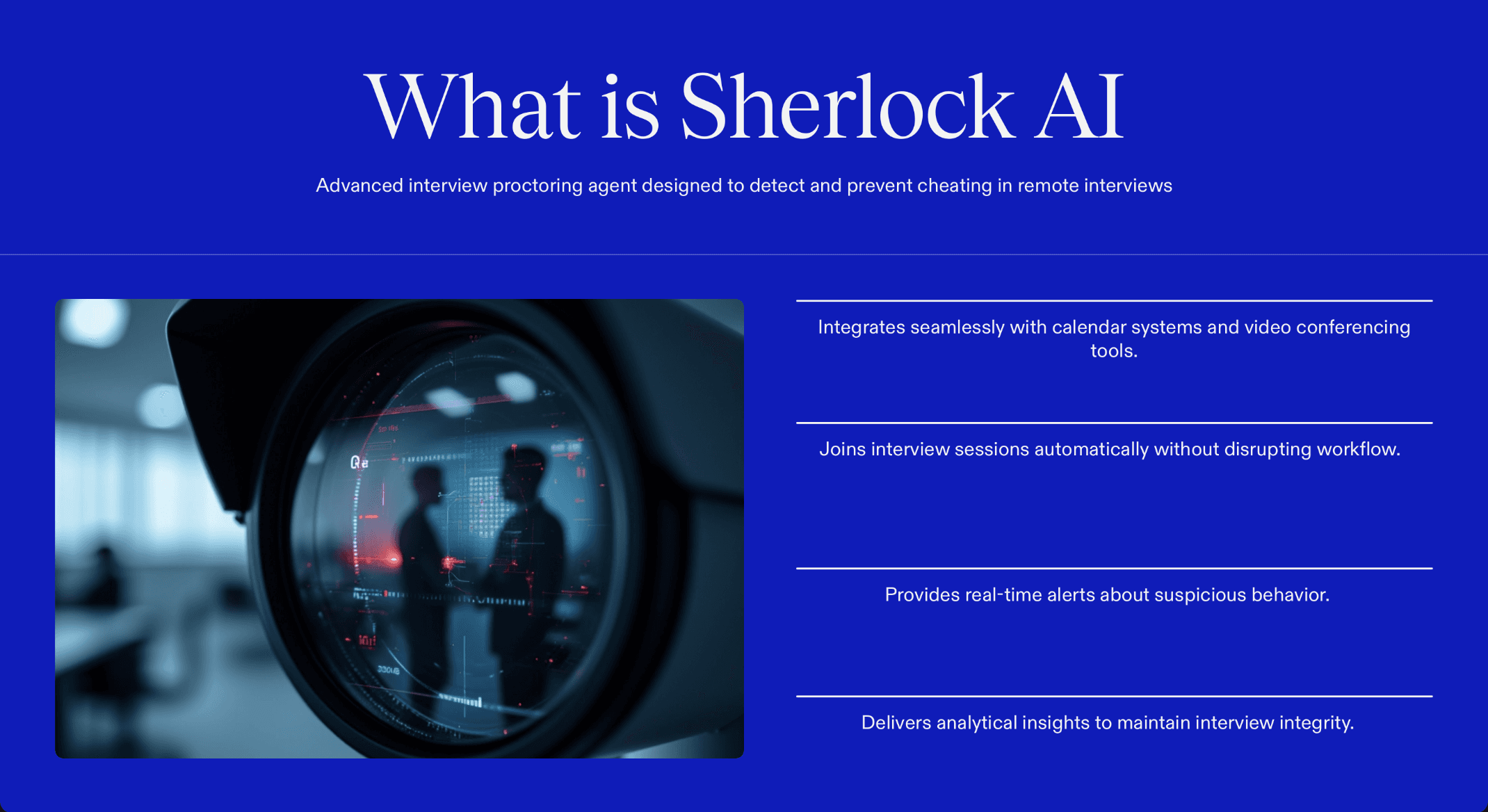
Sherlock AI is an advanced interview proctoring agent designed to detect and prevent cheating in remote interviews. It integrates with calendar systems and popular video conferencing tools so it can join interview sessions automatically and monitor activity without disrupting your workflow. Sherlock AI provides real-time alerts and insights so interviewers can stay focused on evaluating skills while the system looks for suspicious behavior.
This platform works with tools like Google Meet, Zoom, and Microsoft Teams and replaces original meeting links with secure, monitored links. Recruiters and HR teams can connect their calendars, enable Sherlock AI for interview events, and then let the AI join interviews to monitor for signs of AI assistance or other cheating signals.
Why Real-Time AI Detection Matters
Remote hiring is convenient, but it opens the door to new risks. Candidates who use smart AI tools during interviews can produce answers that appear accurate and articulate without demonstrating true reasoning or personal skill. Traditional proctoring tools often rely on basic rules such as screen tracking or webcam monitoring, which can miss deeper signals of misuse or generate false alerts. Sherlock AI addresses this gap by using advanced detection methods that combine multiple signals for higher accuracy and reliability.
Key reasons real-time AI detection is critical include:
Candidates can use AI tools on secondary devices that remain invisible to standard screen monitoring
AI generated responses can sound fluent and well structured while lacking genuine understanding
Basic webcam based proctoring cannot detect behavioral or response timing anomalies
False positives from rigid rules can unfairly flag honest candidates
Hiring decisions based on compromised interviews increase the risk of poor performance after hiring
Real-time detection allows interviewers to respond immediately instead of discovering issues after the interview
As interview cheating methods become more sophisticated and harder to spot, hiring teams need real-time visibility and intelligent detection to preserve trust and make confident hiring decisions.
How Sherlock AI Detects AI Assistance
Sherlock AI does not rely on rigid rules. Instead, it uses a multimodal machine learning approach that combines inputs from device activity, audio patterns, candidate behavior, and more. By modeling both natural and adversarial patterns, the system can recognize behavior that suggests the use of external assistance. The model is trained on enriched data sets so it can adapt to new cheating patterns and maintain high detection accuracy.
Here are some of the key detection methods used by Sherlock AI:
1. Multimodal Analysis
Sherlock AI evaluates interviews by collecting and analyzing multiple signals simultaneously. Instead of relying on a single indicator, it combines device activity, screen behavior, audio cues, and candidate responses to build a complete picture of interview activity in real time.
Key signals analyzed include:
Device and screen activity patterns
Audio consistency and response timing
Alignment between questions, reasoning flow, and answers
By correlating multiple signals together, Sherlock AI reduces blind spots and improves detection reliability.
2. Behavioral Pattern Recognition
AI assisted responses often differ from genuine human answers in subtle but measurable ways. Sherlock AI looks for behavioral inconsistencies such as unnatural response timing, repeated pauses followed by highly structured answers, or breaks in reasoning continuity across questions.
Behavioral indicators monitored include:
Delayed responses followed by unusually polished answers
Repetition of phrasing patterns across different questions
Lack of logical continuity between follow-up questions and responses
These behavioral insights help distinguish authentic candidate reasoning from externally assisted responses.
3. Real-Time Alerts
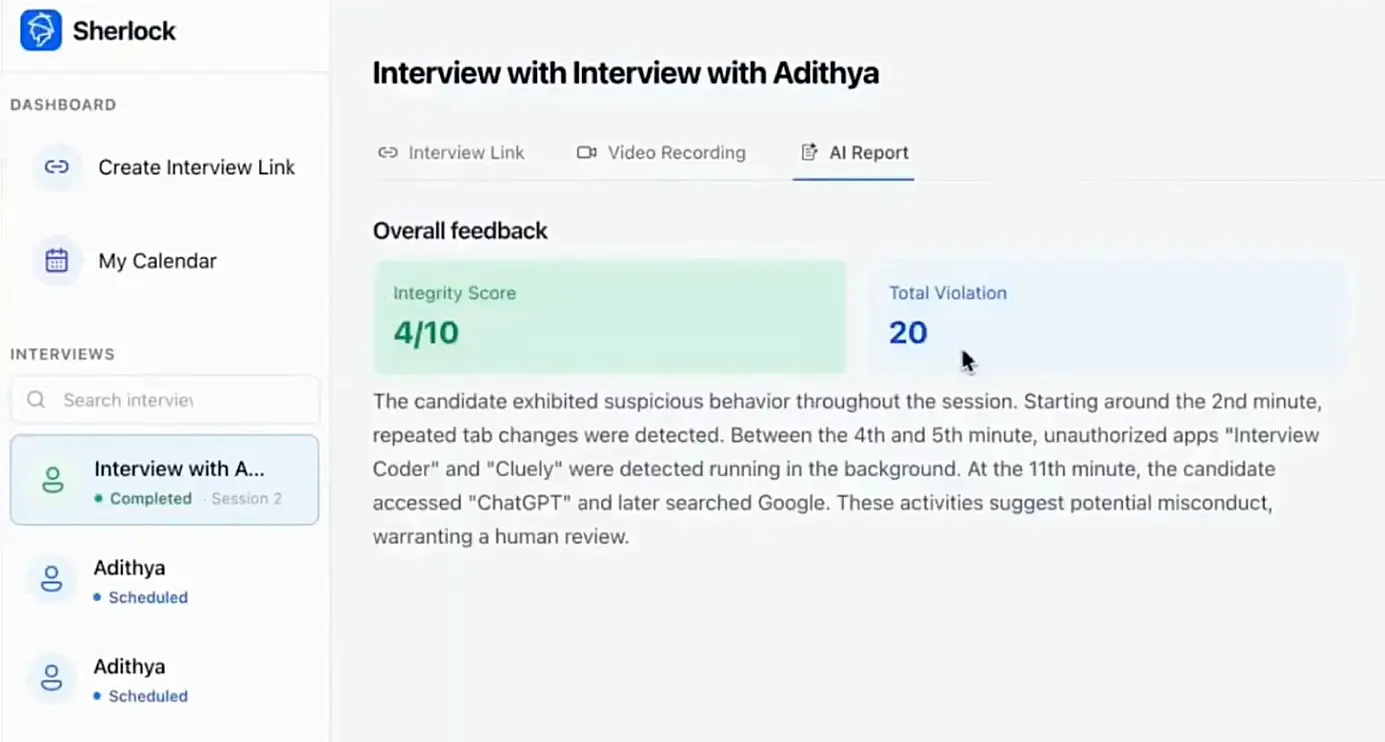
Sherlock AI operates during the interview rather than after it ends. When suspicious patterns are detected, the system sends instant alerts to interviewers, allowing them to stay aware without interrupting the flow of the conversation.
Real-time alert features include:
Immediate notification of suspicious signals
Contextual insights rather than raw flags
Minimal disruption to the interview experience
Real-time alerts ensure potential issues are identified when they matter most, not after decisions are made.
4. AI Fluency Observation
In some hiring scenarios, candidates are allowed or encouraged to use AI tools. Sherlock AI adapts to these environments by evaluating how effectively candidates interact with AI rather than treating all AI usage as a violation.
AI fluency evaluation includes:
Measuring how candidates frame and refine AI prompts
Assessing understanding of AI generated outputs
Differentiating strategic AI use from dependency
This approach enables fair interviews in AI inclusive hiring processes while maintaining transparency.
5. Securing Interviews Without Adding Friction
Sherlock AI is designed to integrate seamlessly into existing interview workflows. Recruiters connect calendars with a simple toggle, and Sherlock automatically joins interviews through secure links without requiring additional software or setup from candidates.
Workflow advantages include:
Automatic calendar and meeting integration
No downloads or technical setup for candidates
Passive monitoring that does not disrupt interviews
Security is added without slowing down hiring teams or complicating the interview experience.
6. Beyond Detection: Insights and Notes
Sherlock AI supports interviewers beyond security by helping capture structured insights during interviews. The platform can automatically generate notes that summarize candidate responses and highlight important discussion points.
Insight features include:
Automated interview notes and summaries
Consistent documentation across interviews
Reduced dependency on manual note taking
These insights help teams make more informed decisions with less administrative effort.
7. Security and Data Protection
Sherlock AI is built with strong security and privacy principles. Interview data is protected using industry standard security controls to ensure confidentiality, integrity, and controlled access.
Security practices include:
Encryption of data in transit and at rest
Role based access controls
Audit logs for system activity and access tracking
These measures ensure interview integrity without compromising candidate privacy or organizational security.
Who Can Benefit from Sherlock AI
Sherlock AI supports organizations that rely on remote interviews and require confidence in candidate authenticity. It is designed to assist multiple stakeholders involved in the hiring process.
Teams that benefit most include:
Hiring managers evaluating real world problem solving and communication
Talent acquisition teams conducting high volume remote interviews
HR professionals responsible for hiring integrity and compliance
Recruiters managing technical, behavioral, or language based interviews
Interview types where Sherlock AI adds the most value include:
Technical and coding interviews
Live problem solving and system design discussions
Language and communication assessments
High trust roles requiring verified skills and reasoning
Sherlock AI helps ensure that interview outcomes reflect genuine capability rather than external assistance.
👉Candidate Fraud in Hiring: How to Spot It and How Sherlock Helps?
How Sherlock AI Identifies AI Copilot Assistance
AI copilots are increasingly used during live interviews to generate answers, suggest code, or refine responses in real time. These tools often operate silently on secondary devices or background applications, making them difficult to detect through traditional screen or webcam monitoring. Sherlock AI approaches this challenge by analyzing behavioral and response patterns rather than attempting to block or identify specific tools.
Copilot Behavior During Interviews | What Sherlock AI Observes |
|---|---|
Delayed answers followed by highly polished responses | Unusual response latency combined with high language fluency |
Consistent use of advanced terminology across unrelated questions | Sudden shifts in language complexity and structure |
Minimal verbal reasoning before final answers | Lack of intermediate thinking or natural self correction |
Repeated pause then respond patterns | Timing signatures associated with external processing |
Strong initial answers but weak follow up explanations | Breaks in reasoning continuity under probing questions |
Code or solutions delivered without exploration | Absence of iterative problem solving behavior |
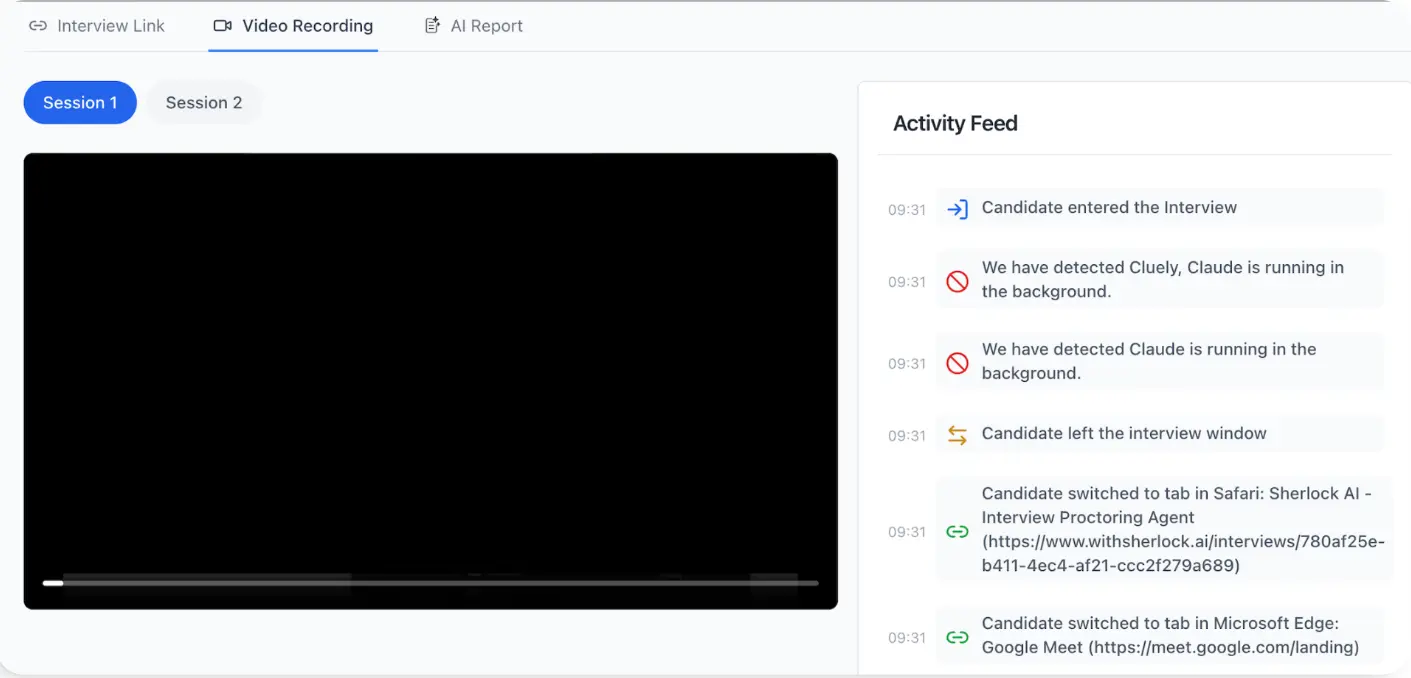
By focusing on how AI copilots influence interview behavior rather than on specific tools, Sherlock AI remains effective as new real-time assistance technologies continue to evolve.
👉 How to Detect and Prevent Cluely AI in Interviews
Keeping Interviews Honest in an AI-First World
Remote interviews are no longer a temporary solution. They are a core part of how organizations hire talent globally. At the same time, real-time AI assistants, copilots, and external tools have fundamentally changed what interview cheating looks like. What was once easy to spot has become subtle, scalable, and difficult to detect using traditional methods. This shift demands a new approach to interview integrity.
Sherlock AI was built for this reality. By combining multimodal detection, behavioral analysis, real-time alerts, and adaptive AI fluency evaluation, Sherlock AI helps organizations protect the authenticity of their interviews without adding friction to the hiring process. It enables hiring teams to focus on what matters most: evaluating real skills, real thinking, and real potential.
As AI continues to evolve, interview processes must evolve with it. Sherlock AI provides the visibility, confidence, and security organizations need to hire fairly and effectively in an AI driven world.