Back to all blogs
Learn how to prevent interview fraud in remote and global hiring with identity verification, AI resistant interviews, and real time monitoring using Sherlock AI.
Abhishek Kaushik
Mar 31, 2026
Global hiring has unlocked access to world class talent. It has also opened the door to a fast growing threat that many companies are still underestimating: interview fraud.
Today, the person on the screen is not always the person you end up hiring. From proxy interviews to real time AI assistance, organizations are facing a new category of risk where hiring, security, and trust intersect.
Recruitment data from recent surveys shows that this problem is far from theoretical. Nearly six in ten hiring managers suspect candidates of using AI tools to misrepresent themselves during the hiring process and around one in three report interviewing someone using a false identity or proxy in live interviews.
Other research projects estimate that candidate profiles could become increasingly fake, with projections suggesting that by 2028 as many as one in four global applications may be fabricated, driven largely by AI and automation tools that can generate convincing resumes, portfolios, and interview responses.Preventing interview fraud in global hiring now requires more than basic video calls and gut instinct. It demands structured verification, intelligent monitoring, and fraud resistant interview design.
This guide explains what interview fraud looks like today, why it is rising globally, and how companies can prevent it at scale with modern solutions like Sherlock AI.
What Is Interview Fraud?
Interview fraud occurs when a candidate misrepresents their identity, skills, or qualifications during the hiring process. In global and remote hiring, this deception often happens live during interviews without recruiters realizing it.
Unlike resume exaggeration, interview fraud occurs when a candidate misrepresents their identity, skills, or qualifications during the hiring process using modern fraud tactics like deepfakes, proxies, and AI-assisted answers.
The result is that companies may hire someone who cannot actually do the job or worse, someone whose identity has never been properly verified.
Common Types of Interview Fraud in Global Remote Hiring
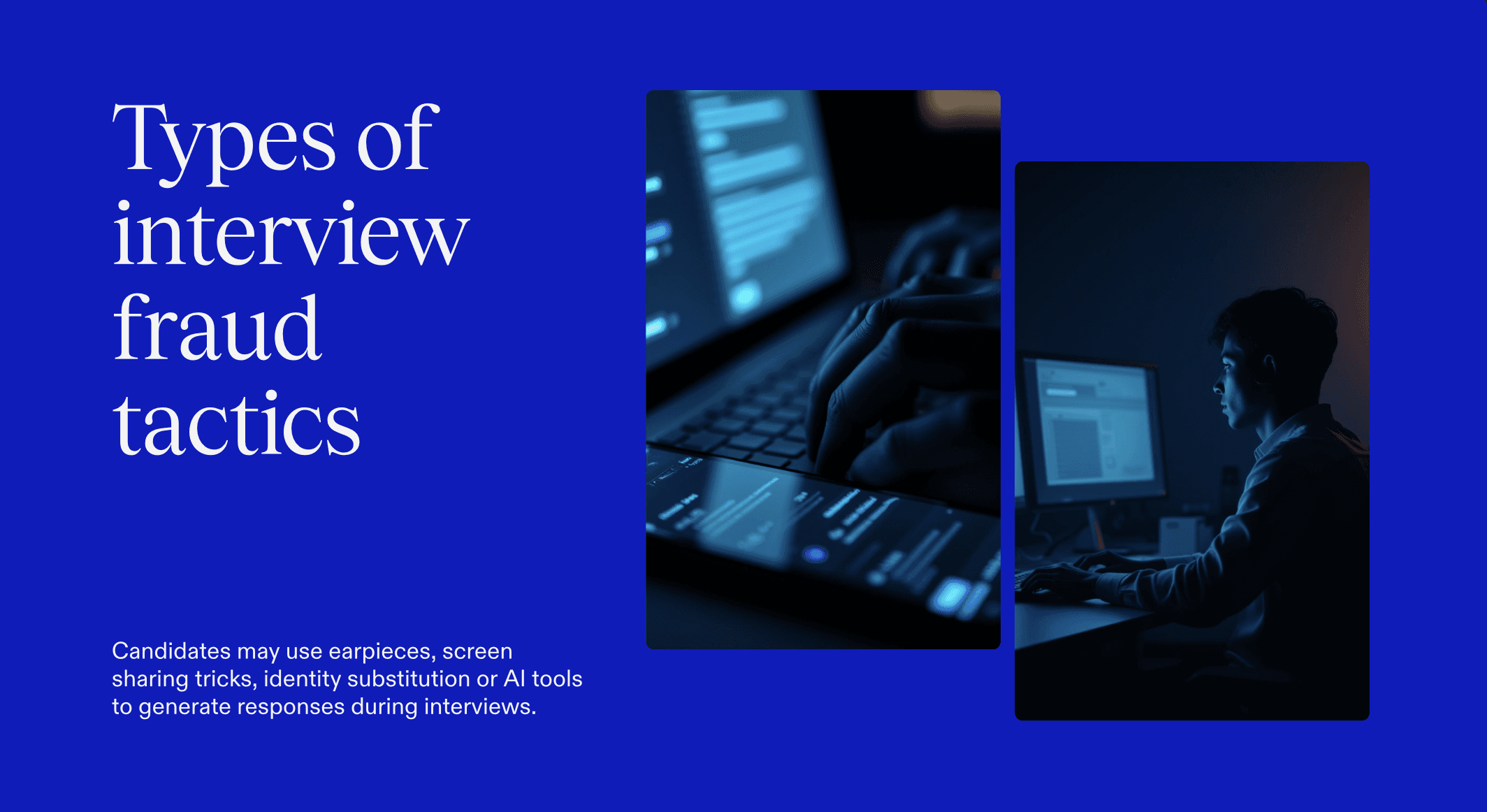
Recruiters and hiring managers need to recognize how interview fraud shows up in real scenarios. Below are the most common types, along with what they mean and how they typically appear during the hiring process.
1. Impersonation and Proxy Interviews
Someone other than the actual applicant attends the interview, often a more skilled individual.
Example: A candidate performs exceptionally well in a live coding interview, but after joining, struggles with basic tasks they previously solved with ease.
2. Resume and Reference Fraud
A candidate provides false information about work history, job titles, or references.
Example: A listed former manager cannot be verified, or the company mentioned on the resume has no record of the candidate’s employment.
3. Interview Cheating Using External Help
The candidate receives real time assistance from another person or tool during the interview.
Example: The candidate pauses frequently before answering technical questions and gives highly structured responses that sound scripted but cannot explain follow up questions clearly.
4. Fake Education and Certifications
Academic degrees or professional certifications are falsified or obtained from unaccredited sources.
Example: A university listed on the resume does not recognize the candidate’s student ID or graduation record when contacted for verification.
5. AI Fraud in Interviews
The candidate uses AI tools to generate answers, code, or responses during the interview.
Example: The candidate provides near perfect theoretical answers but struggles to explain their own thought process when asked to elaborate or modify the solution.
Recognizing these patterns early helps recruiters ask better follow up questions, design more resilient interviews, and reduce the risk of fraudulent hires.
The Rise of Interview Fraud in Global Hiring
Interview fraud is increasing because hiring has changed faster than verification practices. Below are the major forces driving this rise, explained in a recruiter focused, practical way.
1. Rise of Remote Work
Remote hiring removes many of the natural verification layers that exist in in person interviews.
Recruiters cannot physically verify that the candidate matches their identification documents
Body language and environmental cues are harder to assess through a webcam
Candidates can more easily access off screen devices or people during interviews
Interviews are often recorded, which encourages rehearsed or externally assisted responses
What this means for recruiters: Virtual convenience has created blind spots that fraudsters can exploit.
2. Advanced Technology
Technology that once required expertise is now widely available and easy to use during live interviews.
AI tools can generate structured answers to behavioral and technical questions in seconds
Real time coding assistants can suggest or complete solutions during technical rounds
Voice tools and audio devices allow hidden collaborators to feed answers live
Deepfake and face swap technologies are evolving, creating future identity risks
What this means for recruiters: Traditional signals like confidence and fluency are no longer reliable indicators of genuine skill.
3. Global Reach of Talent Pools
Global hiring expands opportunity, but also increases complexity in verification.
Recruiters may be unfamiliar with international universities, employers, or certification bodies
Time zone differences make live reference checks and verification calls harder
Document formats and identity standards vary widely across countries
Some regions have higher exposure to document forgery services and fake credential markets
What this means for recruiters: Verifying authenticity across borders requires more structure and better tools than domestic hiring.
4. Economic Pressure
Intense competition for high paying remote roles motivates some candidates to take unethical shortcuts.
Global applicants compete for the same roles, raising the perceived need to stand out at any cost
Candidates who lack required skills may rely on proxy interviewers or AI assistance
Fraud networks and online communities now share tactics for passing remote interviews
Financial pressure can push otherwise qualified professionals toward risky decisions
What this means for recruiters: Interview fraud is not always random. It is often intentional and coordinated.
Together, these trends show that interview fraud is not a temporary issue. It is a structural shift in how hiring risk appears in a digital, global, and AI enabled talent market. Organizations that adapt their verification strategies will be better positioned to hire with confidence.
Read more: 15 Interview Fraud Examples Hiring Teams Must Know in 2026
Early Warning Signs of Interview Fraud
Interview Signal | What Recruiters May Notice | What It Could Indicate |
|---|---|---|
Long pauses before answering | Candidate looks away or hesitates often | Possible external help or AI prompt generation |
Overly polished, textbook responses | Answers sound perfect but lack depth | AI generated or rehearsed responses |
Inconsistent communication style | Tone, confidence, or fluency changes across rounds | Different person or external assistance |
Difficulty with follow up questions | Cannot explain how they reached an answer | Surface level understanding, not genuine skill |
Frequent audio or video disruptions | Sudden muting or camera adjustments | Off screen collaboration or device switching |
Best Practices to Prevent Interview Fraud
Preventing interview fraud requires a multi layered approach that combines process, training, and technology. Protection must be built into every stage of the hiring journey, not added as an afterthought.
1. Conduct Robust Background Checks
A candidate’s history must be validated with the same rigor as their interview performance.
Verify past employment directly with organizations
Confirm educational qualifications with accredited institutions
Validate professional licenses and certifications
Identify inconsistencies between resumes and verified records
Thorough background checks reduce the risk of hiring candidates whose experience exists only on paper.
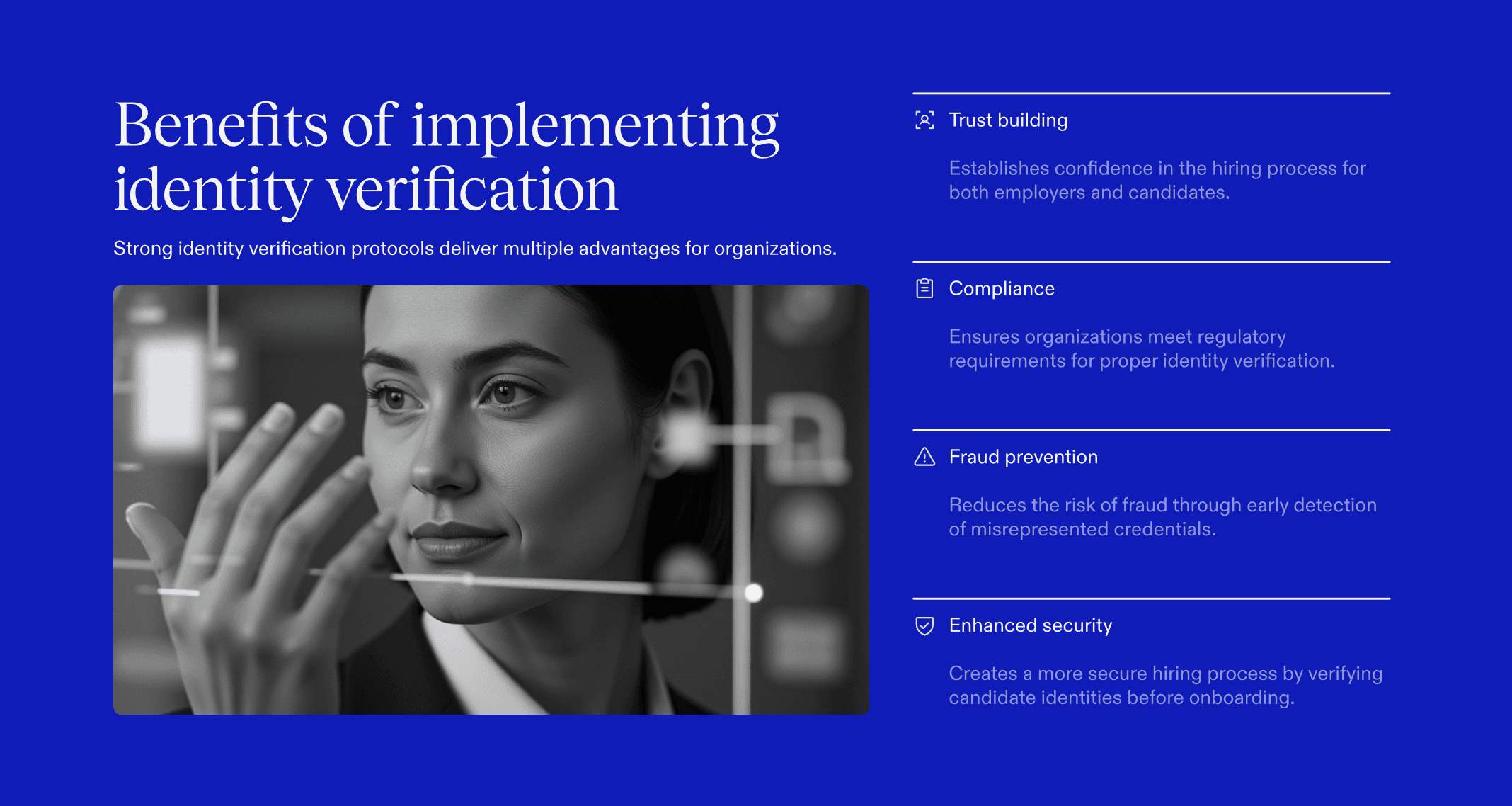
2. Implement Strong Identity Verification
A webcam view alone does not prove identity. Structured identity verification ensures the same person progresses through every stage of hiring.
Match candidates to government issued identification
Confirm identity consistency across multiple interview rounds
Reduce the risk of proxy or substitute interview participants
Create a verifiable identity trail for compliance and audits
Strong identity verification ensures you are evaluating the real candidate, not a stand in.
3. Leverage Technology for Interview Fraud Monitoring
Manual observation is not enough in remote hiring. Technology must support recruiters by monitoring integrity signals throughout the interview.
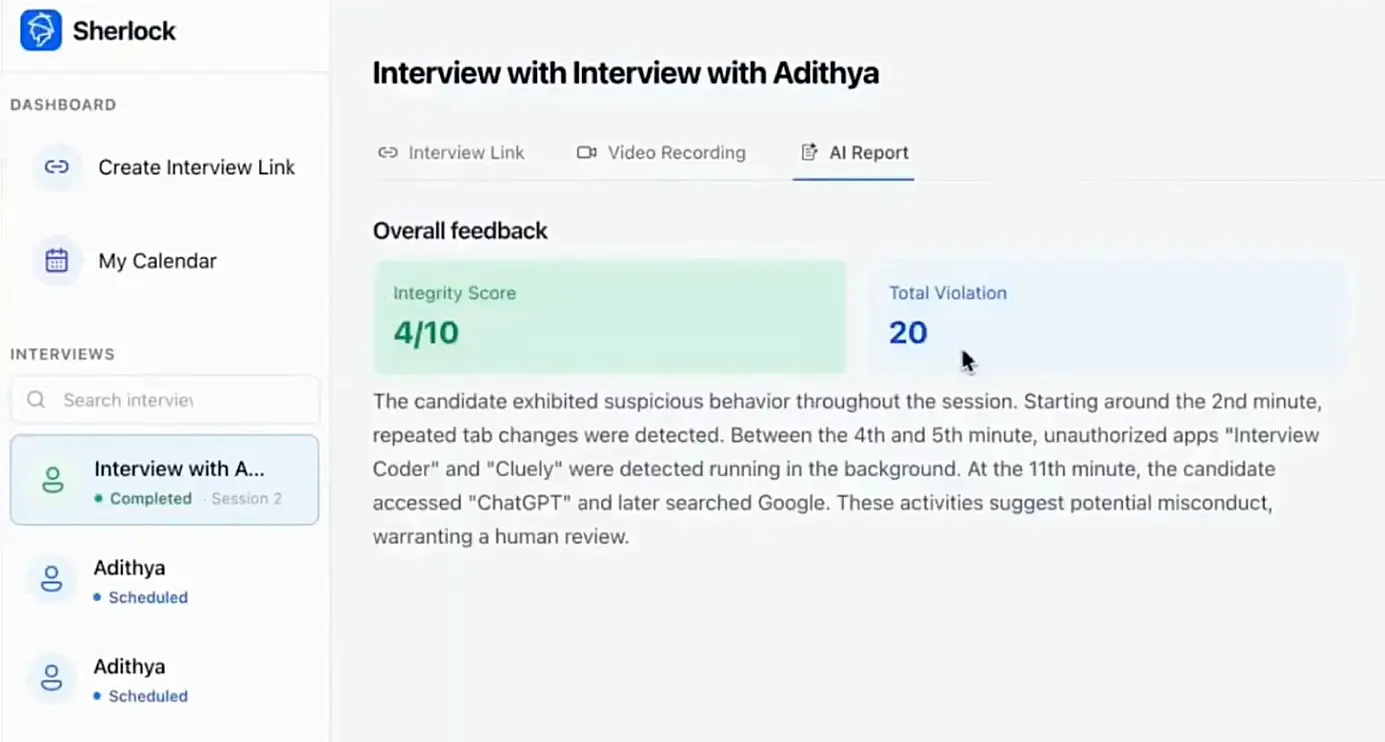
Track behavioral and interaction patterns during live interviews
Detect signs of off screen assistance or divided attention
Flag identity mismatches and unusual participation patterns
Surface risk indicators for recruiter review in real time
Technology driven monitoring helps uncover fraud that is invisible to the human eye.
4. Train Recruiters and Hiring Managers
Even with advanced tools, human awareness remains critical. Recruiters must know how interview fraud presents itself.
Recognize red flags such as delayed answers or inconsistent communication style
Identify sudden unexplained changes in skill level between rounds
Encourage deeper follow up questions to test genuine understanding
Improve confidence in escalating suspicious cases
Well trained interviewers act as the first line of defense against fraudulent behavior.
5. Verify All Candidate Documentation
Documents should be treated as claims that require validation, not proof by default.
Check authenticity of degrees, transcripts, and certificates
Screen for altered or digitally manipulated documents
Confirm issuing authorities and accreditation status
Prevent reliance on credentials from unrecognized institutions
Document verification closes a major loophole in global hiring fraud.
6. Establish Clear Anti Fraud Policies
Expectations must be clearly defined so candidates understand the consequences of dishonest behavior.
State that identity misrepresentation leads to immediate disqualification
Prohibit external assistance during live interviews
Outline consequences for fraudulent documentation
Support consistent enforcement across regions and roles
Clear policies deter misconduct and give recruiters authority to act when fraud is detected.
7. Use Structured, Multi Format Interviews
Interview design plays a major role in interview fraud prevention. Structured formats make cheating more difficult.
Combine technical tests with live problem solving discussions
Include spontaneous follow up questions that require original thinking
Use multiple interviewers to validate consistency
Blend practical tasks with conversational evaluation
Well designed interviews reduce dependence on rehearsed or AI generated answers.
8. Stay Vigilant Against Emerging AI Based Threats
Interview fraud tactics evolve quickly. Prevention strategies must evolve as well.
Regularly update interview processes to address new cheating methods
Evaluate emerging AI tools that candidates may misuse
Incorporate integrity focused technology into hiring workflows
Encourage ongoing recruiter education on digital fraud trends
Continuous adaptation ensures that fraud defenses remain effective as technology advances.
Preventing interview fraud is not a one time control. It is an ongoing system of verification, awareness, and intelligent monitoring that protects every hiring decision.
How Sherlock AI Helps Prevent Interview Fraud at Scale
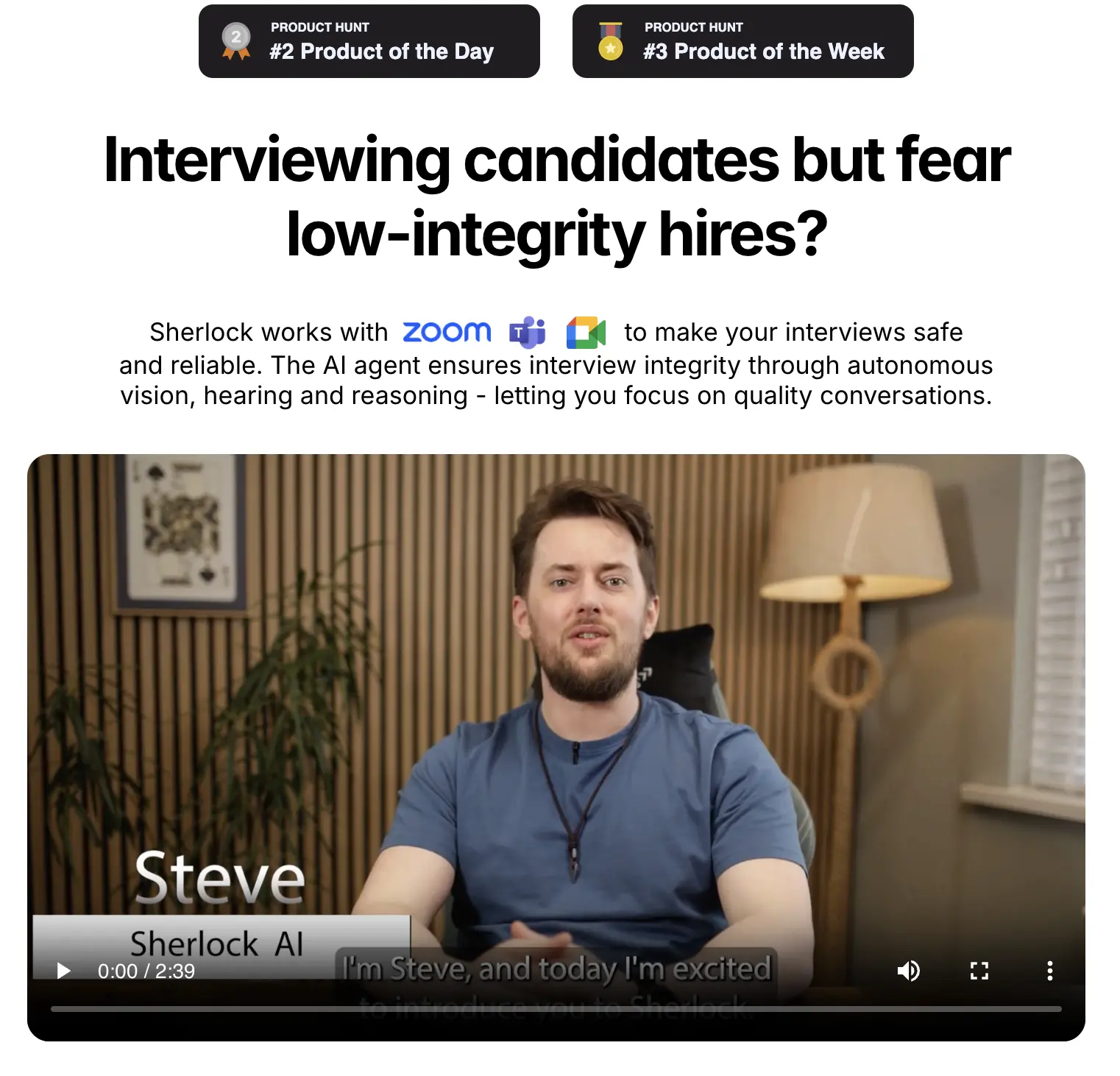
Sherlock AI is built specifically to protect interview integrity in remote and global hiring environments.
Instead of relying only on manual observation, Sherlock AI provides structured, technology driven verification throughout the interview process.
Key Capabilities
Real Time Identity Verification
Sherlock AI helps confirm that the person attending the interview matches their identity documents and remains the same individual across multiple stages.Detection of Suspicious Interview Behavior
The platform analyzes behavioral and interaction patterns that may indicate external assistance, impersonation, or coordinated cheating.AI Resistant Interview Integrity Signals
Sherlock AI is designed with awareness of modern AI based cheating tools, helping organizations identify patterns that traditional monitoring misses.Scalable Global Coverage
Whether hiring in one country or across multiple regions, Sherlock AI supports consistent interview integrity standards at scale.Audit Ready Integrity Records
Sherlock AI provides structured records of verification and interview integrity checks, supporting compliance and internal governance.
Conclusion: Building Trustworthy, Fraud Resistant Hiring Processes
Preventing interview fraud in global hiring is no longer optional. As remote work and AI tools become standard, organizations must treat interview integrity as a core part of risk management.
By combining strong identity verification, structured interview design, and purpose built technology like Sherlock AI, companies can hire with confidence. The goal is simple: ensure that every offer goes to a real person with real skills, not a carefully staged performance.
In a global talent market, trust is a competitive advantage. Protecting your interviews is how you protect your business.