Back to all blogs
Learn how to detect fake behavioral stories in interviews. Explore common red flags, effective validation techniques, and strategies to ensure candidate responses are authentic and reliable.

Abhishek Kaushik
Feb 11, 2026
In today’s competitive job market, behavioral interviews are a key tool to understand how candidates perform in real work situations. But research shows that dishonesty during the hiring process is surprisingly prevalent. According to a large survey of job seekers, 80% admit to lying during job interviews, and significant numbers also misrepresent their experience on resumes and cover letters.
Another study found that 78% of job‑seekers are not fully truthful about their achievements or salary information, indicating that embellishment begins well before the formal interview round.
These trends make it clear that behavioral interviews shouldn’t just be about asking questions, they must also include strategies for spotting fabricated or exaggerated stories.
Red Flags in Candidate Narratives
Behavioral story fabrication often leaves subtle clues. Knowing what to watch for can help interviewers separate authentic experiences from rehearsed or false ones.
1. Inconsistencies in the Story
Fake stories often have logical or chronological gaps. Watch for:
Timeline discrepancies: The candidate may struggle to align events with dates on their resume.
Conflicting details: The “who, what, where, when” may shift subtly across retellings.
Overly generic descriptions: Using phrases like “we did our best” instead of specifics about their role.
Ask for the story multiple times in different ways to see if the details hold up.
2. Overly Polished or “Perfect” Stories
Candidates who fabricate stories often aim for perfection, avoiding mistakes or setbacks. Signs include:
No failures mentioned: Every outcome seems successful, with no lessons learned.
Exaggerated results: Claims like “I increased revenue by 300% single-handedly” without supporting context.
Overly structured answers: Answers that feel like a pre-written script rather than a natural recollection.
Probe deeper with questions about challenges faced, team contributions, and unexpected obstacles.
Read more: How To Spot a Dishonest Candidate and What To Do About It
3. Behavioral Cues That Signal Fabrication
Non-verbal cues can sometimes reveal discomfort or stress when telling a fake story:
Hesitation or long pauses: Struggling to recall details may indicate fabrication.
Micro-expressions: Quick facial expressions that contradict the story (e.g., brief smirks, frowns).
Excessive repetition or filler words: Using “um,” “you know,” or repeating phrases may suggest improvisation.
Compare these cues across multiple stories in the same interview to spot patterns.
Being alert to inconsistencies, overly perfect stories, and behavioral cues equips interviewers to spot potential fabrications early, improving the reliability of the hiring process.
Techniques to Validate Behavioral Stories
Once you identify potential red flags, you can use structured techniques to dig deeper and validate the authenticity of a candidate’s story.
1. Probing with the STAR Method
The STAR method (Situation, Task, Action, Result) is not just for answering questions, it’s a powerful tool to uncover inconsistencies:
Situation: Ask the candidate to describe the context in detail.
Task: Clarify their specific responsibility versus the team’s role.
Action: Probe for concrete steps they took.
Result: Request measurable outcomes and follow-up questions.
Example:
Candidate says, “I led a project to improve customer satisfaction.”
Follow-up: “What specific steps did you personally implement, and how did you measure success?”
A fabricated story often collapses under this level of granularity.
2. Cross-Referencing with Resume and Work History
Validation doesn’t stop at the interview:
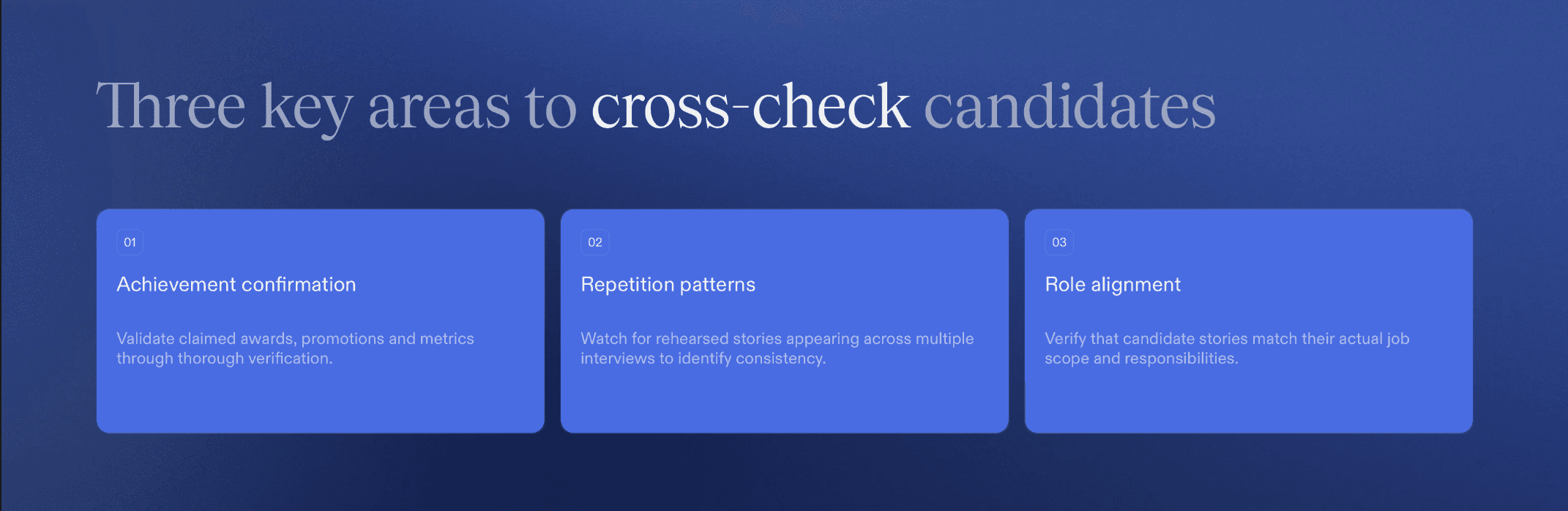
Check role alignment: Does the candidate’s story match the scope of their previous roles?
Confirm achievements: If they claim awards, promotions, or metrics, verify with previous employers or references where possible.
Look for repetition across multiple interviews: If similar stories appear in different forms, they may be rehearsed.
Even subtle mismatches between resume claims and story specifics can indicate exaggeration.
3. Testing for Personalized vs. Generic Responses
Fake stories tend to sound universal, not unique. Use these approaches:
Ask for detailed examples: Request names, timelines, or specific challenges they overcame.
Evaluate reflection: Authentic candidates often share lessons learned and personal growth.
Compare stories across competencies: Are their examples specific to the skill being tested, or do they sound like stock responses?
Authenticity often shines through in reflection and personal insight—generic answers rarely include these nuances.
4. Use Scenario-Based Follow-Ups
Hypothetical variations: Ask, “If the situation had been different, what would you have done?”
What-if probes: Explore how they handled obstacles that weren’t mentioned in the original story.
Stress-testing: Pose edge cases to see if the candidate’s thought process is consistent and grounded in real experience.
Candidates with real experience can usually adapt and reason naturally; fabricated stories crumble under variation.
Validating behavioral stories requires structured questioning, cross-checking details, and probing for personal insight. Given the subtlety of inconsistencies and the scale of modern hiring, tools are increasingly essential to help interviewers detect fabricated or exaggerated responses efficiently and fairly.
Sherlock AI: Ensuring Authentic Behavioral Stories
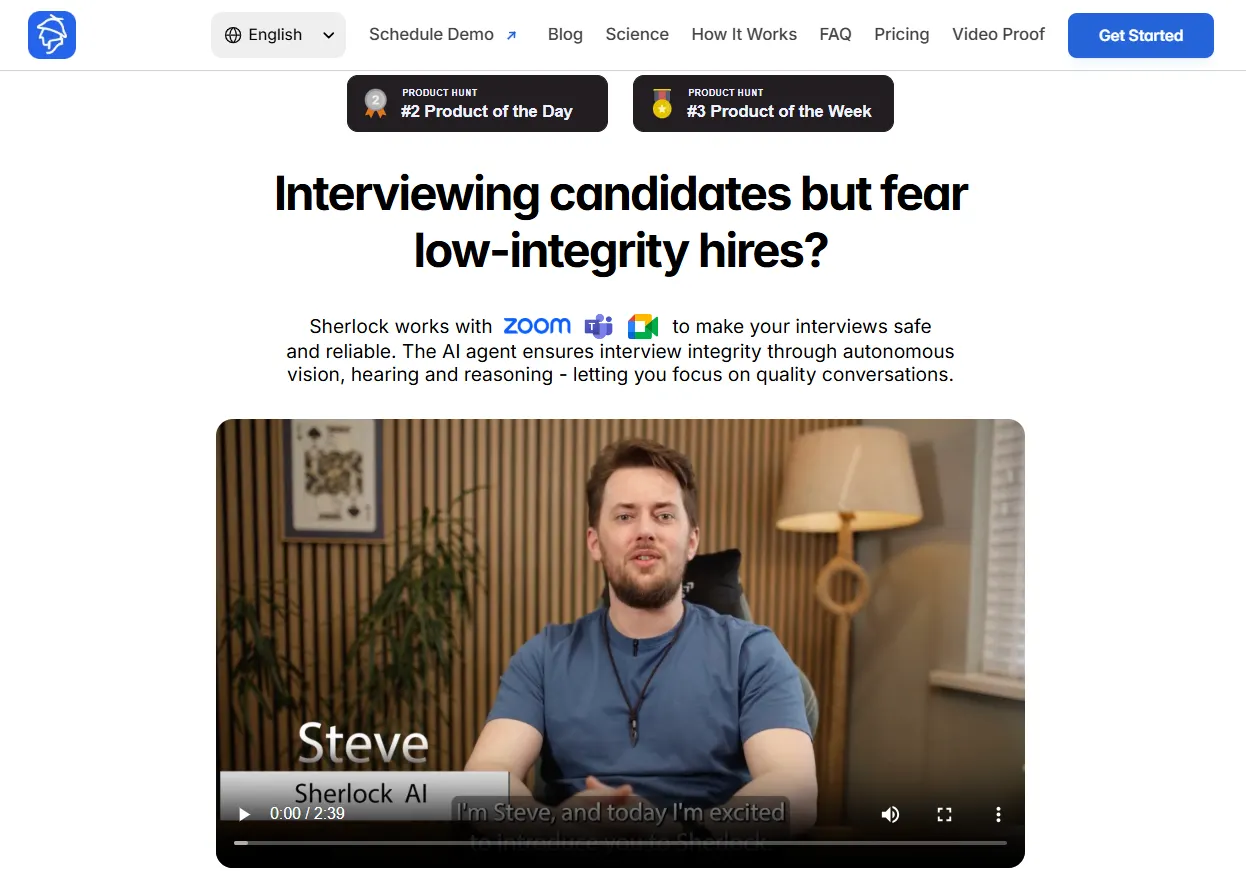
Detecting fake behavioral stories is challenging, even for seasoned interviewers.
Sherlock AI offers a purpose-built solution that combines AI insights with structured analysis to ensure story authenticity while keeping interviews fair and smooth.
1. Real-Time Integrity Monitoring
Sherlock AI tracks multiple signals such as speech patterns, response timing, and interaction cues, to spot inconsistencies without disrupting the candidate experience.
2. Multimodal Behavioral Analysis
It combines:
Speech and language consistency
Attention and gaze patterns
Identity and continuity checks
Contextual environmental cues
This holistic approach makes it harder for coached or AI-generated answers to go unnoticed.
3. Insightful, Not Intrusive
Sherlock AI focuses only on signals relevant to interview integrity, preserving candidate trust. Flags are for interviewer guidance, not automatic disqualification.
4. Structured Evaluation Support
Beyond detection, Sherlock AI provides automated notes and performance insights, helping interviewers standardize evaluations and focus on meaningful follow-ups.
Sherlock AI augments human judgment, combining technology and structured insights to help teams verify behavioral stories reliably, fairly, and efficiently.
Conclusion
Detecting fake behavioral stories is critical for making informed hiring decisions. By recognizing red flags, using structured validation techniques, and leveraging AI-powered tools like Sherlock AI, hiring teams can ensure that every candidate’s story reflects genuine experience.
The combination of human judgment and technology not only strengthens interview integrity but also preserves fairness and candidate trust. With the right approach, organizations can confidently identify authentic behavioral insights, improve hiring outcomes, and build teams based on real talent and experience.