Back to all blogs
Interview integrity is now a business risk. Learn how AI-powered monitoring, identity verification, and Sherlock AI are reshaping secure, trustworthy hiring.
Abhishek Kaushik
Jan 27, 2026
Hiring is undergoing one of the biggest transformations in modern business. Artificial intelligence is now deeply embedded in how candidates prepare for interviews and how employers evaluate talent. While AI brings efficiency and scale to recruitment, it also introduces a new and fast growing risk. Interview fraud is becoming more sophisticated, more accessible, and harder to detect with traditional methods. According to industry data, 44% of job seekers admit to lying during the hiring process , from embellishing resumes to interview answers.
As a result, interview integrity is shifting from a soft hiring concern to a core business risk. When organizations hire someone who misrepresents their identity or abilities, the consequences go beyond poor performance. It can lead to security exposure, compliance issues, project delays, and long term financial loss. In remote and global hiring environments, these risks multiply. A Gartner survey found 6% of applicants admitted to interview fraud, like using AI answers or having someone else interview for them.
The future of interview integrity lies in a hybrid model that combines AI powered efficiency with advanced anti cheating systems and stronger skill validation methods. Hiring teams will move beyond basic video interviews toward verified, monitored, and performance driven assessments. Platforms like Sherlock AI are at the center of this evolution, helping organizations ensure that every interview reflects real people, real skills, and real potential.
Why Traditional Interviews Are No Longer Enough
For years, video interviews were seen as a reliable replacement for in person meetings. Today, they are one of the easiest environments to manipulate.
Candidates can now:
Use AI copilots to generate answers in real time
Receive live help from unseen third parties
Use hidden devices or secondary screens
Rely on deepfake or identity masking techniques
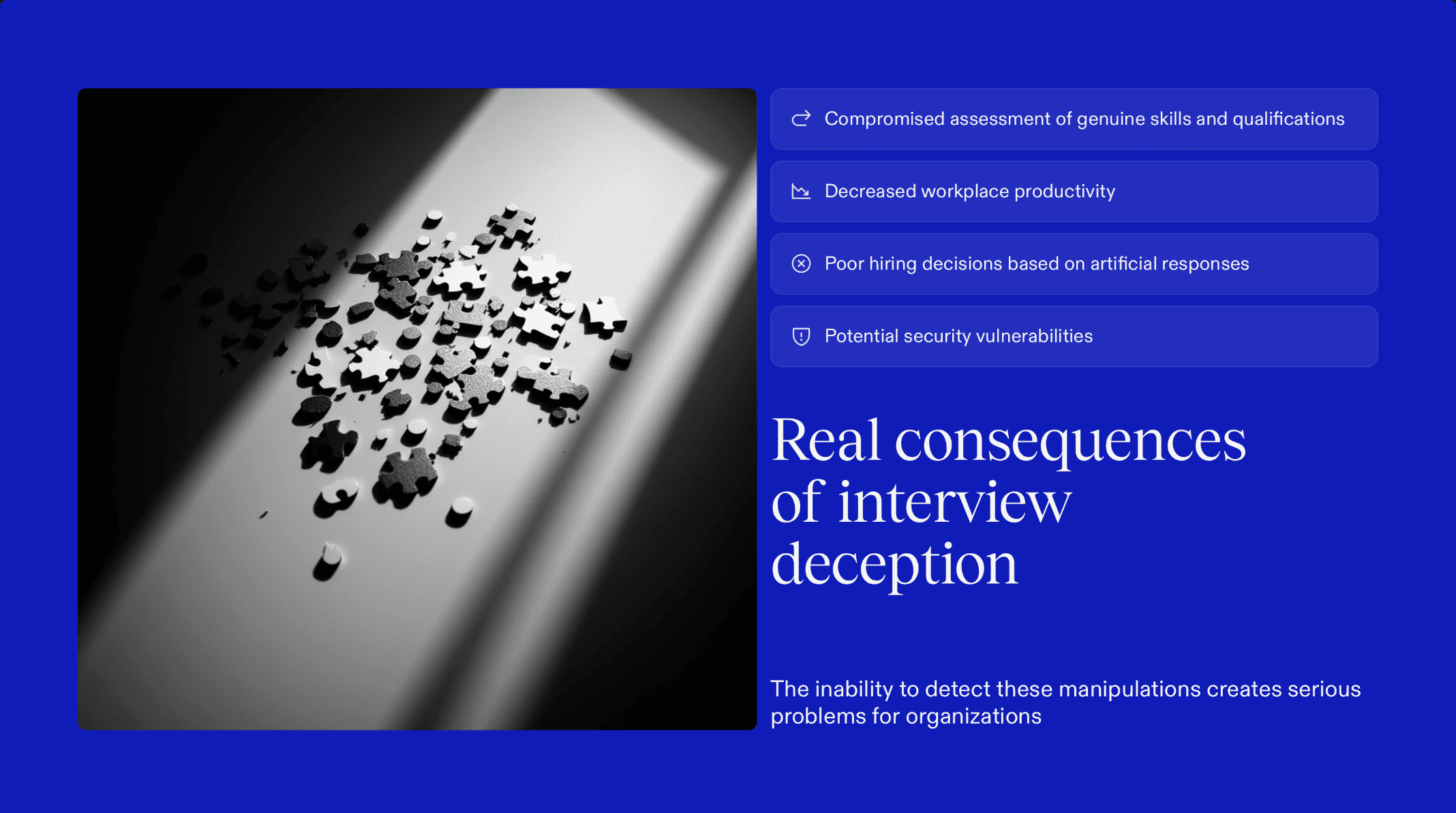
A webcam alone cannot detect these risks. Recruiters may be evaluating AI assisted responses instead of genuine skills. This creates serious consequences, including poor hiring decisions, productivity loss, and security exposure.
The future of interview integrity requires moving beyond passive observation and toward active verification.
The Rise of AI Assisted Interview Fraud
AI tools designed to improve productivity are now being misused during hiring. Real time answer generation tools can listen to questions and provide polished responses instantly. Proxy interviews, where another person feeds answers or replaces the candidate entirely, are also increasing.
This trend is not slowing down. As AI tools become more advanced, they become harder to detect with manual review. Human interviewers cannot reliably spot subtle cues that indicate AI assistance or off screen collaboration.
That is why interview integrity must evolve at the same pace as AI misuse.
Read more: How to Explain Interview Fraud Prevention to Hiring Managers
The Hybrid Future of Interview Integrity
The future is not about removing AI from hiring. It is about using AI to fight AI driven fraud while also validating real world ability.
A hybrid model includes multiple layers that work together to protect interview integrity while still delivering a smooth candidate experience.
1. Real Time AI Fraud Detection
AI can now monitor interviews for suspicious patterns that humans would miss. This includes:
Eye movement and attention tracking
Unusual speech or response timing patterns
Signs of off screen prompts or collaboration
Behavioral inconsistencies across answers
Platforms like Sherlock AI bring real time integrity monitoring into the interview itself, not after the fact. This helps recruiters identify risk as it happens instead of discovering problems after hiring.
2. Identity and Presence Verification
Future hiring processes will require stronger identity checks to ensure the right person is being evaluated.
This can include:
Continuous identity verification during interviews
Detection of multiple faces, voices, or background interference
Alerts for possible proxy participation
Interview integrity will increasingly resemble security verification. Organizations need to confirm not only who the candidate claims to be, but also that they are the only person influencing the interview.
3. Skill Validation Beyond the Interview
The biggest shift in the future of hiring is moving from answer based evaluation to performance based evaluation.
Organizations will rely more on:
Behavioral assessments
Role specific simulations
On the job style tasks
Structured technical challenges
These methods make it harder for candidates to rely purely on AI generated responses. They reveal how someone actually thinks, solves problems, and performs under realistic conditions.
4. Human and AI Collaboration in Decision Making
AI will not replace recruiters. Instead, it will act as a decision support layer that highlights risk while humans make final judgments.
Recruiters and hiring managers will use AI generated integrity insights to:
Ask deeper follow up questions
Validate suspicious responses
Adjust evaluation methods in real time
Document risk signals for compliance and audit needs
This collaboration ensures that hiring remains fair and human centered while still being protected by advanced detection systems.
The hybrid future of interview integrity is about balance. AI provides detection, monitoring, and pattern recognition at scale. Humans provide context, judgment, and final decision making. Together, they create a hiring process that is not only efficient, but also trustworthy, secure, and aligned with real skill verification.
From Video Interviews to Verified Interviews
The future is not about more interviews. It is about more trustworthy interviews.
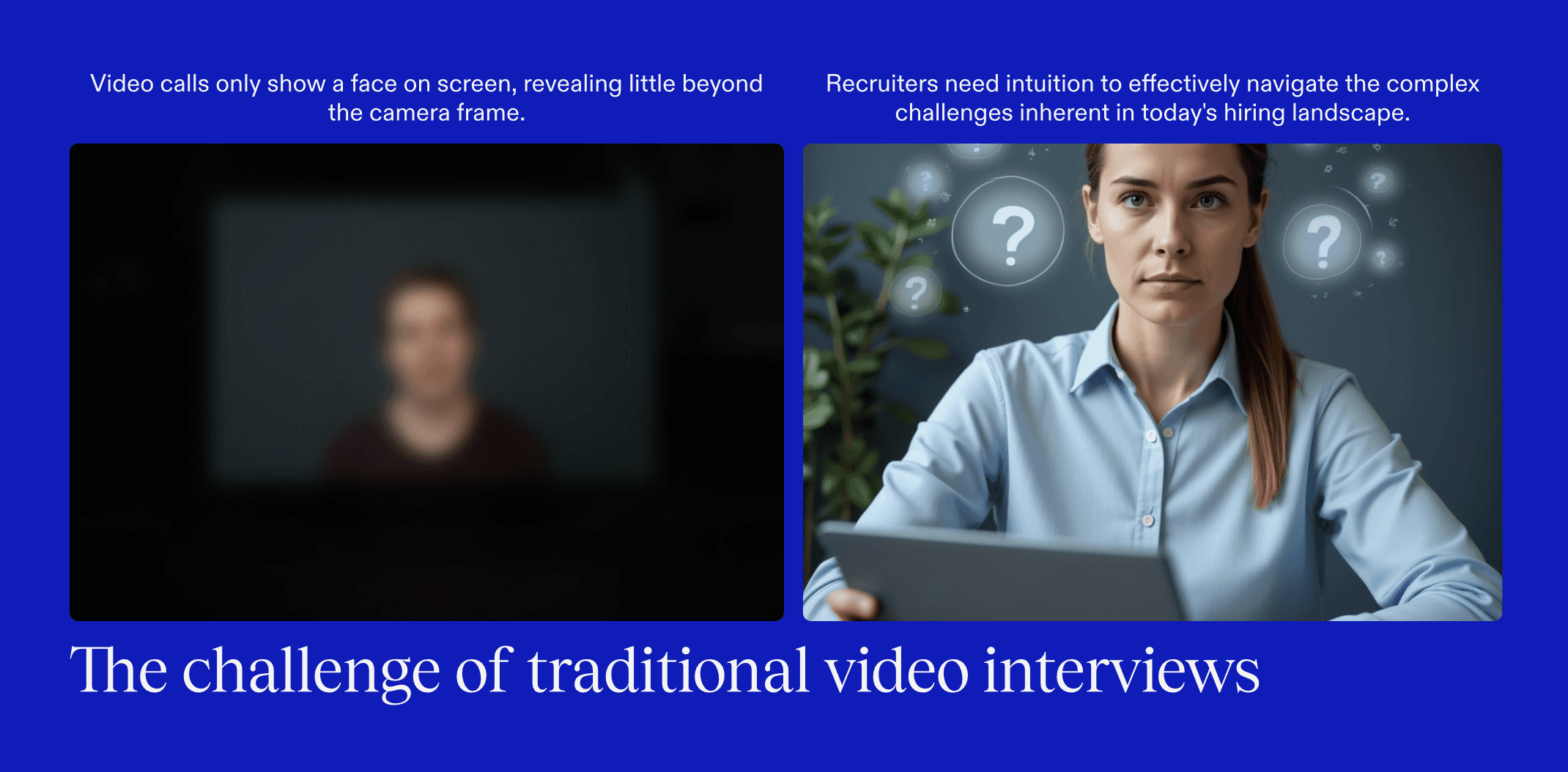
A simple video call only shows a face on a screen. It tells you very little about what is happening beyond the camera frame. Recruiters are left to rely on intuition, limited visual cues, and the assumption that the interaction is genuine. In an era of AI assisted answers and remote hiring, that assumption is no longer safe.
A verified interview, on the other hand, is built on layered integrity signals that help ensure the interaction reflects real ability and real presence.
A verified interview confirms:
The candidate is who they claim to be
The same person remains present throughout the interview
The answers are not being generated by AI in real time
There is no hidden assistance from another person
Behavioral signals align with genuine engagement and independent thinking
This shift transforms interviews from passive conversations into validated interview environments. Instead of simply observing responses, recruiters gain visibility into the authenticity of the interaction itself.
What Changes for Recruiters
When interviews become verified, recruiter confidence increases dramatically. Hiring teams no longer need to second guess whether a perfect answer was memorized, generated by AI, or whispered from off screen.
With integrity signals available during the interview, recruiters can:
Probe deeper when responses seem unnatural
Adjust questioning in real time based on risk indicators
Focus more on evaluating skills and problem solving
Document integrity insights as part of the hiring record
This leads to more informed decisions and reduces the likelihood of costly hiring mistakes.
Why Verified Interviews Will Become the Standard
Just as background checks became a normal part of hiring, interview verification will become a standard layer in remote recruitment. As AI tools become more advanced, organizations that rely only on traditional video calls will face growing risk.
Verified interviews help organizations:
Protect the quality of their talent pipeline
Reduce fraud related hiring losses
Maintain fairness for candidates who do not use unethical assistance
Strengthen trust in remote and global hiring processes
This transformation turns interviews from a soft evaluation step into a secure and reliable decision point.
Read More: Zoom & Teams Interview Fraud (25-Point Detection Checklist)
Interview Integrity as a Measurable Hiring Signal
Interview integrity is becoming a structured, trackable part of modern hiring rather than an informal concern.
Organizations are starting to monitor interview authenticity using clear, data driven indicators that reveal risk patterns and improve decision making.
Key areas being measured include:
Integrity risk patterns across different roles, departments, and regions
Repeated signs of suspicious behavior during interviews
Behavioral inconsistencies across multiple interview rounds
Links between interview integrity signals and eventual employee performance
Trends that indicate rising use of AI assistance or proxy support
This structured visibility allows hiring teams to move beyond intuition and anecdotal concerns. Instead of guessing whether something felt unusual, recruiters can rely on integrity insights backed by behavioral and interaction data.
How Sherlock AI Powers the Future of Interview Integrity
Sherlock AI helps hiring teams move from assumption based interviews to verified and trustworthy evaluations. It adds a protective intelligence layer to remote hiring so recruiters can focus on assessing skills with greater confidence.
Key Capabilities for Recruiters
Real time interview monitoring
Detects suspicious behavioral and interaction patterns during the interview instead of relying only on post interview review.AI assisted answer detection
Identifies signals that suggest candidates may be using real time AI tools to generate or refine responses.Proxy and third party assistance alerts
Flags potential off screen collaboration or the presence of additional voices and influences.Continuous identity awareness
Helps ensure the same candidate remains present and engaged throughout the interview session.Behavioral risk insights
Surfaces inconsistencies in attention, response flow, and engagement that may indicate external assistance.Recruiter friendly risk indicators
Presents integrity signals in a clear and simple format so hiring teams can make fast and informed decisions.
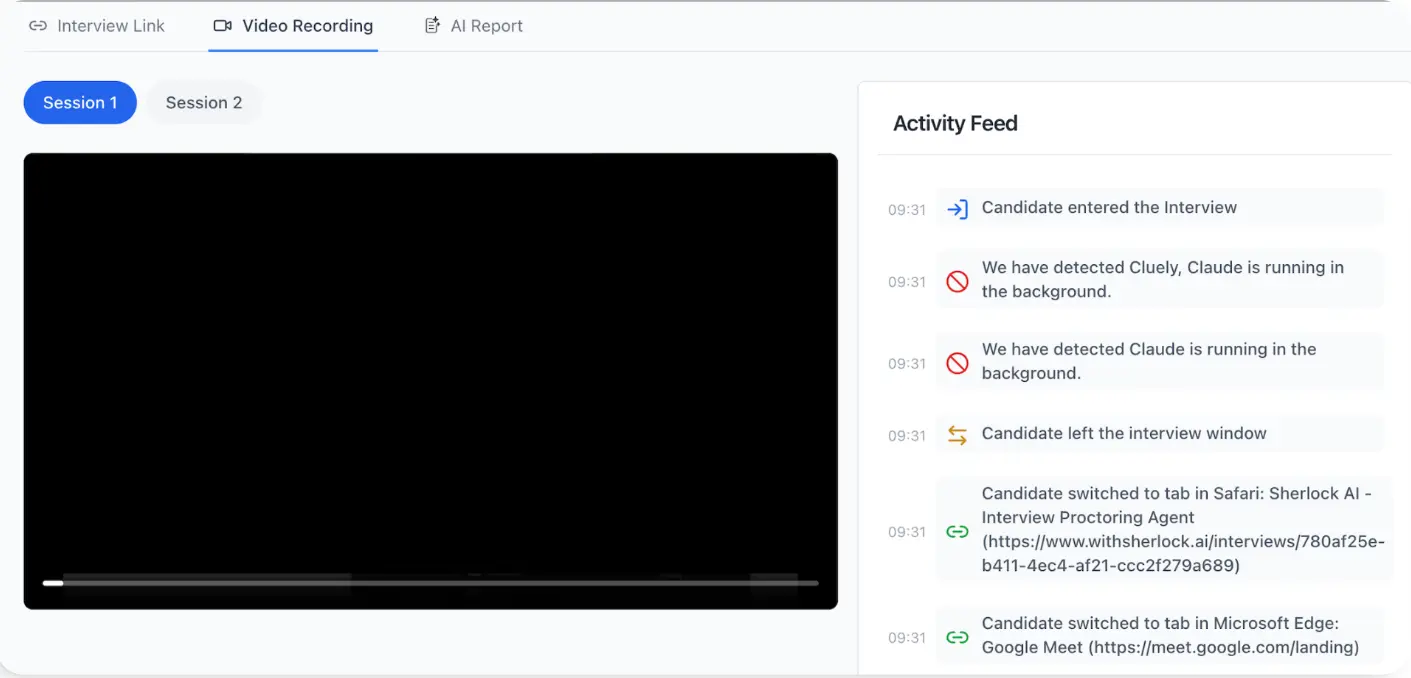
By embedding these capabilities directly into the interview process, Sherlock AI enables recruiters to reduce fraud risk, improve hiring accuracy, and build more trustworthy talent pipelines.
Conclusion: Building Trust in the Age of AI Driven Hiring
The hiring landscape is changing faster than ever. Artificial intelligence is improving how candidates prepare and how companies hire, but it is also reshaping the risks hidden inside the interview process. Organizations can no longer assume that a video conversation reflects genuine skills, independent thinking, or even the true identity of the candidate.
The future of interview integrity lies in combining technology, verification, and human judgment. Recruiters need systems that can detect AI assisted responses, flag suspicious behavior, and help confirm that the person being evaluated is authentic and present. At the same time, hiring teams must continue focusing on meaningful skill validation through structured, performance based assessments.
Sherlock AI is built for this new reality. By adding real time integrity monitoring and identity awareness to interviews, it helps organizations protect their hiring process while still delivering a fair and seamless candidate experience. In an era where AI can enhance both talent and deception, trust becomes the most valuable hiring signal of all.