Back to all blogs
Why live interviews need real-time integrity and how Sherlock AI helps detect AI answer copilots, deepfakes, and proxy candidates during hiring.

Abhishek Kaushik
Mar 5, 2026
As remote hiring accelerates worldwide, hiring teams are grappling with a startling reality: what you see and hear in a live interview may not be real.
According to a survey of 3,000 hiring managers, 59% have suspected candidates of using AI tools to misrepresent themselves, including during interviews, and 35% reported someone other than the listed applicant actually participated in a virtual interview. Meanwhile, nearly two-thirds of recruiters believe job seekers are now better at faking their identities with AI than hiring teams are at spotting them.
AI-driven interview fraud is no longer hypothetical. An analysis found that 15% of recruiters have encountered face-swapping or voice-cloning in video interviews, and broader AI-driven fraud affects over 70% of hiring processes.
These trends expose a critical gap in modern hiring: most interview systems were never designed to detect fraud as it happens. Sherlock AI was built to address this exact problem, bringing real-time interview integrity into live conversations, where identity, behavior, and decision-making unfold moment by moment.
Live Interviews Are the New Attack Surface
Live interviews were once the strongest layer of trust in hiring. But remote hiring has fundamentally changed how live interviews work and how they’re exploited.
What was once a controlled, in-person interaction is now a virtual surface that can be manipulated without the interviewer realizing it.
Common threats include:
AI answer copilots
Tools that listen to interview questions
Generate structured answers in seconds
Feed responses via second screens or hidden prompts
Voice cloning and deepfakes
Synthetic or transformed voices used in live calls
AI-generated or altered faces mapped onto real candidates
Audio and video streams manipulated independently
Proxy candidates with live AI assistance
One person appearing on screen while another feeds answers
Human proxies augmented by AI copilots
Identity and performance both being faked simultaneously
These attacks are dynamic, adaptive, and designed to look natural in short interview windows.
Detecting Fraud After vs During the Interview
There’s a critical difference:
After-the-fact detection
Relies on notes, recordings, or outcomes
Misses real-time behavioral shifts
Offers no opportunity to adapt questioning
During-the-interview detection
Observes timing, behavior, and interaction patterns live
Surfaces inconsistencies as they happen
Allows interviewers to probe, pivot, and validate authenticity in the moment
Live fraud requires live detection.
These realities demand a different category of hiring infrastructure; one designed specifically for live interviews, not static review.
Sherlock AI: Purpose-Built for Live Interview Integrity
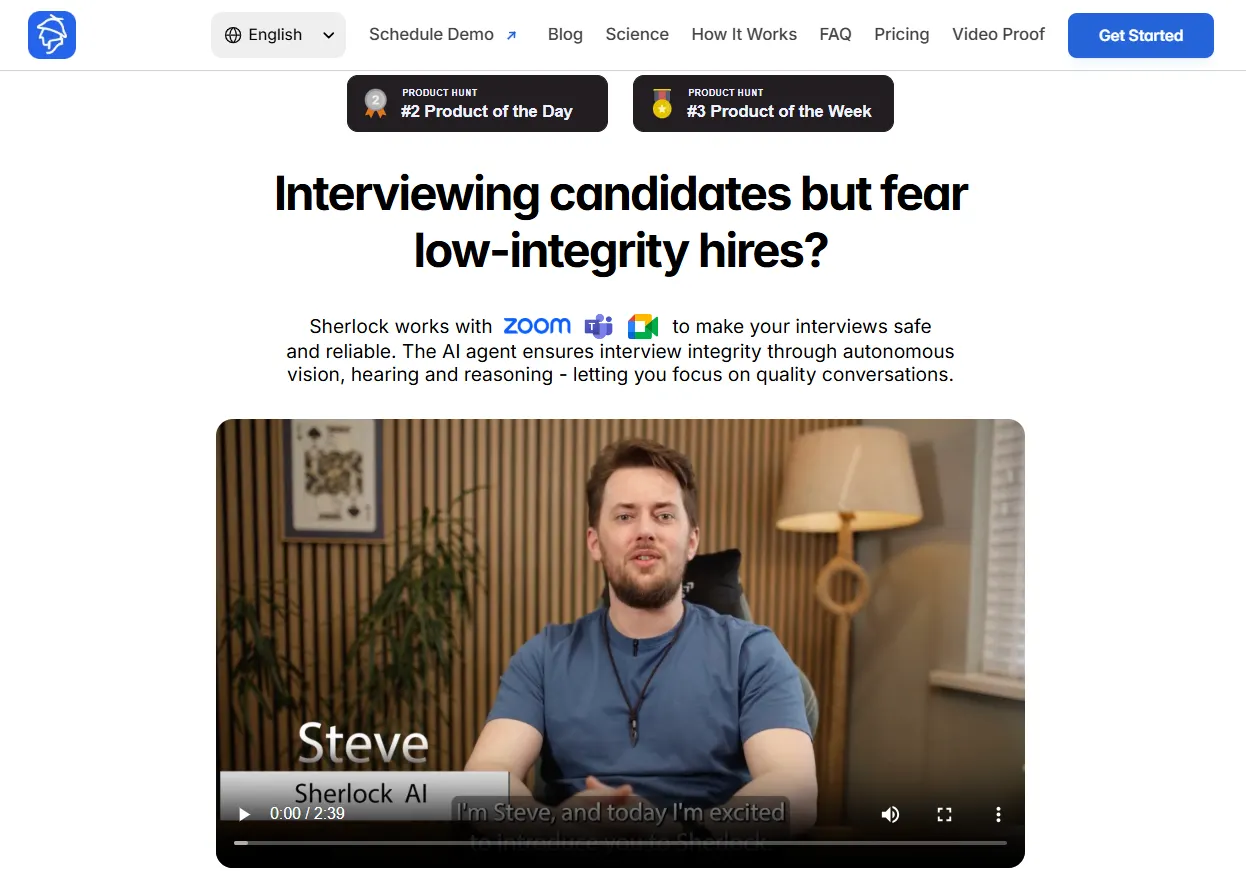
Sherlock AI is built specifically for live interviews, where identity, behavior, and decision-making unfold in real time, and where modern interview fraud actually happens.
What “Built for Live Interviews” Really Means
Most hiring tools analyze interviews after they’re over. Sherlock AI works during the conversation, when signals still matter.
That means:
Real-time monitoring, not retrospective review:
Sherlock AI observes interviews as they happen, surfacing risk signals while interviewers can still respond.
Behavioral + audio + video signals combined
Instead of trusting a single stream (like video alone), Sherlock AI correlates:
How someone looks
How they sound
How they behave under questioning
This multimodal view is critical for detecting AI-driven deception that hides behind polished visuals or fluent speech.
Key Capabilities Designed for Modern Interview Fraud
Sherlock AI focuses on the exact tactics being used in live interviews today:
1. Detecting AI answer copilots during conversations
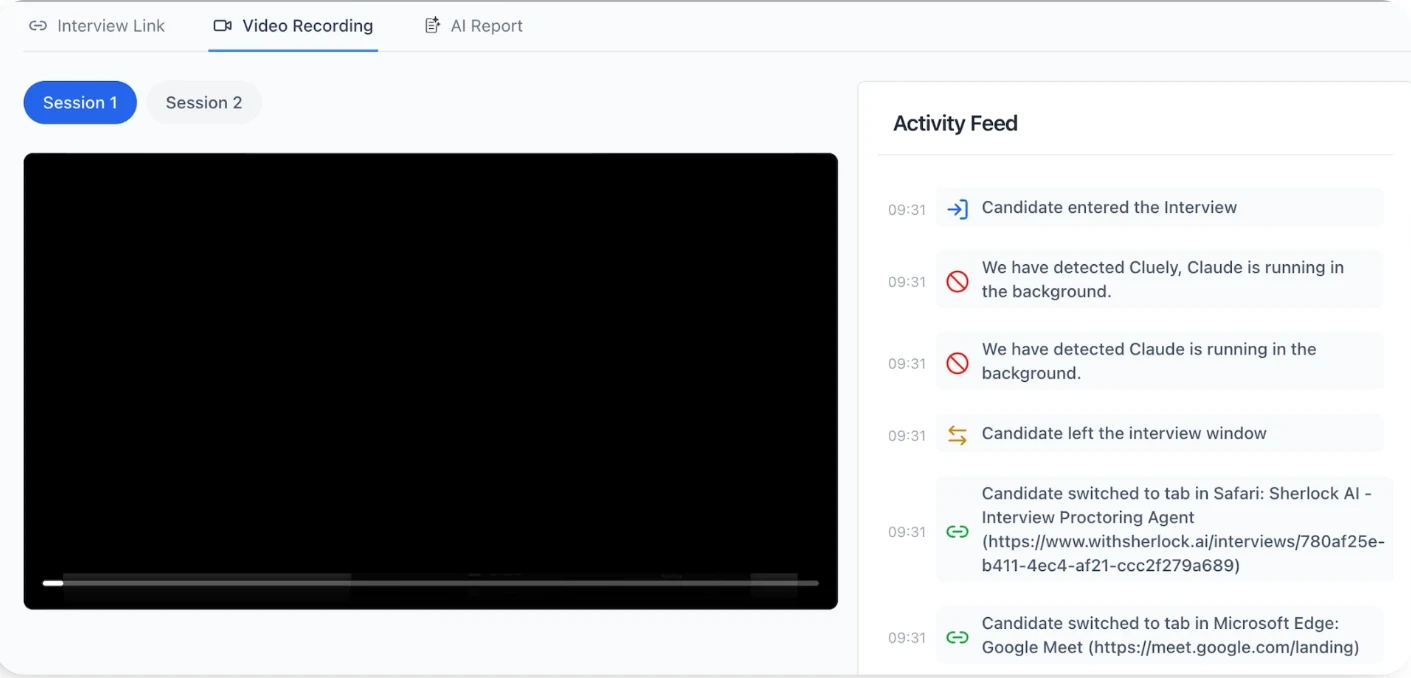
Flags patterns linked to real-time AI assistance
Identifies unnatural response timing and scripted reasoning
Surfaces sudden jumps in answer quality or structure
2. Identifying deepfakes, voice cloning, and proxy candidates
Detects inconsistencies between facial motion and speech
Monitors for synthetic or transformed voice patterns
Spots behavioral mismatches that suggest proxies or off-screen assistance
3. Tracking consistency across interview stages
Compares behavioral and voice signals across:
Screening calls
Technical interviews
Behavioral rounds
Highlights when the “same candidate” doesn’t behave like the same person over time
This closes the gaps left by one-time verification and isolated interview reviews.
Augmenting Interviewers Not Replacing Them
Sherlock AI doesn’t try to automate hiring decisions or replace human judgment.
Instead, it:
Acts as a real-time integrity layer
Surfaces explainable risk indicators, not black-box verdicts
Helps interviewers know when to probe deeper
Preserves interviewer control, context, and empathy
Interviewers stay in charge, Sherlock AI simply gives them better signals than intuition alone.
Enabling Confident, Fair, and Scalable Remote Hiring
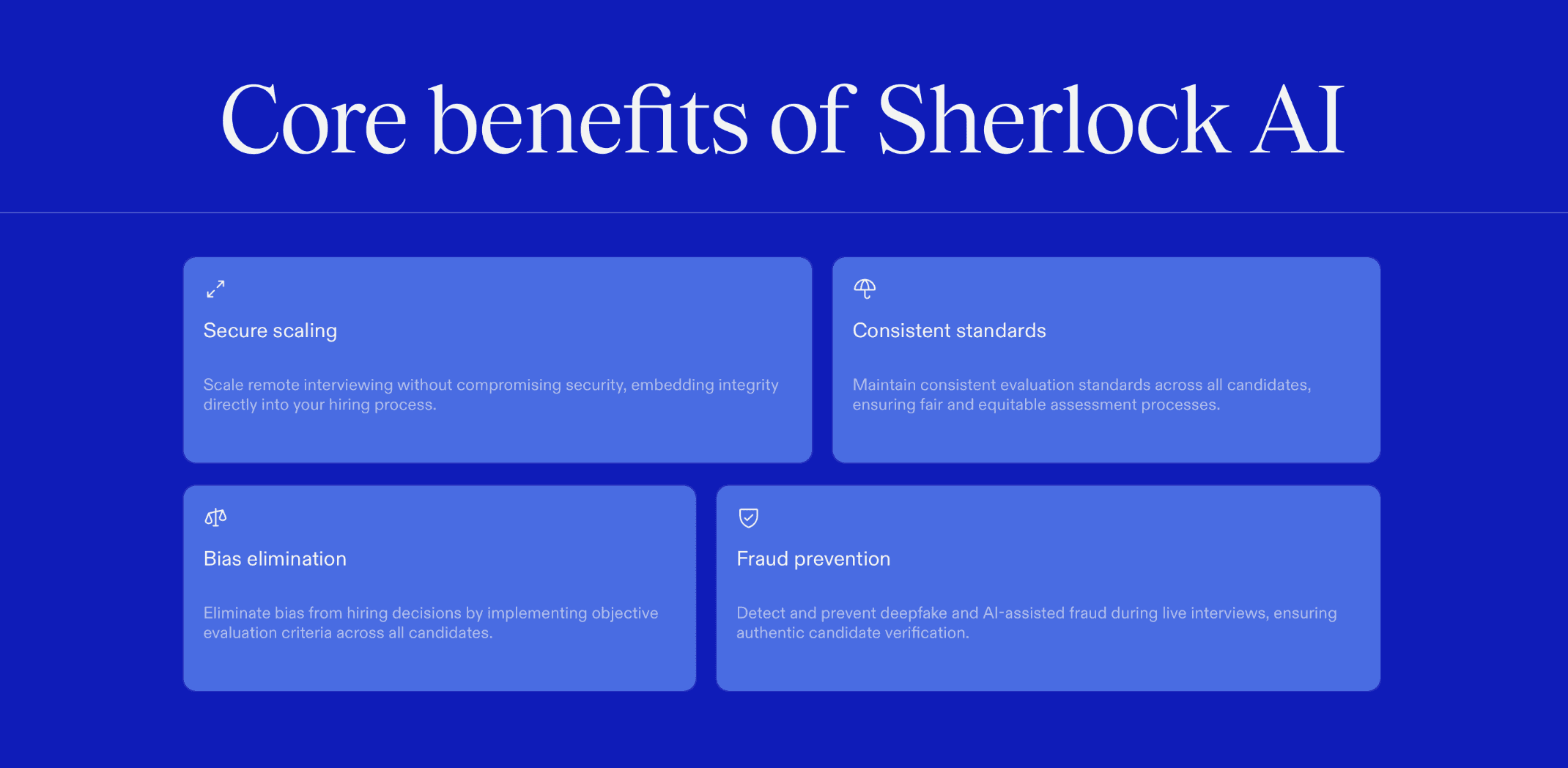
By embedding integrity directly into live interviews, Sherlock AI helps organizations:
Reduce the risk of deepfake and AI-assisted fraud
Avoid false positives caused by biased gut judgment
Maintain consistent standards across high-volume hiring
Scale remote interviews without sacrificing trust
Live interviews are now a frontline security surface, not just an evaluation step.
Sherlock AI is built as infrastructure for trust; designed to protect authenticity in real time, support human decision-making, and restore confidence in who’s actually on the other side of the screen.
Conclusion
Live interviews were once the strongest signal of authenticity in hiring. Today, they’re also the most actively targeted surface for AI-driven fraud, from real-time answer copilots to deepfakes, voice cloning, and proxy candidates.
Post-interview reviews, static identity checks, and human intuition alone can’t keep up with deception that unfolds during the conversation. Protecting interview integrity now requires systems designed to operate in real time, across audio, video, and behavior without disrupting the interview experience or replacing human judgment.
This is why Sherlock AI is built specifically for live interviews. By augmenting interviewers with real-time intelligence and continuous monitoring, Sherlock AI turns interviews back into what they’re meant to be: a trustworthy evaluation of a real person’s skills, reasoning, and authenticity. In an era where seeing and hearing are no longer enough, live interview integrity has to be built into the interview itself.