Back to all blogs
AI-driven interview fraud exposes companies to legal, regulatory, and reputational risk. Discover why interviews are now a compliance issue and how to stop it.

Abhishek Kaushik
Feb 9, 2026
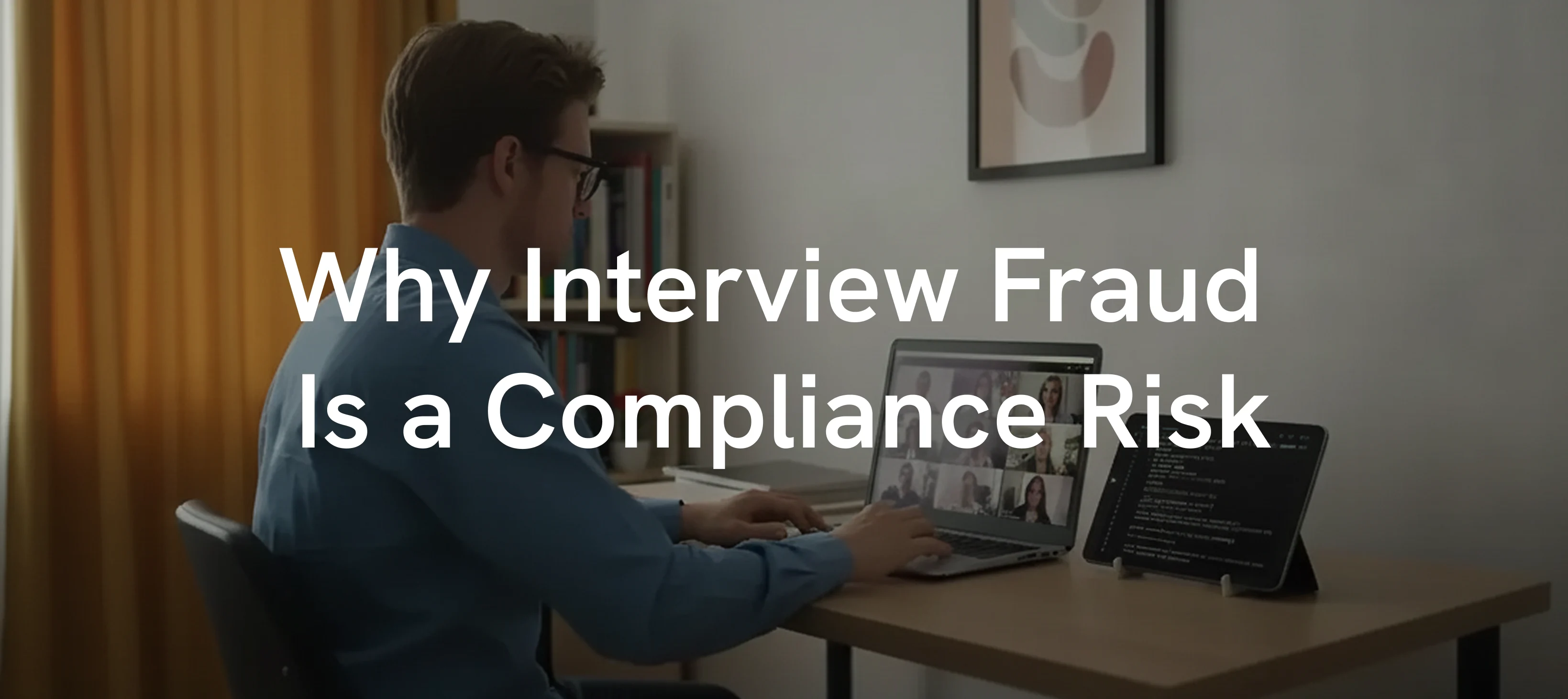
Interview fraud has shifted from an HR annoyance to a serious compliance threat that can undermine legal, financial, and operational safeguards in organizations of all sizes. A recent survey found that 59% of hiring managers suspect candidates of using artificial intelligence or fake identities during the interview process, and 31% have actually encountered fraudulent applicants, including cases where someone other than the listed candidate participated in the interview itself.
It’s not just about embellished resumes anymore. According to industry data, 72% of recruiters report encountering fake credentials, portfolios, or resumes generated by AI, and deepfake techniques are increasingly being used to manipulate video interviews.
At the same time, the financial stakes are real: nearly a quarter of companies report losing more than $50,000 due to fraudulent hires, and 10% estimate losses exceeding six figures.
With traditional verification techniques struggling to keep pace with sophisticated fraud tactics, interview fraud has emerged as a hidden compliance risk that demands strategic attention not just from HR teams, but from compliance leaders, legal counsel, and C-suite decision-makers.
How Interview Fraud Undermines Hiring Compliance
Interview fraud rarely appears as an obvious breach. It blends seamlessly into routine hiring workflows, making compliance failures difficult to detect until damage is already done.
Specifically, interview fraud undermines compliance by:
Enabling impersonation and identity fraud: When someone other than the named candidate appears in an interview, identity verification is compromised before any formal checks even begin. This breaks the assumption that the person evaluated is the person hired, invalidating the integrity of the entire hiring record.
Allowing misrepresentation of skills and experience: AI-assisted answers, coached responses, and scripted interviews distort a candidate’s real capabilities. Hiring decisions are then made on false inputs, creating legal risk when roles require verified competencies or certifications.
Violating fair-hiring and equal-opportunity standards: Candidates using external assistance gain an unfair advantage over honest applicants, skewing hiring outcomes and undermining commitments to equitable and merit-based hiring practices.
Corrupting internal hiring audits and reporting: When fraudulent candidates pass through interviews undetected, audit trails reflect a misleading version of the candidate pipeline, making compliance reporting inaccurate and unreliable.
Invalidating background checks and identity verification: Background screening assumes continuity between the interviewed individual and the hired employee. Interview-stage fraud breaks that chain, making later verification legally fragile.
Undermining right-to-work and legal eligibility controls: If the identity presented during interviews is false, companies risk onboarding individuals who may not be legally authorized to work, exposing them to fines and regulatory action.
Rendering credential and skill attestations meaningless: Certifications, experience claims, and skill validations lose their value when the interview itself is manipulated or outsourced.
Circumventing access control and security compliance: Fraudulent hires may gain system access based on falsified identities or abilities, creating downstream data protection and security risks.
Breaking the compliance chain before onboarding even begins: Every downstream control like background checks, legal reviews, access provisioning, onboarding audits relies on the integrity of the interview stage. When that stage is compromised, all subsequent compliance controls rest on false foundations.
Key takeaway for recruiters and compliance leaders:
If your interview process is compromised, your entire hiring compliance stack is compromised. Interview fraud is a systemic compliance vulnerability.
Regulatory & Legal Consequences of Hiring Through a Compromised Interview Process
When interview fraud slips through undetected, the damage does not stop at a bad hire. It creates legal, regulatory, and contractual exposure that can impact the entire organization.
Hiring through a compromised interview process can trigger:
Employment disputes and wrongful termination claims
When a hire is later found to have misrepresented their identity or qualifications, termination becomes legally complex. Candidates may challenge dismissals, claim discrimination, or allege procedural unfairness, especially if the hiring process lacked fraud controls.
Contractual violations with clients and partners
Many client contracts require staffing that meets defined qualification, certification, and vetting standards. A fraudulent hire can place the company in breach of contract, leading to penalties, lost revenue, or termination of client agreements.
Breach of vendor, staffing, and outsourcing compliance obligations
Organizations relying on staffing firms or global hiring partners often have compliance clauses tied to candidate verification and screening. Interview fraud undermines these commitments, exposing companies to legal disputes and regulatory scrutiny across jurisdictions.
Beyond legal disputes, interview fraud creates systemic risk across critical compliance domains:
Data protection and access control failures
A fraudulent hire may gain access to sensitive systems, customer data, or proprietary information under a false identity or inflated skill profile. This directly increases the risk of data breaches, insider threats, and violations of data protection regulations.
Industry-specific compliance exposure
In regulated sectors such as finance, healthcare, defense, and critical infrastructure, hiring unverified or misrepresented individuals can violate licensing, security clearance, or regulatory staffing requirements - triggering audits, fines, or operational restrictions.
Loss of audit defensibility
If regulators or clients investigate hiring practices, companies must demonstrate that reasonable controls were in place. A compromised interview process weakens this defense and raises questions about overall governance maturity.
Ignoring interview fraud today exposes companies to lawsuits, regulatory penalties, contract losses, and reputational damage tomorrow. In a compliance-driven hiring landscape, interview integrity is no longer optional; it is a legal and business necessity.
Why Traditional Compliance Controls Fail Against AI-Driven Interview Fraud
Traditional hiring compliance frameworks were built for document fraud, not real-time AI-driven deception inside interviews. As a result, they fail in key ways:
Background checks verify identity after interviews, not who actually appeared in them
ID verification confirms documents but cannot detect live impersonation or proxy participation
Audits ensure steps were followed but not whether interviews were authentic
AI-assisted answering bypasses all document-based compliance controls
Skill misrepresentation now happens dynamically, not through resumes alone
This creates a critical gap between:
What compliance teams assume is verified: identity, skills, fairness, and candidate authenticity
What is actually verified: documents and credentials, not interview integrity
As interview fraud evolves into a real-time, AI-driven threat, preventing it can no longer rely on policies, post-hire checks, or recruiter intuition alone. It requires a system that operates inside the interview itself, where fraud now happens.
Sherlock AI: The Ultimate Solution to Interview Fraud as a Compliance Risk
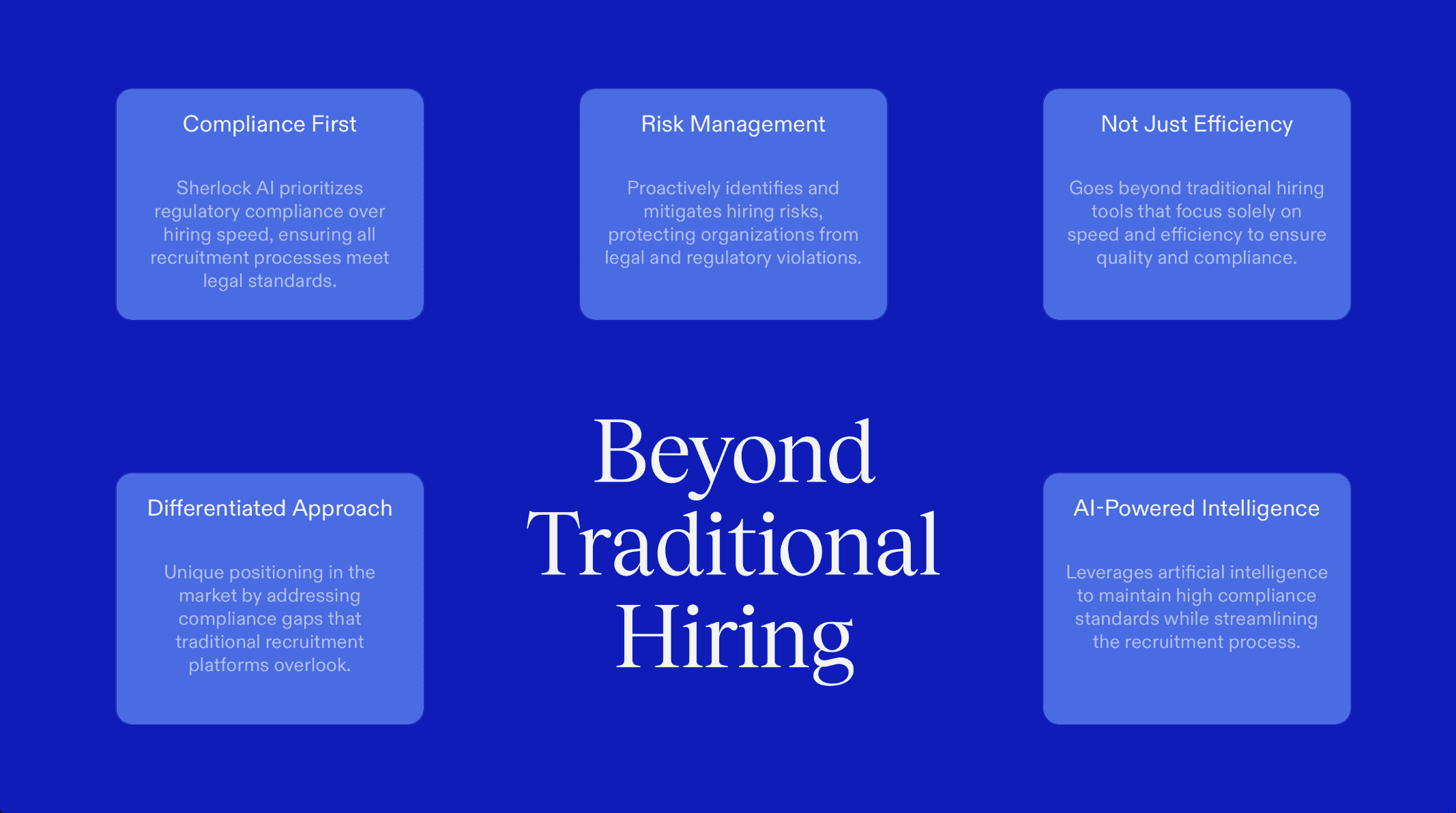
Sherlock AI is not just a hiring tool, it is a compliance control embedded directly into live interviews, designed to preserve the integrity of hiring decisions in remote and hybrid environments.
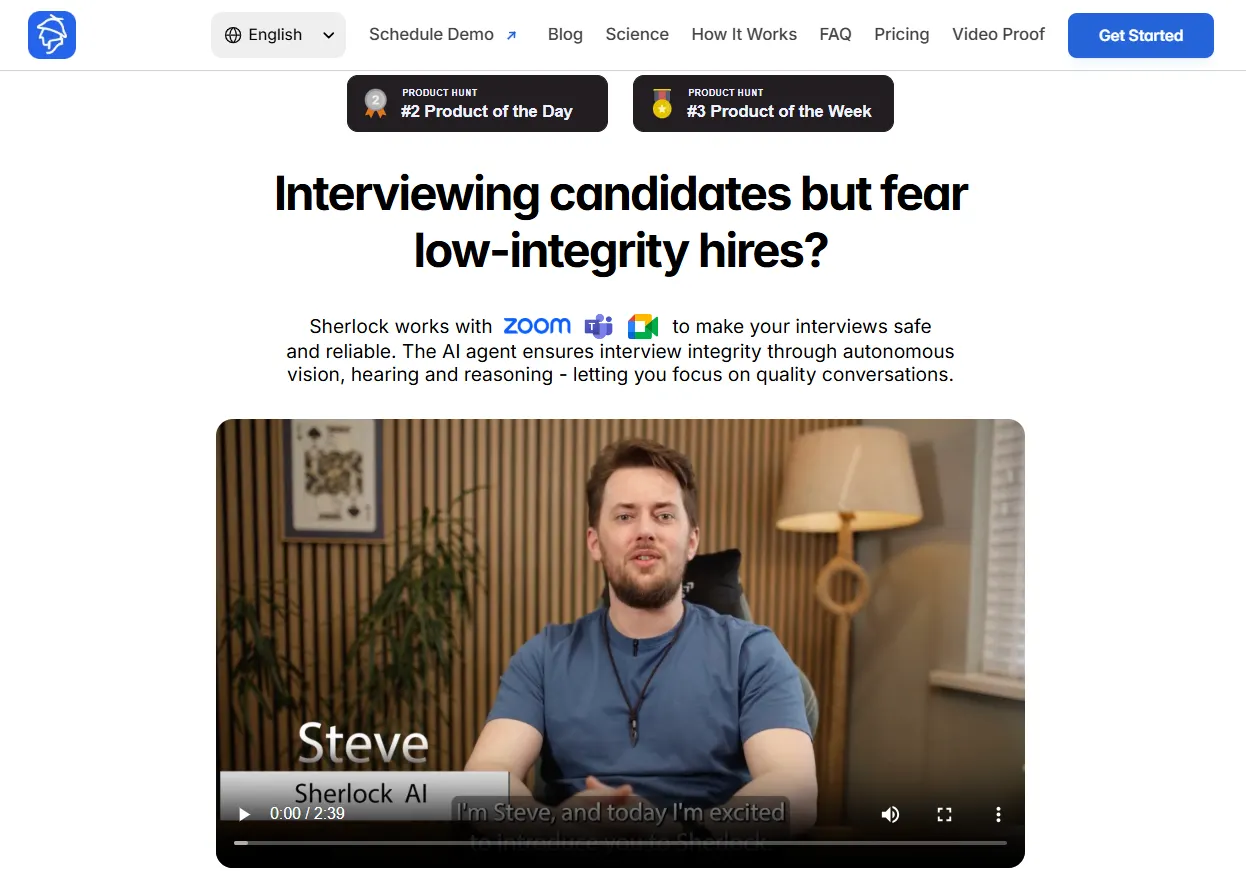
Sherlock AI closes the compliance gaps by:
Detecting real-time impersonation by analyzing behavioral, voice, and participation patterns during the interview
Identifying AI-assisted answering and external help without interrupting the interview experience
Flagging scripted or generated responses that distort true skill representation
Validating that the person interviewed is the person evaluated, protecting the chain of identity
Providing defensible audit signals that compliance, legal, and security teams can rely on
Operating silently inside Zoom, Teams, and Google Meet, without disrupting candidates or interviewers
Why Sherlock AI Is a Compliance Layer, Not Just a Hiring Tool:
Most hiring technologies optimize speed or candidate experience. Sherlock AI protects trust, legality, and defensibility in hiring, which is what compliance actually requires.
With Sherlock AI, organizations can:
Demonstrate reasonable preventive controls against known AI-driven fraud risks
Maintain audit-ready records of interview authenticity
Reduce exposure to legal disputes, regulatory scrutiny, and client contract violations
Safeguard sensitive systems from access by fraudulent hires
Restore confidence in remote hiring signals
If interview fraud is now a compliance risk, Sherlock AI is the compliance solution.
Conclusion
Interview fraud is no longer just a hiring issue, it is a compliance risk that directly affects legal exposure, audit integrity, and business trust. As AI enables real-time impersonation and skill fabrication, the interview itself has become the weakest link in traditional compliance frameworks.
Organizations that ignore this shift risk lawsuits, regulatory scrutiny, and reputational damage. Those that embed fraud detection into the interview process protect not just hiring outcomes, but enterprise integrity.
In the era of AI-driven fraud, interview integrity is a compliance requirement and Sherlock AI is built to enforce it.