Back to all blogs
Discover how interview data reveals key trends in candidate performance, role readiness, and hiring strategies for smarter, data-driven recruitment.

Abhishek Kaushik
Dec 26, 2025
TL;DR
Interview data reveals patterns in candidate performance, role readiness, learning agility, and behavioral tendencies.
Tracking interviews over time helps employers understand which sourcing channels, job descriptions, and assessment methods produce the strongest talent outcomes.
When appropriately structured, interview data becomes a predictive signal, not just a record of what happened.
The key is converting transcripts and scorecards into standardized patterns across roles and hiring cycles.
Every interview generates data. Traditionally, this data was stored in handwritten notes, partial summaries, or informal impressions shared in debriefs. Today, AI interview support tools are generating complete transcript records, standardized scorecards, and competency-based evaluations.
This shift means that companies no longer need to guess why some candidates excel or where their hiring process is failing. Interview data reveals performance trends that help recruiters hire smarter and faster. Organizations using structured interview data improve the quality of hire by significant margins, leveraging AI-driven tools to enhance consistency and candidate evaluation accuracy.
LinkedIn’s 2025 Future of Recruiting Report shows this momentum as well, with hiring teams leaning on AI and data-driven methods to improve quality of hire, and with 61% of TA pros saying AI will improve how they measure quality of hire.
The Types of Interview Data That Matter
High-value interview data falls into four key categories:
Category | Description | Example Signal |
|---|---|---|
Competency evidence | Behavioral and skill-based patterns pulled from responses | Structured problem-solving vs reactive responses |
Communication style | Clarity, coherence, confidence, adaptability | Ability to pause, clarify, and structure thoughts |
Role-specific depth | Technical or domain fluency required by the job | Fluency in terminology, frameworks, systems thinking |
Engagement and motivation | Indicators of interest, alignment, and curiosity | The quality of the questions the candidate asks at the end |
The value is not in single responses. It is in patterns across interviews.
Trend 1: Which Candidate Backgrounds Perform Best
Aggregated interview data helps identify which sourcing channels consistently produce strong talent. For example:
Bootcamp graduate vs CS degree patterns in software roles
Startup vs enterprise experience in leadership roles
Agency vs in-house expertise in marketing roles
This informs future sourcing strategy.
Trend 2: Which Interviewers Produce the Most Reliable Evaluations
Interview data highlights interviewer behavior too, such as:
Who consistently scores too high or too low
Who over-indexes on personality over performance
Who asks structured vs inconsistent questions
This enables training and calibration.
Trend 3: Which Competencies Predict Long-Term Success
Not all roles hinge on the same core skills. Over time, interview data reveals which competencies matter most.
Examples:
Customer support roles often correlate success with emotional patience more than technical knowledge.
Senior engineers succeed more on system thinking than on coding speed.
Managers succeed more in conflict navigation than in pure leadership messaging.
Trend 4: Skills That Are Rising or Declining in Relevance
Interview data also reveals market shifts in candidate capabilities:
More candidates are now fluent in AI-assisted workflows
Presentation clarity is improving due to remote async communication norms
Problem-solving depth may be declining in roles where AI tools automate routine tasks
Recruiters who watch these trends can refine job descriptions and testing frameworks.
Trend 5: How Candidate Preparedness Levels Are Changing
Interview transcripts show how often candidates:
Rely on memorized answer scripts
Use structured storytelling techniques
Use AI tools for answer generation
Patterns in preparedness inform how interviews should evolve.
Turning Interview Data Into Hiring Strategy
Step 1: Standardize scoring: Without standardization, analysis is not possible.
Step 2: Aggregate results by role and cohort: Look for consistency and repeatable signals.
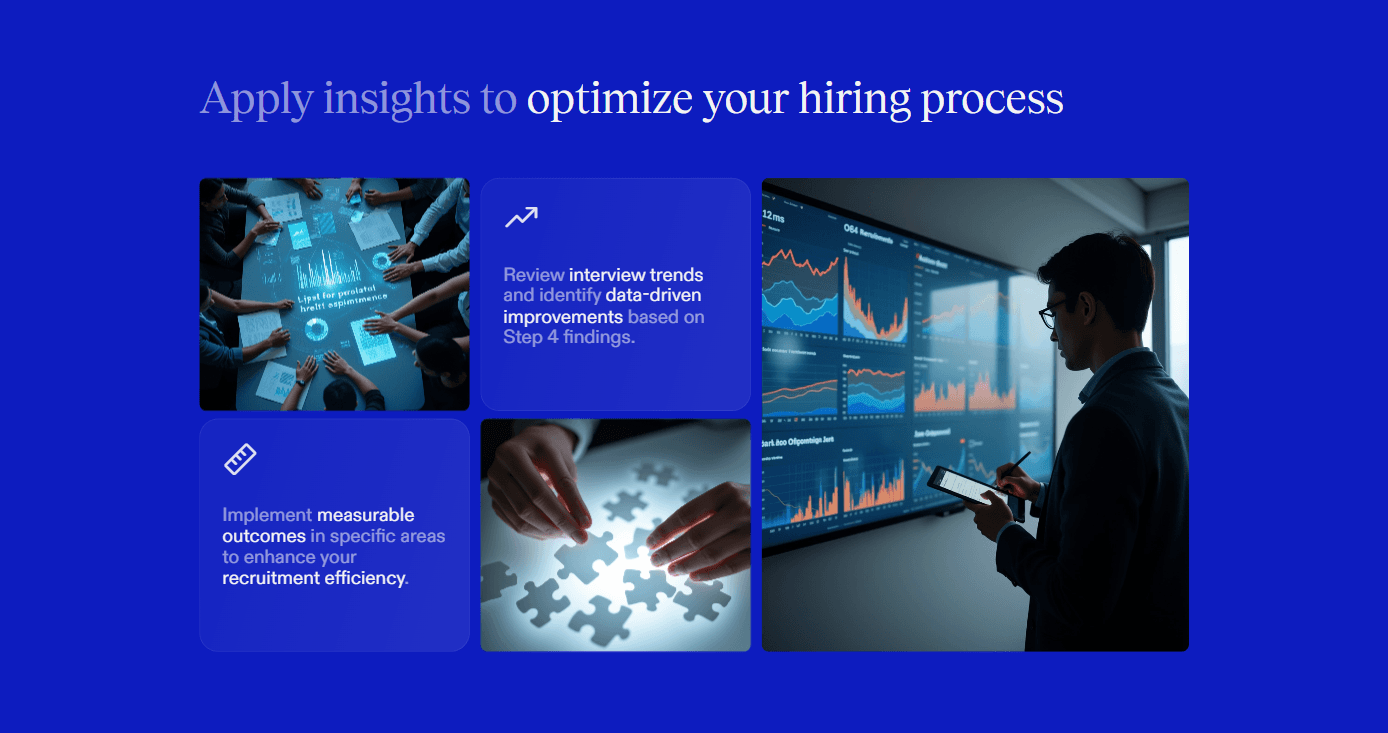
Step 3: Run quarterly hiring performance trend reviews: Share findings with hiring managers, talent leadership, and workforce planning.
Step 4: Use trends to adjust:
Job descriptions
Interview formats
Competency scoring weights
Candidate sourcing channels
Conclusion
Interview data is not just operational documentation. It is strategic intelligence.
When analyzed across time, roles, and interviewers, it reveals performance trends that strengthen hiring decisions, reduce mis-hire risk, and build predictable talent pipelines.
In a hiring environment shaped by remote interviewing and AI-assisted candidates, data-driven interviewing is becoming a competitive advantage.