Back to all blogs
Learn how employers detect scripted or AI-generated answers during job interviews. Explore red flags, detection methods, and tools that protect interview integrity.

Abhishek Kaushik
Nov 27, 2025
Scripted answers occur when a candidate relies on prewritten responses rather than demonstrating real-time reasoning. In remote interviews, scripting is easier: candidates can use hidden tabs, scrolling notes, earbud relays, transcription overlays, or even external whisper coaching.
The goal is not to understand the question, but to recognize a pattern and recite a pre-prepared block of language.
The risk is not just dishonesty. Scripted responses distort hiring signal. The interviewer evaluates performance theater instead of ability to adapt, problem solve, and collaborate.
In multiple enterprise hiring audits from 2024 to 2025, the most common failure mode in mis-hires was not technical incompetence but inability to operate independently once scripted scaffolding was removed.
What Scripted Answers Look and Sound Like
Authentic reasoning is variable. Scripted reasoning is linear, polished, and brittle.
You often see:
Signal Pattern | What It Suggests |
|---|---|
Perfect phrasing without natural hesitation | Prewritten or rehearsed speech |
Explanations delivered in a single long monologue | Memorized answer blocks |
Inability to re-explain the same concept in new wording | Lack of real understanding |
Fluency crashes when interviewer interrupts or shifts framing | Script dependency |
Narrow, exact phrasing that matches blog, course, or YouTube content | Retrieved, not constructed reasoning |
This does not mean the candidate is bad. It means the evaluation is inaccurate.
The job of interview intelligence is to surface real thinking, not penalize practiced communication.
Detecting Teleprompter Use
Teleprompters are usually browser-based overlays or scrolling text displays behind or near the camera.
Key observable cues:
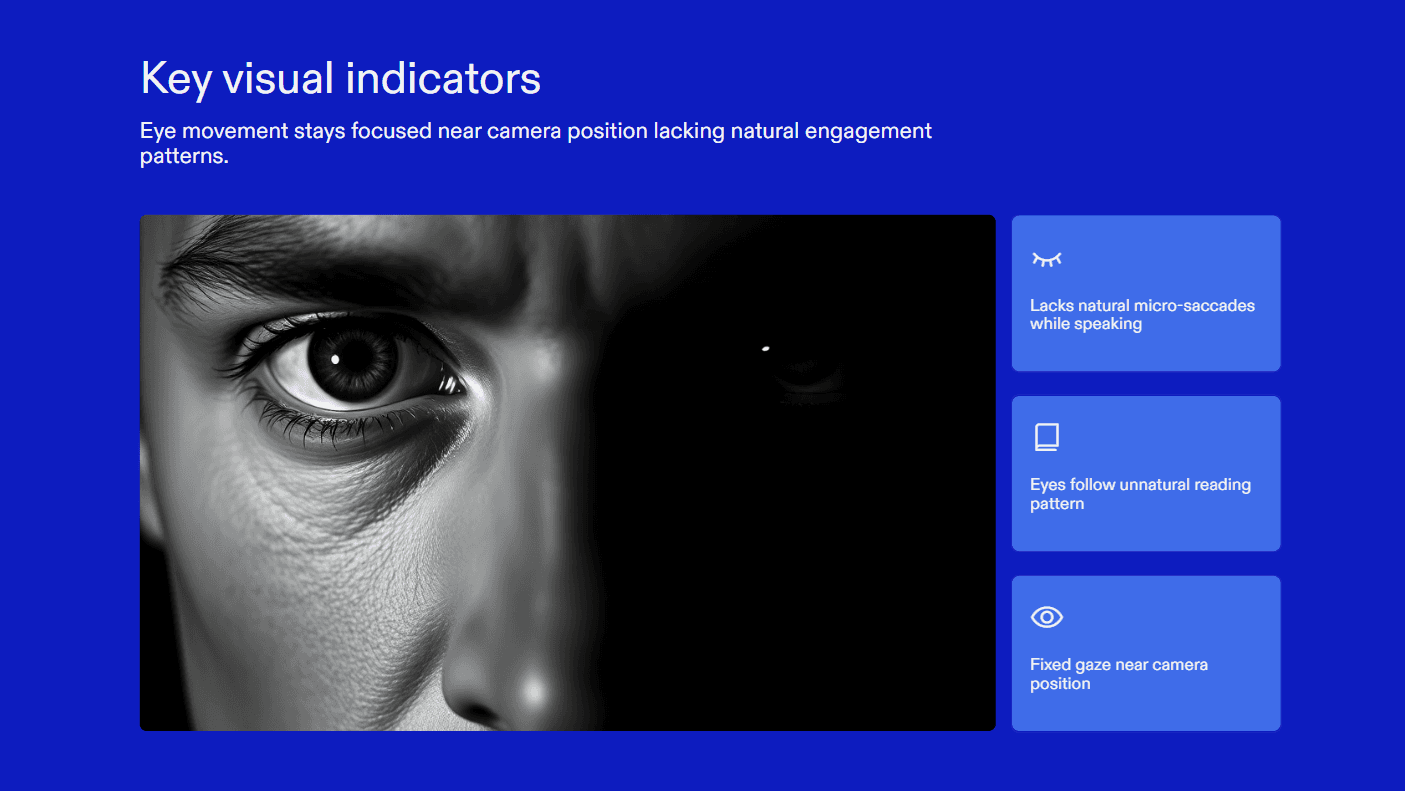
Eye gaze sticks near the camera but lacks micro-saccade variation
Reading rhythm (smooth pacing with no conceptual breath points)
Very consistent speech tempo, even when asked clarifying questions
Detecting Second-Screen Answer Support
Second screens allow silent consulting without suspicious glance patterns.
Signals include:
Slight recurring latency before answering, especially on unexpected follow-ups
Answers delivered in “chunks” that mirror typical AI-generated structure (context, claim, list, closing statement)
Answers contain broad conceptual language but avoid concrete details from the candidate’s actual experience
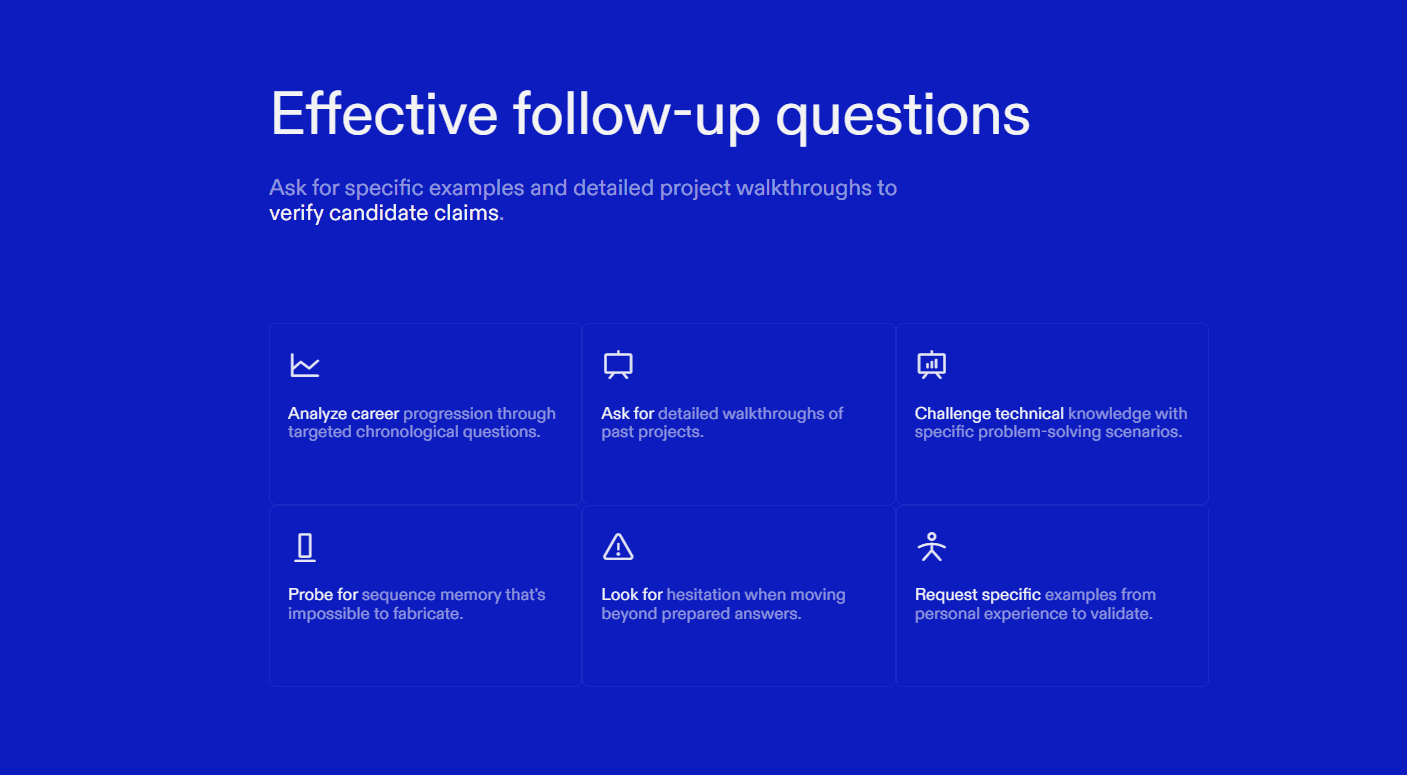
Follow-up questions expose this quickly:
“Can you walk me through the exact last time you used this in a real project?”
If the candidate cannot produce specific sequence memory, the knowledge is borrowed.
Detecting Lip-Sync and Relay Coaching
In some proxy or side-coaching situations, spoken words are not being generated by the candidate.
Cues:
Signal | Explanation |
|---|---|
Audio and lip movement slightly out of sync | External voice relay |
Candidate mouth movement reduced or minimal | Candidate repeating silent or whispered prompts |
Answer delivered in fixed pacing unrelated to question tone | Playback or TTS relay cycle |
This is where reasoning continuity testing is decisive:
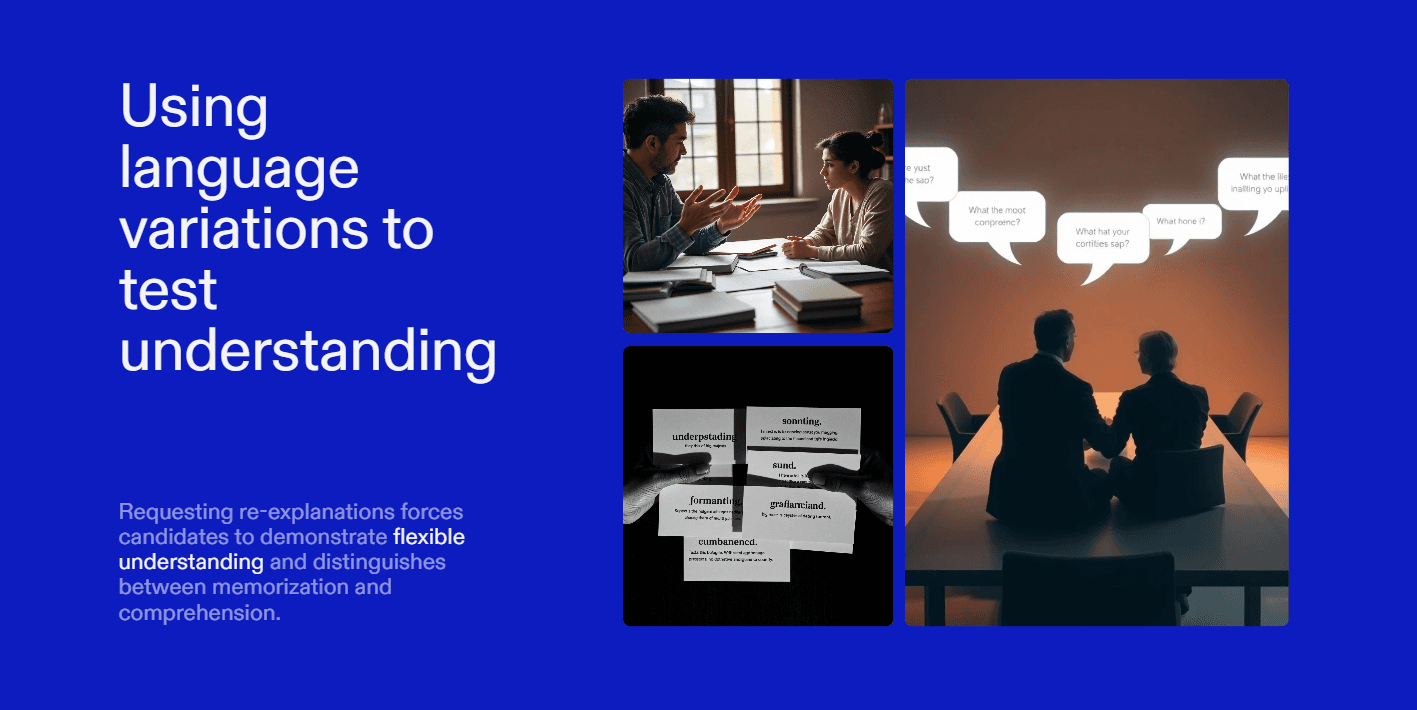
Ask the candidate to restart the explanation with different framing
Ask for a tradeoff comparison
Ask them to explain it "as if teaching a junior peer"
Borrowed reasoning breaks under recontextualization.
How Sherlock AI Detects Scripted Responses Fairly
Sherlock AI does not analyze accent, confidence, camera angle, or emotional expression.
Instead, it focuses on:
Sherlock AI Signal | What It Reveals |
|---|---|
Fluency changes during follow-up prompts | Adaptability of reasoning |
Ability to translate concepts into different language patterns | Whether meaning is internalized |
Continuity across multiple interview rounds | Identity and authorship integrity |
Reverse reasoning explanation ability | Real understanding versus recall |
This method is bias-conscious because it evaluates thought, not appearance.
Practical Takeaways for Recruiters and Hiring Managers
Never evaluate only the first answer
Always request re-explanation in different language
Use follow-up prompts like:
“What tradeoffs influenced that decision”
“How would your approach change if the context shifts”
“Explain the same answer more simply, as if mentoring”
Real knowledge adapts. Borrowed knowledge repeats.
Closing Insight
The real question is not whether a candidate can speak confidently. The real question is whether the thinking behind the answer is theirs.
Interview integrity is not about catching people. It is about ensuring hiring decisions reflect real capability, not performance training.