Back to all blogs
Interview Fraud can hurt hiring quality, team performance, and compliance. Learn how recruiters can detect and prevent interview fraud effectively.

Abhishek Kaushik
Jan 23, 2026
Interview Fraud in hiring is not just about a minor inconvenience, rather it’s a systemic risk with measurable business consequences. According to a recent industry analysis of over 200,000 hiring signals, 72% of candidates admit to lying on their resumes, 38% admit to misrepresenting themselves in interviews, and nearly half believe this behavior is acceptable. Companies that hire such candidates often see a 27% lower quality of hire compared to those who recruit honestly.
Worse still, interview fraud in hiring is expected to escalate. Gartner predicts that by 2028, about one in four candidate profiles worldwide could be fake, creating even greater challenges for talent teams trying to identify genuine experience and skills.
Ignoring these trends can directly impact your bottom line, team performance, and long-term credibility as an employer.
Costs of Interview Fraud in Hiring
Ignoring interview fraud means you risk hiring people who cannot actually do the job. When such candidates are selected, the consequences go beyond embarrassment. Hiring the wrong person can significantly damage team performance and cost a company in real dollars and lost productivity.
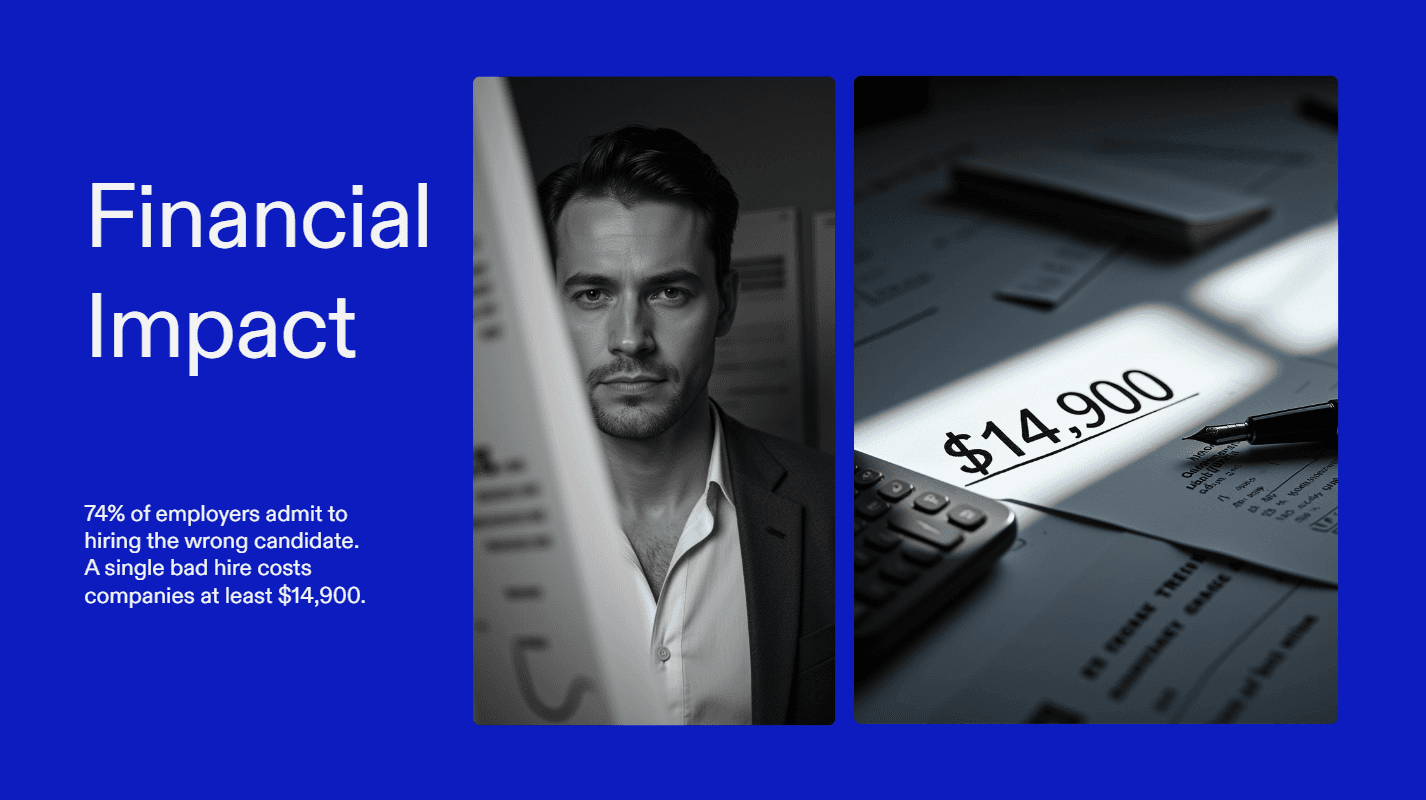
According to a CareerBuilder survey, 74 % of employers admitted to hiring the wrong person, and many organizations reported that a single bad hire cost them at least $14,900 or more in wasted time and resources.
1. Hiring the Wrong Talent
When candidates exaggerate skills during interviews or on applications, hiring managers overestimate what those individuals can deliver. This leads to a mismatch between expectations and actual performance. Research spanning multiple industries shows that poor hiring decisions are frequent and costly:
Skill inflation leads to poor performance: In many hiring processes, candidates’ resumes or interview claims do not match their real abilities, putting teams in a position where they must compensate for skill gaps.
Productivity loss: A bad hire does not just cost salary and training. Work may need to be redone, deadlines get missed, and other team members must devote time to support or correct the work, dragging productivity down across the team. This can result in managers spending significant time fixing issues instead of driving new work forward.
Rehiring costs: When a hire does not work out, companies must reinvest in sourcing, screening, interviewing, and onboarding another candidate. These steps add substantial hidden costs that extend far beyond the original salary budget.
The result is clear: overestimating skills because of interview fraud leads to real operational setbacks and meaningful financial loss for organizations.
2. Damage to Team Performance and Morale
When interview fraud leads to hiring someone without the real skills or fit for the job, the impact spreads far beyond that individual. Instead of helping move work forward, the bad hire can slow down your team and create frustration across the group.
Skill gaps becoming visible after onboarding: Once the new hire starts work, team members begin to see skill gaps that were not apparent during the interview. Research shows that teams with underperforming members can see 30 % to 40 % lower productivity overall compared to teams without performance issues.
Increased workload on high performers and erosion of trust within teams: High performers often absorb the slack when a colleague falls short, taking on extra work to meet goals. This leads to stress, frustration, and reduced engagement, and in some cases can cause top talent to start looking elsewhere.
Teams lose confidence in leadership when hiring decisions repeatedly result in poor performance. Trust breaks down, collaboration suffers, and morale declines.
3. Business, Security, and Compliance Risks
Ignoring interview fraud and hiring unqualified or deceptive candidates can expose your organization to serious business, operational, and legal consequences. These go far beyond productivity losses and team disruption.
Poor technical decisions, code quality issues, and operational failures: When someone is hired without the real skills needed for the job, their work often fails to meet basic quality standards. Poor decisions and low-quality outputs can ripple through products and systems.
Risks in regulated industries: In regulated sectors such as finance, healthcare, manufacturing, energy, and environmental services, skills and credentials are not optional. Hiring someone who lacks proper qualifications or oversight can lead to compliance failures, safety lapses, and regulatory penalties.
Real world consequences include:
Financial penalties and legal exposure: Missteps in compliance roles can result in fines, sanctions, or costly audits.
Operational slowdowns: Teams without the right expertise risk bottlenecks in critical workflows like safety inspections, reporting, or risk management.
Security vulnerabilities: Unqualified hires in sensitive positions may mishandle access controls, increasing the risk of data breaches or system misuse.
Ignoring fraud in hiring can undermine foundational business processes, expose the company to regulatory sanctions, and weaken both customer and stakeholder confidence.
4. Erosion of Hiring Credibility and Employer Brand
When candidates manipulate interviews through misrepresentation, AI assistance, or proxy participation, the credibility of the hiring process itself starts to break down. For recruiters, this is not just an operational issue. It directly affects confidence in interview outcomes and the long-term health of the talent pipeline.
Loss of confidence in interview outcomes: When interview results feel unreliable, recruiters are forced to add extra rounds, repeat assessments, or delay decisions, increasing time-to-hire and internal skepticism.
Weakening of future talent pipelines: Recruiters waste time interviewing unqualified or deceptive candidates, while genuine candidates compete in processes distorted by cheating. Forbes reports that 38% of candidates admit to lying or misrepresenting themselves during interviews.
Over time, this creates recruiter fatigue, interviewer burnout, and stricter screening that can unintentionally discourage honest applicants.
Read more: 5 Ways to Stop AI Fraud in Interviews Without Harming Candidate Experience
How Detection and Proctoring Tools Prevent Interview Fraud
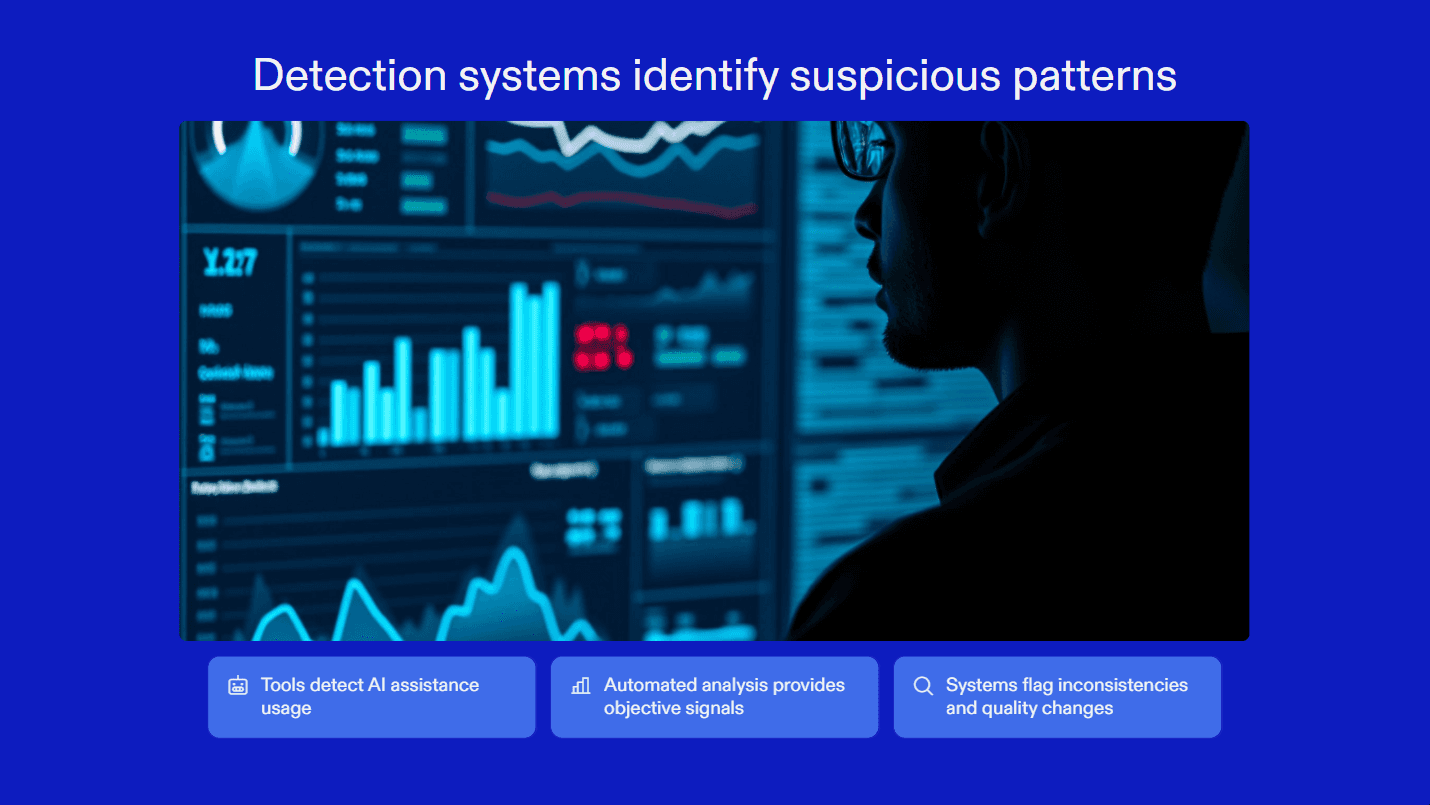
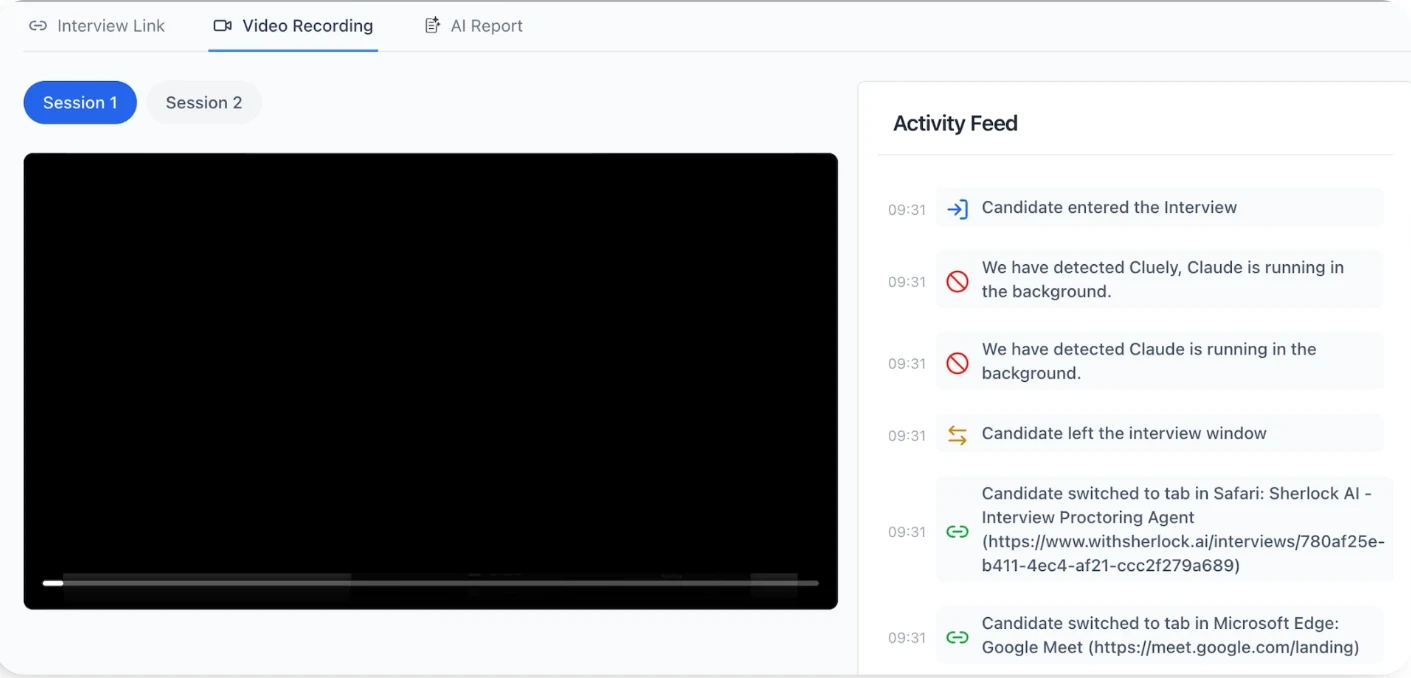
Detection and proctoring tools help recruiters validate whether interview performance reflects real, independent ability. Detection systems analyze behavioral and response patterns such as sudden changes in answer quality, unnatural pauses, or inconsistencies across rounds that often indicate AI assistance or external support. This gives hiring teams objective signals they cannot reliably spot through conversation alone.
Proctoring adds environmental context by monitoring screen behavior, browser activity, and attention shifts during interviews. When applied thoughtfully, it does not disrupt candidates. Instead, it creates a fair and consistent interview baseline, ensuring genuine candidates are not disadvantaged by those using hidden assistance.
Protect Your Hiring Process with Sherlock AI
Sherlock AI is purpose-built for modern interview fraud and designed to support recruiter judgment rather than replace it. It focuses on identifying risk signals that matter in real hiring workflows.
Detects AI-assisted responses, scripted answering, and proxy behavior
Flags behavioral inconsistencies across interview rounds
Combines detection and proctoring without intrusive candidate friction
Integrates seamlessly into existing interview processes
Provides clear, actionable insights recruiters can use for follow-up
The real impact for recruiters:
Reduce false positives caused by AI-assisted interviews
Protect genuine candidates from unfair competition
Improve quality of hire and post-hire performance
Restore trust in interviews as a reliable signal
Conclusion
Interview fraud is no longer a rare risk, it directly affects hiring quality, team performance, compliance, and employer credibility. By leveraging detection and proctoring tools, recruiters can restore confidence in interview outcomes and protect the integrity of their talent pipelines.
Solutions like Sherlock AI give hiring teams the insights they need to identify fraud, support honest candidates, and make smarter, more reliable hiring decisions.