Back to all blogs
Read about the technology behind interview proctoring in 2026, key features of modern proctoring systems, and the role of Sherlock AI in future hiring.
Abhishek Kaushik
Jun 22, 2026

Remote interviews have moved from a temporary solution to a permanent foundation of modern hiring. Today, over 90 percent of employers use virtual interviews as part of their recruitment process, and the vast majority plan to continue this trend in the future. Companies now interview candidates across cities, countries, and continents without ever meeting them in person. While this shift has unlocked speed and access to global talent, it has also introduced new risks that traditional interview processes were never built to handle.
In 2026, interview proctoring is no longer limited to basic webcam monitoring or screen tracking. The rise of AI assisted answering tools, proxy interviews, and identity manipulation has fundamentally changed what hiring teams need to protect against. Recent research suggests that by 2028, as many as one in four job candidates worldwide could be fake due to AI-generated profiles, making remote interview fraud a serious concern for hiring teams. Interview proctoring today focuses on preserving authenticity, validating candidate identity, and ensuring that hiring decisions are based on real ability rather than hidden assistance.
This guide explains what interview proctoring means today, why it has become essential, how modern proctoring technologies work, and how organizations can implement them responsibly at scale.
What Is Interview Proctoring?
Interview proctoring refers to the set of technologies and processes used to ensure the integrity of remote interviews. Its purpose is to verify that the right candidate is attending the interview, answering questions independently, and demonstrating genuine skills throughout the hiring process.
Unlike exam proctoring, interview proctoring does not rely on strict surveillance. Modern solutions focus on detecting risk signals such as behavioral inconsistencies, response irregularities, and identity mismatches across interview stages.
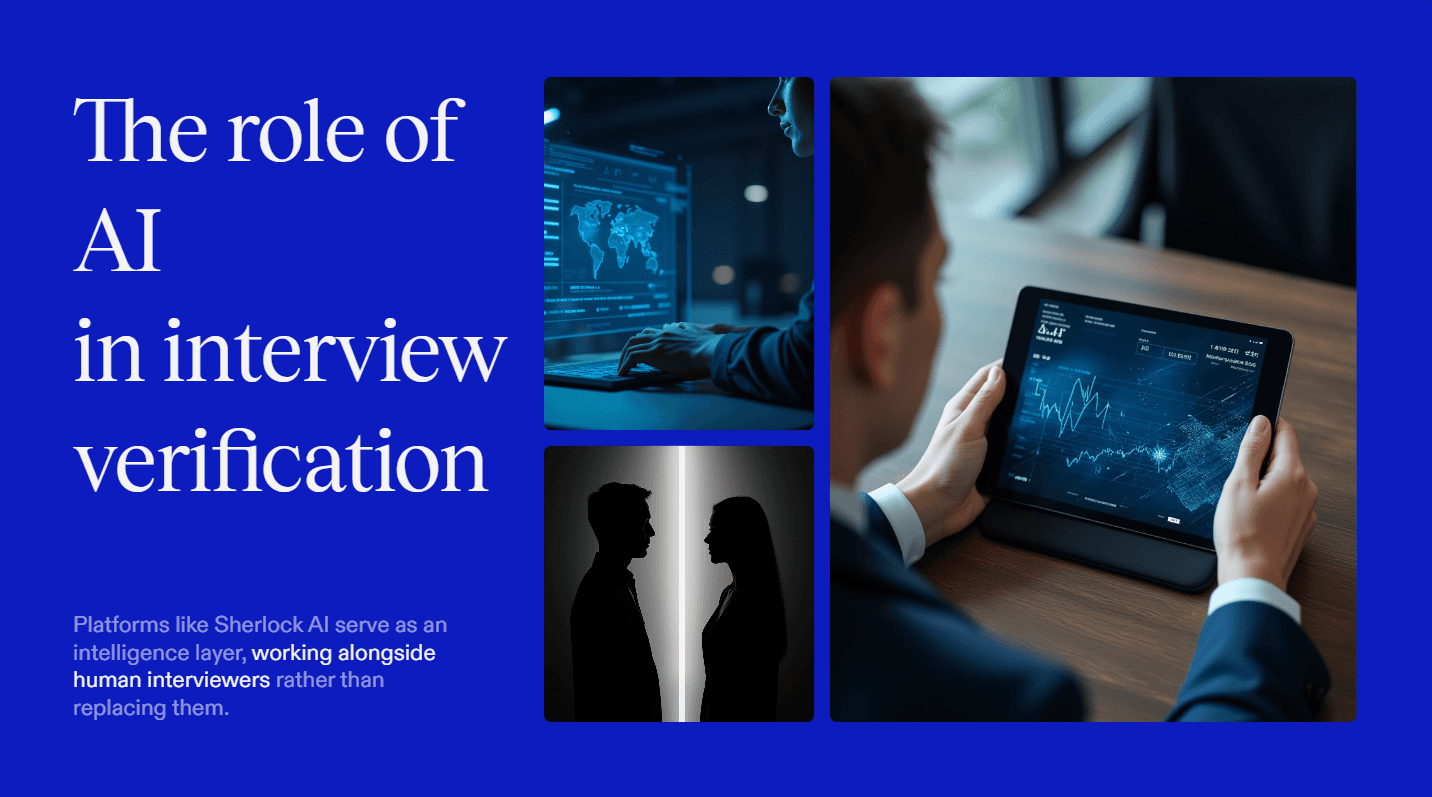
Platforms like Sherlock AI approach interview proctoring as an intelligence layer that works alongside interviewers rather than replacing human judgment.
Why Is Interview Proctoring Needed?
Interview proctoring is needed because remote interviews make it harder to verify candidate authenticity and ensure fair evaluation. As AI tools and external assistance become more accessible, candidates can misrepresent their skills without obvious signs. Interview proctoring helps detect fraud, validate genuine performance, and maintain trust in hiring decisions. It also allows organizations to scale remote hiring without compromising interview integrity.
The following section explains why interview proctoring is essential.
1. Ensuring Integrity in Hiring
Remote interviews remove direct physical verification, making it easier for candidates to misrepresent their identity or level of expertise.
Without proctoring, interviewers may unknowingly evaluate assisted or rehearsed responses instead of genuine problem solving ability.
Interview proctoring validates that answers are produced independently and reflect the candidate’s true skills.
This helps organizations make hiring decisions that are fair, defensible, and based on real performance.
2. Preventing Interview Scams and Candidate Fraud
Interview fraud has become more advanced with the availability of AI tools and remote collaboration platforms.
Candidates may use proxy interviewers, AI generated responses, or off screen coaching without obvious visual cues.
These tactics often appear natural, making them difficult for interviewers to detect in real time.
Sherlock AI identifies such manipulation by analyzing authenticity signals and behavioral consistency across interview sessions.
3. Adapting to Remote Work and Recruitment Trends
Remote and hybrid work models are now a permanent part of modern employment.
Organizations increasingly hire candidates across cities and countries without in person interaction.
Interview proctoring allows companies to maintain strong evaluation standards in fully remote hiring environments.
It ensures that interview quality and fairness remain consistent regardless of candidate location.
4. Enhancing Efficiency and Global Scalability
Manual interview review and verification processes do not scale for high volume or global hiring.
Reviewing every interview in detail increases recruiter workload and slows hiring timelines.
Interview proctoring automatically highlights only high risk interviews for further review.
This enables hiring teams to scale recruitment efficiently while applying consistent evaluation standards across regions.
Technologies Behind Interview Proctoring
Modern interview proctoring is built on multiple layers of technology that work together to assess authenticity, detect risk, and support fair hiring decisions. Instead of relying on a single control, these systems analyze a combination of identity, behavior, environment, and response patterns throughout the interview process.
Key Features of Modern Interview Proctoring Software
1. Identity verification before and during interviews
Interview proctoring platforms verify that the correct candidate is attending the interview by confirming identity at the start and monitoring for inconsistencies during the session. This helps prevent impersonation, proxy interviews, and candidate switching between stages.
2. Behavioral analysis such as response timing and interaction patterns
Modern systems analyze how candidates respond, including pauses before answers, changes in speaking rhythm, and interaction flow. Sudden shifts in behavior may indicate external assistance or scripted responses rather than natural reasoning.
3. Environment and device consistency monitoring
Proctoring tools track changes in the interview environment and devices used. Unexpected shifts such as switching devices, changes in surroundings, or repeated off screen attention can signal potential risk and prompt further review.
4. AI assisted detection of scripted or assisted answers
Advanced models assess whether responses follow predictable, generic patterns that are often associated with AI generated or heavily rehearsed answers. This helps distinguish genuine problem solving from assisted performance.
5. Cross stage consistency checks
Interview proctoring compares behavior and responses across multiple interview rounds. Inconsistencies in communication style, expertise level, or reasoning approach can highlight possible manipulation or proxy involvement.
Rather than producing simple pass or fail outcomes, Sherlock AI combines these signals to generate contextual risk insights. This allows hiring teams to understand what triggered concern, review interviews with greater clarity, and make informed decisions without relying solely on automation.
Benefits for Employers and Job Seekers of Interview Proctoring
Interview proctoring plays a critical role in strengthening remote hiring, but its impact depends on how thoughtfully it is implemented. Understanding both the benefits and the challenges helps organizations adopt proctoring in a balanced and effective way.
Benefit Area | How Employers Benefit | How Candidates Benefit |
|---|---|---|
Hiring integrity | Helps detect impersonation, proxy interviews, and AI assisted answers before hiring decisions are made | Ensures genuine skills and real effort are accurately evaluated |
Decision confidence | Provides authenticity signals that strengthen trust in interview outcomes | Builds confidence that evaluations are fair and unbiased |
Hiring efficiency | Reduces manual interview reviews and accelerates hiring timelines | Shortens waiting time and avoids repeated interview rounds |
Fairness and consistency | Applies standardized evaluation criteria across roles and regions | Creates equal interview conditions regardless of location |
Long term value | Minimizes costly mis hires and protects employer brand | Rewards honest performance and discourages dishonest practices |
Common Challenges Across Regions of Interview Proctoring
While interview proctoring strengthens remote hiring, its implementation is not without challenges, especially when organizations hire across multiple regions. Differences in infrastructure, candidate expectations, cultural norms, and budget availability can all influence how effective and accepted proctoring solutions are. Understanding these challenges helps organizations choose tools and practices that balance integrity with candidate experience.
1. Connectivity and hardware limitations
Internet reliability and access to modern devices vary widely across regions. Poor connectivity can disrupt interviews or generate inconsistent proctoring signals, making it important to use systems that adapt to different technical conditions without disadvantaging candidates.
2. Candidate discomfort with monitoring
Some candidates may feel uncomfortable being monitored during interviews, particularly if they are unsure what data is being collected or why. Clear communication and transparent proctoring practices are essential to reduce anxiety and build trust.
3. Cultural differences in acceptance
Attitudes toward monitoring and data usage differ across cultures. Practices that feel routine in one region may be perceived as intrusive in another, requiring flexible and culturally aware proctoring approaches.
4. Budget constraints for smaller companies
Smaller organizations may find traditional proctoring tools expensive or difficult to manage. Cost, setup complexity, and ongoing maintenance can limit adoption.
5. How Sherlock AI helps address these challenges
Choosing a solution like Sherlock AI that prioritizes transparency and signal based analysis helps organizations overcome these barriers. By focusing on meaningful authenticity signals rather than intrusive monitoring, Sherlock AI supports fair, scalable, and regionally adaptable interview proctoring.
The Future of Interview Proctoring
Interview proctoring is evolving alongside changes in remote work, AI adoption, and global hiring practices. The focus is shifting away from visible monitoring toward intelligent systems that quietly protect interview integrity while preserving candidate experience.
1. Innovations and Emerging Technologies
Interview proctoring is moving toward more subtle and intelligent detection methods.
Behavioral intelligence will play a larger role by analyzing how candidates respond rather than simply what they do on screen.
Cross interview analysis will help identify inconsistencies across multiple interview stages.
AI systems will increasingly focus on authenticity signals instead of constant surveillance.
2. Preparing for a Globalized Workforce
Organizations are hiring across regions with different legal and cultural expectations.
Interview proctoring must support compliance with regional data protection laws.
Cultural sensitivity is essential to maintain candidate trust and fairness.
Configurable proctoring solutions allow organizations to adapt practices without compromising standards.
3. Adapting to Cultural and Legal Diversity
Proctoring systems must accommodate varying privacy regulations across countries.
Flexible consent and data handling options help meet regional requirements.
Localized communication ensures candidates understand proctoring practices.
4. Scaling Securely Across Regions
Global hiring requires consistent interview standards without rigid enforcement.
Proctoring tools must scale without increasing manual oversight.
Secure systems ensure data protection across geographies.
5. Ensuring Fairness and Reducing Bias
Fair evaluation depends on consistent criteria across all candidates.
AI models should be designed to minimize bias and focus on behavior.
Human review remains essential to contextualize risk signals.
6. Using Feedback for Continuous Improvement
Candidate and interviewer feedback helps improve proctoring accuracy.
Ongoing refinement reduces false positives and enhances experience.
Continuous learning keeps systems aligned with evolving hiring practices.
Predictions for Proctoring in the Next Decade
Interview proctoring will continue to evolve as hiring becomes more remote, global, and AI influenced. Over the next decade, proctoring will shift from being a visible control mechanism to an embedded intelligence layer within interview platforms.
Interview proctoring will become a native part of video interview and hiring platforms rather than a separate add on.
Detection will focus more on authenticity, reasoning patterns, and behavioral consistency instead of overt monitoring.
AI models will improve at identifying assisted responses while remaining transparent and explainable.
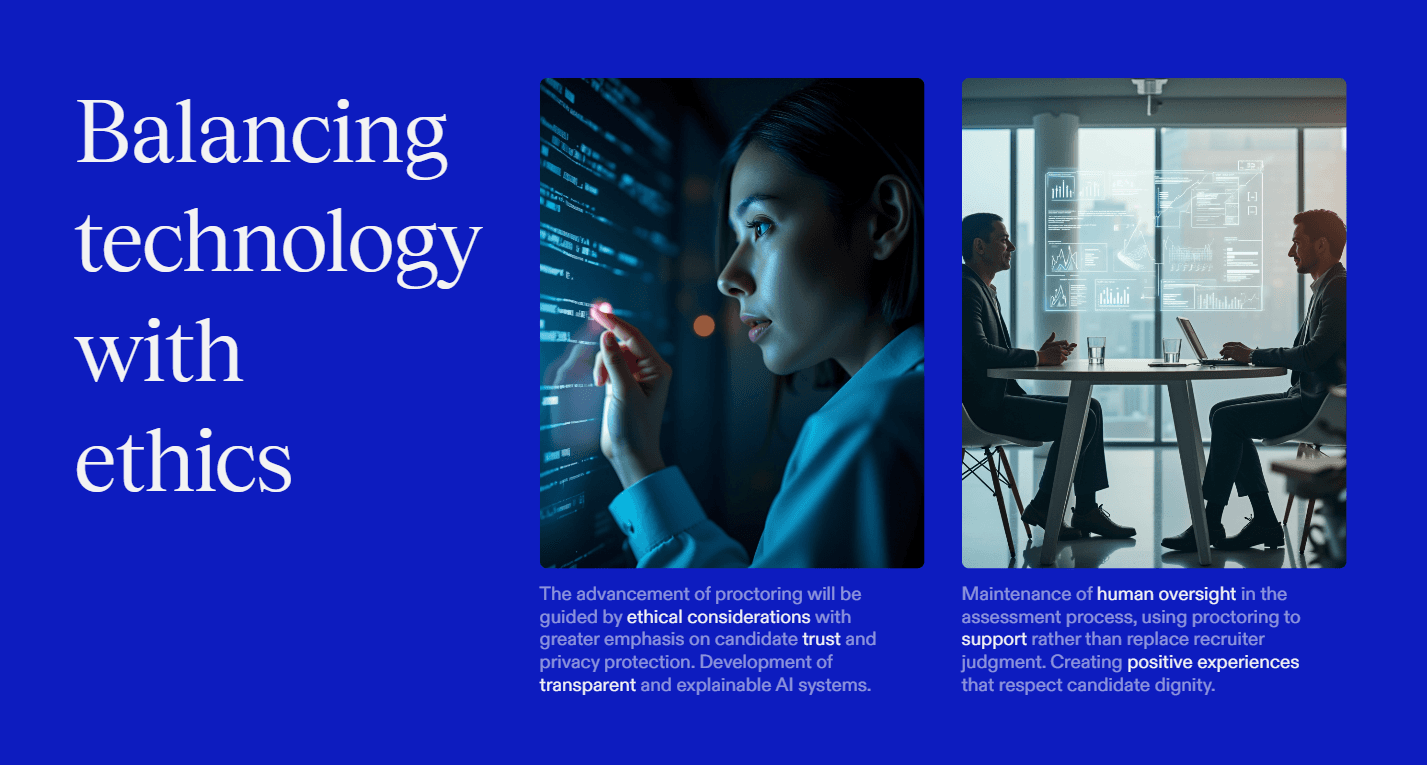
Greater emphasis will be placed on candidate trust, privacy, and ethical AI use.
Human oversight will remain central, with proctoring insights supporting rather than replacing recruiter judgment.
This evolution will allow organizations to protect interview integrity while maintaining a positive and respectful candidate experience.
How Sherlock AI Acts as an Interview Proctoring Agent
As interview fraud becomes more subtle and AI assisted, traditional monitoring based tools are no longer sufficient. Sherlock AI is designed to act as an intelligent interview proctoring agent that focuses on authenticity, fairness, and explainable insights rather than intrusive surveillance.
Key Benefits of Using Sherlock AI for Interview Proctoring
Detects AI assisted and scripted interview responses
Sherlock AI analyzes response structure, reasoning flow, and behavioral signals to identify answers that may be generated or assisted by external AI tools.Identifies proxy interviews and impersonation risks
By tracking identity and behavioral consistency across interview stages, Sherlock AI helps detect cases where a different person may be participating in later rounds.Analyzes behavioral authenticity instead of surface level actions
Sherlock AI focuses on how candidates reason, respond, and interact rather than relying solely on webcam or screen monitoring.Provides contextual risk insights rather than binary outcomes
Instead of pass or fail decisions, Sherlock AI highlights specific risk signals and explains what triggered them, allowing hiring teams to make informed judgments.Supports fair and bias aware hiring
Sherlock AI avoids demographic inference and evaluates candidates based on behavioral consistency and interview context, reducing the risk of biased decisions.Scales seamlessly for global and remote hiring
Designed for high volume and multi region hiring, Sherlock AI applies consistent standards while allowing flexibility for regional compliance and candidate experience.Enhances recruiter confidence without harming candidate experience
By operating transparently and with minimal intrusion, Sherlock AI strengthens trust for both hiring teams and candidates.
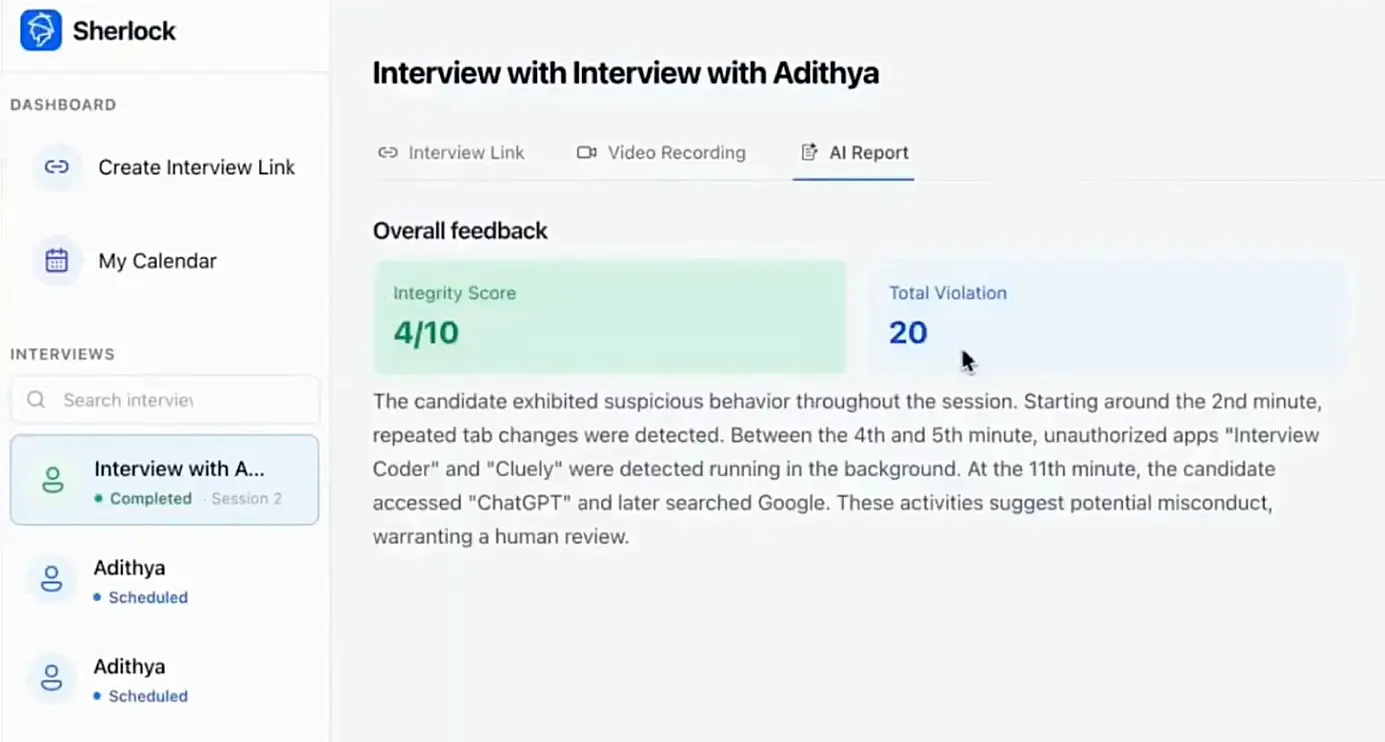
Sherlock AI enables organizations to confidently scale remote hiring while protecting interview integrity, reducing fraud risk, and maintaining ethical hiring practices.
Conclusion
Interview proctoring in 2026 is no longer a secondary safeguard. It is a core requirement for maintaining trust, fairness, and accuracy in remote hiring. As AI assisted answers, impersonation, and interview manipulation become harder to detect through human judgment alone, organizations must rely on smarter and more responsible verification methods.
Effective interview proctoring goes beyond surveillance. It focuses on understanding behavior, validating authenticity, and supporting confident decision making without harming candidate experience. When implemented thoughtfully, it strengthens hiring integrity while enabling teams to scale globally.
Sherlock AI represents the next evolution of interview proctoring by acting as an intelligent proctoring agent throughout the interview journey. By analyzing authenticity signals, behavioral consistency, and contextual risk patterns, Sherlock AI helps organizations identify genuine talent, reduce fraud, and hire with confidence in an AI assisted hiring landscape.