Back to all blogs
From AI voice cloning to proxy coding interviews, discover how deepfake technology is being used to manipulate remote hiring and what organizations can do to stop interview impersonation.
Abhishek Kaushik
Jun 18, 2026
Remote hiring has transformed the way companies recruit talent, but it has also introduced a new and dangerous threat: deepfake interview fraud. Today, cybercriminals and job scammers are using artificial intelligence to manipulate video calls, clone voices, and impersonate candidates during online interviews. What once seemed like an advanced Hollywood technology is now being used in real hiring processes across industries.
The rise of generative AI tools has made deepfake technology more accessible than ever. Fraudsters can now create realistic fake identities, modify facial movements in real time, and use AI-generated voice cloning software to deceive recruiters during virtual interviews. As remote and hybrid hiring continue to grow, organizations are struggling to identify whether the person attending the interview is actually the same individual who later joins the company.
The scale of the problem is increasing rapidly. According to Statista, over 10% of organizations worldwide reported experiencing deepfake-powered cyberattacks between 2024 and 2025. Another report revealed that AI-related content incidents increased nearly tenfold between 2020 and 2026, highlighting the explosive growth of synthetic media and deepfake misuse.
These attacks are no longer limited to social media scams or financial fraud. Recruiters are now facing candidates who use AI-enhanced video feeds, proxy interviewers, real-time answer assistance, and fake identities to secure remote jobs illegally. In some cases, companies only discover the fraud after onboarding when the employee’s identity, communication style, or technical skills suddenly change.
The 10 Deepfake Interview Examples That Happened
In this blog, we will explore 10 real deepfake interview examples that shocked recruiters and exposed major weaknesses in remote hiring systems. We will also examine how companies can identify warning signs early and how advanced proctoring and interview verification solutions can help organizations prevent interview impersonation before it leads to costly hiring mistakes.
1. The North Korean Remote Worker Deepfake Scheme
One of the most alarming deepfake hiring fraud cases involved North Korean operatives infiltrating global companies through remote tech jobs. Investigations by the FBI and cybersecurity firms revealed that individuals connected to North Korean networks were using stolen identities, fake documents, and AI-enhanced interview tactics to secure remote jobs in the United States and other countries.
These fraudulent candidates mainly targeted software engineering, blockchain, cybersecurity, and IT roles because they offered access to sensitive systems and high-paying remote opportunities. Recruiters often believed they were interviewing legitimate professionals with strong technical skills and polished communication abilities. In reality, some identities were stolen from real individuals, while others were completely fabricated using AI-generated media tools.
According to the U.S. Department of Justice, North Korean remote IT worker schemes have generated hundreds of millions of dollars annually through fraudulent remote jobs using stolen identities and fake interview appearances. Officials stated that some workers individually earned up to $300,000 per year while infiltrating companies through remote hiring processes.
The situation became more serious when investigators discovered that several fraudulent candidates had successfully secured employment at real companies. Some organizations unknowingly provided laptops, internal credentials, and system access before suspicious behavior was detected.
Warning Signs Recruiters Missed
Recruiters later identified several red flags during the interview process:
Frequent camera glitches during interviews
Delayed lip synchronization and unnatural facial movements
Candidates avoiding identity verification checks
Inconsistent accents or sudden voice changes
Multiple interview reschedules due to “technical issues”
Suspicious location or IP mismatches
This case exposed how vulnerable remote hiring processes can become when organizations rely only on standard video interviews and manual verification methods.
2. The AI Voice Cloning Interview Fraud Case
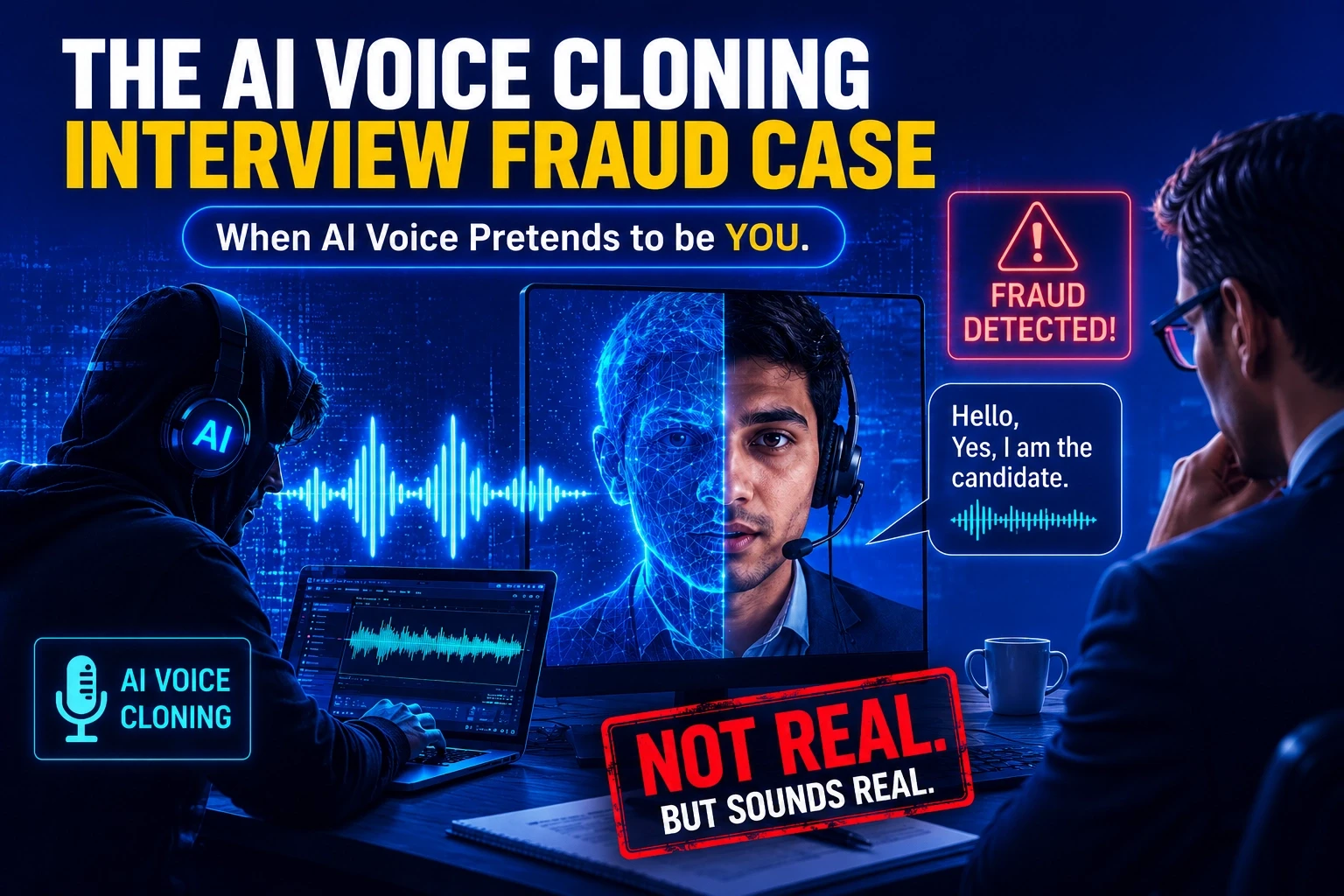
In another deepfake hiring incident, recruiters suspected a candidate of using AI-powered voice cloning and real-time response assistance during a remote technical interview. The applicant appeared highly qualified on paper, with strong certifications and experience at well-known technology companies.
During the interview, recruiters noticed the candidate’s responses sounded unusually polished and mechanically consistent. There were slight delays before answers, sudden changes in tone, and speech patterns that felt scripted rather than natural. Some responses closely resembled AI-generated answers commonly produced by language models.
As the interview process continued, concerns increased when the candidate struggled with spontaneous follow-up questions and real-world problem-solving discussions. Although the candidate answered prepared technical questions confidently, they had difficulty explaining concepts in depth when interviewers changed the conversation flow unexpectedly.
The hiring team later conducted additional verification rounds and discovered major inconsistencies between the candidate’s claimed expertise and their actual technical skills. Investigators suspected the use of AI voice enhancement tools and hidden real-time assistance during the interview process.
Warning Signs Recruiters Missed
The interview included several suspicious indicators:
Delayed responses to simple questions
Robotic or overly smooth speech patterns
Sudden changes in voice tone and energy
Repetitive sentence structures
Difficulty answering unscripted follow-up questions
Technical answers lacking practical depth
This case highlighted how voice-based AI deception is becoming a growing challenge in remote hiring. Many companies focus heavily on video verification while overlooking AI-assisted audio manipulation during interviews.
3. The Proxy Candidate Coding Interview Scam
A major remote hiring fraud case involved a candidate using a proxy interviewer to clear technical interview rounds for a software development role. The applicant appeared confident during the initial screening and performed exceptionally well in live coding assessments, impressing recruiters with advanced programming knowledge and fast problem-solving skills.
However, problems began after the candidate was hired. Team members noticed the employee struggled with basic technical tasks that had been solved easily during the interview process. Their communication style, technical understanding, and coding ability seemed completely different from the person who attended the interviews.
The company launched an internal investigation and discovered that another individual had likely attended the technical interview on behalf of the candidate. Reports suggested the fraudsters used remote desktop tools, hidden communication channels, and virtual meeting manipulation techniques to assist the candidate during coding rounds.
In some versions of the scam, the real expert handles the interview while the actual applicant keeps camera interaction minimal. In other cases, deepfake overlays and AI-enhanced video manipulation are used to make the proxy interviewer appear similar to the original candidate.
In a survey of 3,000 job candidates, 6% admitted to participating in interview fraud by either impersonating another person or having someone else attend interviews on their behalf.
Warning Signs Recruiters Missed
Several suspicious behaviors were later identified during the interview process:
Candidate avoided turning the camera on consistently
Long pauses before answering coding questions
Eye movement suggesting off-screen assistance
Sudden improvement in technical performance during live rounds
Different communication styles between interview stages
Poor performance after onboarding compared to interview quality
This incident showed how easily proxy interview fraud can bypass traditional remote hiring systems, especially during technical assessments where recruiters focus mainly on coding performance instead of identity verification.
Sherlock AI help companies identify suspicious interview activity, detect impersonation risks, and monitor candidate authenticity during virtual interviews to reduce the chances of proxy hiring fraud.
4. The Deepfake Executive Interview Attempt
A multinational company reported a suspicious interview case involving a candidate applying for a senior leadership position through a fully remote hiring process. The applicant presented an impressive background with years of management experience, strong communication skills, and a polished online presence that appeared completely legitimate.
During the first interview rounds, recruiters noticed the candidate’s video quality looked unusually artificial. Facial expressions appeared slightly delayed, lip movements did not always sync naturally with speech, and lighting around the face remained unnaturally consistent throughout the call. Despite these irregularities, the candidate performed well enough to progress further in the hiring process.
Concerns increased during a final executive interview when the video briefly glitched, revealing distorted facial edges and unnatural transitions around the jawline. Internal security teams later suspected the candidate may have been using deepfake video software or facial manipulation filters during the interview to alter their appearance or hide their real identity.
The organization immediately paused the hiring process and conducted additional identity verification checks. The candidate eventually withdrew from the process before completing the verification stage, raising even more suspicion among recruiters and cybersecurity teams.
Warning Signs Recruiters Missed
The interview process included several unusual signs:
Lip movements slightly out of sync with speech
Blurred facial edges during head movement
Unnaturally stable lighting throughout the interview
Video glitches around the face during camera movement
Delayed facial reactions and expressions
Candidate avoiding detailed identity verification requests
This case demonstrated how advanced deepfake video tools can create convincing interview appearances that may initially seem authentic to recruiters, especially during remote executive hiring.
5. The Fake Identity Tech Hiring Fraud
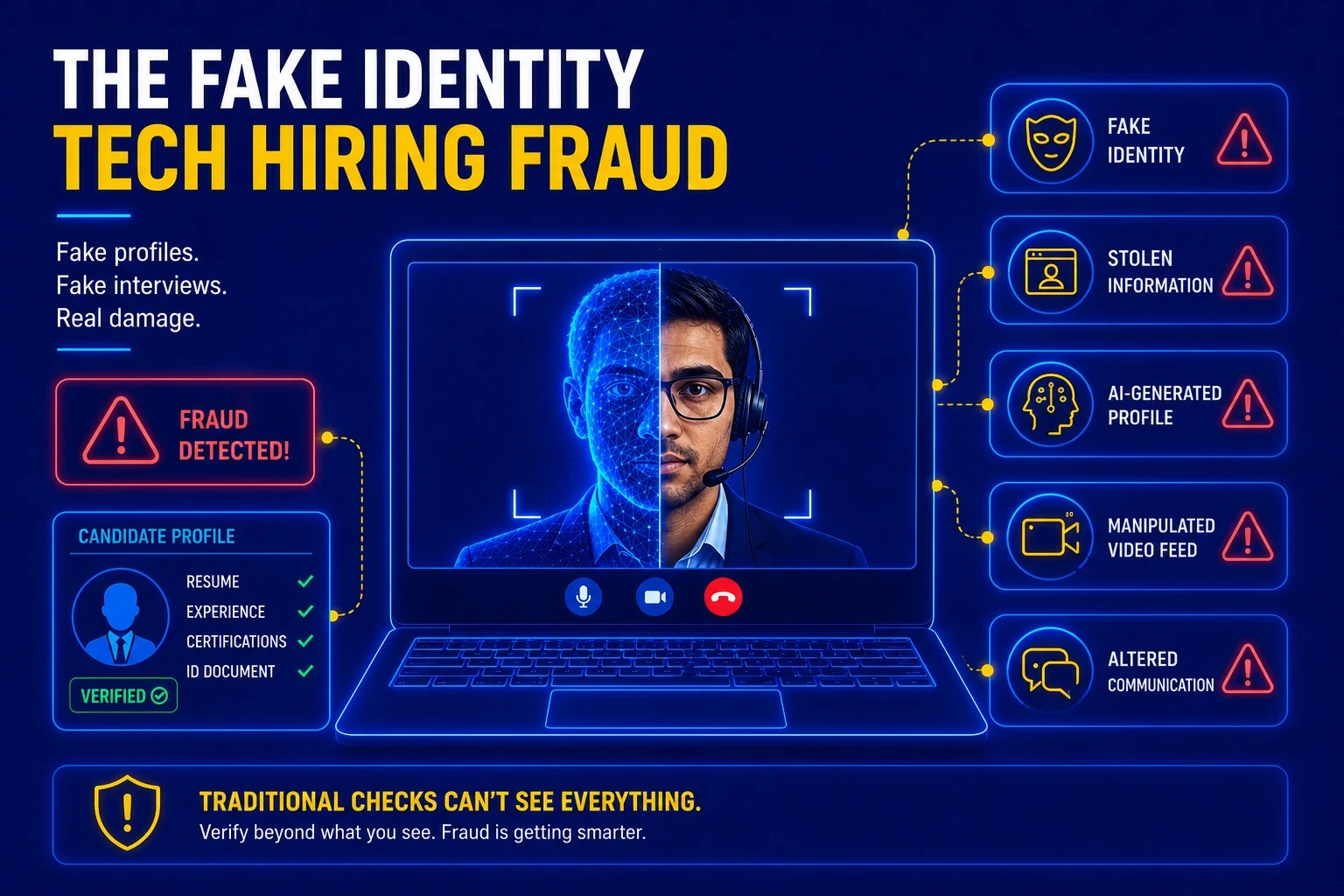
A fast-growing technology company experienced a serious hiring fraud incident when a remote employee was discovered using a completely fake identity during the recruitment process. The candidate had submitted a professional resume, LinkedIn profile, certifications, and identification documents that appeared legitimate during initial verification checks.
The applicant performed well during online interviews and technical discussions, successfully convincing recruiters that they were qualified for the role. However, after onboarding, the company’s IT and HR teams began noticing inconsistencies between the employee’s documentation, communication style, and system activity.
Further investigation revealed that the identity used during the interview process belonged to another real individual whose information had likely been stolen. The person attending the interviews and working remotely was not the actual owner of the submitted credentials.
Security teams later suspected the candidate may have used AI-enhanced profile images, manipulated video feeds, and altered communication tools to maintain the fake identity during interviews. Because the hiring process was entirely remote, the fraud was not identified until after the employee gained access to internal systems.
According to Checkr Hiring Fraud Survey 2025, 31% of hiring managers said they interviewed a candidate who was later revealed to be using a fake identity during the hiring process.
Warning Signs Recruiters Missed
Several red flags were later identified:
Candidate avoided detailed background verification calls
Inconsistencies between submitted documents and live interview appearance
Poor camera quality during identity verification rounds
Delayed responses during personal verification questions
Different communication patterns after onboarding
Resistance to additional video authentication checks
This case highlighted the growing risk of identity theft and AI-assisted impersonation in remote hiring environments. Traditional document verification alone is no longer enough to confirm candidate authenticity.
6. The Real-Time AI Answer Assistance Interview Case
A remote hiring team became suspicious after a candidate delivered unusually perfect answers throughout multiple interview rounds for a technical support role. The applicant responded quickly to complex questions, used highly structured explanations, and rarely hesitated during discussions.
At first, recruiters were impressed by the candidate’s confidence and communication skills. However, interviewers later noticed that many responses sounded overly formal and lacked personal experience or practical examples. The candidate also struggled whenever interviewers interrupted the prepared flow with spontaneous or situational questions.
During one interview round, recruiters observed slight delays before answers appeared, along with repetitive sentence patterns commonly associated with AI-generated content. The candidate’s eye movements also suggested they were reading information from another screen while responding.
The company later suspected the applicant had been using real-time AI answer generation tools during the interview. These tools can listen to interview questions, instantly generate responses, and provide suggested answers to candidates during live conversations.
Warning Signs Recruiters Missed
The interview process showed several suspicious behaviors:
Overly polished and textbook-style answers
Delayed responses before speaking
Repetitive wording and sentence structures
Difficulty sharing real personal experiences
Eye movement indicating off-screen assistance
Weak performance during unexpected follow-up questions
This case revealed how AI-generated response tools are becoming a major challenge for recruiters conducting remote interviews. Candidates can now receive instant automated assistance during live conversations without recruiters noticing immediately.
Sherlock AI help organizations monitor candidate behavior, detect suspicious interview patterns, and identify possible AI-assisted cheating during virtual hiring processes.
7. The Multiple Candidate Identity Swap Scam
A global outsourcing company uncovered a sophisticated interview fraud operation involving multiple candidates swapping identities throughout the hiring process. The scam was designed to help underqualified applicants secure remote technical jobs by using different individuals during screening, interviews, and onboarding stages.
The original applicant submitted a strong resume and completed the initial HR screening successfully. During technical interviews, however, recruiters noticed the candidate kept the camera positioned awkwardly and avoided extended face visibility. Despite this, the applicant performed exceptionally well in coding and system design discussions.
Problems began after onboarding when managers observed a dramatic difference in communication style, technical knowledge, and work quality. The employee struggled with tasks that had been handled easily during the interview rounds. Internal audits later revealed that different individuals had likely participated in various stages of the hiring process.
Investigators suspected the operation involved proxy interviewers, identity swapping, and AI-enhanced video manipulation tools to reduce the chances of detection during remote interviews.
Warning Signs Recruiters Missed
Candidate avoided direct eye contact during interviews
Inconsistent facial appearance across interview rounds
Different communication styles between meetings
Camera angles hiding parts of the face
Sudden drop in technical performance after hiring
Resistance to additional verification requests
This case showed how organized interview fraud networks can manipulate remote hiring systems when companies rely only on standard video interviews and resume check
8. The Deepfake Finance Interview Fraud Attempt
A financial services company reported a suspicious case involving a candidate applying for a remote analyst position using possible deepfake video technology during the interview process. The applicant had an impressive educational background, strong certifications, and excellent communication skills that initially impressed recruiters.
During the virtual interview rounds, however, some interviewers noticed unusual facial movements and slight delays between speech and expressions. The candidate’s face occasionally appeared blurred during head movement, while lighting around the face remained strangely uniform throughout the conversation.
Despite these inconsistencies, the candidate advanced to later interview stages because their answers appeared professional and technically accurate. Concerns escalated when security reviewers observed that the candidate repeatedly avoided requests for enhanced identity verification and refused to participate in additional live authentication checks.
The company later suspected the applicant may have been using AI-generated facial overlays or real-time video manipulation tools to disguise their actual identity during the interview process.
Warning Signs Recruiters Missed
Facial expressions appearing delayed or unnatural
Blurred edges around the face during movement
Lip synchronization issues during speaking
Unusually stable lighting and video quality
Candidate resisting identity verification requests
Repeated technical excuses during authentication checks
This incident highlighted how advanced deepfake technology can create convincing professional appearances during remote interviews, especially in industries handling sensitive financial information.
9. The Remote Cybersecurity Engineer Impersonation Case
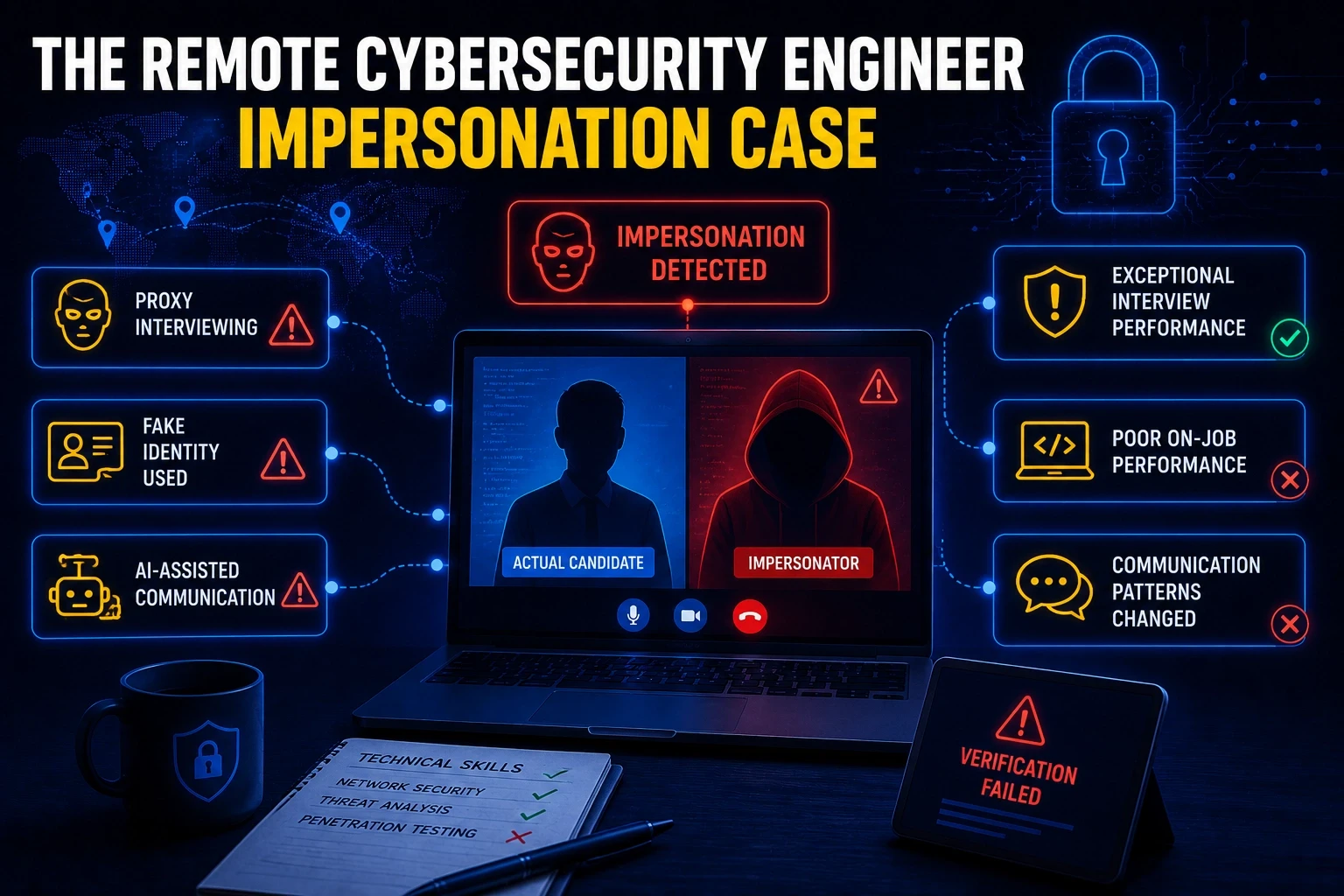
A cybersecurity company discovered a major hiring fraud incident after a newly hired remote engineer failed to demonstrate the advanced technical skills shown during the interview process. The candidate had performed exceptionally well during technical assessments, answering complex security questions confidently and completing coding challenges with ease.
However, shortly after onboarding, managers noticed the employee struggled with basic cybersecurity tasks and frequently required assistance for work that should have been straightforward based on their interview performance. Team members also observed differences in communication style, confidence level, and technical vocabulary compared to the interview sessions.
An internal investigation later suggested that another individual may have participated in the technical interview rounds on behalf of the candidate. Recruiters suspected the use of proxy interviewing methods along with possible AI-enhanced communication tools to support the impersonation process.
Warning Signs Recruiters Missed
Exceptional interview performance followed by weak job performance
Different communication patterns after onboarding
Candidate avoiding live collaborative technical exercises
Delayed responses during real-time problem solving
Inconsistent confidence levels between interviews and work sessions
Limited participation during camera-on meetings
This case demonstrated how proxy interviewing and AI-assisted impersonation can create serious security risks, especially for companies hiring remote employees for sensitive technical roles.
10. The AI Generated Profile and Interview Fraud Scheme
A remote-first startup uncovered a sophisticated hiring scam involving candidates using AI-generated identities, fake profile images, and manipulated interview appearances to apply for multiple remote jobs simultaneously. The applicants created convincing online profiles complete with professional headshots, fabricated employment histories, and polished resumes generated using AI tools.
Recruiters initially found the candidates highly impressive because their resumes matched job requirements perfectly and their interview responses sounded structured and professional. However, inconsistencies started appearing during later interview stages when candidates struggled with personalized questions about previous projects and work experiences.
The company’s hiring team eventually noticed that several applicants shared similar communication patterns, identical answer structures, and nearly identical interview behaviors. Security reviewers later suspected the use of AI-generated profile photos, scripted response tools, and deepfake-assisted video enhancements during interviews.
According to The Economic Times Report, a startup reported losing over ₹2 lakh and nearly four months of productivity after hiring a candidate who allegedly falsified salary details, work experience, and references during the hiring process.
Warning Signs Recruiters Missed
AI-generated profile images with unnatural facial details
Repetitive answer structures across multiple candidates
Difficulty discussing detailed past experiences
Overly polished interview responses lacking personality
Suspiciously perfect resumes matching job descriptions
Inconsistent facial behavior during live interviews
This incident revealed how AI tools are making it easier for fraudsters to create entirely fabricated professional identities that appear legitimate during remote hiring.
How Sherlock AI Helps Prevent Deepfake Interview Fraud
As deepfake technology and AI-assisted interview fraud continue to evolve, companies need more than basic video interviews and manual verification checks. Traditional hiring methods are no longer enough to identify proxy candidates, fake identities, or AI-generated interview manipulation. This is where Sherlock AI helps organizations secure their remote hiring process.
Real-Time Interview Monitoring
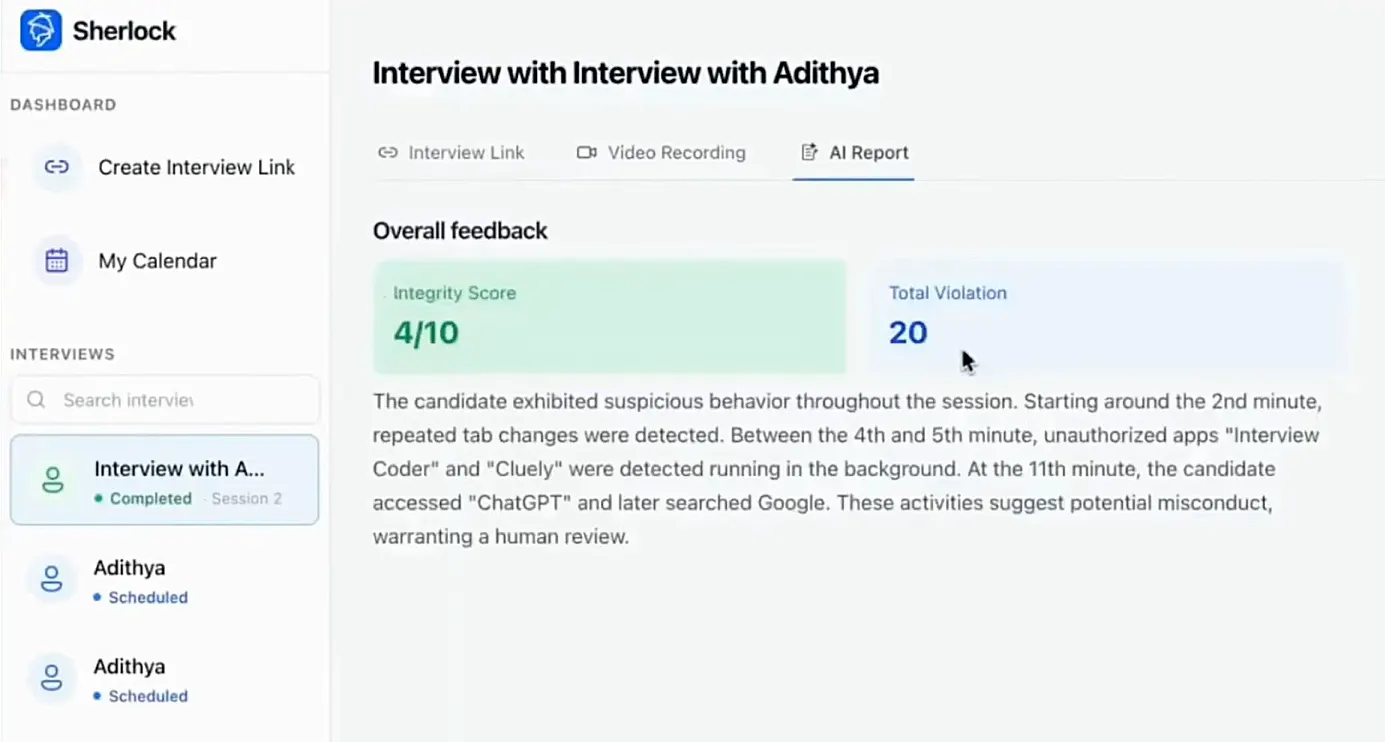
Sherlock AI continuously monitors interview sessions to identify suspicious candidate behavior during live interviews. The platform helps recruiters detect unusual movements, facial inconsistencies, abnormal eye patterns, and possible impersonation attempts that may indicate deepfake usage or proxy interviewing.
Identity Verification and Facial Consistency Checks
One of the biggest challenges in remote hiring is confirming whether the person attending the interview is the same individual who applied for the role. Sherlock AI helps organizations verify candidate identity through facial consistency analysis and interview authentication checks across multiple hiring rounds.
Detection of AI-Assisted Cheating
Candidates increasingly use AI-generated answer tools, hidden assistance software, and voice enhancement technologies during interviews. Sherlock AI helps identify suspicious communication patterns, delayed responses, and behavioral irregularities that may indicate AI-assisted cheating or external support.
Prevention of Proxy Interviews
Proxy interview fraud occurs when another person attends the interview on behalf of the original applicant. Sherlock AI helps recruiters identify potential impersonation risks through behavioral analysis, identity tracking, and interview integrity monitoring.
Stronger Remote Hiring Security
Remote hiring creates opportunities for fraudsters to exploit weak verification systems. Sherlock AI adds an extra layer of protection by helping organizations maintain hiring integrity, reduce recruitment fraud, and improve confidence in virtual interviews.
Better Candidate Trust and Hiring Confidence
A secure interview process not only protects organizations but also improves trust among genuine candidates. By implementing advanced interview verification and monitoring systems, companies can create a more transparent and reliable hiring environment.
Secure remote hiring today with Sherlock AI |
Conclusion
Deepfake interview fraud is rapidly becoming one of the biggest challenges in remote hiring. What started as isolated impersonation scams has now evolved into sophisticated AI-driven deception involving voice cloning, proxy interviews, fake identities, and real-time video manipulation. As the examples in this blog show, even experienced recruiters and large organizations can struggle to identify fraudulent candidates during virtual interviews.
For organizations, the risks go far beyond making a bad hire. Deepfake interview fraud can lead to financial losses, insider threats, data breaches, compliance issues, and serious reputational damage. Companies hiring for technical, cybersecurity, finance, and remote access roles are especially vulnerable because fraudulent candidates may gain direct access to sensitive systems and confidential information.
Sherlock AI help organizations protect their recruitment process through advanced interview proctoring, identity verification, and deepfake detection capabilities. By identifying suspicious interview behavior before candidates are hired, companies can reduce fraud risks and build a more secure remote hiring process.
As AI technology continues to evolve, organizations that strengthen their interview verification systems today will be far better prepared to handle the future of hiring fraud.