Back to all blogs
Explore the top risks of remote hiring fraud including fake candidates, proxy interviews, identity theft, and cybersecurity threats. Learn how Sherlock AI helps prevent fraud.

Abhishek Kaushik
Jun 9, 2026
Remote hiring has become the new standard for global recruitment. Companies can now access talent from anywhere in the world, reduce hiring timelines, and build distributed teams faster than ever before. However, this shift has also opened the door to a growing problem that many organizations are struggling to control: remote hiring fraud.
Today’s hiring fraud goes far beyond fake resumes. Fraudulent candidates are now using AI-generated identities, deepfake video technology, proxy interviews, voice cloning tools, and real-time AI assistance to manipulate online interviews and bypass recruiter verification processes. As remote hiring becomes more common, recruiters are finding it increasingly difficult to confirm whether the person attending the interview is the same person who eventually joins the company.
The financial impact of remote hiring fraud is becoming severe. According to TechRadar, nearly 24% of organizations estimated that losses from fraudulent hires exceeded $50,000 annually, while 10% reported losses of more than $100,000 every year. These losses often include recruitment costs, onboarding expenses, cybersecurity incidents, compliance violations, and productivity damage caused by bad hires.
Recruiters are also reporting a sharp increase in suspicious candidates during remote interviews. In one widely discussed Reddit conversation among hiring professionals screening technical candidates, fraud detection rates reportedly reached as high as 37% in certain remote hiring pipelines. Many recruiters described encountering fake identities, candidates receiving off-camera assistance, and proxy interview scams during virtual assessments.
Top 10 Risks Of Remote Hiring Fraud
In this blog, we will explore the top 10 risks of remote hiring fraud, how these scams affect organizations, and why companies are increasingly adopting AI driven hiring verification platforms to protect their recruitment processes.
1. Financial Losses From Fraudulent Hires
Remote hiring fraud can lead to major financial losses for companies. When businesses unknowingly hire fake or unqualified candidates, they waste money on recruitment, salaries, onboarding, and training. In some cases, fraudulent employees may also damage projects, steal company resources, or create cybersecurity issues.
Common Financial Risks
Wasted recruitment and onboarding costs
Salary paid to unqualified employees
Project delays and missed deadlines
Increased rehiring and retraining expenses
Loss of clients and business opportunities
Cybersecurity recovery costs
Example: A company hires a remote developer who cleared interviews using a proxy interviewer. After joining, the actual employee lacks technical skills and fails to complete assigned tasks. The business loses time, salary expenses, and project productivity while searching for a replacement.
2. Identity Theft And Candidate Impersonation
Remote hiring fraud often involves fake identities and candidate impersonation. Fraudsters may use stolen documents, AI generated profiles, or proxy interviewers to secure remote jobs under false identities. According to HireRight’s 2025 Global Benchmark Report, one in six organizations worldwide reported experiencing identity fraud during the hiring process, highlighting the growing risks of fake identities and candidate impersonation in remote recruitment.
As remote interviews become more common, verifying whether the actual candidate matches their credentials has become increasingly difficult.
Common Identity Fraud Risks
Fake government IDs and resumes
Proxy interviews conducted by another person
AI generated profile pictures and portfolios
Deepfake video or voice manipulation
Stolen LinkedIn or GitHub profiles
Example: A candidate clears multiple technical interview rounds using a highly skilled proxy interviewer. After getting hired, a different person joins the company and fails to perform the required tasks, creating operational and security risks for the business.
To prevent impersonation fraud, companies are using AI based verification platforms like Sherlock AI to detect suspicious interview behavior and verify candidate authenticity during remote hiring.
3. Data Breaches And Cybersecurity Threats
Fraudulent remote hires can become major cybersecurity threats for organizations. Once fake employees gain access to company systems, they may steal sensitive information, leak confidential data, or compromise internal infrastructure.
This risk is especially high for remote technical roles that provide access to cloud systems, databases, and proprietary code.
Common Cybersecurity Risks
Unauthorized access to company systems
Theft of confidential business data
Source code leaks and intellectual property theft
Malware or ransomware attacks
Exposure of customer information
Misuse of privileged system access
Example: A fake remote IT employee gains access to internal systems after clearing online interviews using false credentials. After onboarding, the individual downloads sensitive company files and shares them externally, causing financial and reputational damage.
4. Reduced Team Productivity
Fraudulent hires can significantly reduce team productivity. When unqualified employees fail to perform their responsibilities, other team members are forced to spend additional time fixing mistakes, managing delays, and handling unfinished work.
Common Productivity Risks
Missed project deadlines
Increased workload for existing employees
Poor quality deliverables
Delayed client communication
Reduced team efficiency
Example: A remote marketing specialist exaggerates their experience during the hiring process. After joining, they fail to execute campaigns properly, forcing the rest of the team to redo tasks and manage project delays.
5. Damage To Company Reputation
Hiring fraud can damage a company’s reputation with clients, investors, and customers. If fraudulent employees create operational issues or security breaches, businesses may lose trust in the market.
Common Reputation Risks
Negative client experiences
Loss of customer trust
Public cybersecurity incidents
Reduced investor confidence
Poor employer branding
Example: A company unknowingly hires a fake customer support manager who mishandles client data. After the incident becomes public, customers lose confidence in the business and move to competitors.
6. Compliance And Legal Issues
Fraudulent hiring can also create serious legal and compliance problems. Companies may unknowingly violate employment regulations, data protection laws, or industry compliance standards by hiring fake candidates.
Common Compliance Risks
Employment verification failures
Violation of data privacy regulations
Tax and payroll compliance issues
Legal disputes with clients or partners
Regulatory penalties and fines
Example: A financial services company hires a remote employee using fake credentials. During an audit, regulators discover the fraud, resulting in compliance penalties and legal complications for the organization.
7. Intellectual Property Theft
Remote hiring fraud increases the risk of intellectual property theft. Fraudulent employees may gain access to confidential business information, product plans, source code, or proprietary research.
Common Intellectual Property Risks
Theft of source code and software
Leakage of confidential documents
Sharing proprietary business strategies
Unauthorized access to research data
Competitor information leaks
Example: A fake remote developer gains access to a company’s product repository and copies sensitive code before leaving the organization, creating long term competitive and legal risks.
8. Increased Recruitment Costs
When companies hire fraudulent candidates, they often need to restart the entire hiring process. This increases recruitment costs and wastes valuable HR resources.
Common Recruitment Cost Risks
Reposting job openings
Conducting additional interviews
Repeating onboarding and training
Higher recruitment agency costs
Longer hiring timelines
Example: A company discovers that a newly hired remote employee used fake credentials during recruitment. The HR team must restart sourcing, interviewing, and onboarding, increasing hiring expenses and delaying business operations.
9. Insider Threats From Fraudulent Employees
Fraudulent hires can become serious insider threats once they gain access to company systems and internal operations. Unlike external attackers, insider threats already have authorized access, making their activities harder to detect.
In remote work environments, this risk becomes even more dangerous because employees often access company resources from multiple devices and locations.
Common Insider Threat Risks
Unauthorized sharing of confidential data
Abuse of system access permissions
Internal sabotage or data deletion
Leakage of sensitive business information
Financial or operational manipulation
Example: A fake remote operations employee gains access to internal company tools after using false credentials during hiring. Over time, the employee secretly exports sensitive business data and shares it with external parties, causing major security and reputational damage.
10. Difficulty Scaling Remote Teams Safely
As companies expand remote hiring, managing hiring security becomes increasingly difficult. Larger recruitment volumes create more opportunities for fraudsters to exploit weak verification processes.
Without proper screening systems, businesses may struggle to scale remote teams safely while maintaining hiring quality.
Common Scaling Risks
Increased fake job applications
Difficulty verifying large candidate volumes
Faster hiring leading to weaker screening
More interview manipulation attempts
Higher operational and security risks
Example: A fast growing startup rapidly hires remote employees across multiple countries without strong verification systems. Over time, several fraudulent candidates enter the organization, creating productivity, security, and compliance issues.
Key Statistics
HireRight's report revealed that employers in the Asia-Pacific region recorded the highest rate of identity fraud with 20%, followed by Europe, the Middle East, and Africa (19%), and then North America (15%).
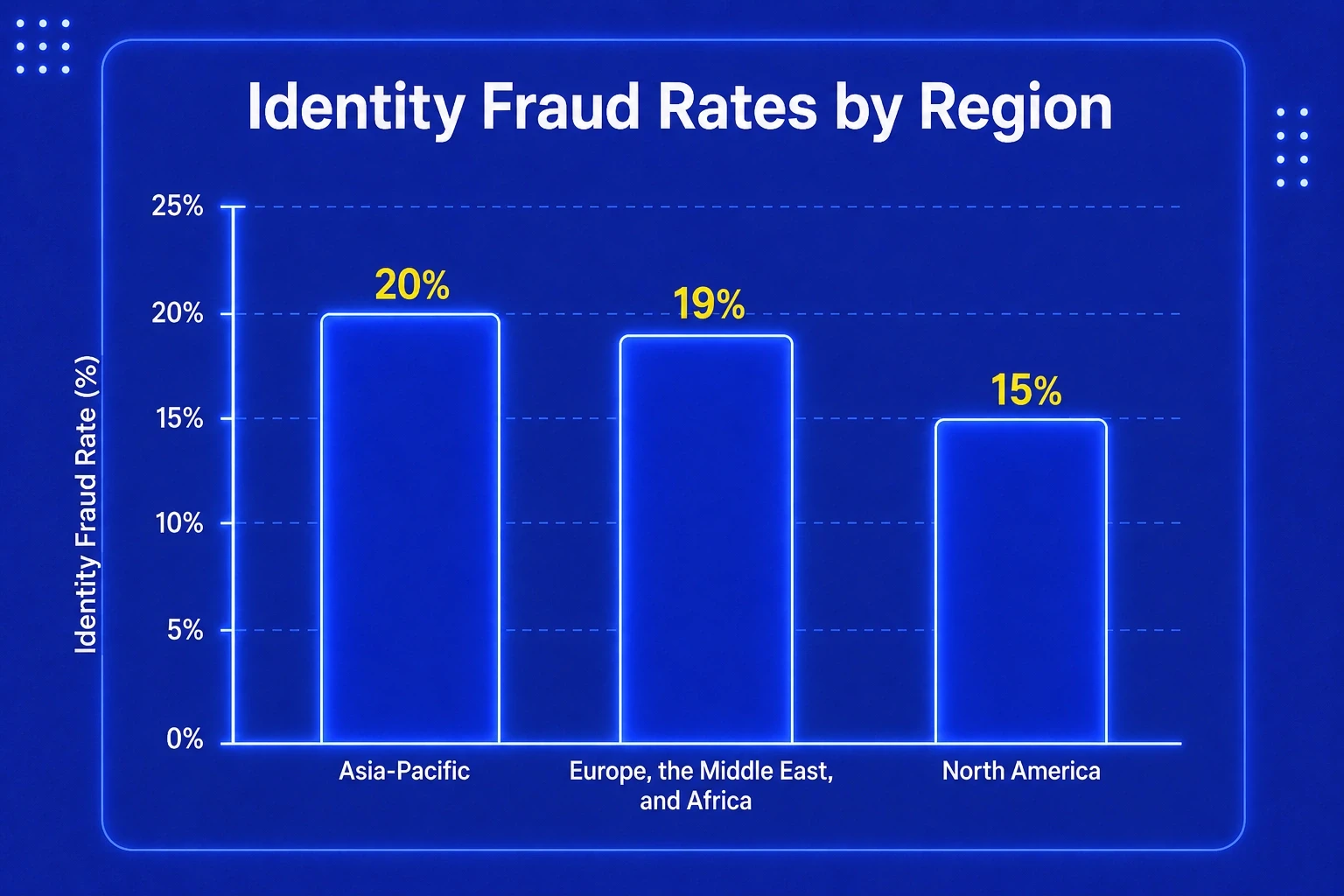
Source: HireRight 2024 Global Benchmark Report
How Companies Can Prevent Remote Hiring Fraud
Preventing remote hiring fraud requires more than traditional resume screening and video interviews. As fraud tactics become more advanced, businesses need stronger verification processes throughout the hiring journey.
Companies can reduce hiring fraud risks by implementing the following strategies:
Verify candidate identity before and during interviews
Conduct live technical and problem solving assessments
Use AI powered interview monitoring tools
Watch for suspicious interview behavior and inconsistencies
Record and review interview sessions when necessary
Perform detailed background and credential verification
Limit system access for new remote employees initially
Train recruiters to identify impersonation and deepfake risks
How Sherlock AI Helps Prevent Remote Hiring Fraud
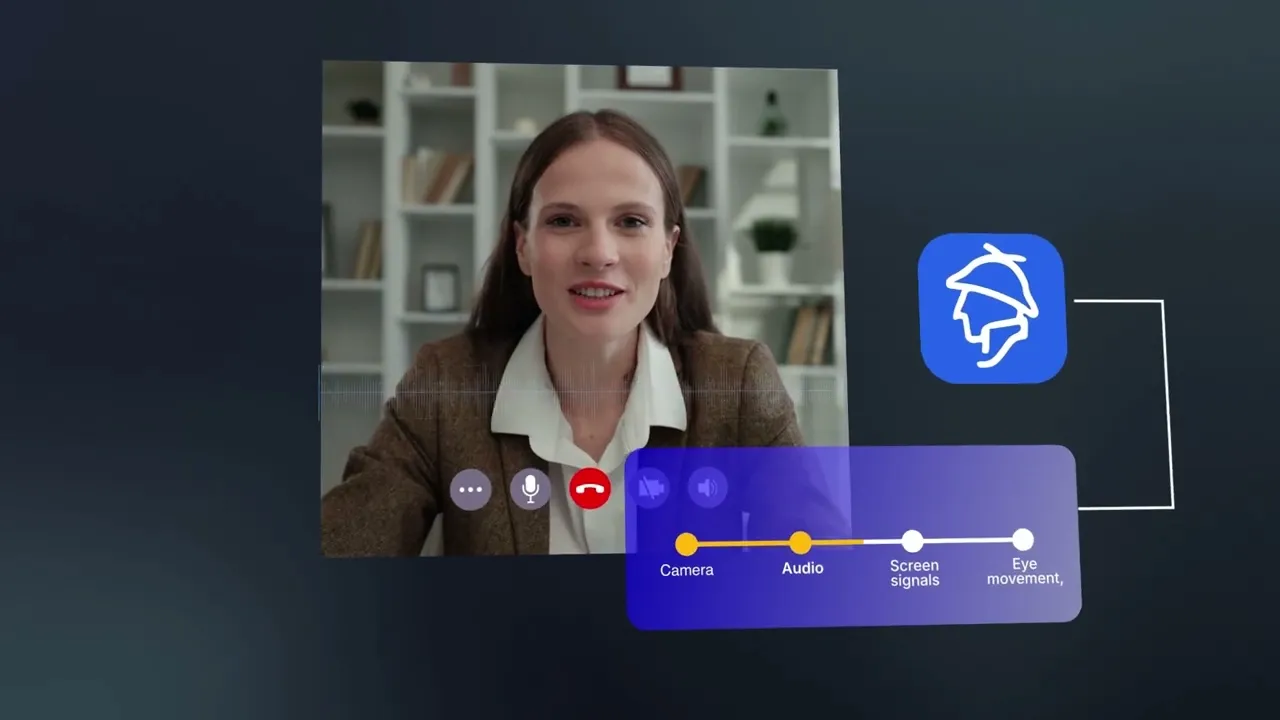
As remote hiring fraud becomes more sophisticated, recruiters need more than traditional interviews and manual verification processes. Sherlock AI helps companies identify suspicious candidate behavior and reduce hiring fraud risks during remote recruitment.
Sherlock AI is designed to help recruiters and hiring teams detect interview manipulation, impersonation attempts, and suspicious activities that may go unnoticed in standard virtual interviews.
1. AI Powered Interview proctoring
Sherlock AI monitors candidate behavior during remote interviews and helps identify suspicious patterns that may indicate hiring fraud.
Key Benefits
Detects unusual interview behavior
Monitors candidate activity in real time
Helps recruiters identify potential fraud signals
2. Candidate Identity Verification
Sherlock AI helps verify whether the person attending the interview matches the candidate profile and submitted credentials.
Key Benefits
Reduces impersonation risks
Supports secure candidate verification
Helps identify fake identities
3. Proxy Interview Detection
The platform helps detect situations where another person may be assisting or replacing the candidate during the interview process.
Key Benefits
Identifies proxy interview attempts
Detects suspicious communication patterns
Improves interview authenticity
4. Deepfake And AI Fraud Detection
Sherlock AI helps recruiters identify possible deepfake usage and AI assisted interview manipulation during remote hiring.
Key Benefits
Detects AI generated interview behavior
Helps identify deepfake risks
Strengthens remote hiring security
5. Recruiter Fraud Insights
Sherlock AI provides recruiters with behavioral insights and fraud indicators that support better hiring decisions.
Key Benefits
Improves recruiter confidence
Highlights suspicious candidate activity
Supports safer remote hiring decisions
6. Secure Remote Hiring Workflows
Sherlock AI helps businesses strengthen their overall remote hiring process and reduce risks associated with fraudulent candidates.
Key Benefits
Improves hiring security
Protects company systems and data
Supports scalable remote recruitment processes
For businesses hiring remote talent at scale, Sherlock AI provides an additional layer of security to help detect fraud and build more trustworthy hiring workflows.
Conclusion
Remote hiring has created new opportunities for businesses to access global talent, but it has also introduced serious fraud risks that companies can no longer ignore. From fake identities and proxy interviews to cybersecurity threats and insider attacks, remote hiring fraud is becoming more advanced every year.
A single fraudulent hire can lead to financial losses, operational disruptions, reputational damage, and long term security risks. Traditional hiring methods are often not enough to detect modern interview manipulation techniques powered by AI and deepfake technology.
This is why organizations are increasingly investing in smarter hiring verification processes that can identify suspicious candidate behavior before a hiring decision is made.
Platforms like Sherlock AI help companies strengthen remote hiring security through AI powered interview monitoring, candidate verification, and fraud detection solutions designed for modern recruitment challenges.
As remote work continues to grow, businesses that prioritize hiring security will be better positioned to build trustworthy teams, protect sensitive data, and scale safely in the future.