Back to all blogs
Interview manipulation can lead to poor hires and compliance risks. Explore real techniques candidates use and how Sherlock AI detects them in real time.

Abhishek Kaushik
Jan 23, 2026
Interview manipulation is becoming a growing concern as hiring shifts toward remote and digital-first models. With reduced face-to-face interaction and intense competition for roles, candidates now have more opportunities to influence interview outcomes using psychological tactics, technology, and deliberate misrepresentation.
What once involved minor resume exaggeration has evolved into real-time manipulation during interviews, making it increasingly difficult for hiring teams to accurately assess true capability, intent, and authenticity. Nearly 46% of hires fail within the first 18 months due to poor fit.
When interview manipulation goes undetected, it undermines hiring fairness, leads to poor role fit, damages team performance, and increases legal and compliance exposure, including discrimination-related challenges.
As manipulation techniques become more sophisticated, traditional interviews and human judgment alone are no longer enough. Solutions like Sherlock AI help organizations detect interview manipulation early by analyzing behavioral consistency, identity signals, and response authenticity, enabling more confident, unbiased, and trustworthy hiring decisions.
What Is Interview Manipulation?
Interview manipulation refers to intentional actions taken by candidates to influence interview outcomes unfairly, without accurately representing their skills, experience, or identity. Unlike minor resume exaggeration, interview manipulation directly interferes with fair and objective evaluation during the interview itself.
Below are the most common forms of interview manipulation explained in detail:
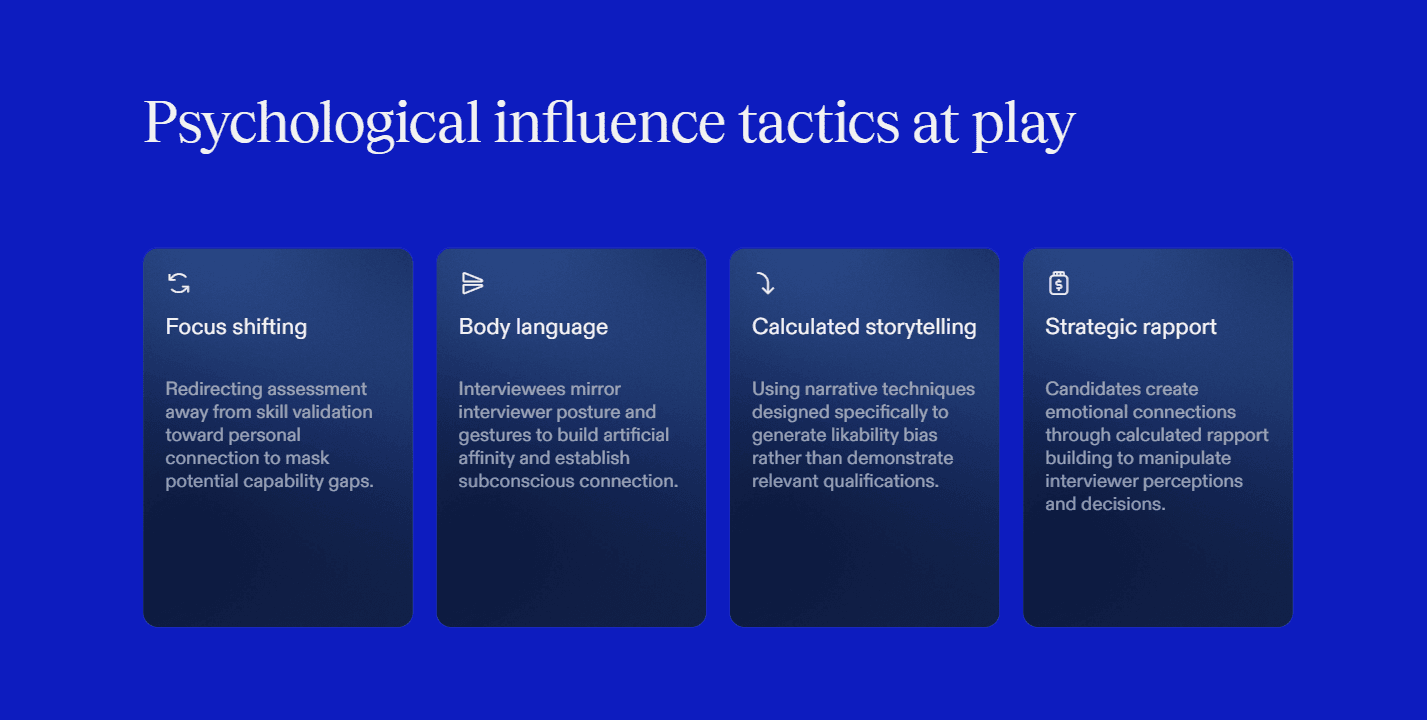
Psychological influence tactics
Candidates use behavioral cues such as excessive rapport building, mirroring body language, or storytelling to create likability bias. These tactics shift the interviewer’s focus from skill validation to emotional connection, increasing the chance of biased decisions.
AI-assisted answering
Real-time AI tools generate structured and fluent responses during interviews. While answers sound confident and polished, they often lack personal context, real-world problem solving, and genuine experience.
Proxy or impersonation techniques
A different individual attends the interview on behalf of the actual candidate, often for technical or senior roles. This results in a strong interview performance followed by immediate skill gaps after hiring.
Credential and identity misrepresentation
Candidates submit fake or inflated degrees, certifications, job titles, or even use stolen professional identities. Without deep verification, these inconsistencies can pass through traditional interview processes undetected.
Together, these tactics make interview manipulation one of the most challenging and high-risk threats in modern hiring.
Common Interview Manipulation Techniques Candidates Use
1. Psychological Manipulation of Interviewers
Candidates use behavioral psychology to shape interviewer perception.
Common tactics include:
Excessive rapport building to create likability bias
Mirroring interviewer body language and speech patterns
Strategic storytelling to distract from weak skills
Example: A candidate avoids technical depth but keeps the interviewer engaged emotionally, resulting in a favorable impression without real skill validation.
2. AI-Assisted Interview Responses
Candidates use real-time AI tools to generate answers during live interviews.
How it works:
AI listens to questions and produces structured answers
Responses sound fluent but lack personal depth
Follow-up questions often expose shallow understanding
Example: A candidate explains leadership concepts perfectly but cannot describe a real situation where they applied them.
3. Proxy Interviewing
A different individual attends the interview on behalf of the actual applicant.
Why it works:
Remote interviews lack strong identity verification
Interviewers assume continuity between interview and hire
Example: A highly skilled proxy clears interviews, but the hired employee struggles with basic tasks during onboarding.
4. Deepfake or Identity Manipulation
AI-generated video or audio is used to impersonate another individual.
Risks include:
Fake identities passing interviews
Security and compliance exposure
Example: Facial movements and voice patterns do not fully align during a video interview.
5. Scripted and Rehearsed Interview Behavior
Candidates prepare memorized responses or scripts for common questions.
Signs include:
Repetitive phrasing
Inflexibility when questions change
Overly generic examples
Example: The candidate answers confidently but struggles when asked to explain decisions in detail.
6. Resume and Credential Manipulation
Interview manipulation often begins before the interview.
Common methods:
Inflated job titles
Fake certifications
Fabricated project experience
Example: A resume lists senior responsibilities that references cannot confirm.
How to Detect Interview Manipulation
Detecting interview manipulation requires attention to behavioral, technical, and process-level signals. Short, focused observations during each stage of hiring can reveal patterns that are easy to miss when viewed in isolation.
1. Behavioral Indicators
Over-polished but shallow responses often signal scripted or AI-assisted answers. Candidates may use perfect language but fail to explain how they applied skills in real situations. Inconsistent storytelling is another warning sign, where details change when the same experience is discussed again.
Delayed answers can also indicate external assistance. Long pauses followed by highly structured responses suggest the candidate may be waiting for prompts or generated content.
2. Technical Indicators
Frequent off-screen gaze may indicate reading from another screen or receiving real-time help. This is especially common in remote interviews.
Audio or video inconsistencies, such as mismatched voice tone or unnatural facial movement, can point to identity substitution or deepfake usage. Unnatural response timing, where answers arrive with repeated pauses, is another strong indicator.
3. Process Indicators
A clear mismatch between interview performance and post-hire capability is one of the most reliable signs of manipulation. Candidates who interview exceptionally well may struggle with basic responsibilities once hired.
Inconsistent identity signals across interview stages, such as changes in communication style or technical depth, can reveal proxy participation or impersonation during earlier interviews.
How Sherlock AI Helps Detect Interview Manipulation
Sherlock AI adds an intelligence layer to interviews by analyzing authenticity signals that humans often miss.
Sherlock AI helps organizations to:
Detects AI-assisted and scripted interview responses
Identifies proxy candidates and impersonation attempts
Analyzes behavioral consistency across interview stages
Verifies candidate identity without disrupting experience
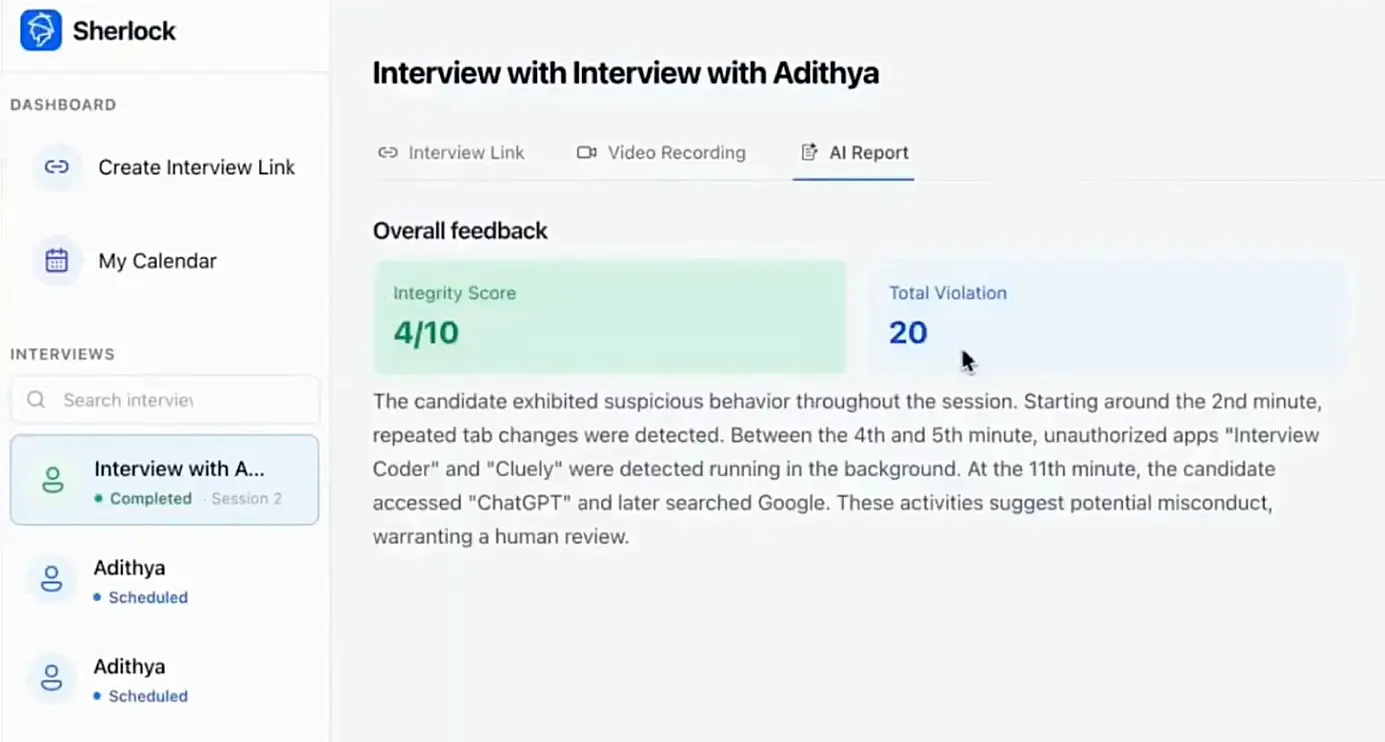
Flags suspicious interview activity in real time
Provides objective, data-driven hiring insights
Scales across remote and high-volume hiring
Protects candidate trust while preventing manipulation
Instead of relying on gut instinct, hiring teams gain objective insight into interview authenticity.
Best Practices to Prevent Interview Manipulation
1. Use structured and scenario-based interview questions
Structured questions ensure every candidate is evaluated using the same criteria, reducing opportunities for manipulation. Scenario-based questions require candidates to explain how they handled real challenges, not just what they know in theory.
Example: Asking a candidate to walk through how they resolved a production issue exposes real experience versus scripted answers.
2. Train interviewers to recognize manipulation patterns
Interviewers should be trained to spot warning signs such as overly polished responses, inconsistent explanations, or long pauses before answers. Awareness helps interviewers adjust questions in real time.
Example: An interviewer notices repeated delays before answers and asks follow-up questions that require spontaneous thinking.
3. Apply identity verification across hiring stages
Verifying identity at multiple points helps prevent proxy interviews and impersonation. Consistency checks ensure the same person participates throughout the process.
Example: A candidate’s communication style and technical depth are compared between screening and final interviews to confirm authenticity.
4. Use intelligent detection platforms like Sherlock AI
Sherlock AI analyzes behavioral consistency, identity signals, and response authenticity during interviews. This provides objective insights beyond human judgment alone.
Example: Sherlock AI flags unusual response patterns, prompting recruiters to conduct deeper verification before making an offer.
Final Thoughts
Interview manipulation is no longer rare or unsophisticated. Psychological tactics, AI tools, and identity deception have transformed interviews into high-risk decision points. Organizations that rely solely on traditional interviews expose themselves to poor hires, discrimination claims, and long-term trust damage.
By combining strong interview design, trained hiring teams, and intelligent solutions like Sherlock AI, companies can protect hiring integrity, ensure fairness, and make confident decisions in 2026 and beyond.