Back to all blogs
Discover the crucial metrics shaping interview integrity in 2026. Learn how to track fraud prevention, candidate authenticity, interview fairness, and hiring quality for better recruitment outcomes.

Abhishek Kaushik
Nov 27, 2025

Interview integrity programs cannot be evaluated by anecdote or perception. They require measurable metrics tied to fairness, operational efficiency, and decision accuracy. The goal is not to “catch more fraud.”
The goal is to ensure that hiring decisions reflect real candidate capability while protecting candidate experience and avoiding bias.
The three core metrics that matter are:
Fraud Rate
Intervention Rate
False Positive Budget
These metrics determine whether a hiring organization is preventing misrepresentation without increasing unnecessary friction.
In 2024 to 2025, companies that tracked integrity metrics directly were 3 to 6 times more accurate in predicting first-quarter performance of new hires.
1. Fraud Rate
The percentage of interviews in which identity substitution, external assistance, or scripted reasoning dependency is detected.
This does not measure “bad candidates.” It measures signal distortion.
Good Range | Typical Risk Pattern |
|---|---|
1 to 6 percent in typical corporate roles | Indicates manageable integrity challenge |
7 to 15 percent in IT services or vendor-mediated hiring | Indicates structured proxy market influence |
15 percent and above in offshore contracting pipelines | Indicates systemic misrepresentation risk |
Fraud rate is not a moral judgment. It is an input reliability measure.
2. Intervention Rate
The percentage of interviews where the system or interviewer needed to apply additional validation such as re-explanation prompts, scenario shifts, or authorship continuity testing.
Intervention rate reflects how often thinking needed to be surfaced rather than accepted at face value.
Observation | Interpretation |
|---|---|
Low intervention + low fraud = Healthy hiring signal | Interviews reflect real reasoning naturally |
High intervention + low fraud = High coaching market | Candidates know how to sound ready |
High intervention + high fraud = Acute misalignment risk | Requires process corrective action |
Intervention is not a penalty. It is controlled elevation of depth.
3. False Positive Budget
The maximum acceptable rate of incorrectly flagged interviews before candidate fairness or brand reputation is harmed.
Every integrity system must budget for the fact that not every complex answer is deception and not every hesitation is authenticity.
The correct target is not zero false positives. The correct target is a monitored and acceptable tolerance.
Target FP Budget | Meaning |
|---|---|
0.5 to 2 percent | Typical for enterprise hiring volumes |
3 to 5 percent | Acceptable in high-risk hiring (defense, financial clearance) |
Above 5 percent | Candidate trust and recruiter adoption risk |
False positives are minimized by focusing on reasoning coherence, not accent, confidence, or fluency.
This is where Sherlock AI differs from surveillance tools.
How Sherlock AI Measures These Metrics Fairly
Sherlock AI does not classify candidates based on visual or tonal patterns. It measures authorship and reasoning continuity, which are inherently less biased.
Metric | Sherlock AI Method | Why It Is Fair |
|---|---|---|
Fraud Rate | Consistency of reasoning patterns across follow-ups | Measures thinking, not presentation style |
Intervention Rate | Adaptive prompting when reasoning is unclear | Supports candidates who think slowly or verbally process |
False Positive Budget | Transparent candidate explanation and review trail | Ensures disputes can be resolved with evidence, not judgment |
Organizations using Sherlock AI report higher candidate trust scores than those using visual proctoring tools.
How to Operationalize These Metrics
Weekly Report to Talent Leadership
Fraud Rate trend by role group
Intervention Rate by interviewer cohort
FP Budget variance and candidate feedback scores
Monthly Review to Risk & HRBP
Pattern analysis
Vendor channel exposure
Corrective actions (training, pipeline source change, interview step calibration)
Quarterly Review to Leadership
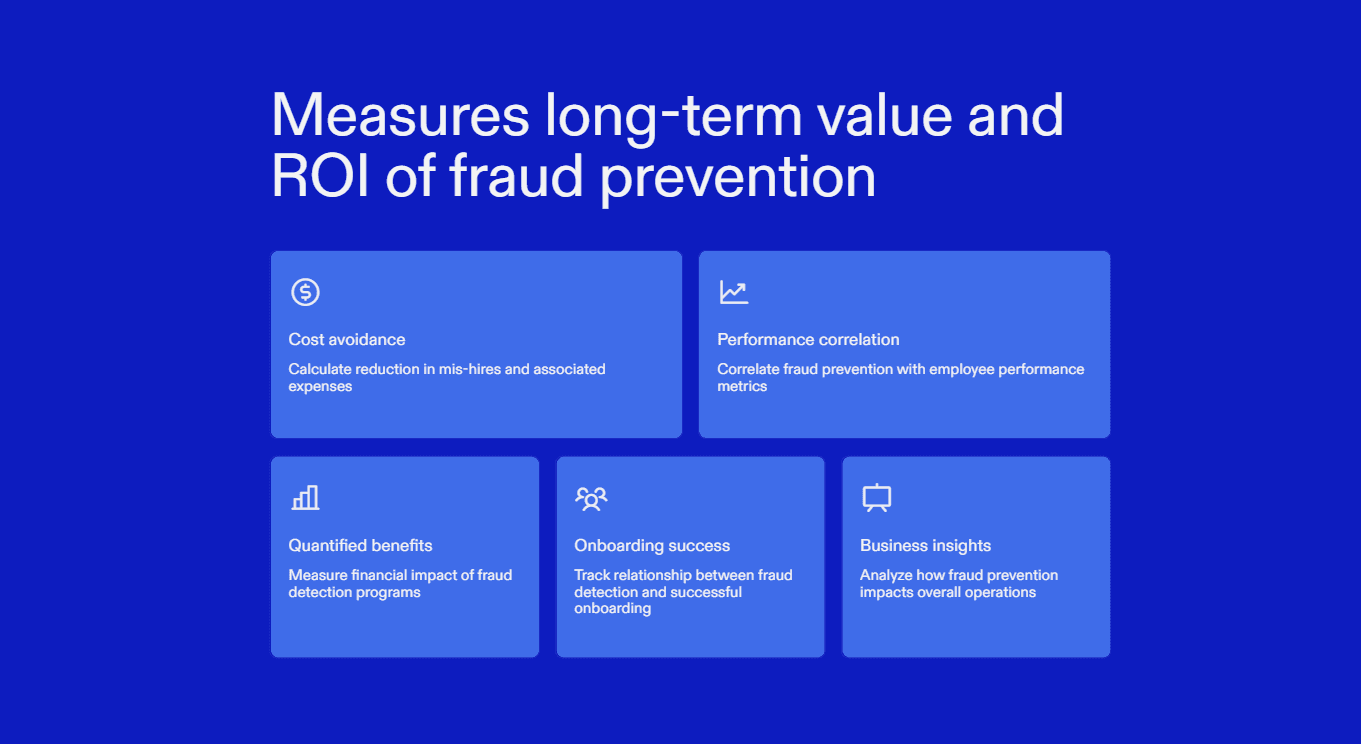
Impact on performance ramp
Correlation to onboarding success rates
Cost avoidance from mis-hire reduction
Closing Insight
A mature interview integrity program does not try to eliminate risk entirely. It manages it.
Fraud rate shows how much risk exists.
Intervention rate shows how much verification is needed.
False positive budget ensures fairness remains intact.
The goal is not to catch candidates. The goal is to make confident hiring decisions based on real skills.