Back to all blogs
Learn how to write audit-ready interview notes that pass debriefs and audits. Get templates and tips for defensible, objective documentation.

Abhishek Kaushik
Dec 26, 2025
TL;DR
Audit-ready interview notes must be objective, structured, and defensible to hold up in hiring debriefs and compliance reviews.
Avoid subjective labels and focus on observable behaviors and specific examples.
Use competency frameworks and standardized templates to ensure consistency across interviewers.
Audit-ready notes protect your company from bias claims, mis-hire risk, and legal challenges.
Interview notes are more than personal reminders. They are official hiring records that may be reviewed by:
Hiring committees
HR leadership
Compliance officers
External auditors
Courts or regulatory agencies
This means your interview documentation must be clear, consistent, fact-based, and traceable. Notes that rely on gut feeling or vague impressions are not defensible. Notes that describe observable behavior and align with defined competencies are essential for building a defensible interview process.
What Makes Interview Notes “Audit-Ready”
Audit-ready interview notes share four characteristics:
Objective language
Describe observable behaviors, not subjective interpretations.Write: “Candidate paused for 14 seconds before responding to technical question.”
Avoid: “Candidate seemed unsure.”
Specific evidence
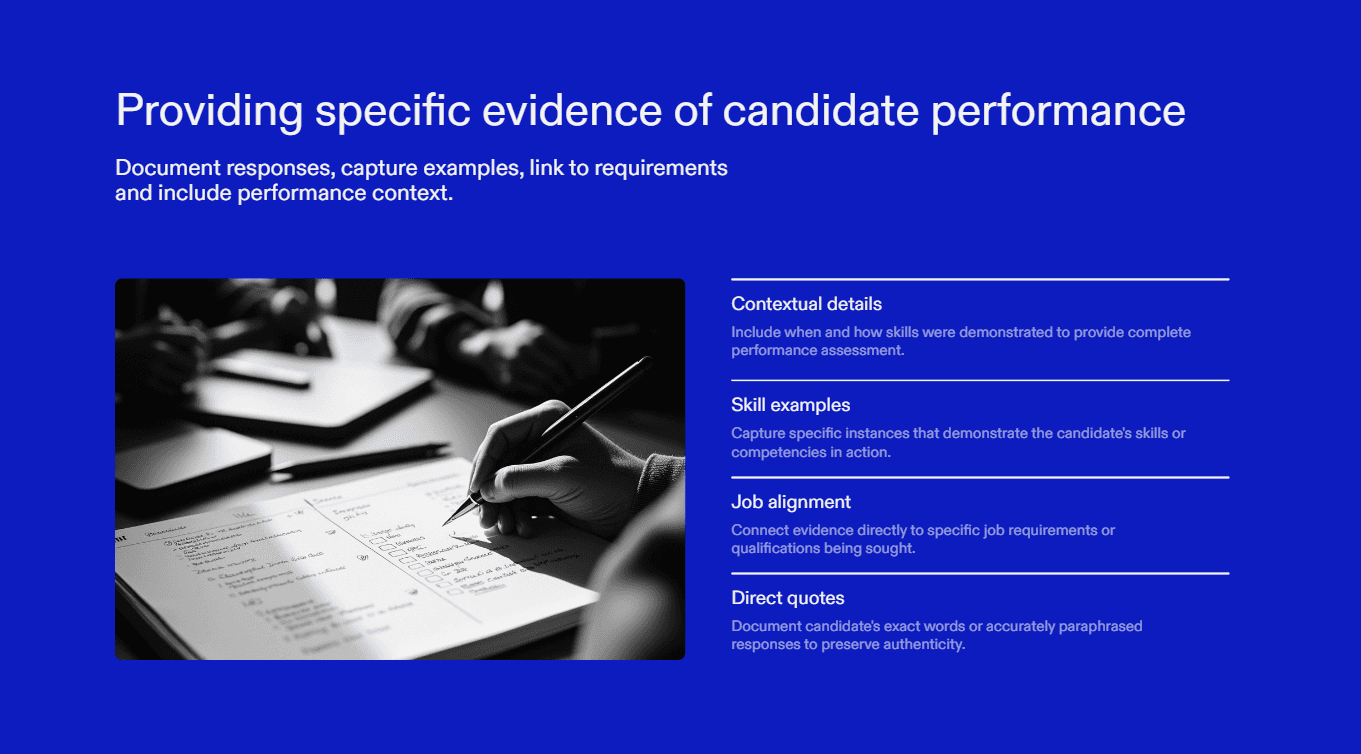
Capture quotes or paraphrased segments that illustrate skill demonstrations.Competency-based structure
Evaluate against standardized role competencies, not personal criteria.Traceability
Ensure every comment is linked to a specific question, skill area, or decision factor, providing clear traceability throughout the interview process.
The Biggest Mistake Interviewers Make
Interviewers often record impressions instead of evidence. This leads to subjective interview notes that are not defensible during hiring debriefs or audits.
Subjective Notes (Not Defensible)
Strong communicator
Good fit
Confident
Audit-Ready Notes (Defensible)
Explained project dependencies clearly using timeline and stakeholder examples
Gave three examples of cross-functional collaboration with quantifiable outcomes
Used a structured narrative: context, objective, action, result (COAR), showcasing a competency-based approach.
The difference is in the concrete detail.
How AI Note-Takers Strengthen Audit Readiness
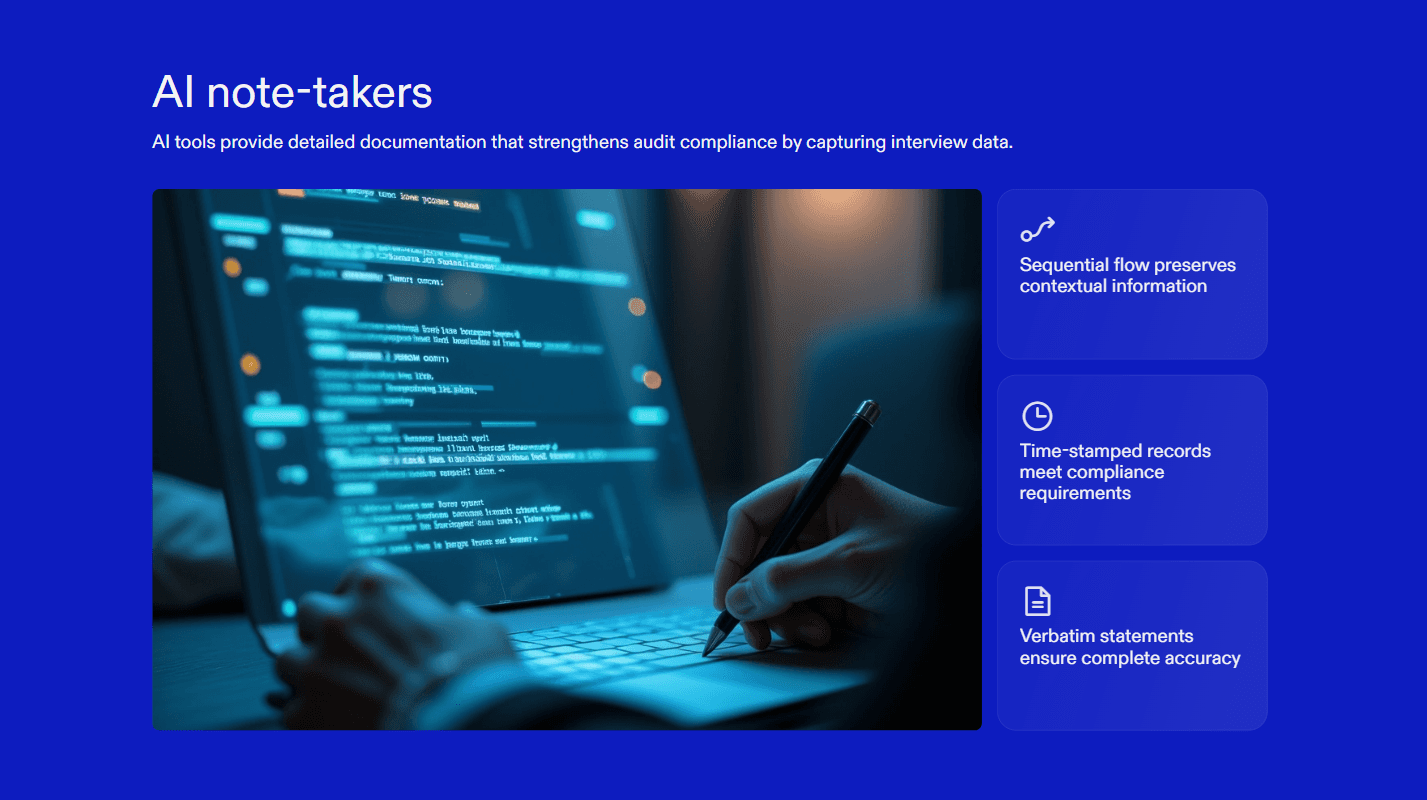
AI tools can capture:
Exact language used by the candidate
Chronological flow of the conversation
Behavioral signals like hesitation or clarification requests
According to the Insight Global 2025 AI in Hiring Report, Nearly 98 % of hiring managers who used AI‑enabled processes reported significant efficiency gains in hiring.
But AI notes must still be human-interpreted. Recruiters refine AI transcripts into structured evaluation notes.
Template: Audit-Ready Interview Notes Format
Use this format to document interviews consistently.
Example: Before and After
Weak Notes
Good technical understanding. Might be too direct. It could be a culture mismatch.
Audit-Ready Notes
Candidate demonstrated knowledge of Kubernetes scaling strategies and provided two real-world examples with quantified performance outcomes. Communication style is concise and assertive. Recommend validating team collaboration preferences with the hiring manager in the next stage.
Preparing for Debriefs Using Structured Notes
In hiring debrief sessions:
Lead with evidence, not opinion
Reference specific transcript excerpts
Tie every comment back to competencies
This keeps discussions fair, fast, and focused.
Conclusion
Audit-ready interview notes are a strategic hiring asset. They:
Improve fairness and reduce bias
Enable strong hiring decisions
Protect your organization in compliance reviews
Build trust with candidates and hiring teams
The key is consistent, competency-based, evidence-driven documentation.