Back to all blogs
Learn how to detect cheating in Google Meet interviews with actionable tips, behavioral red flags, and AI-powered tools like Sherlock AI. Protect hiring integrity and identify suspicious candidates in real time.

Abhishek Kaushik
Jan 30, 2026
Google Meet interviews have become a core part of modern hiring as companies shift to remote and hybrid recruitment. While virtual interviews offer speed and flexibility, they also make it easier for candidates to cheat without being noticed. From using AI tools and second screens to getting off-camera help or sending a proxy interviewer, cheating in online interviews is now a real and growing risk for employers.
By 2028, Gartner predicts that as many as one in four candidate profiles could be fake, creating a serious risk for talent acquisition teams trying to hire the right people.
For recruiters and hiring managers, learning how to detect cheating in a Google Meet interview is no longer optional. Understanding the common cheating tactics, the behavioral red flags, and the right detection methods can help reduce bad hires, protect hiring quality, and build confidence in every hiring decision.
How Candidates Cheat in a Google Meet Interview
Understanding how candidates circumvent the integrity of remote interviews is essential for recruiters who depend on video calls like Google Meet to make hiring decisions. The rise of sophisticated cheating tactics is not theoretical, industry surveys show large numbers of candidates and recruiters are already experiencing deception in remote hiring processes.
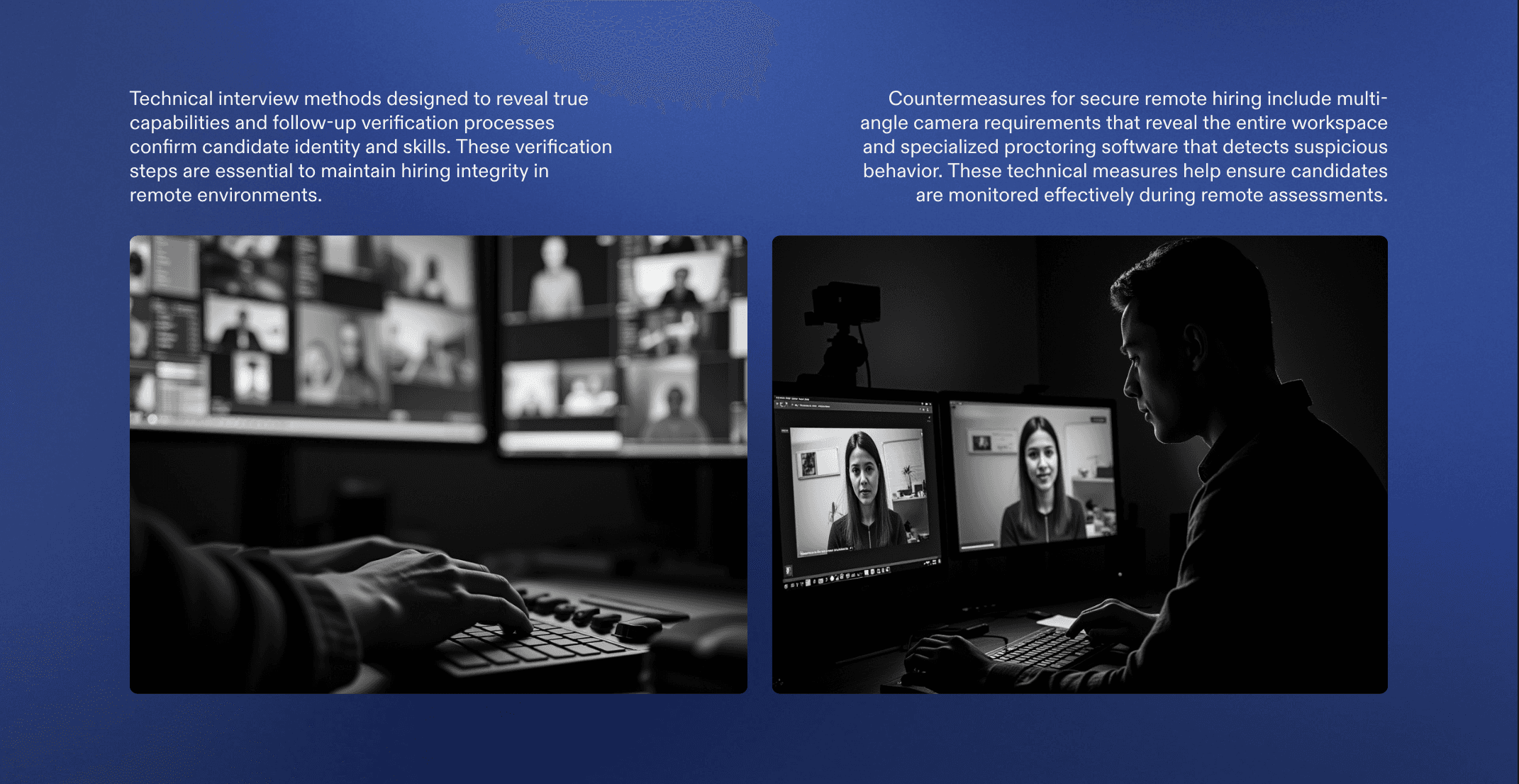
1. AI Tools for Real-Time Answer Generation
Candidates can run AI assistants on a secondary screen or device and then relay AI-generated answers back to interviewers.
Tools like Interview Coder and its successor Cluely have made headlines for enabling real-time AI assistance during coding interviews, prompting disciplinary action and raising alarms in the tech hiring world
This blurs the line between authentic skill and coached performance and undermines the purpose of live problem-solving questions.
2. Off-Camera Notes or Secondary Device Use
Another common method is referencing hidden notes, secondary monitors, phones, or tablets during the interview. These methods let candidates access prepared answers, scripts, or unauthorized resources without the interviewer noticing.
Investigative reporting has already documented real cases of interview cheating using secondary devices. In one widely shared example, a woman was caught using a hidden phone during a live video interview to read out AI-generated answers word for word.
3. Off-Camera Assistance via Earpieces or Remote Help
Some candidates go a step further by receiving live assistance. Bluetooth earpieces, subtle audio devices, or remote desktop access controlled by an accomplice can provide real-time help unseen by a recruiter.
Industry reports now list hidden coaching devices and off-camera support as common fraud tactics that can compromise the fairness of virtual interviews and push employers toward in-person verification.
4. Proxy Interviewing or Deepfake Impersonation
In extreme cases, candidates deliberately send someone else to take the interview. This isn’t just cheating on a question; it’s outright substitution of a person with fraudulent intent.
Checkr found that nearly one in three managers say they’ve interviewed someone who was not the person listed on the resume, and 35% have confirmed someone other than the reported candidate participated in the interview.
5. Screen Sharing Manipulation and Visual Concealment
Finally, candidates may manipulate screen sharing, virtual backgrounds, or camera angles to hide deceptive behavior. For instance, a candidate could share only a portion of their screen, hide a second monitor, or use lighting and camera tricks to mask other devices in the room.
Recruiters need to look beyond surface signals, validate both identity and skill authenticity, and build interview frameworks that are resistant to deception.
Behavioral and Visual Red Flags to Watch For on Google Meet
While AI and off-camera tools are increasing in sophistication, there are still subtle human-level cues that trained interviewers can notice during live Google Meet interviews. Recognizing these red flags helps detect cheating in real time and avoid hiring candidates who misrepresent their abilities.
1. Eye Movements and Focus Shifts
Frequent glances away from the camera may suggest the candidate is reading hidden notes or using a second screen.
Rapid eye shifts that don’t match the normal flow of conversation can indicate covert referencing of AI-generated answers.
2. Delayed Responses or Unnatural Pauses
Long pauses after questions may indicate the candidate is consulting a secondary device or waiting for real-time AI suggestions.
Inconsistent reaction times between simple and complex questions are often a red flag.
Tip: Compare response timing across similar questions to spot unnatural patterns.
3. Sudden Changes in Communication Style or Technical Fluency
Shifts in tone, vocabulary, or confidence may suggest external help.
Example: A candidate who stumbles on basic questions but suddenly answers technical questions flawlessly may be relying on AI or off-camera assistance.
4. Inconsistent Typing Sounds or Background Cues
Typing sounds when the candidate is speaking may suggest they are copying answers from notes or a secondary device.
Background noises like faint voices or notifications can reveal off-camera assistance.
Example: Recruiters have caught candidates with hidden tablets providing prompts, indicating the need for clear audio/video guidelines during interviews.
5. Lip-Sync Delays, Lighting Inconsistencies, or Video Artifacts
Mismatched lip movements or audio/video lag can signal deepfake use or pre-recorded/assisted responses.
Sudden changes in lighting or shadows may indicate someone else entering the camera frame or a manipulation attempt.
These visual and behavioral cues provide immediate, actionable signals of potential cheating.
How Sherlock AI Helps Recruiters Detect Cheating in Google Meet Interviews
Sherlock AI provides a comprehensive solution that empowers recruiters to maintain hiring integrity without relying solely on manual observation.
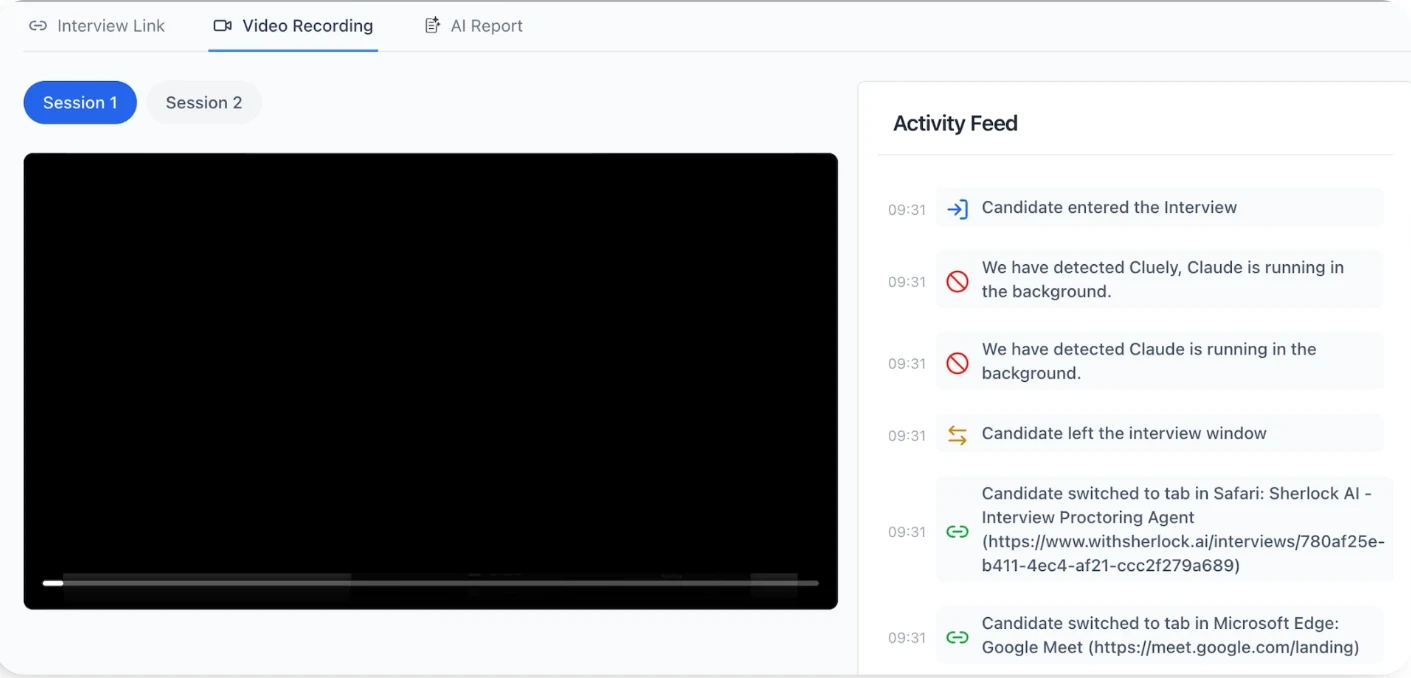
Real-Time Proctoring and Candidate Monitoring
Sherlock AI monitors live video feeds, audio patterns, and screen activity during Google Meet interviews.
The tool detects eye movement anomalies, suspicious background activity, and off-camera assistance.
Recruiters can receive real-time alerts if the candidate shows signs of using secondary devices, hidden notes, or external coaching.
AI-Assisted Deepfake Detection
Sherlock AI uses facial analysis, lip-sync verification, and video artifact detection to identify deepfake or synthetic candidates.
It can detect subtle inconsistencies in expressions, audio/video synchronization, and unnatural lighting or pixel patterns.
Behavioral Pattern Analysis
Beyond visual cues, Sherlock AI evaluates response timing, typing patterns, and communication style shifts to identify suspicious behavior.
For instance, candidates using AI-generated answers often have predictable pauses or unnatural phrasing, which the system flags for review.
Recruiters can combine these insights with structured questioning to verify real competency immediately.
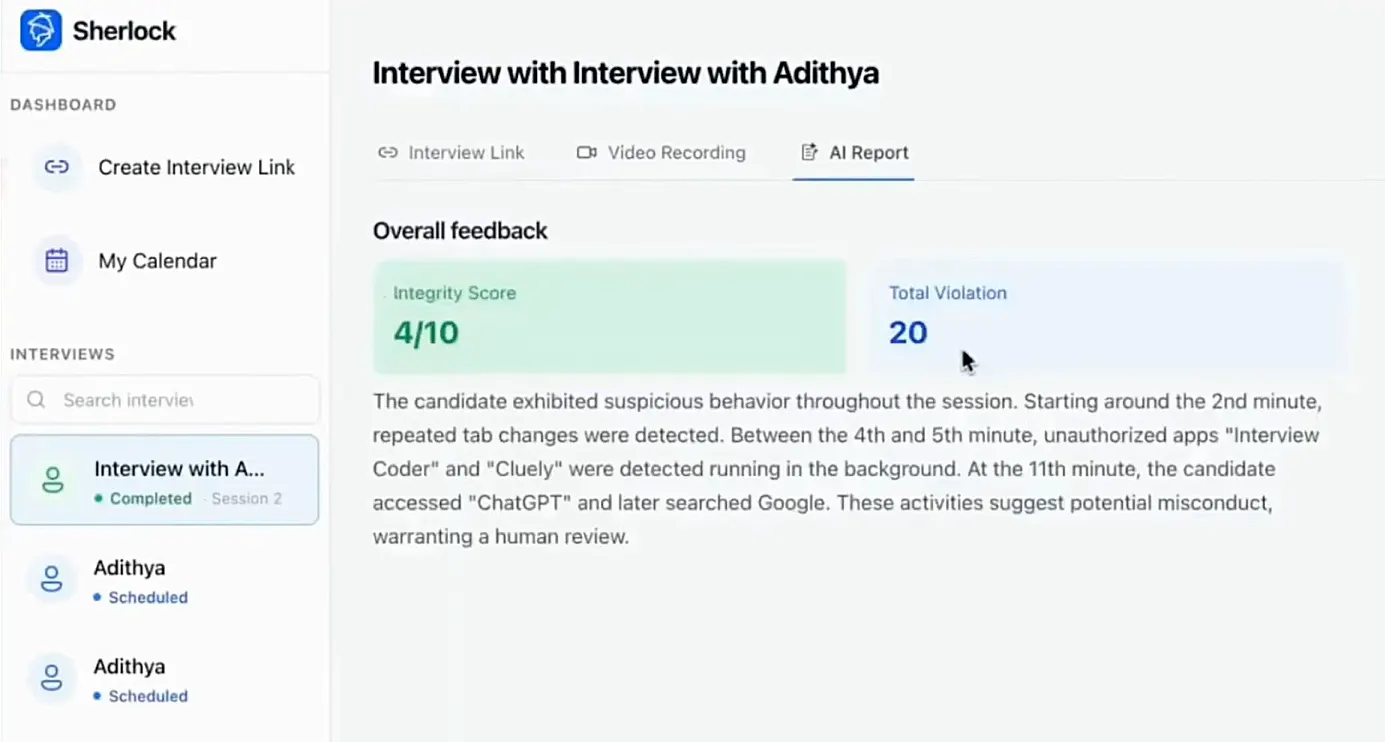
Audit Trails and Reporting
Every interview is logged with detailed behavioral and video analytics, providing evidence for hiring decisions.
This supports compliance, risk management, and dispute resolution, particularly for regulated industries or high-value positions.
Recruiters can generate actionable reports highlighting flagged behaviors, helping HR teams make confident decisions without guessing.
With Sherlock AI, recruiters no longer have to rely solely on intuition or observation. Real-time detection and AI-driven insights make Google Meet interviews secure, fair, and reliable, preserving the integrity of the hiring process.
Conclusion
Cheating in Google Meet interviews is evolving, from AI-assisted answers and hidden devices to deepfake candidates. By combining behavioral awareness, real-time observation, and tools like Sherlock AI, recruiters can detect suspicious behavior, protect hiring integrity, and ensure they select truly qualified candidates. Staying vigilant and leveraging the right technology is now essential for successful remote hiring.