Back to all blogs
Discover how to create a fairness statement that improves transparency, boosts candidate trust, and supports consistent, bias-free hiring worldwide.

Abhishek Kaushik
Dec 2, 2025
TL;DR
A fairness statement should not sound like legal boilerplate and should not sound defensive.
It should make candidates feel:
Respected
Seen
Safe to be themselves
Clear on what is expected
Confident the process is consistent and fair
This guide shows you how to create and deliver a fairness statement that sets expectations, reduces anxiety and prevents misunderstandings, especially across global and multicultural talent pools.
Why Fairness Statements Usually Fail
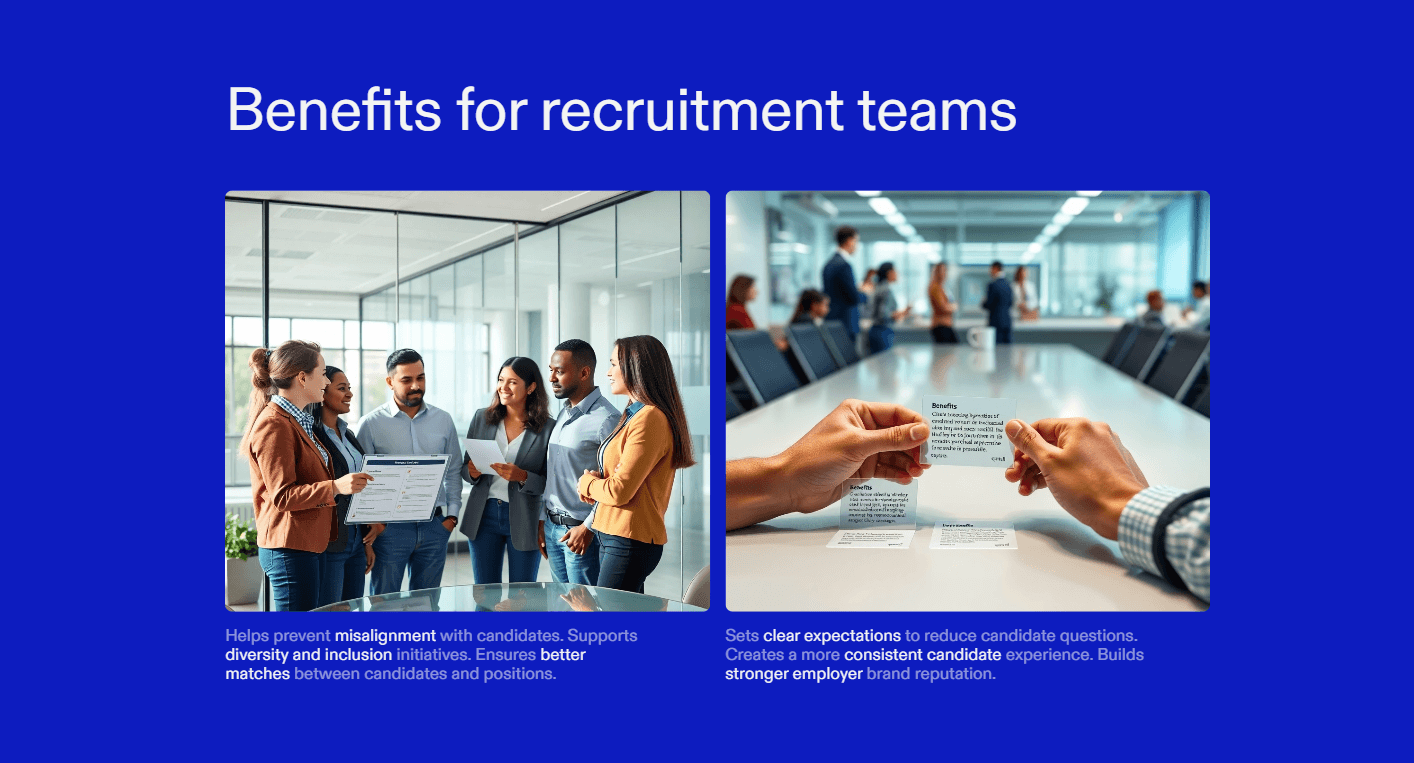
Most fairness statements are:
Generic
Corporate
Written by Legal without Talent input
Never read aloud
Never explained
So candidates ignore them.
What candidates want is:
Clarity on what will happen and how they will be evaluated.
Not:
Disclaimers, disclaimers, disclaimers.
A positive candidate experience influences offer acceptance and long-term engagement.
A better candidate experience also leads to significantly better hires, up to 70% higher quality.
The Principles of a Fairness Statement That Works
1. Explicit, Not Implied
Say what will happen. Do not assume candidates will “pick it up”.
2. Behavior, Not Vibes
State what you evaluate:
Reasoning
Ownership
Problem-solving
Adaptability
Not:
Personality
Style
Accent
Confidence
3. Normalize Asking for Clarification
This reduces disadvantage for:
Non-native English speakers
First generation professionals
Neurodivergent candidates
4. Reinforce Equal Standards
Everyone follows the same process.
This communicates fairness and removes guesswork.
The Script to Say at the Start of Every Interview
Use this verbatim:
This works globally because it:
Reduces pressure
Signals safety
Clarifies expectations
Encourages questions
Neutralizes advantage from interview prep privilege
Add the Anti-Fraud Fairness Clause Without Creating Fear
This is where companies usually stumble.
The key is to frame protection as fairness, not suspicion.
Use:
Short. Neutral. Clear. Non-accusatory.
The Written Version for Candidate Emails / Job Pages
Copy-paste:
This works across:
US
EU
UK
LATAM
APAC
Middle East
India and SEA talent markets
Because it is:
Inclusive
Respectful
Process-aligned
Not adversarial
Where to Use the Fairness Statement
To maximize impact, place it:
Location | Why |
|---|---|
Interview scheduling confirmation email | Sets expectations early |
Interviewer opening script | Reinforces psychological safety |
Company careers page | Signals values and professionalism |
Campus recruiting handouts | Reduces performance anxiety |
Internal interviewer training docs | Standardizes execution |
Measuring Success
A fairness statement is working if:
Candidates ask more clarifying questions
Candidates visibly relax early in the call
Interviewers report clearer reasoning signals
Dropout rates decrease
Post-interview candidate satisfaction feedback mentions “clarity”
A fairness statement is failing if:
Interviewers never read it aloud
It exists only in ATS policy pages
It is full of legal jargon
It sounds like a warning

Conclusion
A fairness statement is not about compliance language.
It is about:
Reducing ambiguity
Leveling the playing field
Creating psychological safety
Protecting evaluation integrity
When delivered well, fairness statements:
Increase candidate trust
Reduce interview anxiety
Improve reasoning clarity
Strengthen Hiring Manager confidence
Fairness is not just ethics.
Fairness improves signal quality.