Back to all blogs
Understand how modern teams are redefining interview expectations and setting new norms for AI-influenced hiring.

Abhishek Kaushik
Dec 5, 2025
AI did not just change how candidates prepare.
AI changed the definition of a fair interview.
Companies are rewriting interview rules to:
Allow AI support in transparent and limited ways
Focus evaluation on reasoning instead of memorization
Ensure identity authenticity and authorship integrity
Use AI tools like Sherlock AI to maintain fairness across global teams
Hiring is shifting from:
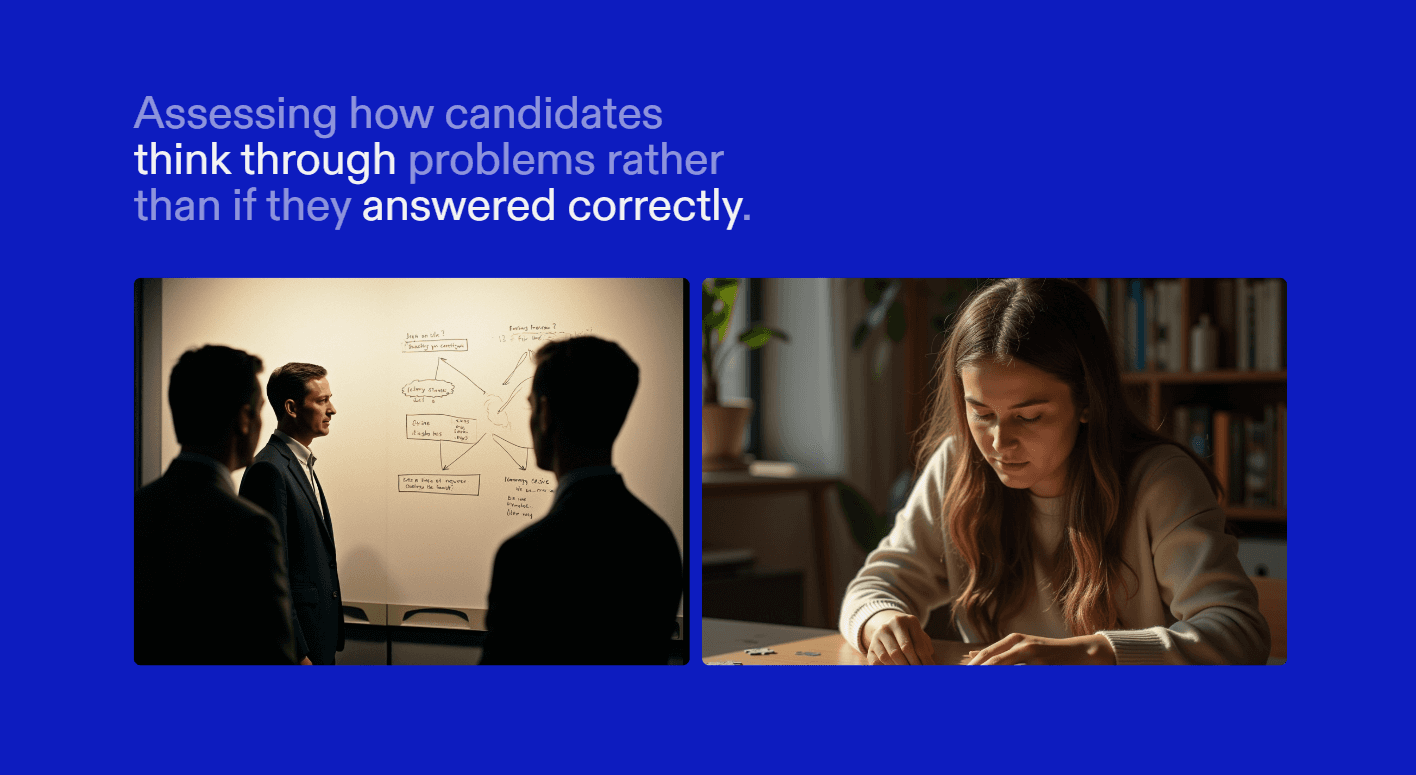
“Did the candidate answer correctly?”
to
“Did the candidate demonstrate how they think, decide, and learn?”
Why Companies Are Updating Interview Rules Now
Three forces are reshaping interviews:
AI coaching and answer shaping
Candidates can now rehearse stories and technical answers until they sound perfect.Remote interview format
Makes it easier for hidden collaboration, prompt feeding, or proxy participation.Employer responsibility for fairness and compliance
Laws worldwide require transparency and consistency in hiring decisions.
Companies are realizing:
Old interview formats reward performance theater.
Modern roles require reasoning, adaptability, and ownership.
AI makes the polished candidate look identical to the strong one.
So the interview must be redesigned to reveal the real mind behind the answer.
The Key Changes Companies Are Making
1. Clear AI Usage Rules for Candidates
Instead of banning AI, companies are now defining:
What is allowed before the interview (research, prep)
What is allowed during the interview (note-taking, no answer generation)
What is not allowed (live coaching, proxy or hidden prompts)
This reduces ambiguity and keeps interviews fair.
[FACT] A recent study showed candidates perform best when rules are known in advance.
2. Shifting Scoring From Output to Reasoning
Companies are updating scorecards to evaluate:
How decisions were made
How constraints were handled
How tradeoffs were justified
How the candidate responds to change in the problem
This is the hardest thing to fake with AI.
3. Introducing Identity and Authorship Integrity Tools
Tools like Sherlock AI monitor:
Voice consistency
Reasoning continuity
Reaction time patterns
Behavioral fluency shifts
Not to punish candidates
But to protect honest candidates who interview without backstage help.
This ensures fairness across:
Locations
Language fluency
Access to coaching networks
4. Automating Notes and Scorecards for Transparency
Companies are adopting AI note-takers that:
Record the interview transcription
Extract decision-relevant reasoning signals
Generate neutral summaries
Prevent memory or bias distortion
This protects:
The candidate (fair representation)
The interviewer (no mental overload)
The company (audit trails for compliance)
Sherlock AI does this while also detecting authorship integrity issues in the background.
What This Looks Like in Practice
Old Interview Model | AI-Era Interview Model |
|---|---|
Fluent storytelling rewarded | Reasoning under changing conditions evaluated |
Human note-taking | Automated notes and structured evidence |
Trust that candidate is alone | Identity and authorship verification |
One interviewer interpretation | Shared and transparent scorecards |
Confidence treated as competence | Decision logic treated as competence |
This is not more strict interviewing.
This is more accurate interviewing.
The Culture Shift Behind These Rule Changes
Companies are recognizing:
Some candidates have access to AI prep, coaching networks, or paid scripts
Some do not
Without intervention:
Interviews become a socioeconomic performance test.
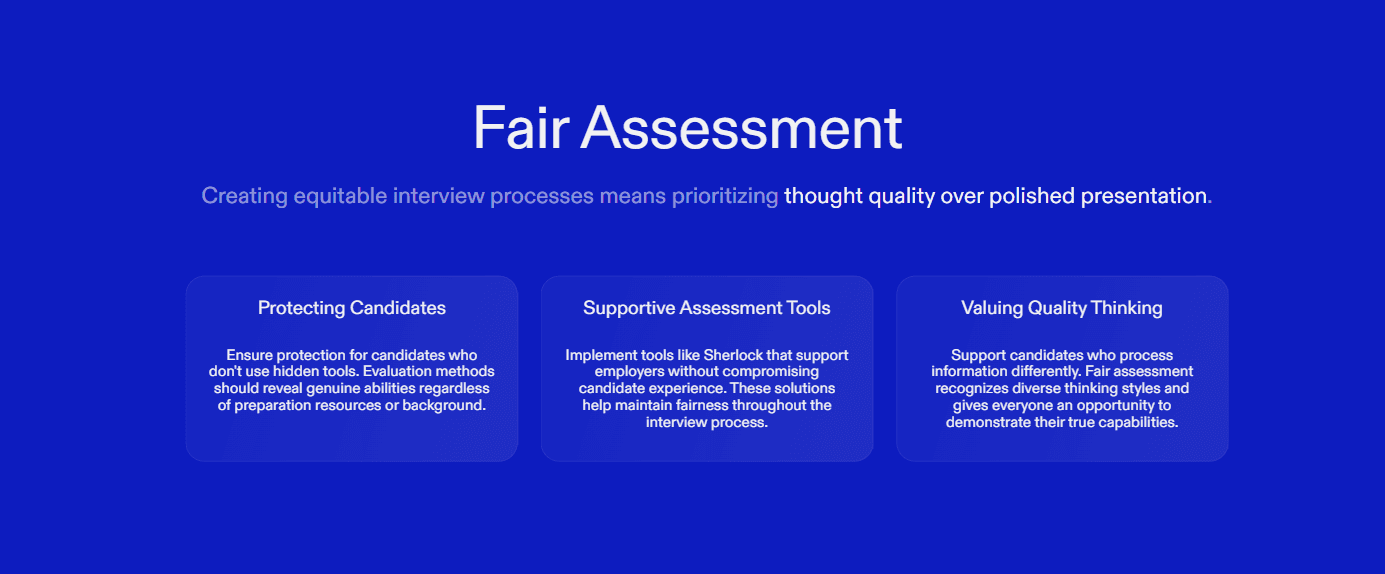
Fairness in the AI era means:
Evaluate thought, not polish
Support candidates who think slower but deeper
Protect candidates who do not use hidden tools to compete
This is where Sherlock AI supports the employer without harming the candidate experience.
Conclusion
The future of interviewing is not about banning AI.
It is about making sure the interview reflects the candidate’s own thinking.
Companies are redefining interview rules to:
Allow transparent support
Prevent hidden collaboration
Focus scoring on reasoning instead of recitation
Keep humans doing interpretation and decision-making
Use AI to maintain fairness and integrity at scale
This is how hiring becomes more fair, more humane, and more accurate in the AI era.