Back to all blogs
Discover the hidden costs of overlooking fraud in hiring and learn how addressing it protects your budget, your teams, and your company’s integrity.

Abhishek Kaushik
Dec 2, 2025
TL;DR
AI-based interview fraud is no longer rare.
But most companies underestimate the true cost of letting it slide.
It does not just affect the one bad hire.
It affects:
Team velocity
Engineering quality
Manager workload
Employee morale
Performance culture
Talent brand
This is not a hiring problem.
This is a business performance risk.
What We Mean by “AI Fraud”
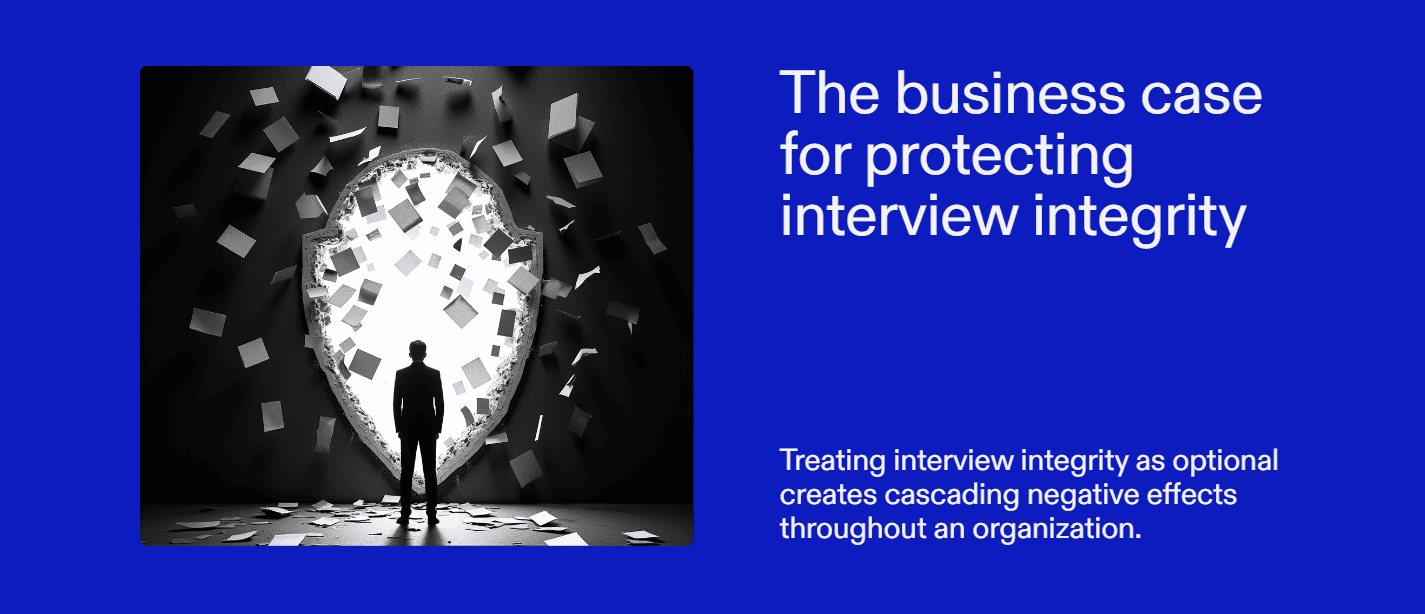
AI fraud in interviews can take the form of:
Candidates reading AI-generated real-time answers
Proxy interviewers substituting themselves in video calls
Deepfake identity masking
External message relay during coding or system design rounds
Whisper coaching through hidden prompts
A survey from 2025 found that 17% of hiring managers have directly encountered candidates using deepfake technology in video interviews.
When remote work becomes normal, fraud becomes cheap.
The Hidden Cost Structure
Most leaders only consider:
Cost of replacing a mis-hire.
But the real costs ripple outward.
Below is the complete impact model.
1. Manager and Team Time Burn
When a misrepresented hire joins, managers must:
Break down work further
Review deliverables more deeply
Assign remediation buddies
Hold repeated performance reset conversations
This burns:
Manager time
Senior IC bandwidth
Project throughput
2. Quality and Stability Decay
AI-assisted interview fraud commonly impacts roles where:
Precision matters
Systems break under silent errors
Examples:
Backend engineers introducing scaling regressions
Data scientists misapplying statistical assumptions
Security roles misconfiguring auth policies
These failures do not always appear immediately.
They accumulate. Slowly. Quietly.
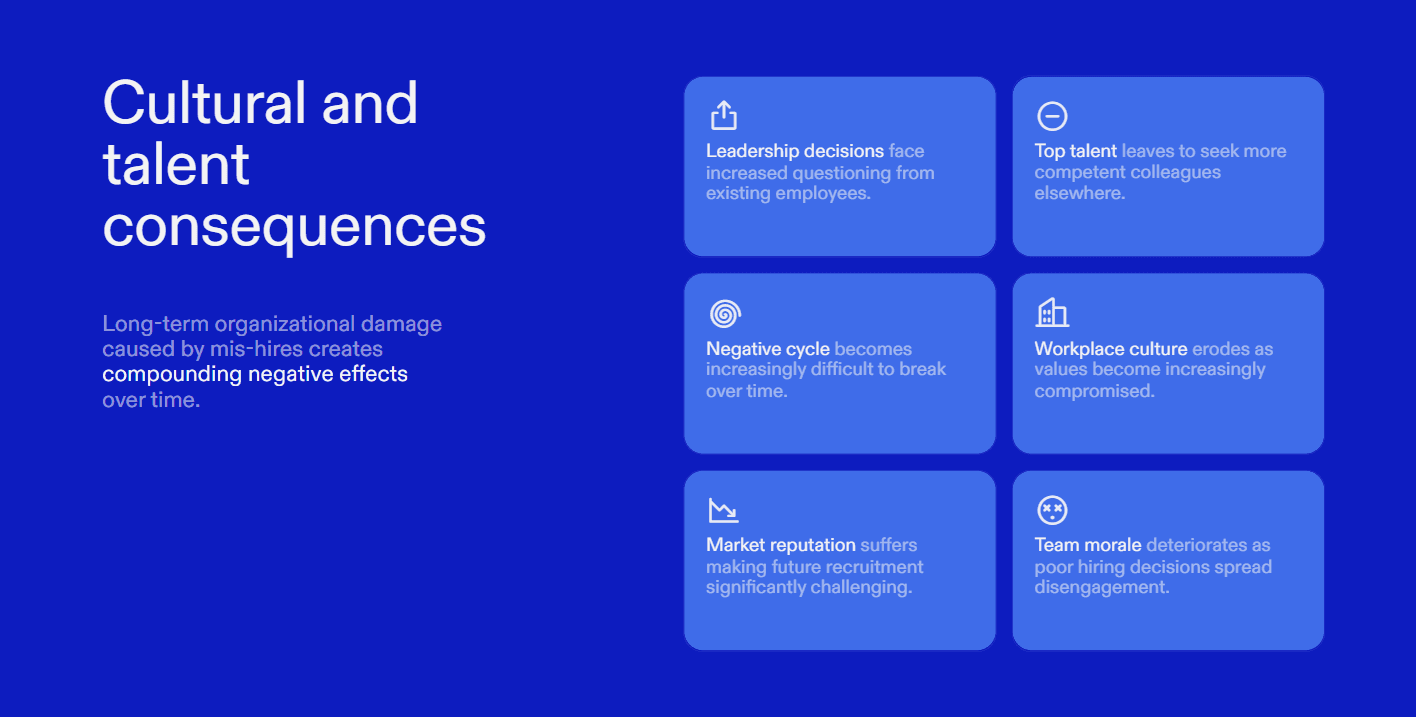
3. Team Morale and Trust Erosion
High performers notice underperformance first.
Then they make assumptions:
“Leadership does not care about quality.”
“We reward smooth talkers, not real builders.”
“Nobody protects our execution standards.”
Once morale breaks:
Retention risk spikes
Senior talent leaves first
This is the most expensive cost.
4. Cultural Drift Toward Mediocrity
If teams learn:
Interview performance is judged on surface fluency
They respond by:
Optimizing for performance theater
Not skill depth
This encourages:
Memorized answers
Coaching factories
Shallow reasoning loops
This is how innovation cultures die.
5. Increased Legal and Compliance Exposure
If a company knows AI-fraud is common and does not implement controls:
It risks:
Negligent hiring claims
Security audit failures
Contract compliance penalties
Industry certification violations
Ignoring fraud becomes a contract risk.
6. Brand Damage in the Candidate Market
Candidates discuss:
Whether interviews feel fair
Whether bad performers are filtered out
Whether hiring rewards authentic ability
If strong candidates believe:
Your company cannot tell real skill from fake skill
They stop applying.
Top talent is allergic to weak talent environments.
Read More: Best Practices to Prevent AI Fraud in Your Hiring Process
The Real Economics
The cost of a mis-hire is not the recruiter fee.
The cost of a mis-hire includes:
Salary + benefits
Manager oversight load
Senior IC correction effort
Delays in feature deliverables
Quality rollback rework
Project roadmap slowdown
Team productivity drag
Talent attrition ripple
Cultural erosion cost
The total is often:
2.6x to 7.5x annual salary depending on the role.
A bad hire can cost a company ~30% of the employee’s first-year earnings - a substantial cost beyond just hiring fees.
The Strategic Shift
Companies that take interview integrity seriously do not do it to:
Police candidates
Create friction
They do it to:
Protect work quality
Protect culture
Protect speed
Protect trust
Fraud prevention is not gatekeeping.
Fraud prevention is guarding excellence.
Practical Next Step: Start With One Low-Friction Change
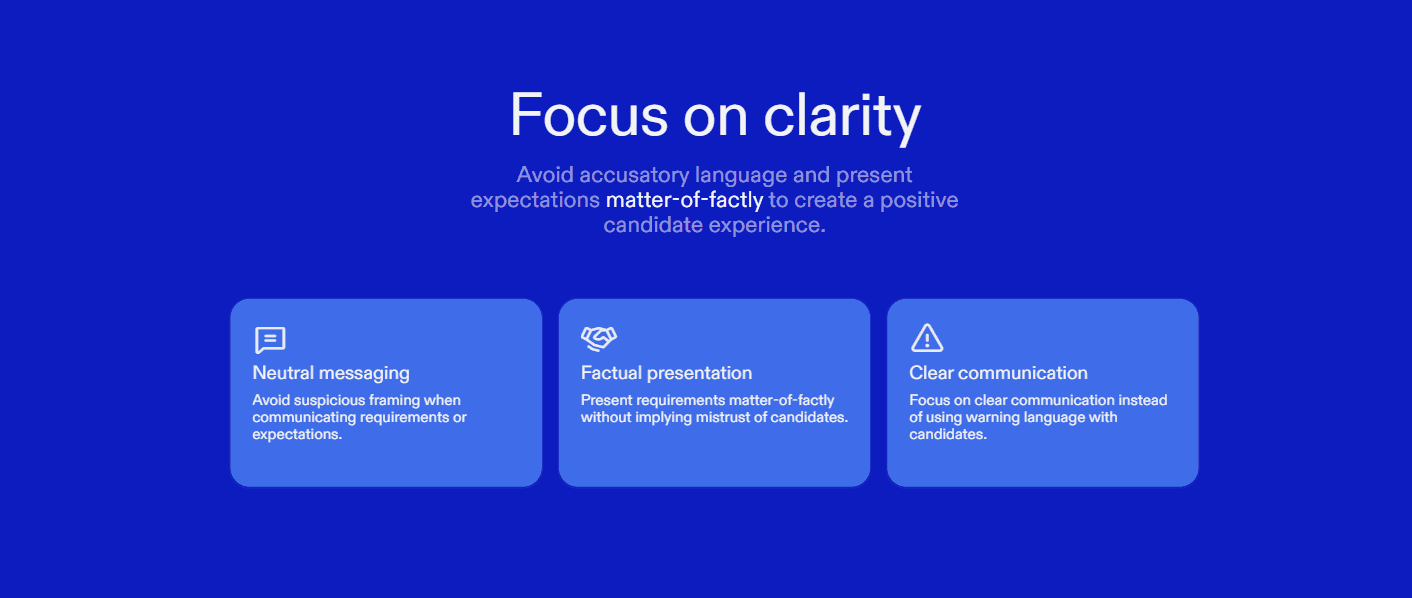
Introduce a fairness and integrity statement at the start of every interview:
We evaluate reasoning and problem-solving.
We ask that all answers reflect your own thinking without outside assistance.
This keeps the process fair for everyone.
No warnings.
No suspicion.
Just clarity.
Conclusion
Ignoring AI fraud is not a hiring oversight.
It is a strategic risk.
The cost is:
Financial
Cultural
Operational
Reputational
The solution is not policing.
The solution is consistency and clarity.
Preventing fraud protects:
Teams
Products
Velocity
People
Trust
Integrity is not compliance.
Integrity is how high-performing teams stay high-performing.