Back to all blogs
A practical framework to ensure AI is used fairly in interviews, with guidelines that support consistency, transparency, and balanced evaluations.

Abhishek Kaushik
Dec 5, 2025
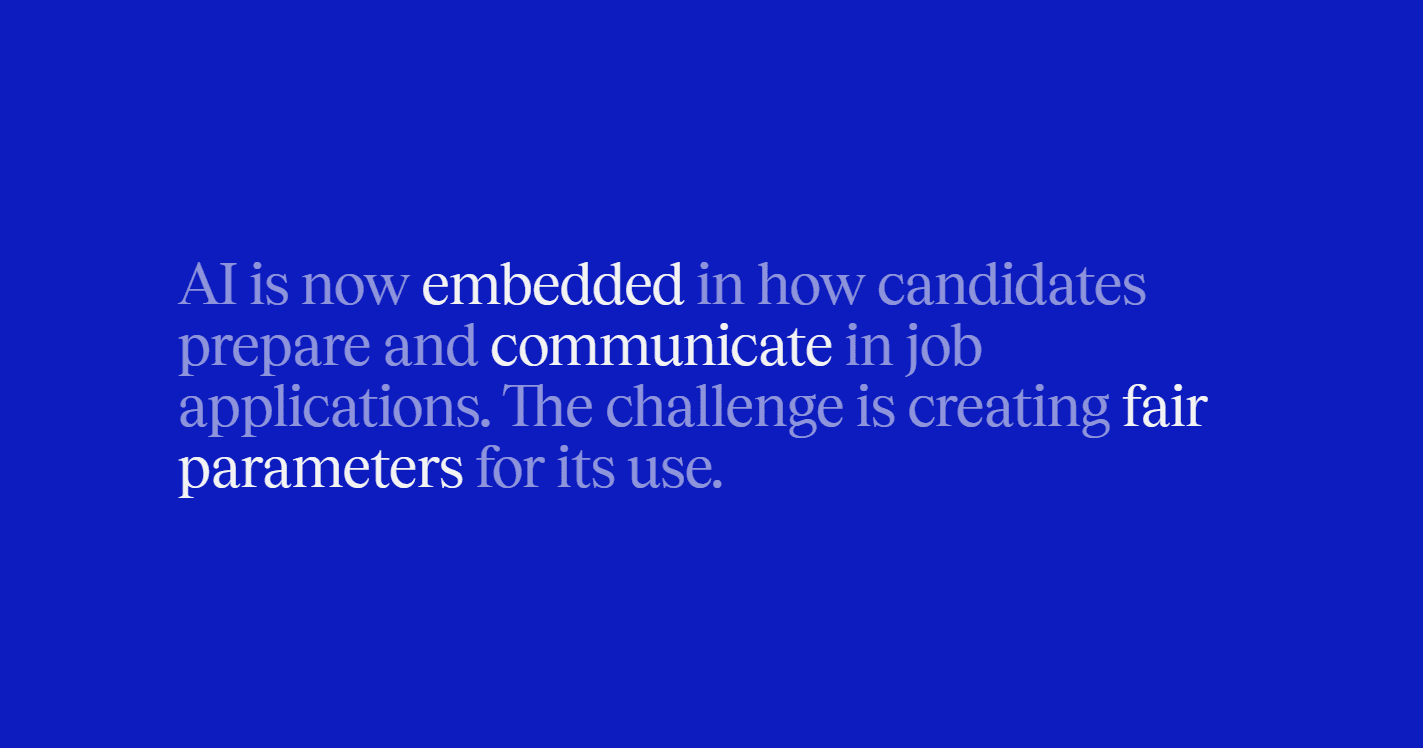
AI is now part of how candidates prepare and communicate.
The question is not whether AI should be allowed.
The question is how to allow it fairly.
A fair framework must:
Define what AI support is allowed
Define what counts as misuse
Ensure identity and authorship integrity
Shift scoring toward reasoning and adaptability
Use tools like Sherlock AI to maintain transparency and evidence
The goal is simple:
Support candidates who think.
Prevent situations where AI replaces thinking.
Why a Framework Is Needed
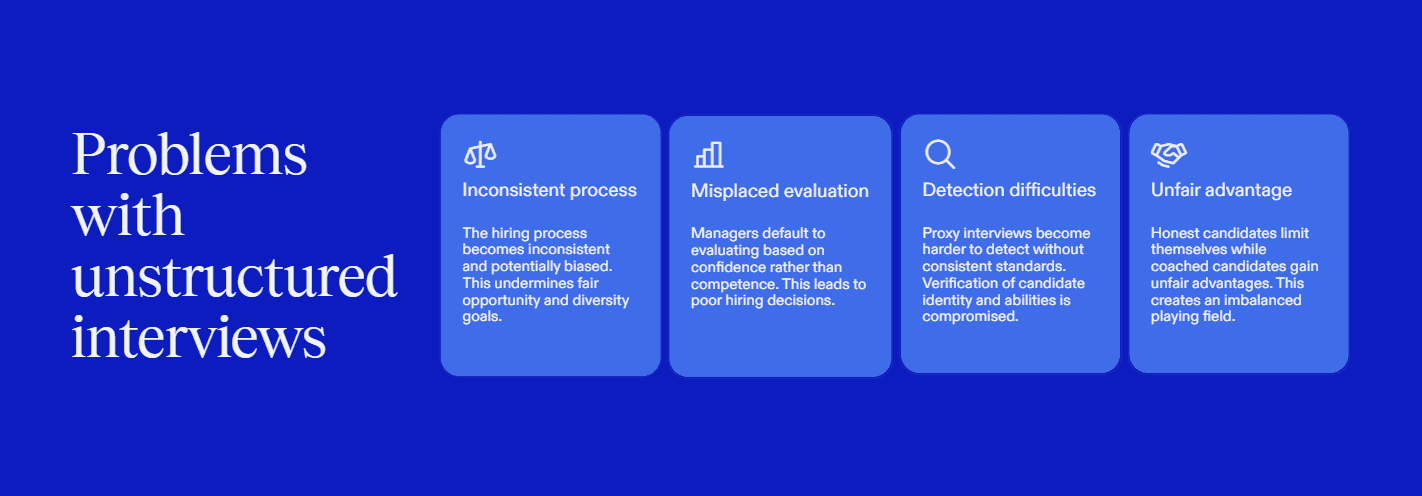
Without clear rules:
Honest candidates self-limit
Coached candidates gain an advantage
Proxy interview behavior becomes harder to detect
Managers evaluate based on confidence and fluency again
A structured framework makes interviews:
Fair
Repeatable
Defensible
High-signal
It also protects teams, candidates, and compliance.
The Fair AI Usage Framework
This framework applies across:
Technical interviews
Behavioral interviews
Leadership evaluations
Campus hiring
Remote and hybrid formats
It has three layers:
Preparation
During the Interview
Evaluation and Documentation
Layer 1: Preparation
AI may be used for:
Researching the company or role
Translating concepts or practicing clarity
Structuring past experience narratives
Managing anxiety or language processing load
This supports:
Non-native speakers
Neurodivergent candidates
Candidates without access to coaching networks
Not allowed:
Memorized scripts where the candidate cannot re-explain concepts in their own words
Test for fairness:
The candidate should be able to paraphrase, adapt, and reason, not just recite.
Layer 2: During the Interview
AI is not allowed to:
Generate live answers
Whisper or feed responses
Provide logic or debugging guidance
Participate as a hidden second device
Allowed:
Taking notes in their own words
Requesting clarification or restating the problem
Using scratch space or whiteboarding tools provided in the interview platform
This is where Sherlock AI matters.
Sherlock AI verifies:
Identity consistency
Voice continuity
Reasonability patterns
Real-time authorship integrity
This protects honest candidates from being disadvantaged by proxy or coached interviewers.
Layer 3: Evaluation and Documentation
Scoring must shift from fluency to thinking.
Interviewers should rate:
Dimension | What to Look For |
|---|---|
Problem Framing | Does the candidate understand the problem in their own words |
Tradeoff Thinking | Can they explain why they chose an approach |
Adaptability | Can they adapt when constraints change |
Ownership | Do they speak from firsthand experience |
Learning Orientation | Do they update thinking based on new information |
Sherlock AI supports this by:
Automatically generating structured notes
Highlighting reasoning patterns and inconsistencies
Creating audit-ready scorecards
This protects both candidate fairness and company legal defensibility.
Why This Framework Works
It does not punish AI usage for accessibility and understanding
It prevents AI from replacing the core thinking being evaluated
It reduces reliance on confidence and fluency, which often correlate with privilege
It shifts evaluation toward signal that predicts future performance
Conclusion
Fair AI usage in interviews is not about limiting tools.
It is about ensuring:
The candidate owns their thinking
The interview focuses on reasoning and decision-making
The process remains equitable for all candidates
Interviews become more fair when:
AI supports clarity and comprehension
AI does not generate core thinking
Identity and authorship are verified
Evidence is consistently captured
This is what Sherlock AI operationalizes at scale.