Back to all blogs
Discover the warning signs of deepfake video calls, how AI impersonation attacks work, and the best ways to protect remote communication and hiring workflows.

Abhishek Kaushik
Jun 18, 2026
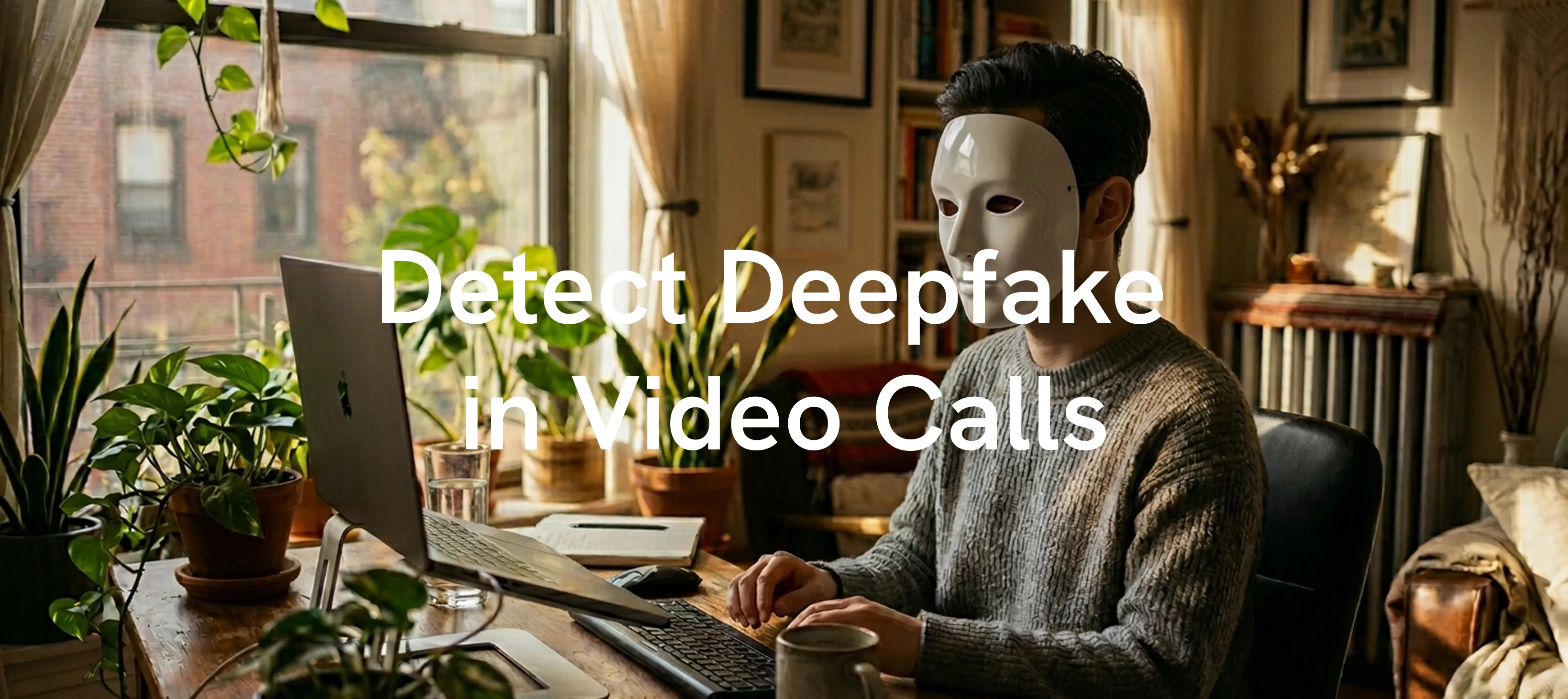
Remote communication has become the backbone of modern business, but it has also introduced a new cybersecurity threat that organizations can no longer ignore: deepfake video calls. From fake executive meetings to AI-generated job interviews and financial scams, cybercriminals are now using synthetic video and cloned voices to impersonate real people in real time.
According to Gartner, 30% of enterprises will no longer trust identity verification and authentication solutions in isolation due to AI-generated deepfakes by 2026. Another Gartner survey found that 62% of organizations already experienced a deepfake-related attack, showing how rapidly AI impersonation threats are evolving in remote communication and video calls.
The rise of deepfake in video calls is especially concerning for HR teams, security leaders, and compliance professionals. Fraudulent candidates are increasingly using AI-generated identities during remote interviews, while cybercriminals use synthetic avatars and voice cloning to manipulate employees into sharing confidential information or approving financial transactions.
As these attacks become more sophisticated, traditional security measures such as passwords, meeting links, and basic identity checks are no longer enough. Organizations now need advanced AI-powered detection systems that can analyze behavioral inconsistencies, facial anomalies, voice authenticity, and real-time liveness signals.
In this guide, we will explain how to detect deepfake in video calls, the warning signs organizations should watch for, how deepfake attacks work, and the technologies businesses can use to protect remote communication.
What Are Deepfake Video Calls?
A deepfake video call is a live or pre-recorded video conversation where artificial intelligence is used to manipulate a person’s face, voice, or identity in real time. The goal is usually to impersonate someone else convincingly enough to gain trust, bypass verification processes, or commit fraud.
Unlike traditional scams that rely on stolen passwords or fake emails, deepfake attacks exploit human trust in visual communication. When people see a face speaking naturally on a video call, they are more likely to believe the interaction is genuine. Deepfake technology takes advantage of this psychological trust by generating highly realistic digital impersonations during virtual conversations.
Modern deepfake video calls typically combine multiple AI technologies together. These include:
Real-time face swapping
AI-generated avatars
Voice cloning
Lip-syncing technology
Synthetic speech generation
AI-assisted conversation tools
Attackers can use these technologies separately or combine them to create convincing fake identities during live calls.
For example, during a remote job interview, a fraudulent candidate may use a real-time face-swapping tool to appear as a completely different person on camera. In another scenario, a scammer may clone an executive’s voice and appearance to trick employees into approving financial transactions or sharing confidential information.
Deepfake attacks are becoming more dangerous because AI tools are improving rapidly. Earlier deepfakes often contained obvious glitches such as distorted facial movements, unnatural blinking, or audio delays. Today, many AI-generated video calls appear highly realistic, especially during short meetings or low-quality video streams.
How Deepfake Video Calls Actually Work
Deepfake video calls may look simple on the surface, but behind them is a combination of advanced AI technologies working together in real time. Attackers use artificial intelligence to manipulate facial expressions, clone voices, sync lip movements, and sometimes even generate live responses during conversations.
The process has become much easier in recent years because many AI tools are now publicly available and require very little technical expertise. What once demanded expensive infrastructure and machine learning knowledge can now be done using consumer-grade software and cloud-based AI platforms.
Understanding how deepfake video calls work is important because it helps organizations identify the weak points attackers exploit during remote communication.
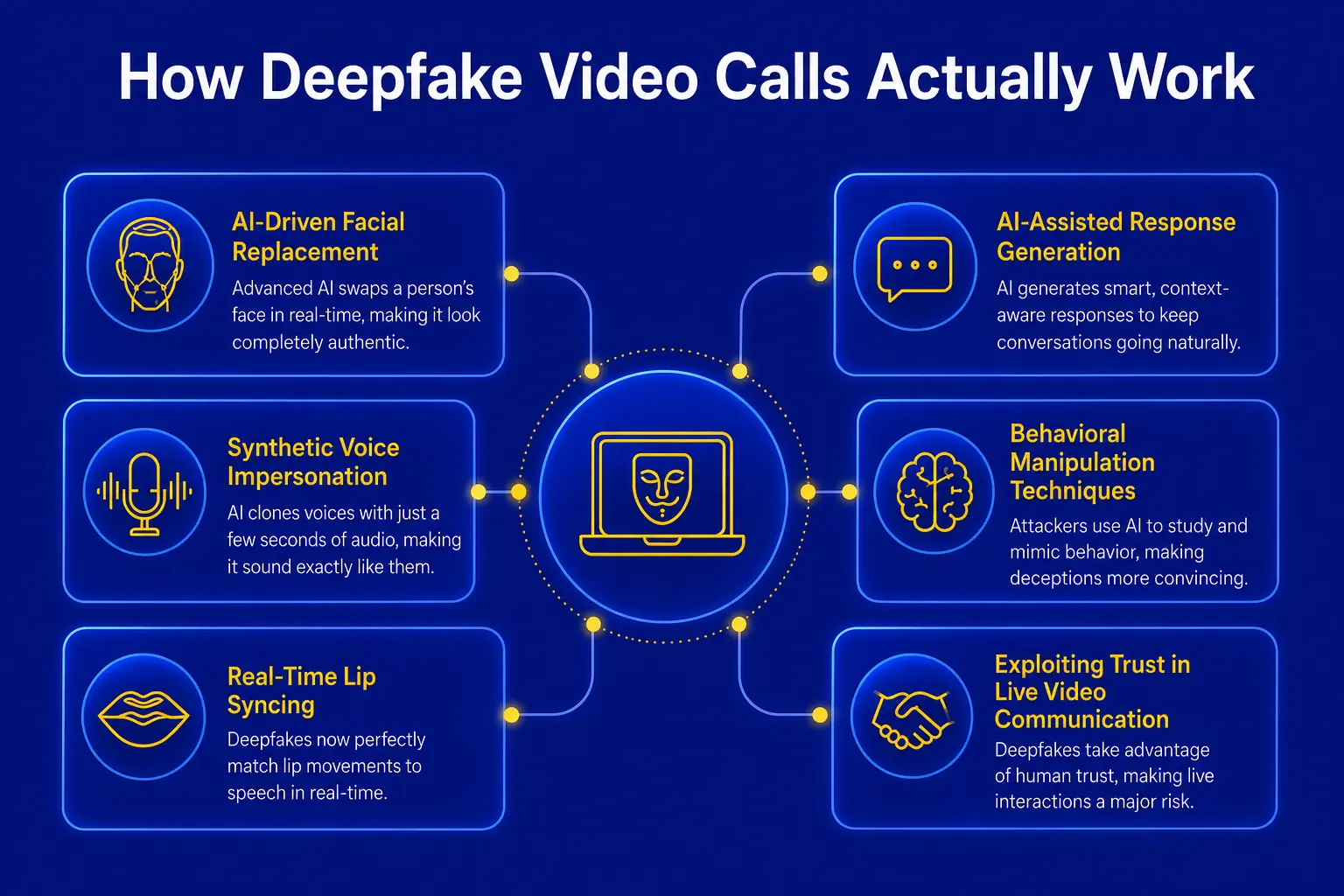
Here is how a typical deepfake video call attack usually happens.
AI-Driven Facial Replacement
Attackers typically use training data like photos, video recordings, webinar clips, or even scraped social media content to build an AI model of a person’s face. During a live video call, the software overlays this synthetic face onto the attacker in real time, replicating movements such as blinking, lip-syncing, facial expressions, and head turns to make the impersonation appear authentic.
Synthetic Voice Impersonation
Voice cloning tools analyze audio samples to recreate a person’s tone, accent, speech rhythm, and pronunciation. Attackers can then use AI-generated speech to sound like executives, candidates, employees, or trusted individuals during live conversations. Some advanced systems can even generate responses dynamically during the call.
Real-Time Lip Syncing
Modern deepfake software synchronizes fake speech with facial movement to create natural-looking conversations. The AI adjusts mouth movement, jaw motion, and expressions in real time so the manipulated video appears aligned with the generated voice output.
AI-Assisted Response Generation
Some attackers use hidden AI copilots during video calls to generate interview answers, technical explanations, or conversation prompts instantly. This allows fraudulent participants to appear highly knowledgeable during interviews, onboarding sessions, or verification calls without actually possessing the required expertise.
Behavioral Manipulation Techniques
Deepfake attackers often intentionally create conditions that make detection harder. They may use poor lighting, low-quality webcams, unstable internet connections, or shorter conversations to hide visual inconsistencies and reduce suspicion during the call.
Exploiting Trust in Live Video Communication
The final objective of most deepfake video calls is to exploit human trust. People naturally assume that seeing a face and hearing a voice in real time means the interaction is genuine. Attackers use this trust to bypass identity verification, manipulate employees, steal sensitive information, secure fraudulent employment, or conduct financial scams.
As these attacks become more advanced, organizations are increasingly adopting platforms like Sherlock AI to detect suspicious interview behavior, identify AI-assisted impersonation, and strengthen identity verification during remote interactions.
Why Are Deepfake Video Calls a Growing Threat?
Deepfake video calls are becoming a major cybersecurity and identity verification challenge for businesses worldwide. As remote communication becomes a standard part of hiring, customer verification, financial operations, and enterprise collaboration, attackers are using AI-powered impersonation tools to exploit trust in virtual interactions.
Here are five major reasons why video call deepfakes are becoming a growing threat.
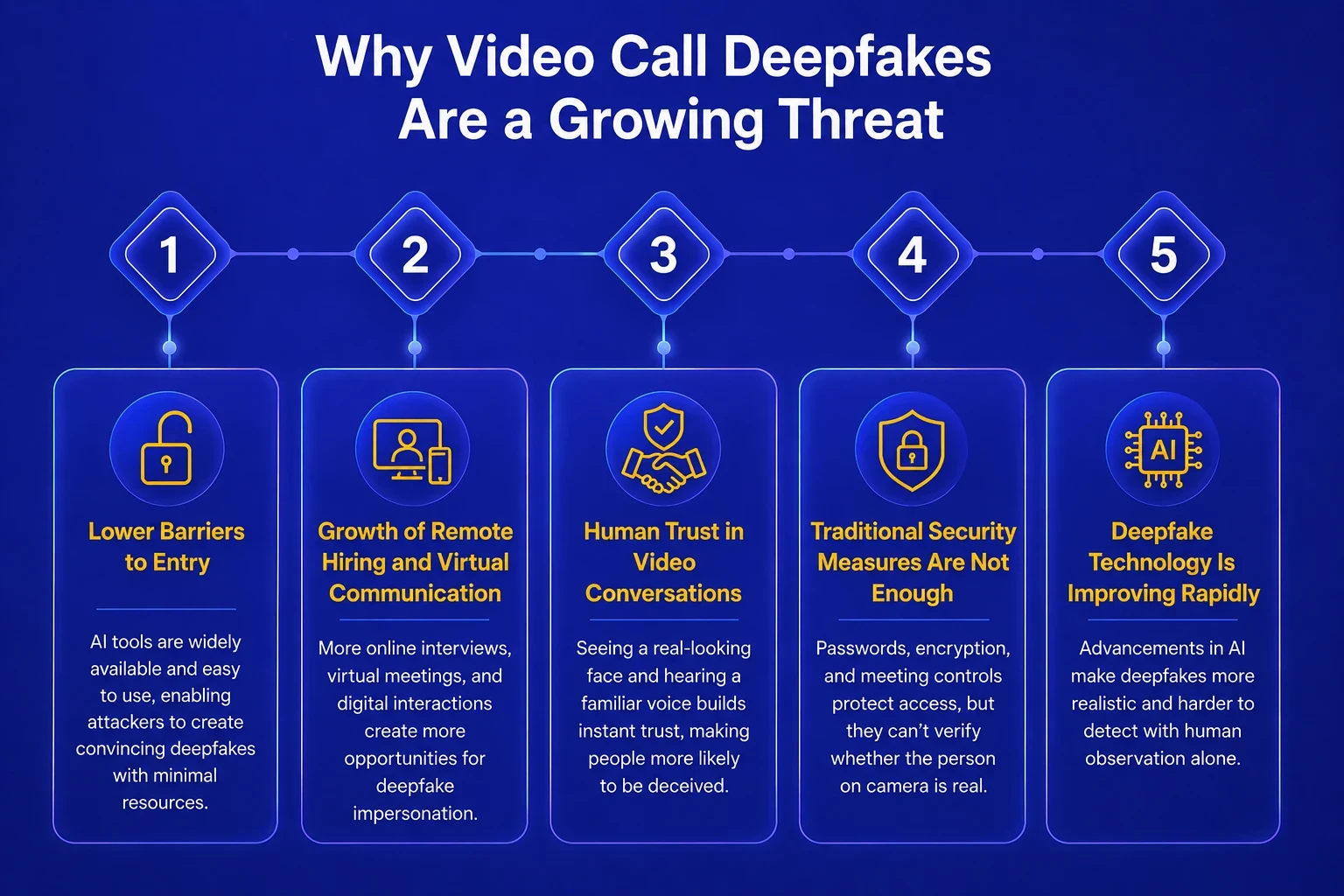
Lower Barriers to Entry
Creating convincing deepfakes no longer requires advanced technical expertise or expensive infrastructure. Many AI-powered face-swapping and voice-cloning tools are now publicly available and easy to use.
Attackers can generate realistic fake identities using:
Social media photos
Public video clips
Short audio recordings
Free or low-cost AI software
This accessibility has made deepfake fraud more scalable and harder for organizations to control.
Growth of Remote Hiring and Virtual Communication
Remote work and online hiring have significantly increased the number of video-based interactions between businesses and individuals.
Organizations now rely heavily on video calls for:
Job interviews
Employee onboarding
Customer verification
Financial approvals
Telehealth consultations
Executive meetings
This shift creates more opportunities for attackers to impersonate candidates, employees, executives, or customers during live interactions.
Human Trust in Video Conversations
People naturally trust face-to-face communication more than emails or text messages. Seeing someone speak on camera creates a sense of authenticity, even when the video may be manipulated.
Attackers exploit this psychological trust to:
Gain unauthorized access
Steal sensitive information
Conduct financial scams
Manipulate employees
Bypass identity verification checks
This makes deepfake video calls more convincing than many traditional phishing attacks.
Traditional Security Measures Are Not Enough
Most video conferencing platforms focus on securing access to meetings through:
Password protection
Encryption
Waiting rooms
Authentication systems
While these controls protect the meeting environment, they do not verify whether the person appearing on camera is genuinely real.
As a result, organizations may secure the platform itself while still remaining vulnerable to AI-generated impersonation attacks.
Deepfake Technology Is Improving Rapidly
Modern AI models are becoming significantly better at generating realistic:
Facial expressions
Voice patterns
Lip syncing
Real-time video rendering
Earlier deepfakes often contained obvious glitches or robotic behavior. Today, many fake video calls appear highly convincing, especially during short conversations or low-quality video streams.
Traditional Video Fraud vs Deepfake Video Fraud
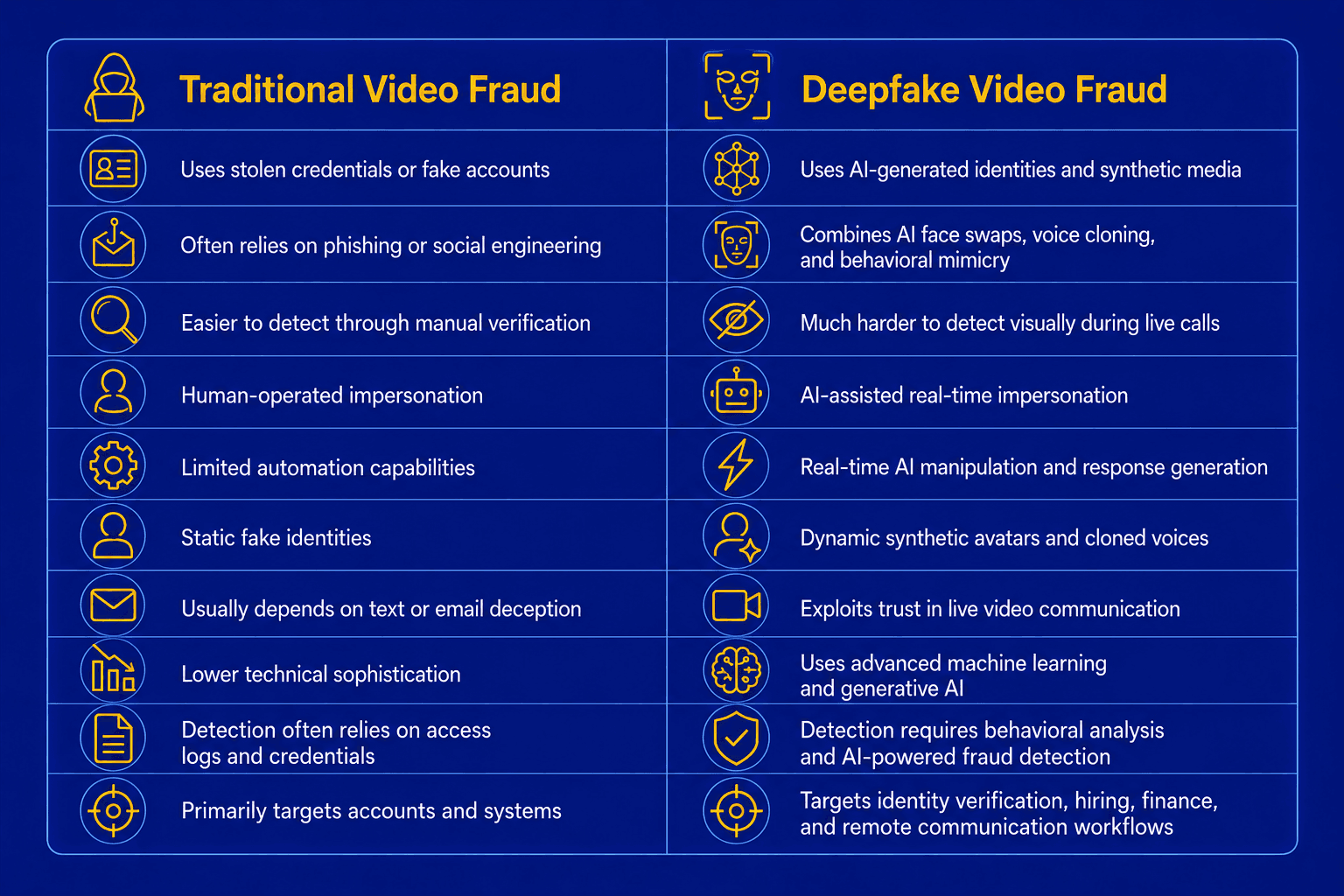
As AI-powered impersonation attacks become more sophisticated, deepfake video fraud introduces risks that go far beyond traditional account compromise or identity theft. The table below highlights the key differences between conventional video-based fraud and modern AI-generated deepfake attacks.
How to Detect Deepfake in Video Calls
Detecting deepfake video calls is becoming more challenging as AI-generated impersonation technology improves. Many modern deepfakes can mimic facial expressions, voice patterns, and natural conversation flow with surprising accuracy, especially during short or low-quality video calls.
However, even advanced deepfake systems often leave behind subtle technical, behavioral, and visual inconsistencies. Organizations that rely on remote hiring, virtual onboarding, customer verification, or online meetings need structured detection methods instead of relying only on human intuition.
Here are some of the most effective ways to identify deepfake activity during video calls.
Watch for Facial and Lip Sync Inconsistencies
Deepfake systems often struggle to fully replicate natural facial movement during live conversations. Look for signs such as delayed lip syncing, distorted facial expressions, blurred jawlines, flickering around the mouth, or unnatural blinking patterns. These visual inconsistencies usually become more noticeable when the person moves quickly or changes camera angles.
Example:
During a remote job interview, a candidate’s lips may continue moving slightly after the audio stops, or the facial overlay may briefly distort when the person turns sideways or adjusts lighting during the call.
Analyze Voice and Audio Patterns
AI-generated voices may sound convincing, but they can still contain subtle irregularities. Listen carefully for robotic speech rhythm, overly polished pronunciation, unnatural pauses, flat emotional tone, or delayed responses. In some cases, background noise may also sound disconnected or artificially processed during the conversation.
Example:
An attacker impersonating a company executive during a financial approval call may sound unnaturally consistent, with delayed emotional reactions or robotic speech patterns that do not match normal conversational behavior.
Ask Unexpected Questions
Deepfake attacks and AI-assisted response tools work best in structured conversations. Asking spontaneous follow-up questions or shifting topics suddenly can expose suspicious behavior. Attackers using hidden AI copilots may hesitate before answering, rely on scripted responses, or struggle to maintain natural conversational flow in real time.
Example:
During a technical interview, an interviewer may suddenly ask the candidate to explain a previous project in detail. A participant relying on AI-generated assistance may pause unusually long or provide vague, scripted answers instead of responding naturally.
Request Real-Time Movements
Many deepfake overlays perform best under controlled conditions with limited movement. Asking the participant to turn sideways, move closer to the camera, adjust lighting, or perform quick gestures can sometimes reveal rendering glitches, facial distortions, or synchronization problems during the call.
Example:
An interviewer may ask a participant to wave their hand or move closer to the webcam. A deepfake overlay may flicker around the face or temporarily lose synchronization during these spontaneous movements.
Use Multi-Layer Identity Verification
Video calls alone should not be used as the only method for identity verification. Organizations should combine additional verification layers such as multi-factor authentication, ID verification, device authentication, secure onboarding workflows, and behavioral analysis to reduce the risk of impersonation attacks.
Example:
A company onboarding a remote employee may require a live video interview alongside government ID verification, device authentication, and secure login confirmation to validate identity more reliably.
Monitor Behavioral Red Flags
Behavioral inconsistencies can sometimes reveal AI-assisted fraud more clearly than visual artifacts. Watch for warning signs such as repeated scripted answers, unusual pauses before responding, refusal to interact naturally on camera, sudden disconnections during verification steps, or limited spontaneous conversation.
Example:
A fraudulent candidate using hidden AI assistance may repeatedly provide memorized responses, avoid unscripted discussion, or disconnect suddenly when asked to complete additional identity verification during the interview.
Use AI-Powered Deepfake Detection Tools
As deepfake technology becomes more sophisticated, manual detection alone is no longer reliable. AI-powered fraud detection systems analyze facial inconsistencies, voice anomalies, behavioral patterns, identity signals, and manipulation indicators in real time to identify suspicious activity more accurately.
Example:
During a virtual onboarding session, an AI-powered detection system may identify mismatched facial movement, suspicious response timing, or abnormal voice synchronization that could indicate deepfake manipulation or AI-assisted impersonation.
Best Practices to Prevent Deepfake Fraud in Video Calls
Detecting deepfakes is important, but prevention is equally critical. As AI-generated impersonation attacks become more advanced, organizations need stronger verification workflows, employee awareness, and fraud prevention systems to reduce the risk of deepfake-related incidents.
Businesses that rely on remote hiring, online onboarding, customer verification, financial approvals, or virtual collaboration should treat deepfake prevention as part of their broader cybersecurity and identity protection strategy.
Here are some of the most effective best practices organizations can follow to prevent deepfake fraud during video calls.
Implement Multi-Factor Authentication
Video presence alone should never be treated as proof of identity. Organizations should require multiple layers of authentication before granting access to sensitive systems, financial approvals, or confidential information.
Additional verification methods may include:
One-time passwords
Device authentication
Secure login verification
Biometric verification
Identity document validation
Multi-factor authentication significantly reduces the risk of successful impersonation attacks.
Strengthen Identity Verification Workflows
Companies should establish structured verification processes for remote interactions, especially during:
Job interviews
Employee onboarding
Vendor approvals
Financial authorization
Customer verification calls
Identity verification should combine visual confirmation with supporting validation methods instead of relying only on video communication.
Use Secure Video Communication Platforms
Organizations should use trusted video conferencing platforms that provide:
Encrypted communication
Meeting access controls
Waiting rooms
Participant authentication
Session monitoring
While these features alone cannot stop deepfakes, they help reduce unauthorized access and improve overall communication security.
Train Employees to Recognize Deepfake Risks
Human awareness remains one of the strongest defenses against AI-powered fraud.
Recruiters, HR teams, finance departments, customer support agents, and executives should understand:
Common deepfake warning signs
AI-assisted interview fraud tactics
Voice cloning risks
Social engineering techniques
Identity verification best practices
Regular awareness training helps employees respond more carefully during suspicious interactions.
Verify Sensitive Requests Through Secondary Channels
Organizations should avoid approving sensitive actions based only on a video call.
For high-risk requests such as:
Financial transfers
Access approvals
Confidential data sharing
Password resets
System permission changes
employees should confirm requests through secondary communication channels such as secure messaging, verified phone calls, or internal approval systems.
Limit Public Exposure of Sensitive Media
Attackers often use publicly available videos and audio recordings to train deepfake systems.
Organizations can reduce risk by limiting unnecessary public exposure of:
Executive video recordings
Internal presentations
Employee voice samples
Sensitive webinar content
While complete prevention is impossible, reducing accessible training data makes impersonation attacks more difficult.
Use AI-Powered Fraud Detection Solutions
Manual verification alone is no longer sufficient against advanced deepfake attacks. Businesses increasingly need AI-powered systems that analyze:
Facial inconsistencies
Voice anomalies
Identity mismatches
Session behavior
Device intelligence
AI-assisted manipulation signals
Advanced fraud detection platforms help organizations identify suspicious activity in real time before impersonation attempts lead to security or financial damage.
Establish a Deepfake Response Strategy
Organizations should prepare for the possibility of deepfake incidents by creating clear response plans.
A deepfake response strategy should include:
Escalation procedures
Verification protocols
Incident reporting workflows
Employee response guidelines
Security investigation processes
Having predefined procedures helps teams respond quickly and minimize damage if suspicious activity is detected.
As deepfake technology continues evolving, organizations that combine employee awareness, strong verification systems, and AI-powered fraud detection will be better positioned to protect remote communication environments from identity-based attacks.
Leverage Advanced Detection Tools for Deepfake Video Calls: Sherlock AI
As deepfake technology becomes more advanced, organizations can no longer rely only on manual observation or traditional verification methods to secure remote interactions. AI-generated impersonation attacks are evolving quickly, making it harder for recruiters, HR teams, and security professionals to identify suspicious behavior consistently during live video calls.
Sherlock AI help organizations detect AI-assisted fraud, strengthen identity verification, and reduce the risk of impersonation during remote interactions.
Detects AI-Assisted Interview Fraud
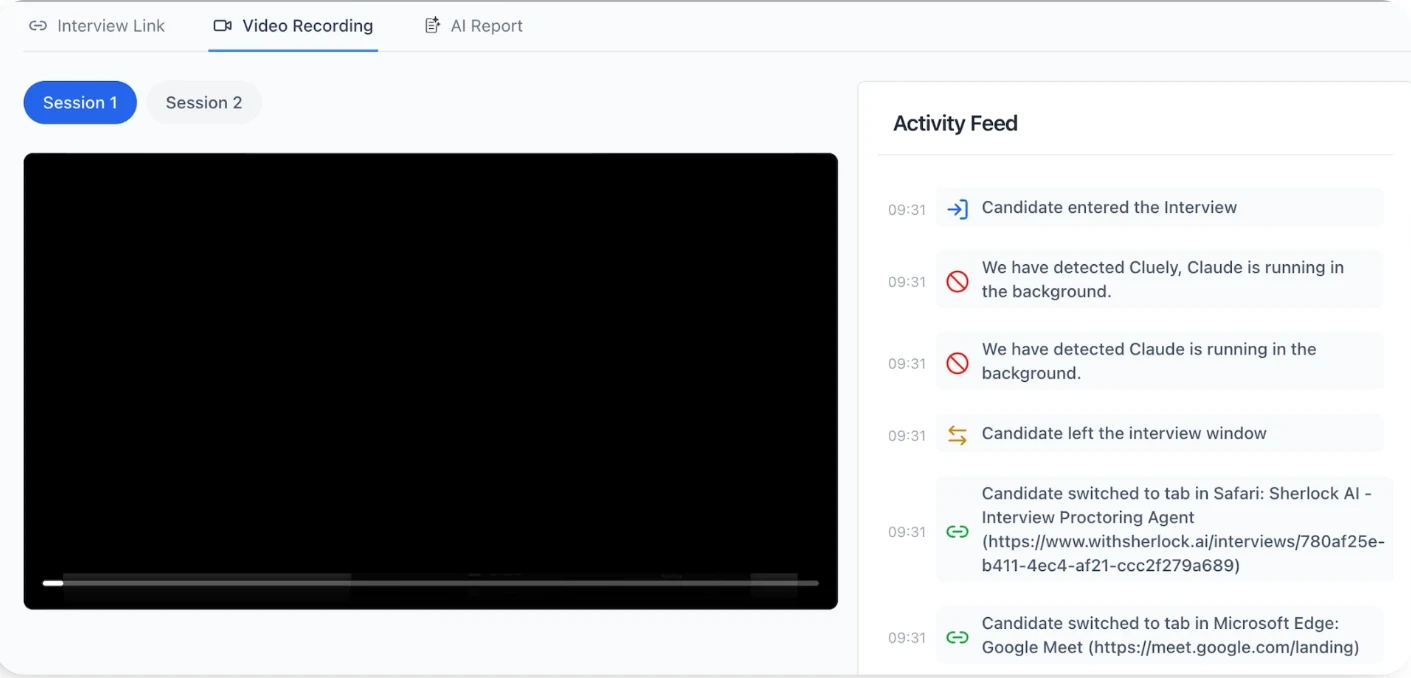
Fraudulent candidates increasingly use hidden AI copilots, proxy interview tactics, and deepfake overlays during remote interviews. Sherlock AI helps identify suspicious interview behavior that may indicate external assistance or impersonation attempts during live conversations.
Identifies Suspicious Behavioral Patterns
Behavioral analysis is one of the strongest defenses against modern deepfake attacks. Sherlock AI monitors for unusual indicators such as scripted communication patterns, delayed responses, inconsistent conversational flow, and unnatural interview behavior that may signal suspicious activity.
Strengthens Identity Verification
Traditional video calls cannot reliably confirm whether the participant on camera is genuinely the claimed individual. Sherlock AI helps strengthen remote identity verification by analyzing multiple behavioral and interaction signals during video-based communication workflows.
Helps Detect Proxy Participation
Some fraudulent candidates use proxy interviewers or external assistance during remote assessments. Sherlock AI helps identify patterns that may indicate third-party involvement, suspicious participation behavior, or inconsistencies during interviews and evaluations.
Supports Secure Remote Hiring
Remote hiring introduces significant identity verification challenges for organizations. Sherlock AI helps businesses improve hiring integrity by detecting suspicious activity during virtual interviews, candidate assessments, onboarding workflows, and remote verification processes.
Provides Real-Time Fraud Detection Insights
Deepfake fraud often succeeds because suspicious behavior is missed during live interactions. Sherlock AI helps organizations analyze interview signals and behavioral patterns in real time, enabling faster identification of potential fraud risks before they lead to operational or security issues.
Conclusion
Deepfake video calls are no longer a future cybersecurity concern. They are an active and rapidly growing threat affecting businesses, recruiters, financial institutions, healthcare providers, and organizations that rely heavily on remote communication. Advancements in artificial intelligence have made it easier for attackers to generate realistic face swaps, cloned voices, AI-assisted responses, and live impersonation attacks during video calls. As remote hiring, virtual onboarding, and online verification processes continue to expand, organizations are becoming increasingly vulnerable to identity fraud and AI-powered manipulation.
The biggest challenge is that traditional security measures alone are no longer enough. Password-protected meetings, encrypted communication platforms, and access controls may secure the connection itself, but they cannot confirm whether the person appearing on camera is genuinely real. At the same time, human observation is becoming less reliable as deepfake technology improves and AI-generated impersonations become more convincing during live conversations.
To reduce these risks, organizations need a stronger and more proactive approach to identity verification and fraud prevention. Businesses should combine multi-factor authentication, employee awareness training, behavioral analysis, secure verification workflows, and AI-powered fraud detection systems to identify suspicious activity during remote interactions. Relying only on manual verification can leave organizations exposed to fraudulent hiring, financial scams, unauthorized access, and reputational damage.
As deepfake technology continues evolving, businesses must adapt their security strategies to protect digital trust across remote communication channels. Platforms like Sherlock AI help organizations detect AI-assisted impersonation, identify suspicious interview behavior, strengthen identity verification, and reduce the risk of deepfake fraud during remote video interactions. Organizations that invest early in advanced fraud detection and identity protection technologies will be better prepared to secure virtual communication in the age of AI-generated deception.