Back to all blogs
Learn how to handle data privacy and candidate consent when using AI note-takers in interviews. Discover compliance best practices for ethical AI hiring.

Abhishek Kaushik
Dec 26, 2025
TL;DR
AI note-taking tools record, transcribe, and analyze interviews, so clear disclosure to candidates is legally and ethically required.
Recruiters must explain what is being recorded, why, how long it will be stored, and who can access it.
Transparent communication builds trust, reduces compliance risk, and protects both employer and candidate.
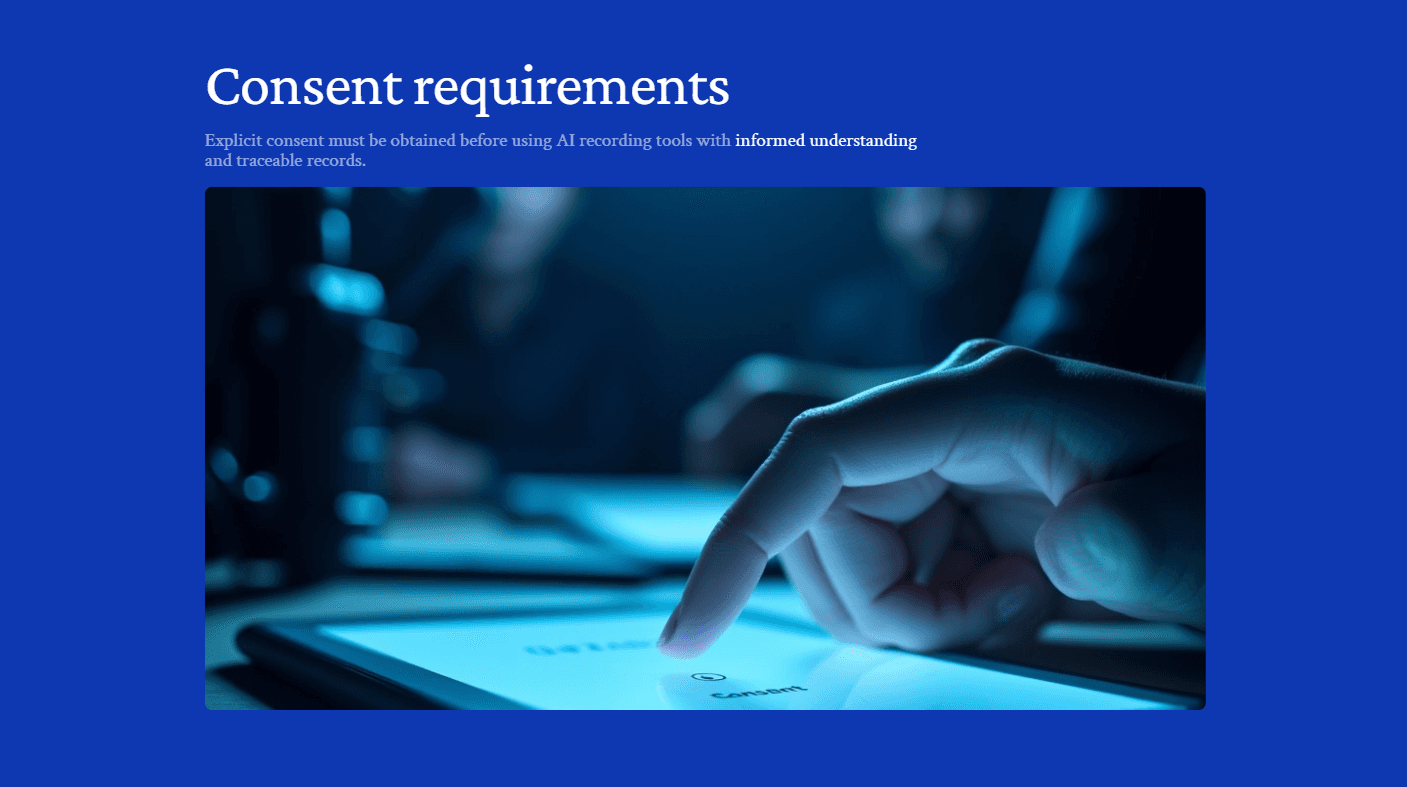
Consent is not optional; it must be explicit, informed, and traceable.
AI note-taking tools are becoming an essential part of modern recruitment workflows. These tools automatically record, transcribe, and summarize interview conversations, allowing recruiters to focus more on evaluating candidates instead of manually capturing notes.
However, the use of AI note-takers in interviews raises important concerns about data privacy, candidate consent, and responsible data handling. Interviews often involve sensitive personal information, including employment history, personal identifiers, and behavioral insights.
Because of this, organizations must clearly disclose how AI tools collect, process, and store interview data.
For recruiters, transparency is no longer optional. Privacy regulations and candidate expectations both require clear communication whenever AI systems are used in hiring processes.
This guide explains how AI note-takers work, what data they collect, why consent is required, and the best practices recruiters should follow to ensure privacy compliance.
Understanding AI Note-Takers in Recruitment
AI note-taking tools help recruiters document interviews more efficiently by automatically capturing conversations and converting them into structured summaries.
These tools typically integrate with video interview platforms and perform tasks such as:
Recording interview conversations
Transcribing speech into text
Highlighting key responses
Generating interview summaries
Creating searchable documentation for hiring teams
By automating note-taking, recruiters can focus on candidate responses rather than managing documentation during the interview.
However, because these systems capture personal information, organizations must treat interview data as sensitive candidate information that requires responsible handling.
Read more: The Buyer’s Guide to AI Interview Note-Takers for Zoom, Teams & Meet
What Data AI Note-Takers Collect
AI note-takers collect multiple forms of interview data in order to generate accurate summaries and insights.
Interview Recordings
Many tools record the entire interview conversation, including both audio and video. This recording becomes the primary data source used for transcription and analysis.
Transcribed Conversations
Speech recognition technology converts interview dialogue into written transcripts. These transcripts allow recruiters to review candidate responses after the interview.
Metadata and Meeting Information
AI tools may also capture supporting information such as:
Interview timestamps
Participant names
Meeting duration
Platform metadata
Behavioral Signals
Some advanced AI systems analyze tone, pauses, and speaking patterns to generate additional insights.
Because these elements contain personal identifiers, interview data may fall under privacy regulations such as General Data Protection Regulation (GDPR) and other global data protection laws.
Cisco 2025 Data Privacy Benchmark Study highlights that privacy laws require transparency, fairness, and accountability, enabling individuals to engage with AI technologies knowing their data is protected.

Security and Privacy Risks of AI Note-Takers
While AI note-taking tools provide efficiency benefits, they can introduce security and compliance risks if used without proper governance.
Unauthorized Data Access
If interview recordings and transcripts are stored without strict access controls, sensitive candidate data may become accessible to individuals who are not part of the hiring process.
Third-Party Data Processing
Many AI note-taking tools rely on cloud-based infrastructure. If the vendor processes interview data through external systems, organizations must ensure that appropriate data protection agreements are in place.
Data Retention Risks
Storing interview recordings indefinitely can create privacy compliance issues. Many data protection frameworks require organizations to define clear retention periods for personal data.
Lack of Candidate Awareness
One of the most common risks occurs when candidates are not informed that AI tools are recording or analyzing their interview responses.
Organizations must therefore ensure that candidates understand how AI note-taking tools are used during interviews.
Why Candidate Consent Is Required
Before using AI tools to record or analyze interviews, recruiters must obtain clear and informed consent from candidates.
Consent ensures that individuals understand how their data will be collected and processed.
In most privacy frameworks, valid consent must meet the following conditions.
Informed
Candidates must know that AI tools are being used and understand what type of data is being collected.
Specific
The purpose of data collection must be clearly defined, such as interview documentation or hiring evaluation.
Freely Given
Candidates should have the ability to ask questions or decline recording in certain situations.
Documented
Recruiters should maintain a record showing that the candidate agreed to the use of AI note-taking during the interview.
What Recruiters Must Disclose When Using AI Note-Takers
Transparency plays a critical role in maintaining candidate trust during AI-assisted interviews.
Recruiters should clearly communicate the following information before starting the interview.
Use of AI Tools: Candidates should be informed that AI software is being used to capture or summarize interview discussions.
Type of Data Collected: Recruiters should explain whether the system records audio, video, transcripts, or behavioral signals.
Purpose of Data Processing: Candidates must understand why the data is being collected. For example, documentation, hiring evaluation, or interview analysis.
Data Storage Location: Candidates should know where the data will be stored and whether third-party systems are involved.
Data Retention Period: Organizations should specify how long interview recordings or transcripts will be stored before deletion.
AI Analysis or Automated Evaluation: If the system performs automated analysis or scoring, this should also be disclosed.
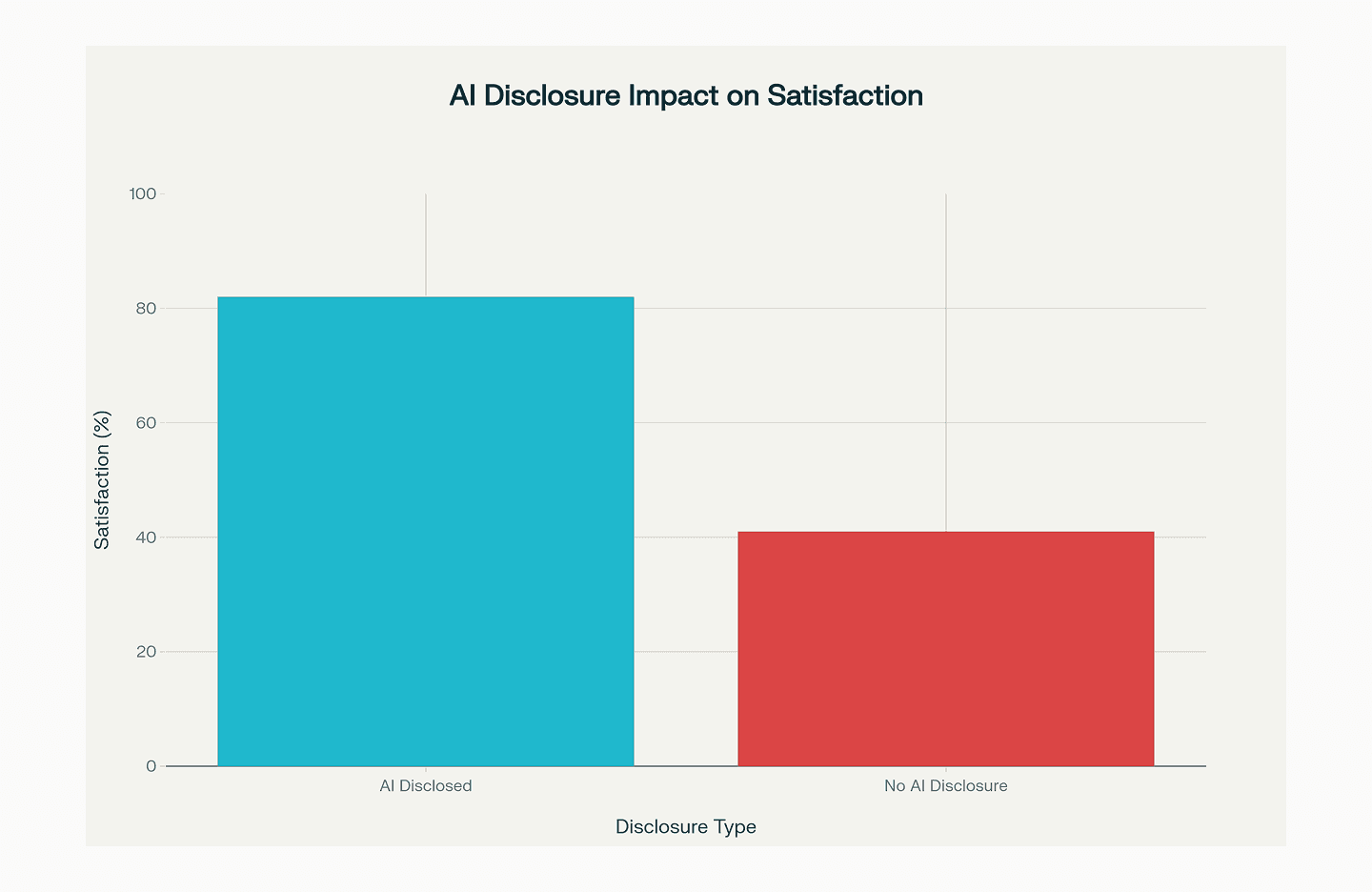
Clear disclosure ensures transparency and reduces the risk of privacy concerns.
Storage, Access, and Retention Requirements
AI note-taking platforms must be configured to comply with data retention and deletion laws. Recruiters should:
Set automatic deletion timelines
Restrict access to authorized users only
Encrypt data at rest and in transit
Ensure the vendor signs a Data Processing Agreement (DPA)
Audit logs should make it possible to confirm who accessed what and when.
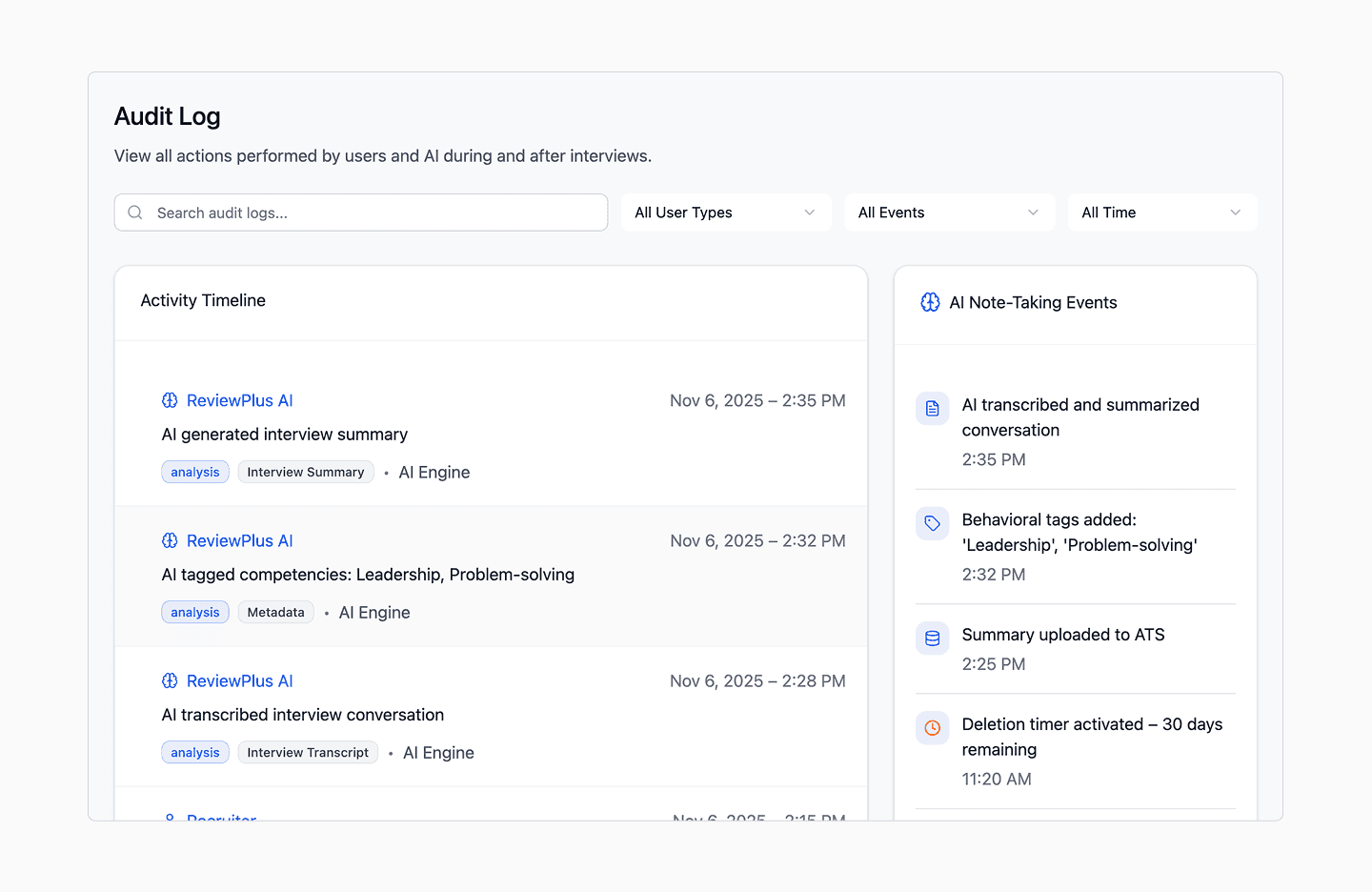
Example AI Note-Taker Disclosure Script for Recruiters
Recruiters can use a simple disclosure statement before starting the interview.
For example:
"Before we begin, I want to let you know that we use an AI note-taking tool to record and transcribe interviews. This helps us accurately document the discussion and review responses later in the hiring process. The recording will only be used internally by the hiring team. Please let me know if you have any questions."
Providing a clear disclosure helps build transparency and trust with candidates.

How Sherlock AI Supports Responsible AI Note-Taking in Interviews
Organizations that want to adopt AI note-taking tools while maintaining strong privacy standards often rely on platforms that prioritize transparency, consent, and secure interview documentation.
Solutions like Sherlock AI are designed specifically for recruitment environments where interview integrity and responsible data handling are critical. Instead of simply recording meetings, Sherlock AI focuses on maintaining clear documentation while supporting compliance with modern privacy expectations.
For recruiters, this means interview conversations can be captured and summarized while still maintaining proper disclosure practices, controlled access to interview data, and structured documentation for hiring decisions.
By combining AI-powered interview documentation with responsible governance practices, organizations can improve hiring efficiency without compromising candidate trust or data privacy.
Key Privacy Considerations When Choosing an AI Note-Taking Tool
Feature | Why It Matters for Recruiters | Example with Sherlock AI |
|---|---|---|
Candidate Consent Disclosure | Candidates should know when AI tools are recording or transcribing interviews | Supports transparent interview documentation workflows |
Secure Interview Data Storage | Interview recordings may contain personal information | Structured storage designed for recruitment documentation |
Controlled Access to Interview Data | Only hiring teams should access candidate information | Access can be restricted to relevant hiring stakeholders |
Clear Data Usage Policies | Candidates should understand how interview data will be used | Designed for recruitment documentation rather than general meeting recording |
Interview Integrity Protection | AI tools should not compromise fairness in hiring | Helps recruiters maintain transparent interview records |
Conclusion
AI note-taking tools can significantly improve interview documentation and help recruiters maintain accurate hiring records. However, these benefits come with responsibilities related to candidate privacy and data protection.
By clearly disclosing AI usage, obtaining candidate consent, securing interview data, and following responsible data governance practices, organizations can safely integrate AI note-taking into their recruitment processes.
Solutions like Sherlock AI help recruiters implement AI-driven interview documentation while maintaining transparency, structured data handling, and responsible hiring practices. By supporting clear disclosure and organized interview records, such platforms enable teams to adopt AI tools without compromising candidate trust.
Recruiters who prioritize transparency and privacy will not only maintain compliance but also build stronger trust with candidates in an increasingly AI-driven hiring landscape.