Back to all blogs
Discover the sweet spot between candidate-friendly processes and the proctoring controls needed to protect assessment integrity.

Abhishek Kaushik
Dec 5, 2025
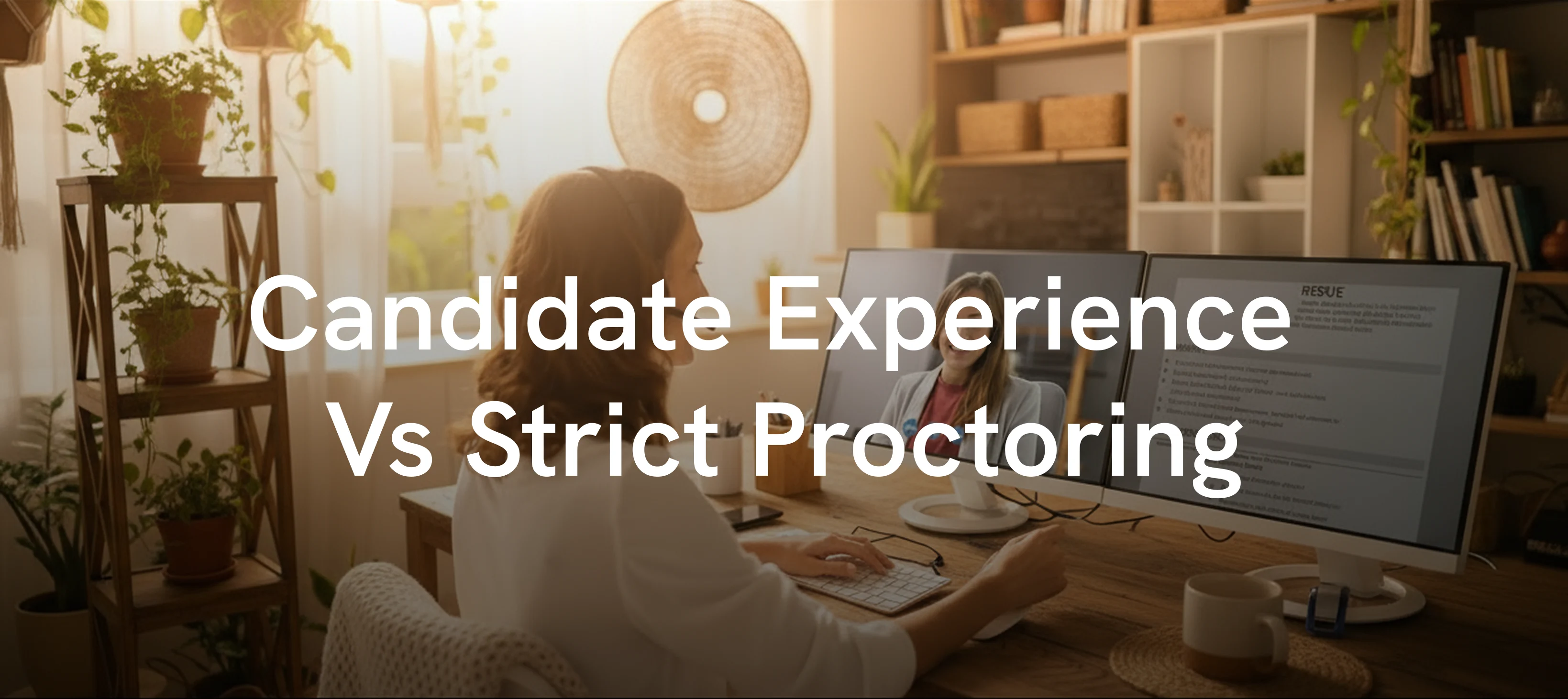
Companies are tightening proctoring rules to reduce AI misuse and proxy interviewing.
But heavy-handed monitoring can:
Increase candidate anxiety
Lower engagement
Harm employer brand
Reduce access for non-native speakers or neurodivergent applicants
The best approach is not total surveillance or total trust.
The best approach is a balanced integrity model that:
Verifies identity
Ensures authorship is real
Keeps the interview human and respectful
Sherlock AI enables this approach by maintaining integrity quietly in the background.

Why This Balance Matters Now
Remote interviewing changed the hiring environment.
What candidates worry about:
Feeling distrusted
Being judged on communication or accent
Proctoring feeling invasive or adversarial
What companies worry about:
Proxy interviews
AI-fed answers during problem solving
Inaccurate hiring decisions
Compliance and audit risks
Both concerns are valid.
So the solution cannot be:
Strict surveillance
No integrity controls
The solution must protect both fairness and trust.
The Two Extremes That Fail
1. Over-Proctoring
Examples:
Mandatory face scans every few minutes
Forced 360-degree room scans
Continuous screen recording with alerts
Disallowing any silence or thinking time
Impact:
Candidates feel policed
Anxiety increases
Strong candidates walk away
Employer brand suffers
2. No Oversight at All
Examples:
Zoom interviews without identity or authorship checks
Whiteboarding without real-time observation
Take-home tasks without verification
Impact:
Proxy interviews slip through
Scripted answers appear convincing
Hiring signal collapses
High performer trust declines
Read more: Proxy Interviews Explained - How They Work & Why They’re Rising
What “Balanced Integrity” Looks Like
A balanced model has three parts:
Layer | Purpose | How Sherlock Helps |
|---|---|---|
Identity | Confirm the person is the applicant | Voice and presence continuity across rounds |
Authorship | Ensure answers come from their own reasoning | Reasoning pattern and timing consistency |
Signal Clarity | Evaluate thinking, not performance | Structured notes and decision-ready summaries |
This model:
Does not monitor the candidate aggressively
Does not assume deception
Does not require discomfort or surveillance
Integrity becomes quiet, fair, and consistent.
Candidate Experience Should Feel Like This
Candidates should feel:
Respected
Calm enough to think clearly
Evaluated on how they solve problems, not how they perform scripts
Confident the interviewers are prepared and attentive
This happens when:
Interviewers listen deeply instead of typing notes
Scorecards measure reasoning and decision-making
Expectations are communicated clearly upfront
Sherlock AI automates the administrative and monitoring layer, so the human interaction stays human.
What to Communicate to Candidates (Exact Language)
Use simple and transparent messaging:
We use light identity and authorship verification to ensure the interview reflects your own thinking.
This protects you and ensures fairness across all applicants.
There is no surveillance. No penalties for pausing, thinking, or asking questions.
Candidates respond well to:
Transparency
Respect
Predictability
Not rules.
Not pressure.
Why This Balance Drives Better Hiring
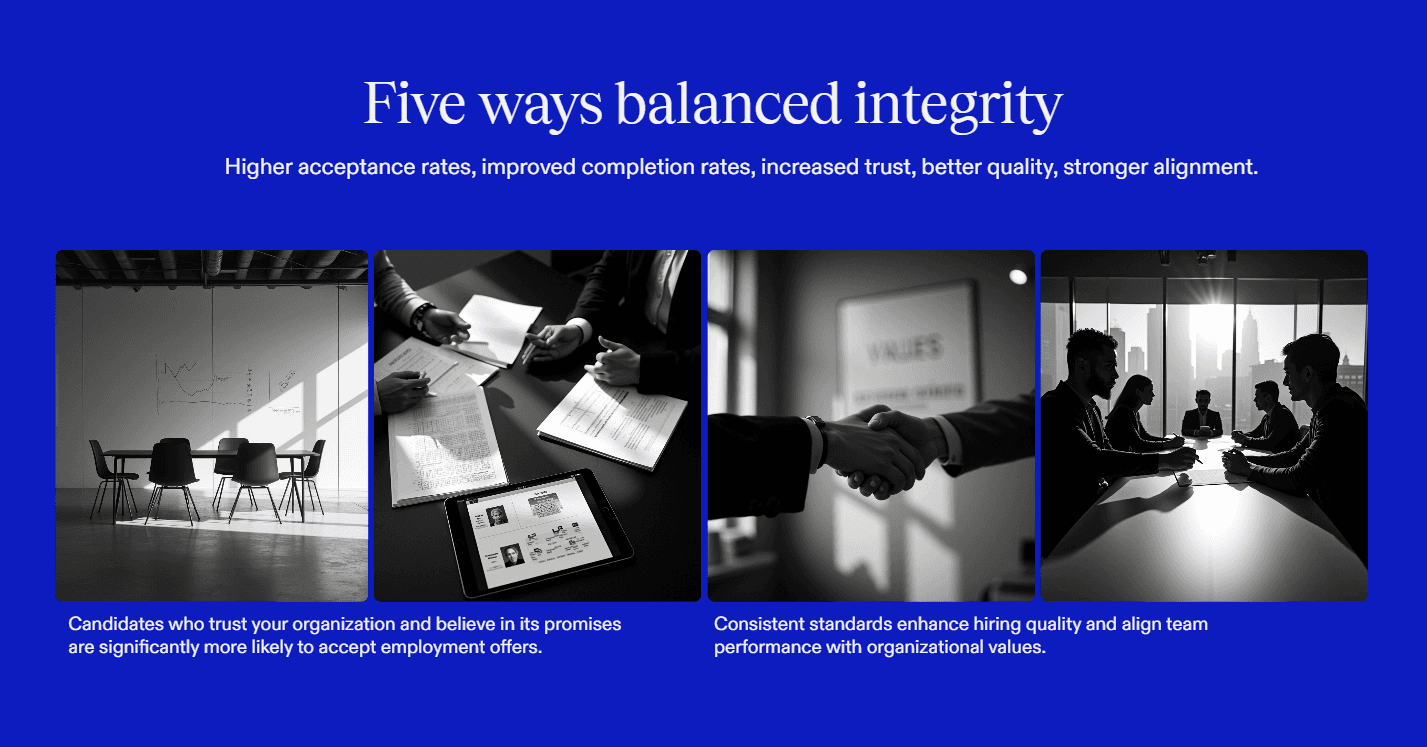
A balanced integrity model improves:
Offer acceptance rates
Interview completion rates
Candidate trust in fairness
Quality of hire
Team performance alignment
It also reduces:
Rework and false-positive hires
Interviewer fatigue and note-taking overload
Legal and compliance vulnerability
Balanced integrity is not just ethical.
It is efficient.
It improves outcomes.
Conclusion
You do not have to choose between:
A great candidate experience
andStrong fraud prevention
You can have both by:
Verifying identity quietly
Evaluating reasoning rather than polish
Supporting interviewers with automated structure
Communicating expectations openly
Sherlock AI is the trust layer that makes this possible.
It protects fairness.
It protects candidates.
It protects hiring quality.