Back to all blogs
Learn how to stop AI cheating in interviews with proven strategies, secure assessment methods, and best practices to ensure fair and accurate hiring decisions.
Abhishek Kaushik
Jul 13, 2026
Remote hiring has transformed how companies recruit talent, but it has also created a new challenge that many organizations are struggling to control: AI cheating in interviews.
Today, candidates can use AI tools during live interviews, coding assessments, and online screening rounds without recruiters noticing immediately. From real time ChatGPT assistance and AI generated answers to proxy interviews and hidden voice assistants, hiring fraud has become more advanced than ever before.
The growing accessibility of generative AI tools has made interview manipulation easier, faster, and harder to detect. Candidates can now rely on AI generated responses, hidden browser assistants, voice based tools, and external support during interviews without obvious signs of misconduct. As a result, recruiters and hiring managers must adopt smarter interview monitoring and verification strategies to ensure they are evaluating genuine skills, communication abilities, and job readiness rather than AI assisted performance. At the same time, candidate adoption of AI during hiring is accelerating. A Gartner survey found that 39% of job applicants admitted to using AI during the application process,
This issue does not only affect hiring quality. AI cheating can lead to poor employee performance, increased hiring costs, security risks, and damaged employer reputation. A single bad hire can cost organizations thousands of dollars in lost productivity, onboarding expenses, and rehiring efforts.
As remote and hybrid hiring continue to grow, businesses need stronger interview integrity systems that can detect suspicious behavior in real time without damaging the candidate experience. This is where AI driven interview intelligence platforms are becoming essential for modern recruitment teams.
How Candidates Use AI to Cheat in Interviews
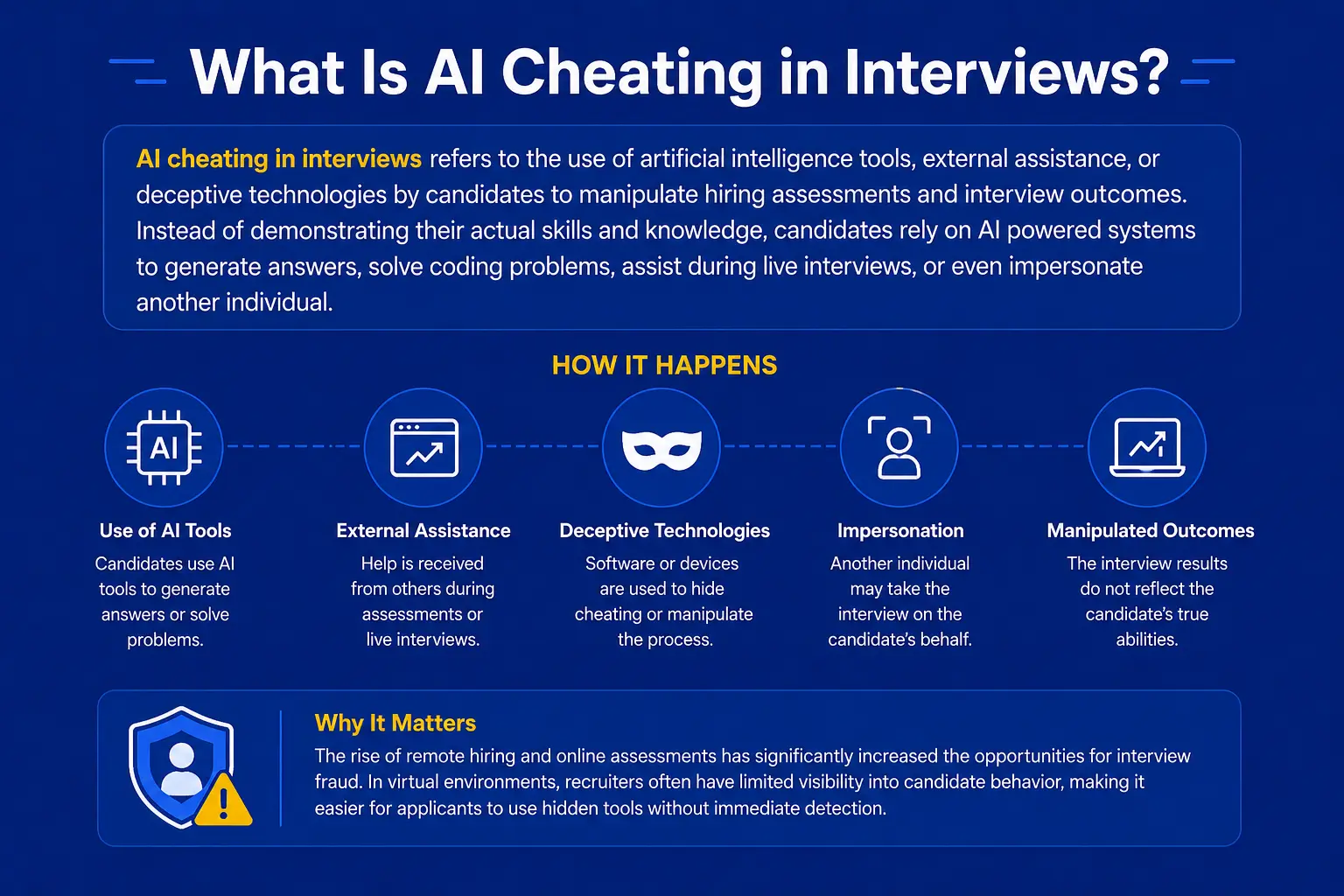
AI cheating in interviews has evolved rapidly over the past few years. Candidates now have access to advanced tools that can generate answers instantly, assist during coding assessments, and even help manipulate live video interviews. Many of these tools operate quietly in the background, making them difficult for recruiters to detect through traditional hiring methods.
Understanding the most common cheating techniques is the first step toward building a more secure and trustworthy hiring process.
1. Using AI Generated Answers During Live Interviews
One of the most common forms of interview cheating involves candidates using AI tools like ChatGPT or real time answer generators during virtual interviews.
Candidates often keep hidden browser tabs, secondary devices, or AI overlays open while speaking with interviewers. They paste interview questions into AI tools and read generated responses back during the conversation.
This method is especially common in:
Behavioral interviews
Customer support hiring
Sales interviews
Non technical screening rounds
Written communication assessments
Because AI generated responses are often polished and professional, recruiters may initially believe the candidate has strong communication skills. However, these answers frequently lack personalization, depth, and authentic examples from real experience.
2. AI Assisted Coding Assessments
Technical hiring has become one of the biggest targets for AI cheating.
Candidates use AI coding assistants to solve programming questions during remote assessments. Some tools can generate complete code snippets, explain algorithms, optimize logic, and even debug errors in real time.
Common cheating methods include:
Using ChatGPT during coding tests
AI powered autocomplete tools
Browser extensions for coding assistance
Copying AI generated solutions
External coding support from another individual
This creates a major problem for recruiters because candidates may pass assessments without actually understanding the concepts behind the solutions.
3. Voice Based AI Assistance
Candidates use hidden earpieces or secondary devices connected to voice AI systems that listen to interview questions and generate spoken answers in real time. Some candidates also rely on another person sitting nearby to feed them responses during interviews.
These methods are difficult to identify during audio only or poorly monitored video interviews.
Warning signs often include:
Delayed responses
Repetitive phrasing
Unnatural pauses
Eye movement away from the screen
Answers that sound overly scripted
Voice enabled AI assistants are becoming increasingly popular in remote interviews.
4. AI Generated Resume and Assignment Content
Generative AI tools also allow candidates to create highly optimized resumes, assignments, and project explanations.
Candidates may:
Generate fake project descriptions
Create AI written case studies
Fabricate technical expertise
Enhance work experience descriptions
Produce polished written assignments instantly
While AI can support productivity, misuse during hiring creates misleading candidate profiles that do not reflect actual skill levels.
5. Bypassing Proctoring Systems
Some candidates attempt to bypass interview monitoring systems using technical workarounds.
These include:
Virtual machines
Screen sharing blockers
Hidden mobile devices
Multiple monitors
Browser isolation tools
Remote desktop software
Without advanced behavioral monitoring, many traditional proctoring systems fail to detect these activities effectively.
As AI tools become more sophisticated, organizations must move beyond basic webcam monitoring and adopt intelligent interview integrity systems capable of detecting suspicious behavior patterns, identity inconsistencies, and unauthorized AI usage in real time.
AI Cheating in Interviews: CNBC & Industry Stats
A startup founder interviewed by CNBC said that over 50% of candidates cheated during a remote coding interview process using AI tools and external assistance.
CNBC reported that Sundar Pichai said some fraction of interviews should happen in person to better validate candidate skills and authenticity(more than 25% of new code is written by AI)
Half of companies currently use AI in the hiring process, and 68% will by the end of 2025
CNBC reported that Interview Coder, a startup helping candidates cheat in coding interviews using AI, was on track to hit nearly $1 million in annual recurring revenue.
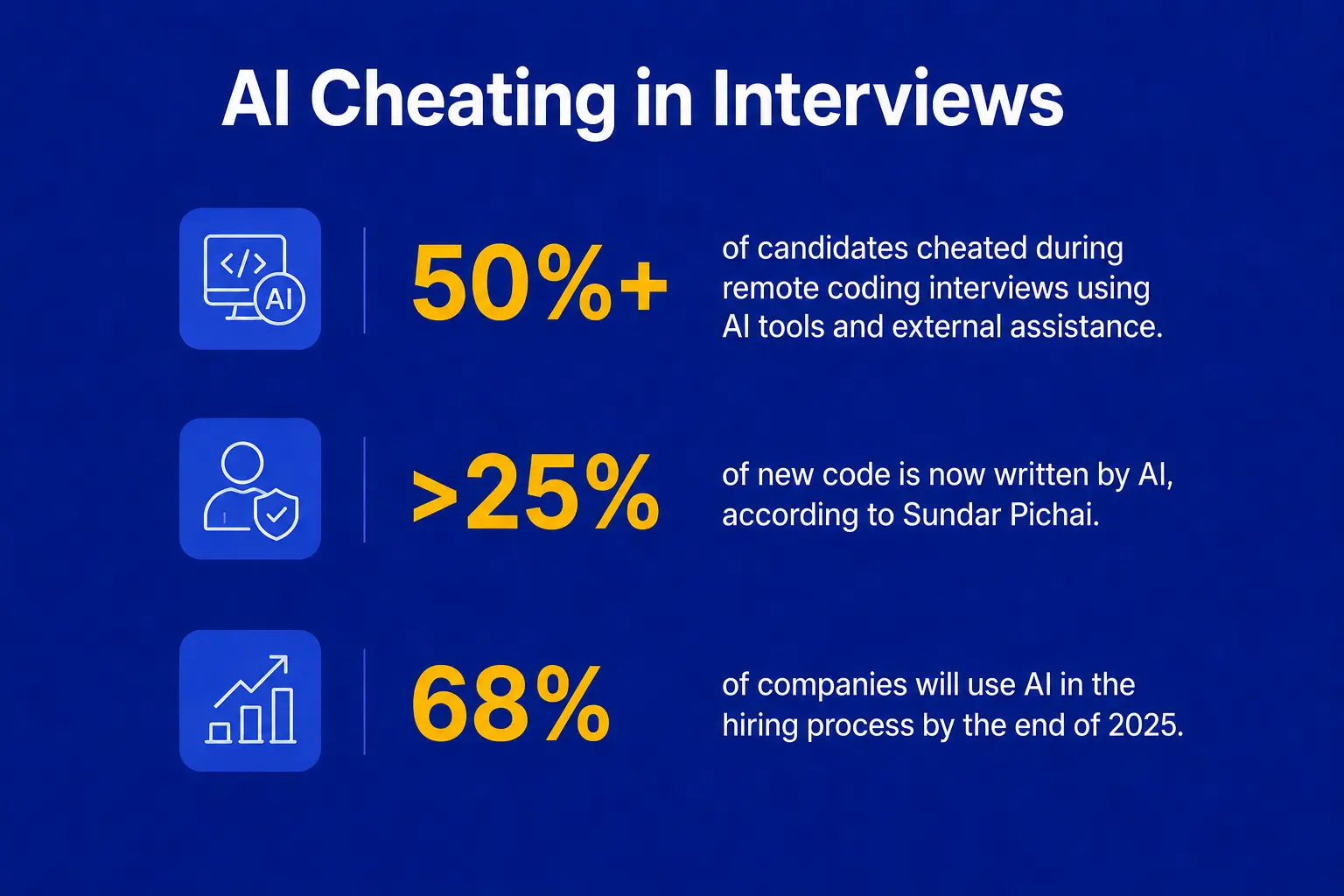
Source: CNBC
Top Strategies to Stop AI Cheating in Interviews
As AI powered interview fraud becomes more sophisticated, companies need stronger hiring safeguards that go beyond traditional proctoring and manual observation. Modern recruitment teams must combine intelligent technology, behavioral analysis, structured interviews, and identity verification to protect hiring integrity.
Below are some of the most effective strategies organizations can use to stop AI cheating in interviews.
1. Conduct Live Skill Validation
One of the best ways to verify genuine expertise is through live problem solving sessions.
Instead of relying only on multiple choice assessments or take home assignments, recruiters should include:
Live coding rounds
Scenario based problem solving
Real time case discussions
Whiteboard exercises
Follow up technical questioning
Candidates who rely heavily on AI tools often struggle to explain their thought process during live interactions.
Example:
A candidate submits a perfect coding assessment but struggles to explain the logic behind the solution during a live follow up interview. This inconsistency helps recruiters identify possible AI generated code usage.
2. Design AI Resistant Interview Questions
Predictable interview questions are easier for AI systems to answer. Companies should focus on personalized and context driven questioning that requires candidates to demonstrate authentic thinking.
Effective question strategies include:
Asking follow up questions based on previous answers
Requesting real project examples
Discussing role specific challenges
Presenting dynamic problem solving scenarios
Evaluating decision making processes
Behavioral and situational questions are generally harder for AI systems to handle convincingly in real time.
Example:
Instead of asking, “What are your strengths?” an interviewer asks, “Tell me about a difficult production issue you solved recently and explain the exact steps you took.” This requires real experience and detailed explanation that AI generated answers often lack.
3. Use Sherlock AI for AI Powered Interview Monitoring
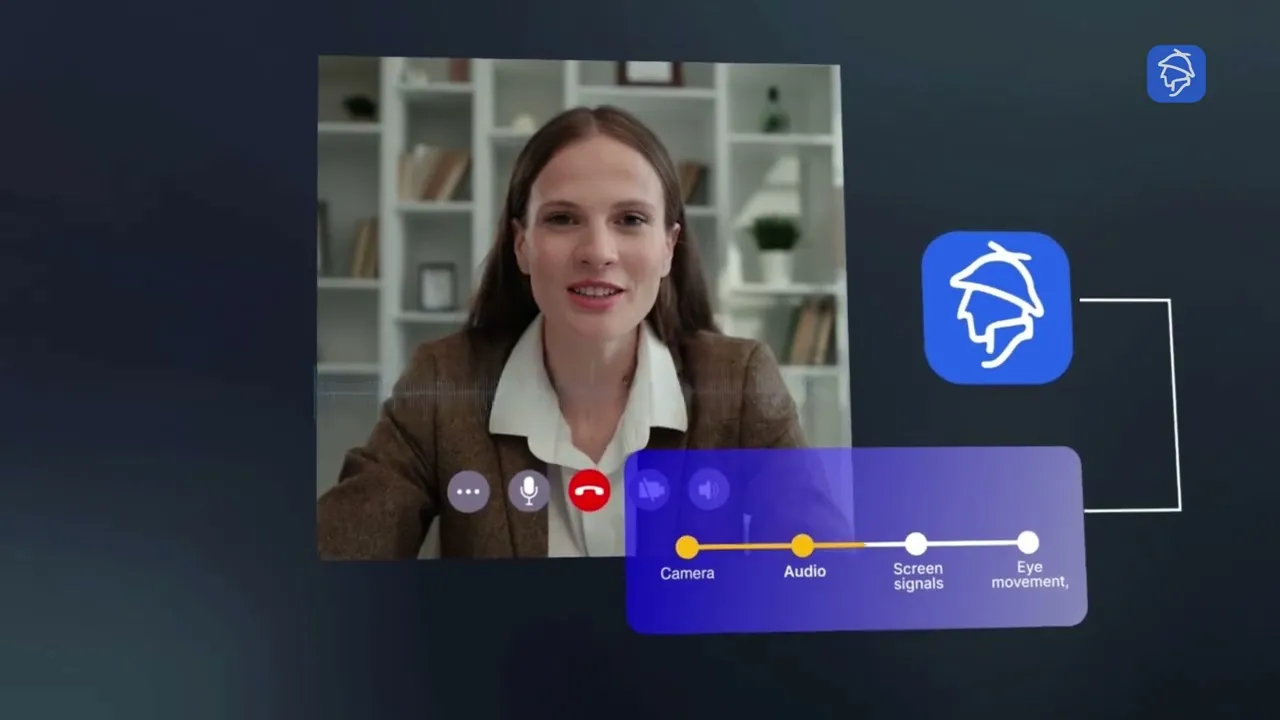
Traditional webcam monitoring alone is no longer enough to detect modern interview fraud. Organizations should implement AI driven monitoring systems that analyze candidate behavior throughout the interview process.
Advanced interview intelligence platforms can help detect:
Suspicious eye movement
Unusual response delays
Tab switching activity
Multiple face detection
Background voice interference
Lip sync inconsistencies
Screen anomalies
Behavioral irregularities
Example:
During a remote technical interview, a candidate repeatedly looks away from the screen before answering coding questions. The system detects unusual eye movement patterns and long response delays, indicating possible use of an external AI assistant.
4. Implement Multi Layer Identity Verification
Identity fraud and proxy interviews are becoming major risks in remote hiring. Organizations should introduce multiple verification checkpoints during recruitment.
This may include:
Government ID verification
Face matching technology
Live photo capture
Voice verification
Session consistency checks
Continuous identity monitoring
Multi layer verification helps ensure that the same individual participates throughout the hiring process.
Example:
A company compares the candidate’s government ID photo with their live interview video feed and notices facial inconsistencies between different interview rounds, helping uncover a potential proxy interview attempt.
5. Monitor Behavioral Patterns
Behavioral analysis can reveal inconsistencies that traditional proctoring tools often miss.
Recruiters should pay attention to:
Repetitive communication patterns
Sudden tone changes
Robotic response delivery
Delayed reactions
Overly polished answers
Inconsistent technical depth
AI assisted responses often lack natural conversation flow and personalized detail.
Example:
A candidate answers behavioral questions naturally but suddenly gives highly formal and robotic responses during technical discussions. This sudden communication shift may indicate AI generated assistance.
6. Use Adaptive Assessments
Static assessments make it easier for candidates to prepare AI generated answers in advance.
Adaptive testing systems dynamically adjust questions based on candidate responses. This creates a less predictable interview environment and makes unauthorized assistance more difficult.
Adaptive assessments can also evaluate:
Critical thinking
Communication ability
Real time reasoning
Technical depth
Problem solving approach
Example:
If a candidate solves an intermediate coding question quickly, the system automatically presents a deeper follow up problem requiring explanation of optimization techniques in real time.
7. Combine AI Detection With Human Oversight
Technology alone cannot fully prevent interview fraud. Human judgment remains essential during hiring.
Recruiters and hiring managers should review flagged activities carefully rather than relying only on automated detection systems. Combining AI based monitoring with human evaluation creates a more balanced and accurate hiring process.
This approach helps reduce:
False positives
Biased decision making
Candidate frustration
Unfair disqualifications
Example:
An interview monitoring tool flags a candidate for repeated eye movement. A recruiter later reviews the interview and realizes the candidate was referring to handwritten notes allowed during the session, preventing an incorrect rejection.
8. Educate Candidates About Interview Policies
Clear communication can discourage cheating before interviews even begin.
Organizations should explain:
Acceptable AI usage policies
Interview integrity expectations
Monitoring procedures
Consequences of fraudulent behavior
Transparency helps create accountability and sets professional standards early in the hiring process.
Example:
Before the interview starts, candidates receive a clear policy explaining that the use of external AI tools, hidden devices, or proxy assistance during interviews is prohibited and may lead to immediate disqualification.
9. Continuously Update Hiring Security Measures
AI cheating methods evolve constantly. Companies must regularly review and improve their interview security strategies to stay ahead of emerging threats.
This includes:
Updating assessment formats
Testing new detection tools
Reviewing fraud patterns
Training recruiters
Improving monitoring systems
Continuous improvement is critical for maintaining long term hiring integrity.
Example:
A company notices candidates using browser based AI assistants during coding interviews. In response, they introduce live coding rounds with screen monitoring and behavioral analytics to strengthen assessment security.
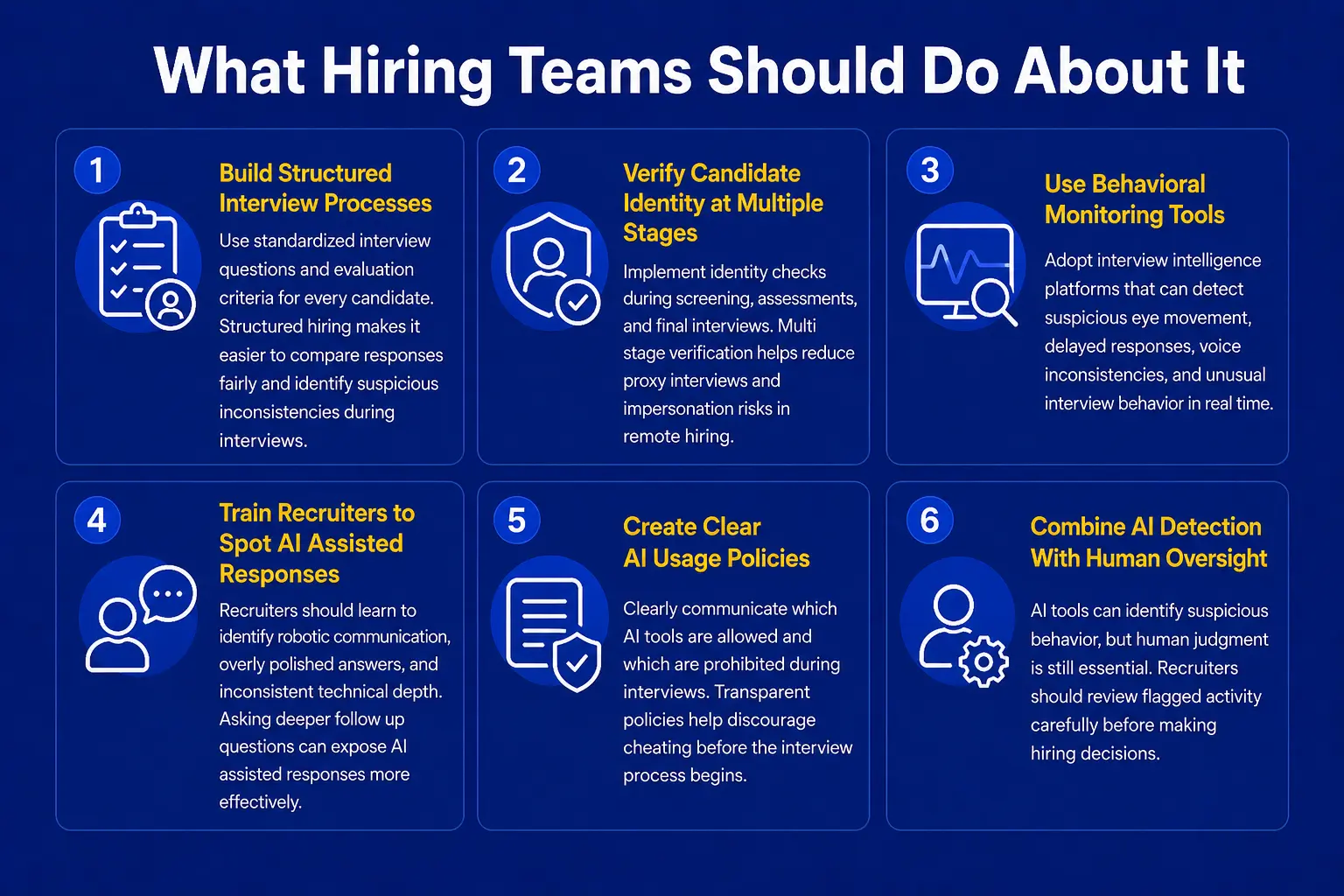
What Hiring Teams Should Do About It
As AI cheating in interviews continues to rise, hiring teams can no longer rely on traditional recruitment methods alone. Organizations must adapt their hiring strategies to ensure they are evaluating genuine candidate skills rather than AI assisted performance.
The goal is not to create a stressful interview experience but to build a hiring process that is secure, fair, and capable of identifying authentic talent.
Here are the most important steps hiring teams should take to reduce AI cheating risks during interviews.
How Sherlock AI Helps Prevent AI Cheating in Interviews
Modern hiring teams need more than basic proctoring software to stop interview fraud effectively. As AI powered cheating methods become more sophisticated, organizations require intelligent systems that can identify suspicious activity, verify candidate authenticity, and maintain interview integrity without disrupting the hiring experience.
Sherlock AI helps organizations strengthen remote hiring security through advanced behavioral monitoring, fraud detection, identity verification, and interview intelligence capabilities.
Here is how Sherlock AI helps companies prevent AI cheating in interviews.
1. Real Time Behavioral Monitoring
Sherlock AI continuously analyzes candidate behavior during interviews to detect suspicious activity patterns. The platform monitors eye movement, response timing, attention shifts, and unusual interaction behavior in real time. This helps recruiters identify candidates who may be using hidden AI tools or external assistance during interviews. Real time monitoring improves interview integrity without interrupting the candidate experience.
2. Deepfake and Voice Manipulation Detection
Sherlock AI helps organizations detect AI generated voices, voice changers, and deepfake related manipulation during virtual interviews. The platform analyzes lip sync consistency, facial movement patterns, and voice authenticity signals to identify suspicious activity. These capabilities help recruiters uncover advanced interview fraud techniques that are difficult to detect manually. This adds an extra layer of security to remote hiring processes.
3. Automated Fraud Alerts
The platform generates automated alerts whenever suspicious interview activity is detected. Recruiters can receive notifications for issues such as multiple face detection, unusual response behavior, voice inconsistencies, or suspicious interview interactions. These alerts help hiring teams review high risk interviews more efficiently. Automated detection reduces the manual effort required to monitor large scale remote hiring operations.
4. Identity Verification Support
Sherlock AI strengthens remote hiring security through identity verification and session consistency monitoring. The platform helps ensure that the same individual participates throughout all interview and assessment stages. Features such as face consistency checks and identity validation workflows reduce the risk of proxy interviews and impersonation attempts. This improves trust and accountability in remote recruitment.
5. AI Driven Interview Intelligence
Beyond fraud prevention, Sherlock AI provides interview intelligence insights that help recruiters evaluate candidate authenticity and engagement levels. The platform analyzes communication quality, behavioral consistency, and interaction patterns during interviews. These insights support more informed hiring decisions while helping identify scripted or AI assisted responses. Recruiters gain a clearer understanding of candidate performance beyond technical answers alone.
6. Scalable Protection for Remote Hiring
Sherlock AI helps organizations secure high volume remote hiring processes without slowing down recruitment operations. The platform automates interview monitoring and fraud detection across multiple candidates simultaneously. This reduces manual review workload while maintaining strong hiring security standards. Organizations can scale recruitment confidently while protecting interview integrity.
Conclusion
AI cheating in interviews is rapidly becoming one of the biggest challenges in modern remote hiring. From AI generated answers and coding assistance to proxy interviews and deepfake technology, candidates now have access to tools that can manipulate hiring processes in ways that traditional recruitment methods often fail to detect.
As remote and hybrid hiring continue to grow, organizations must move beyond basic interview monitoring and adopt smarter hiring integrity strategies. Combining live skill validation, behavioral analysis, adaptive assessments, identity verification, and AI driven fraud detection can help recruiters identify genuine talent more accurately.
At the same time, companies must balance security with candidate experience. The goal is not to create fear during interviews but to build a fair, transparent, and trustworthy hiring process that rewards authentic skills and real expertise.
Platforms like Sherlock AI help organizations strengthen interview integrity through real time behavioral monitoring, deepfake detection, automated fraud alerts, and interview intelligence capabilities. By using advanced AI driven hiring protection, companies can reduce recruitment fraud, improve hiring confidence, and build stronger remote teams.
As AI technology continues to evolve, hiring teams that proactively strengthen their interview security processes will be better positioned to protect recruitment quality, reduce bad hires, and maintain long term workforce trust.