Back to all blogs
Explore the top Proctortrack alternatives in 2026. Compare AI proctoring, browser security, authentication, and why modern teams choose Sherlock AI.

Abhishek Kaushik
Mar 3, 2026

Remote assessments are now a standard part of hiring and certification. Proctortrack helped organizations move exams online, but the threat landscape has changed dramatically.
Candidates today can access real time AI help, second devices, remote desktops, and hidden collaborators that traditional webcam based monitoring cannot detect.
Because of this, recruiters and universities are actively searching for Proctortrack alternatives that provide stronger visibility, smarter AI, and easier workflows.
This guide covers the best Proctortrack competitors in 2026 and explains which platforms are best for modern integrity challenges.
Top 15 Proctortrack Alternatives and Competitors in 2026
While Proctortrack helped teams move exams online, today’s candidates can access real-time AI help and off-screen assistance that legacy monitoring often misses. As a result, recruiters are exploring more advanced alternatives built for the realities of 2026.
1. Sherlock AI
Sherlock AI is purpose built for modern remote hiring where candidates may receive help from generative AI, messaging apps, or people sitting outside the camera frame. Instead of only recording video, the platform analyzes behavioral signals, environmental context, and assistance patterns to determine authenticity.
Recruiters get actionable intelligence rather than raw footage. The system reduces manual review time, improves fairness, and helps teams confidently shortlist candidates based on genuine ability.
Sherlock AI is particularly valuable in technical interviews, remote campus drives, and distributed hiring where unseen help is the biggest risk.

Features
AI-Powered Webcam Monitoring: Uses smart video analytics to keep an eye on candidates’ faces, gaze movement, and surroundings throughout the session.
AI-Driven Proctoring (Sherlock): Provides real-time and asynchronous monitoring with advanced behavioral modeling trained to detect external support patterns.
Secure Browser Awareness: Identifies risky interaction behavior and signals potential off platform assistance without interrupting candidate flow.
Real-Time Plagiarism Detection: Evaluates code, responses, or spoken answers to identify similarities with AI generated or pre prepared material.
Multi-Factor Candidate Authentication: Verifies identity using facial matching, session validation, and continuous presence tracking.
Live Proctoring Add-On: Enables organizations to layer human oversight on top of Sherlock’s AI intelligence for sensitive evaluations.
Instant Integrity Alerts: Flags anomalies like unnatural pauses, attention shifts, or collaboration indicators the moment they occur.
Multi-Device & Environment Intelligence: Detects signals that suggest parallel device usage or third party involvement.
Detailed Audit Trails: Produces time stamped behavioral logs, risk markers, and replay snapshots for quick decisions.
Enterprise-Grade Scalability: Handles everything from small hiring panels to global recruitment programs with consistent detection quality.
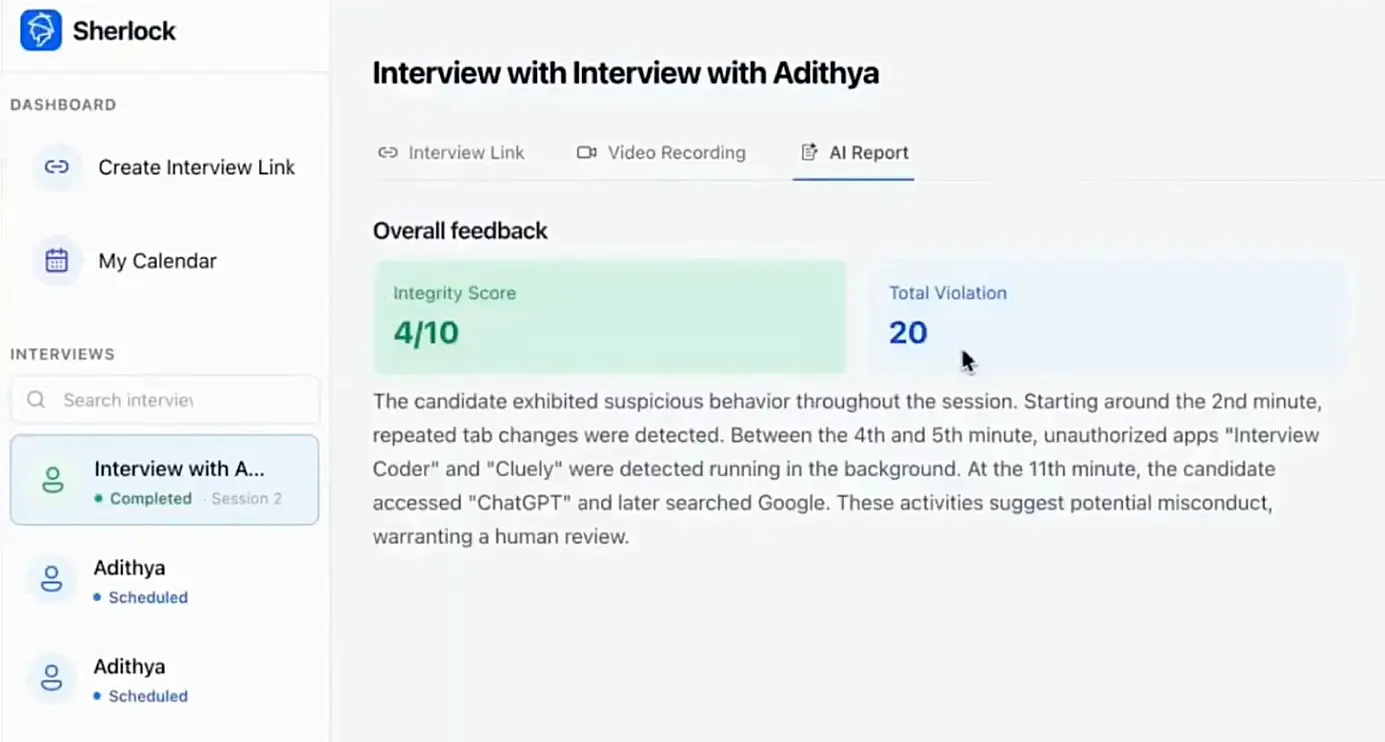
Recruiters do not have time to watch hours of recordings or interpret vague red flags. Sherlock AI converts complex behavioral data into simple, actionable insights that teams can trust. By focusing on assistance detection rather than basic monitoring, it protects interview integrity while keeping the process smooth and fair for genuine candidates.
Explore: Sherlock AI (Anti-Interview-Fraud) Security Overview
2. WeCP (We Create Problems)
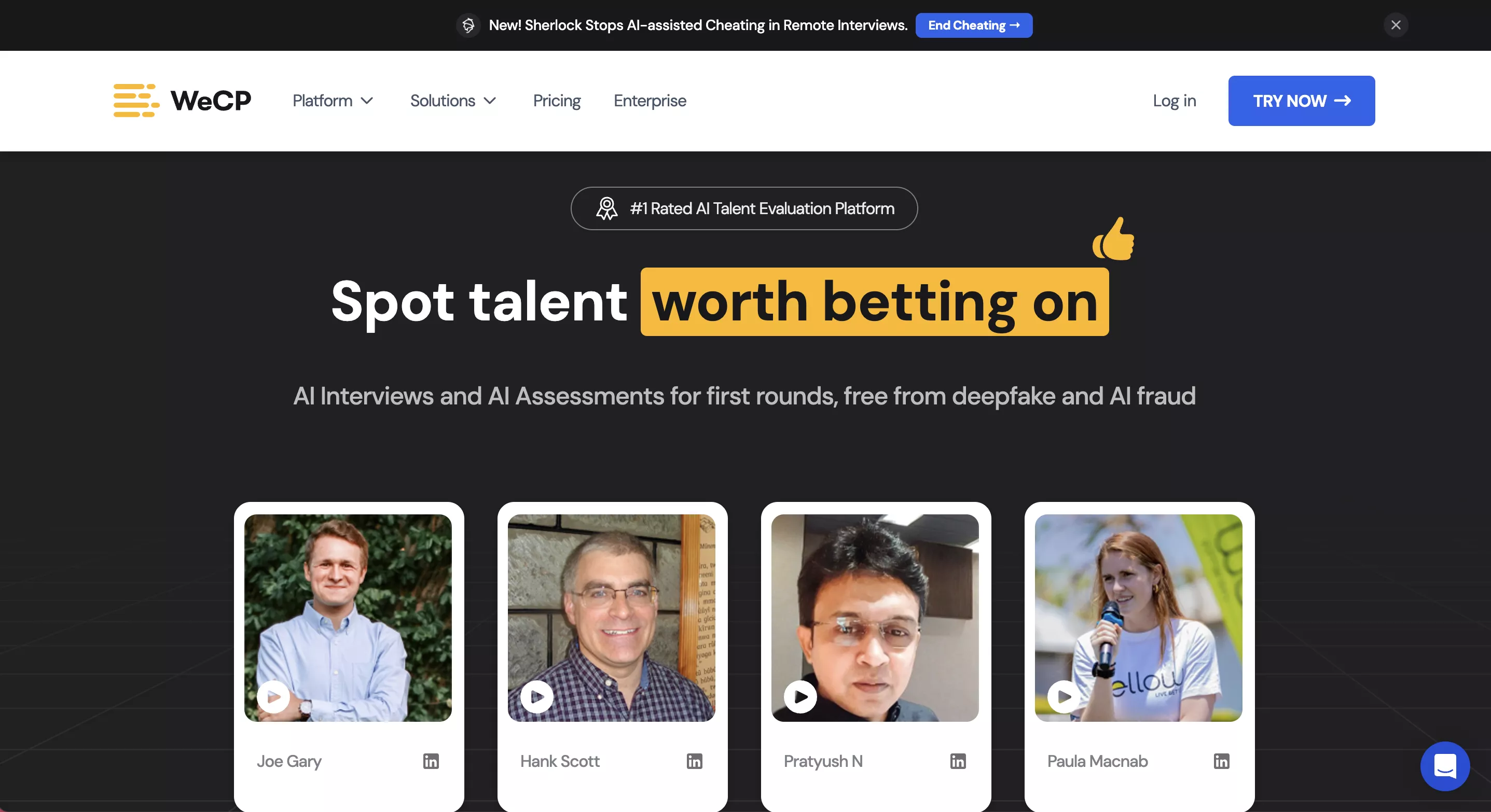
WeCP combines assessment delivery with remote monitoring for structured hiring programs. It is frequently used in campus recruitment and technical screening initiatives. The platform provides built in tools for evaluating real world skills. Organizations often adopt it when they want testing and proctoring in one system.
Features
AI-Based Proctoring: Monitors candidate activity through webcam, audio, and screen capture during assessments.
Integrated Coding Environment: Provides built in IDEs to evaluate real technical problem solving ability.
Candidate Authentication: Verifies identity before test access to reduce impersonation risks.
Recruitment Integrations: Syncs results with ATS and hiring workflows for easier evaluation.
3. Honorlock
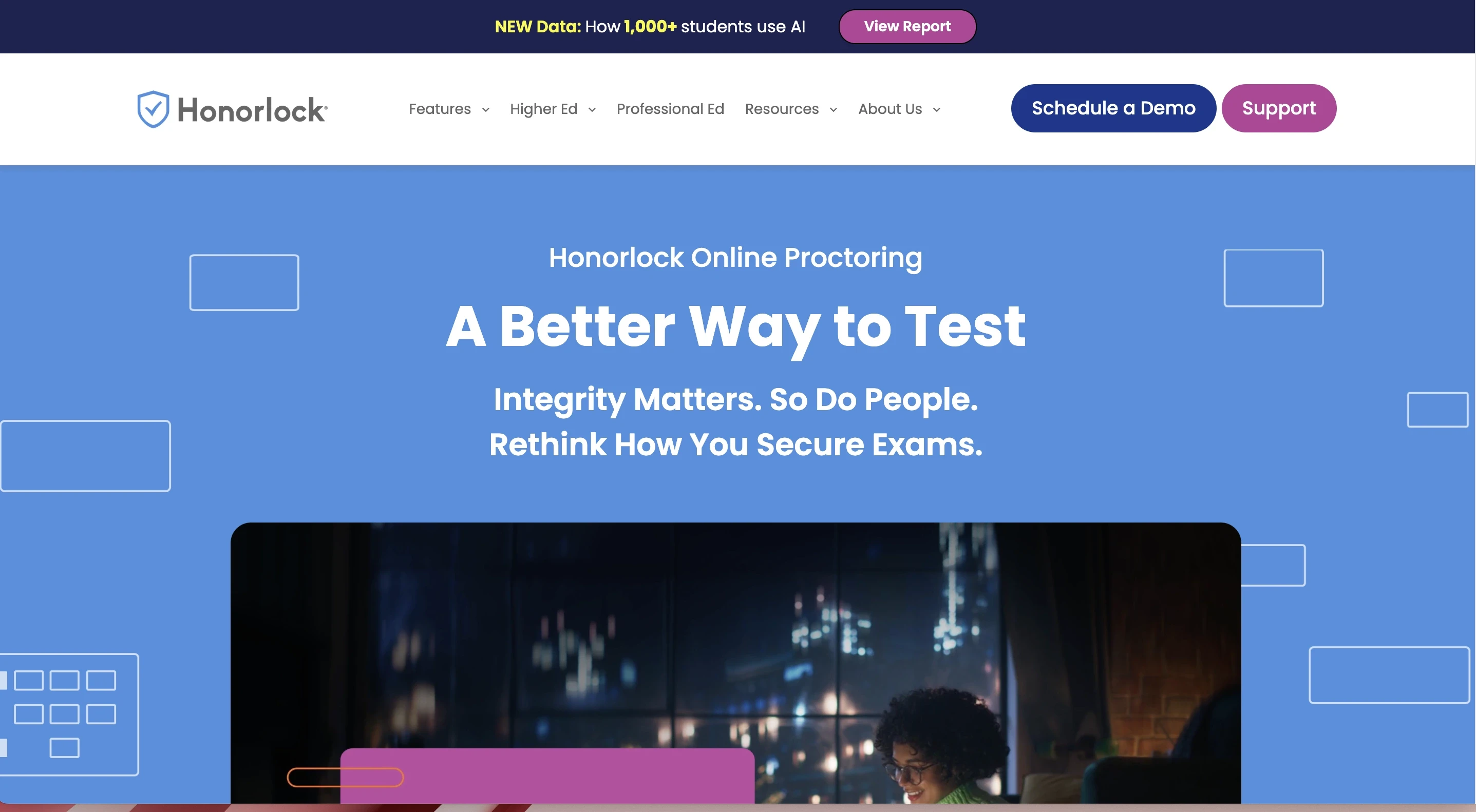
Honorlock is widely adopted across universities for large scale online exams. It blends automated detection with human proctor involvement. Institutions value its ability to work within existing LMS environments. The platform is designed around academic integrity requirements.
Features
AI + Live Proctoring: Combines automated detection with human intervention when risk is identified.
Identity Verification: Authenticates students at the start of each exam session.
Browser Monitoring: Tracks web usage to discourage unauthorized resource access.
LMS Integration: Embeds directly into platforms like Canvas and Blackboard.
4. ProctorU (Meazure Learning)
ProctorU is an established provider with strong adoption in high stakes testing. It supports universities, certification bodies, and professional programs. Human invigilators are a key component of its offering. The service model appeals to compliance heavy environments.
Features
Live and Automated Supervision: Offers real time proctors or AI monitoring depending on exam sensitivity.
Multi Step Authentication: Uses ID validation and facial checks to confirm participants.
Session Recording: Captures full audio, video, and screen activity for audit purposes.
Platform Compatibility: Integrates with learning and credentialing systems.
5. Talview
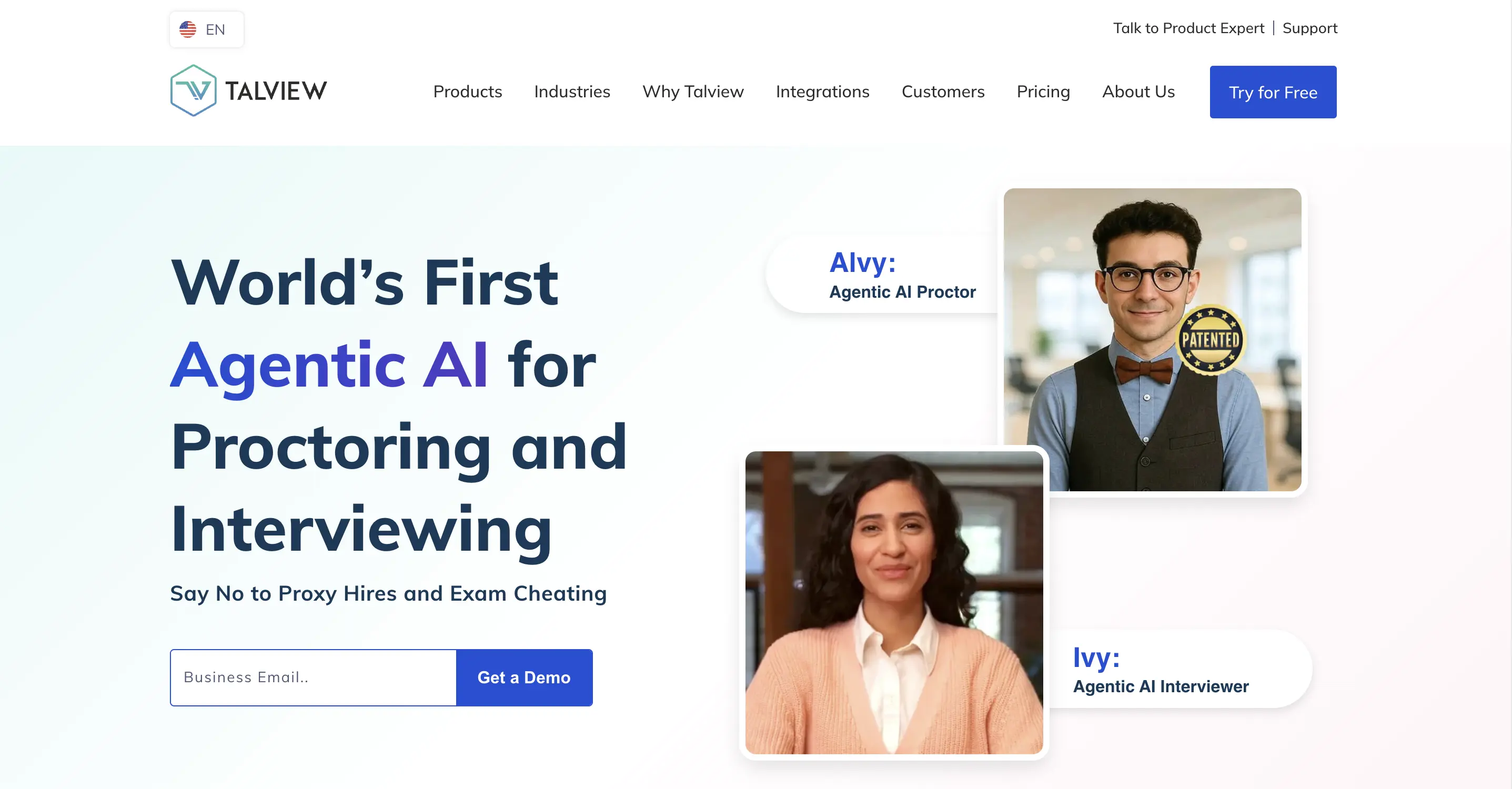
Talview combines interview technology with remote proctoring capabilities. Many enterprises like managing multiple evaluation stages in one place. AI is used to generate behavioral insights. The platform supports distributed hiring across regions.
Features
AI Remote Proctoring: Analyzes behavior patterns during interviews and assessments.
Video Interviewing: Supports live and on demand candidate responses.
Candidate Verification: Confirms identity before participation.
ATS Connectivity: Shares evaluation data with recruiting platforms.
6. Examity
Examity is focused on academic and certification use cases. It provides structured governance for remote exams. Institutions can choose supervision intensity based on risk. The system emphasizes repeatability and support.
Features
Flexible Proctoring Options: Provides live, automated, or hybrid supervision models.
Pre Exam Authentication: Confirms identity at login.
Exam Session Capture: Maintains recordings for validation and review.
LMS Alignment: Works within university technology environments.
7. Proctorio
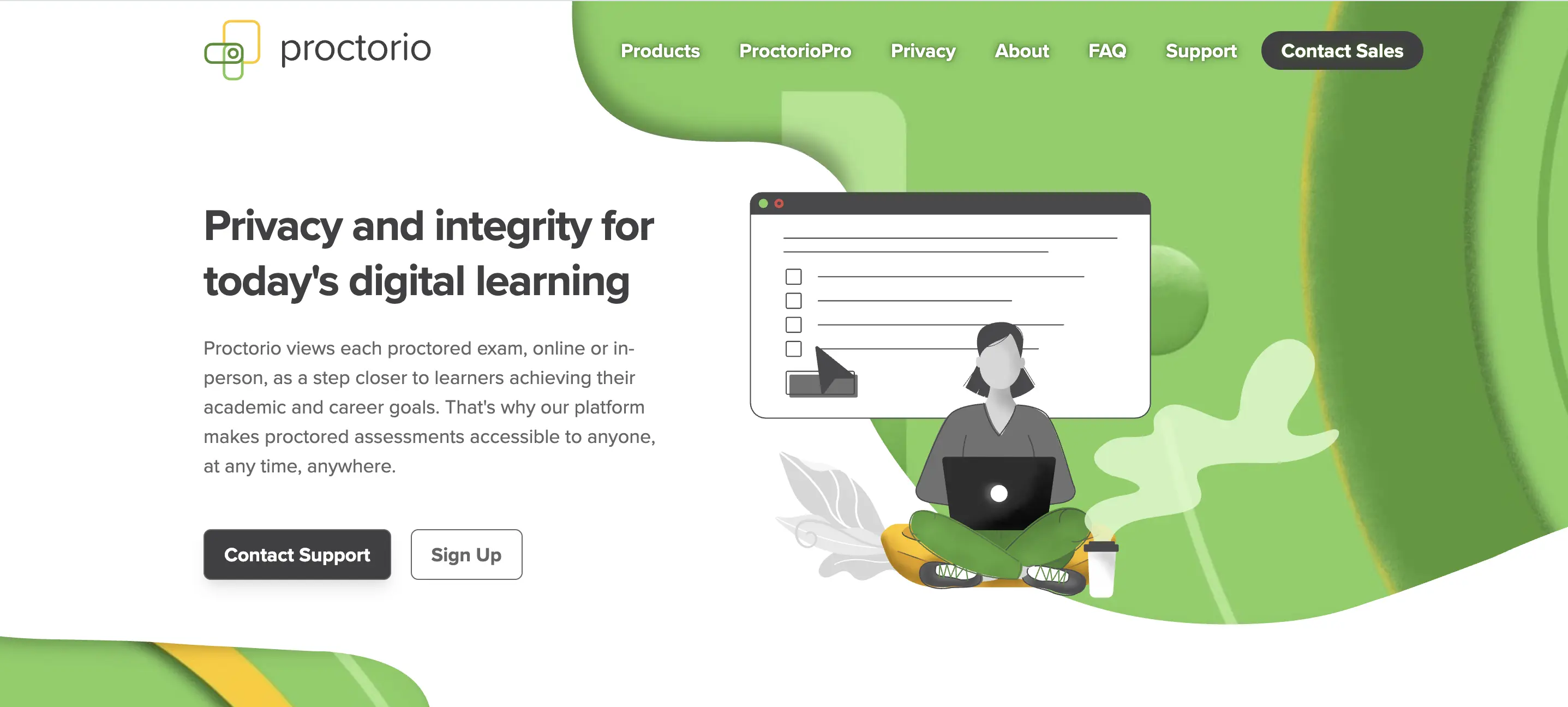
Proctorio takes a software first, automated approach to supervision. It is often selected for its scalability and quick rollout. Browser security is central to its design. Institutions deploy it across distributed cohorts.
Features
Automated AI Monitoring: Supervises candidates without requiring live invigilators.
Browser Lockdown: Prevents switching tabs or accessing other applications.
Identity Confirmation: Validates authorized test takers.
LMS Embedding: Operates inside existing learning systems.
8. Respondus Monitor
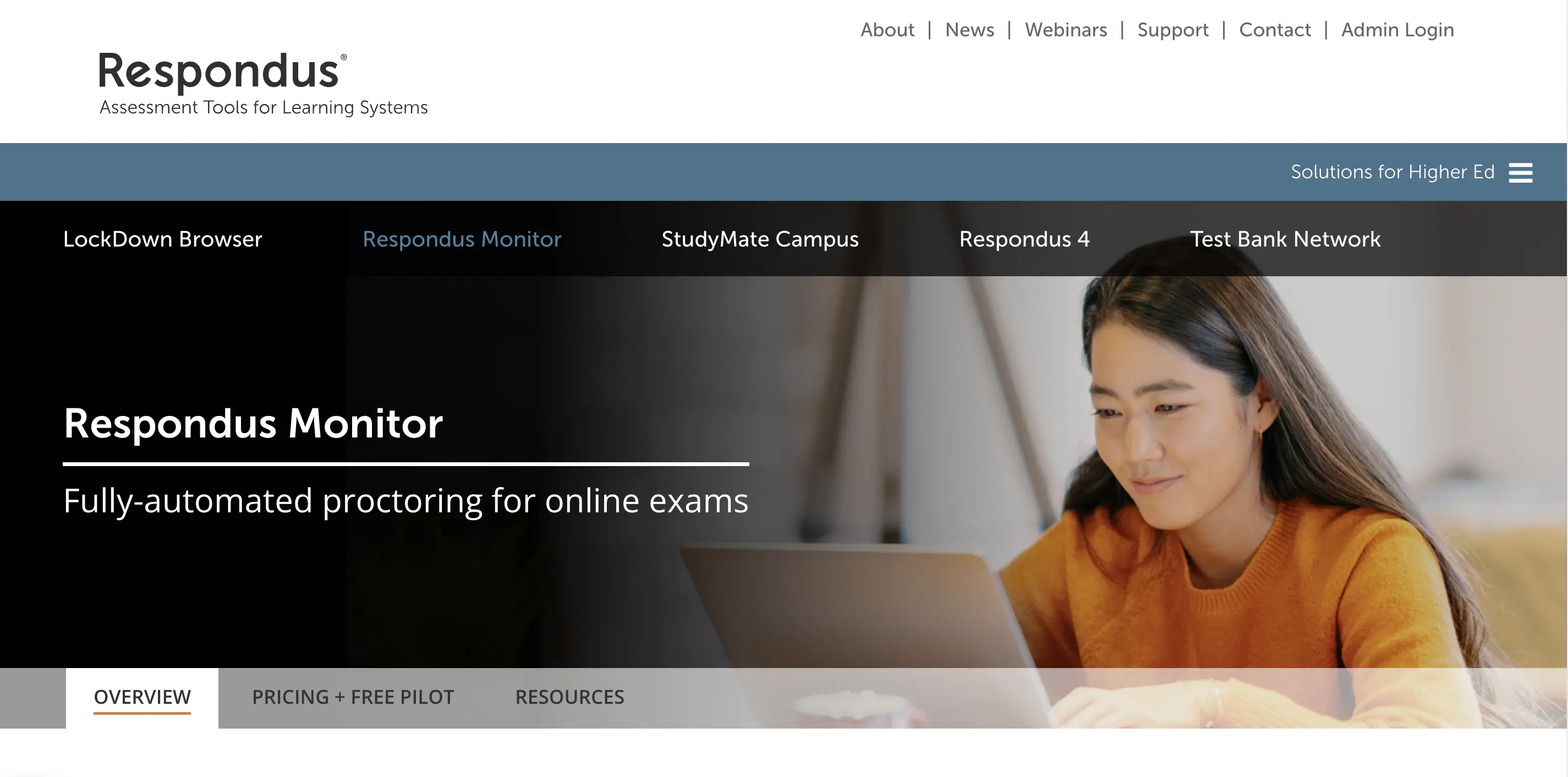
Respondus Monitor is typically used with the LockDown Browser. Many schools adopt it because it fits existing workflows. It captures video and audio evidence. Review processes are straightforward for faculty.
Features
AI Powered Proctoring: Tracks and flags abnormal behaviors automatically.
Assessment Ecosystem: Includes aptitude, technical, and domain testing.
Candidate Authentication: Verifies identity prior to exam start.
Enterprise Integrations: Connects with ATS and HR systems.
9. Mercer | Mettl
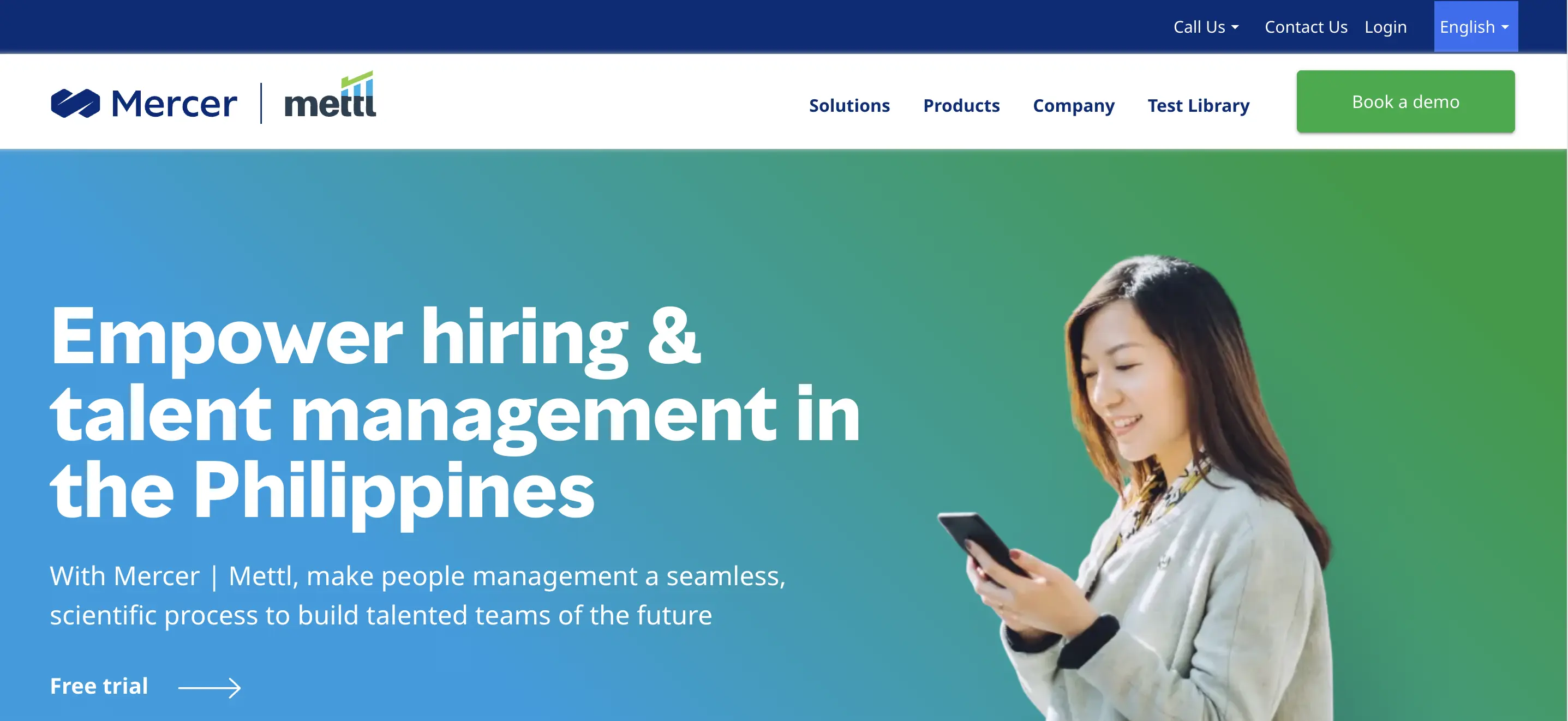
Mettl serves enterprises, universities, and competitive exam authorities. It combines assessment content with monitoring and analytics. Large organizations value the integrated ecosystem. It supports global scale programs.
Features
AI Powered Proctoring: Tracks and flags abnormal behaviors automatically.
Assessment Ecosystem: Includes aptitude, technical, and domain testing.
Candidate Authentication: Verifies identity prior to exam start.
Enterprise Integrations: Connects with ATS and HR systems.
10. PSI Bridge / RPNow
PSI Bridge is commonly used in licensing and credentialing exams. The platform focuses on defensible testing standards. Reliability and documentation are major priorities. It is trusted across regulated industries.
Features
Secure Remote Proctoring: Uses monitoring workflows suited for regulated testing.
Identity Validation: Confirms examinees before entry.
Full Session Recording: Maintains defensible audit evidence.
Provider Integrations: Works with certification platforms.
11. Constructor Proctor
Constructor Proctor is engineered for high concurrency environments. Automation ensures consistent monitoring. National and global programs frequently rely on it. It is optimized for scale.
Features
Scalable AI Monitoring: Supports very large numbers of concurrent candidates.
Secure Test Controls: Helps maintain exam discipline.
Identity Verification: Confirms participant legitimacy.
System Integrations: Connects with assessment infrastructure.
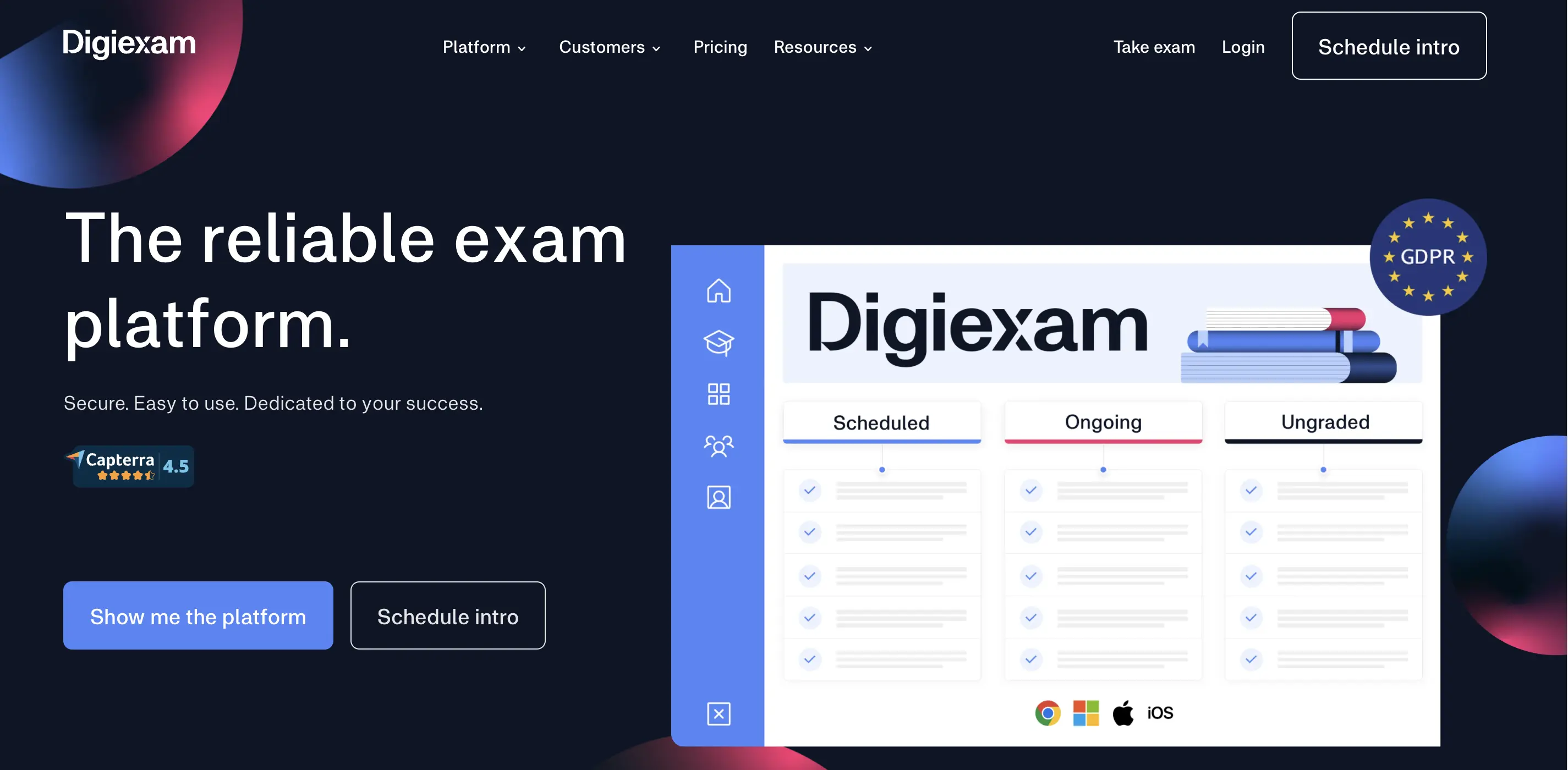
12. Digiexam
Digiexam emphasizes ease of use while maintaining security. Schools appreciate the straightforward adoption. It supports both online and controlled environments. The design favors simplicity.
Features
Digital Exam Monitoring: Uses AI and recording to supervise sessions.
Protected Testing Environment: Controls candidate interaction during exams.
User Authentication: Validates learners.
Education Integrations: Fits into school systems.
13. YouTestMe GetCertified
YouTestMe integrates training, testing, and certification. Organizations manage the full lifecycle in one platform. It supports remote monitoring as part of that ecosystem. Many professional programs adopt it.
Features
Automated Proctoring: Observes sessions and flags irregular behavior.
Certification Framework: Manages credentials and testing together.
Identity Checks: Confirms approved participants.
LMS Connectivity: Links learning and assessment data.
14. Synap
Synap is aimed at professional education and business assessments. It provides modern exam delivery online. The system is designed for flexibility. Institutions can scale easily.
Features
Remote Exam Monitoring: Enables supervision across distributed candidates.
Secure Delivery Controls: Protects integrity during tests.
Authentication Measures: Verifies user access.
Integration Ready: Works with external platforms.
15. Exam.net
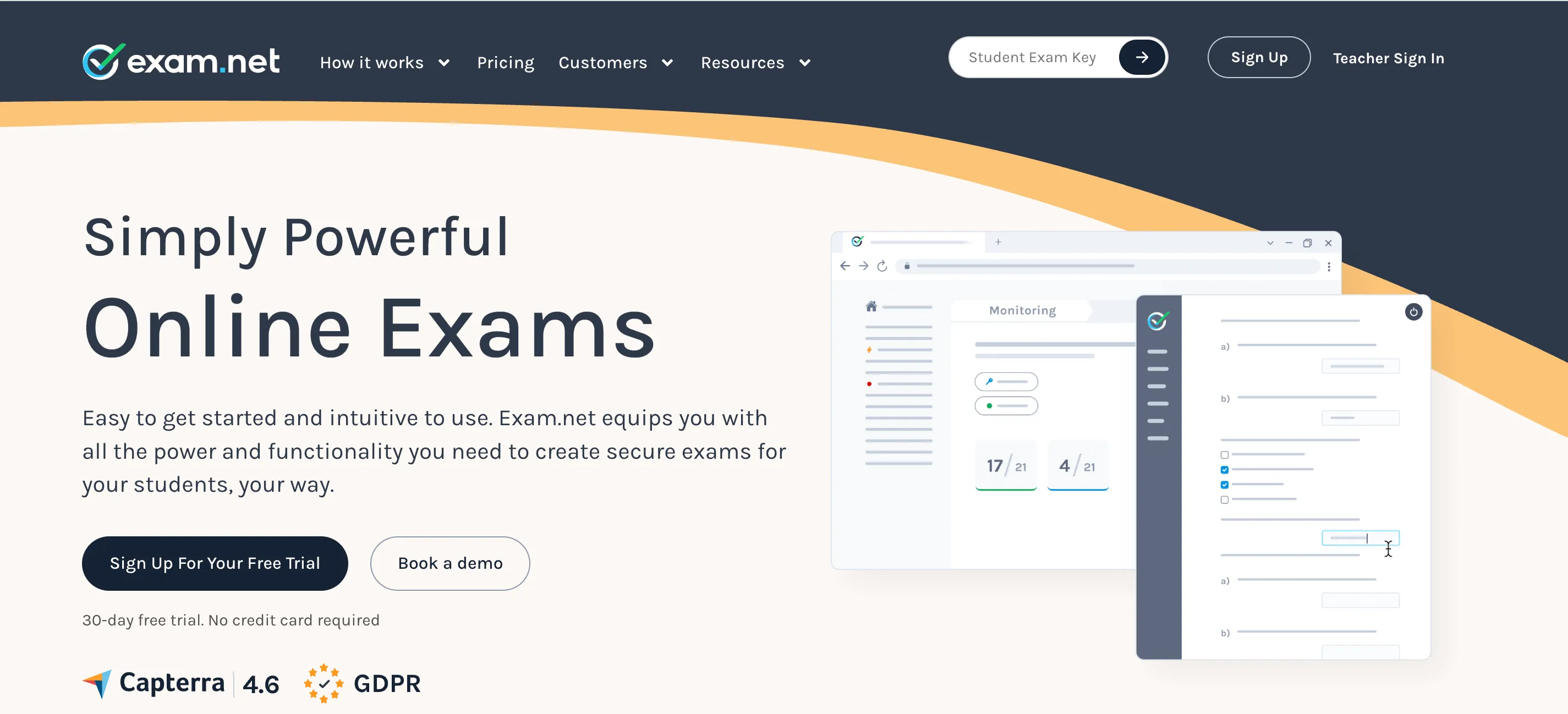
Exam.net focuses on accessibility and quick deployment. Teachers can run secure assessments without heavy infrastructure. It is popular in school settings. Ease of use is a major strength.
Features
Simple Proctoring Tools: Records exam activity for oversight.
Secure Interface: Minimizes opportunities for disruption.
Student Verification: Confirms participants.
Classroom Integrations: Works within school workflows.
Conclusion
Remote assessment security is no longer just about watching a webcam or recording a screen. The rise of generative AI, hidden communication channels, and off camera collaboration means organizations must evaluate authenticity, not just activity.
While Proctortrack laid the groundwork for moving exams online, many of today’s integrity risks require smarter detection models, richer behavioral context, and faster decision support for recruiters and institutions.
Platforms across this list address different needs, from academic compliance to enterprise certification. For hiring teams in particular, solutions like Sherlock AI stand out by focusing on assistance detection, behavioral intelligence, and clear risk signals instead of leaving recruiters to interpret hours of footage.
Teams that adapt their proctoring strategy to these new realities will make more confident decisions, protect fairness, and ensure that results truly reflect candidate ability.