Back to all blogs
See how modern interview intelligence systems outperform human proctors with better insight, automation, and consistent monitoring throughout the hiring process.

Abhishek Kaushik
Jan 8, 2026
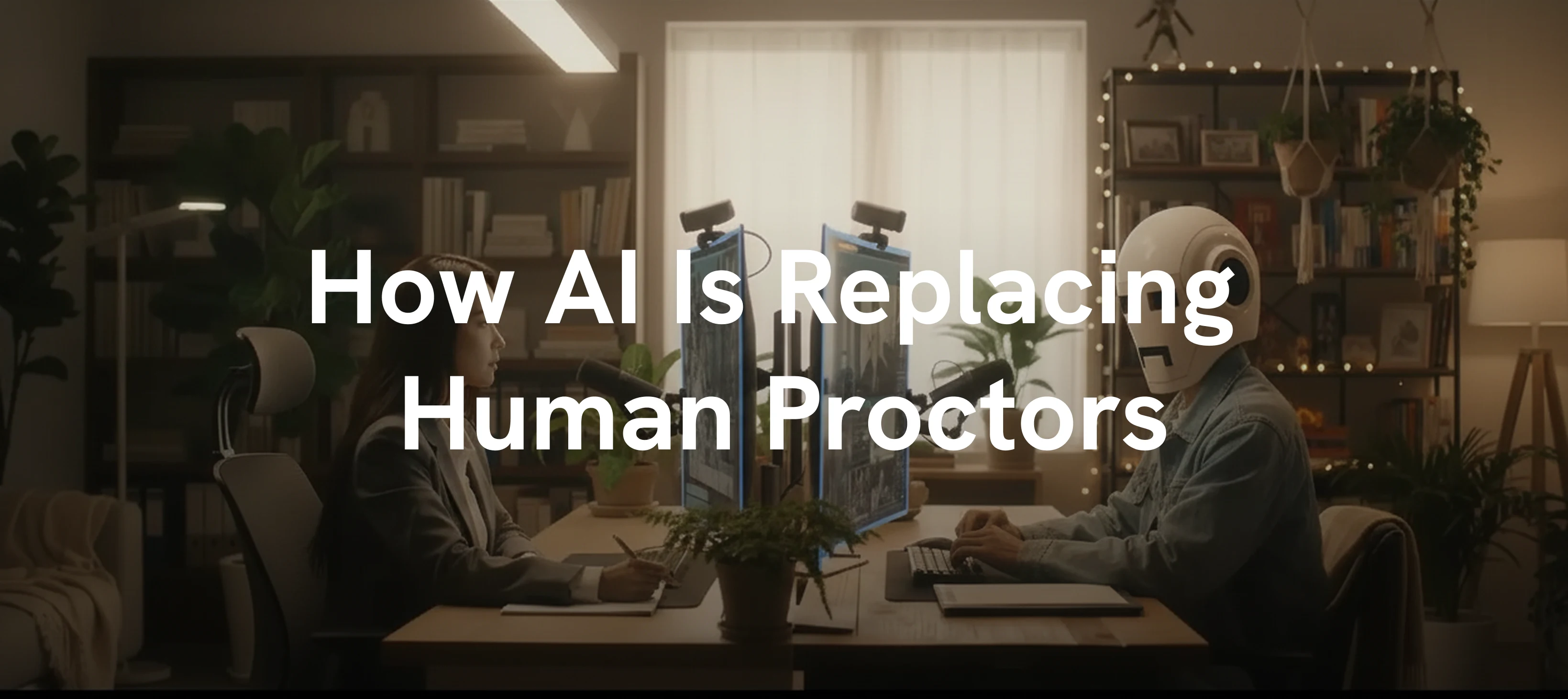
Remote hiring once depended on human proctors watching candidates take tests or join live interviews.
The logic was simple: if someone is watching, it’s harder to cheat.
But as interviews moved online and candidates gained access to powerful AI tools, that model began to fall apart.
Human proctors can only observe what’s happening on the screen. They can’t verify identity through behavior, track continuity of thought, or detect subtle AI assistance in real time.
That’s where interview intelligence platforms come in. Rather than policing for rule violations, they focus on understanding how candidates think, respond, adapt, and reason.
The shift is no longer about surveillance, it’s about preserving the authenticity of the signal.
Why Human Proctoring Started Failing
Human proctors face structural limitations:
They can only monitor one screen view
They cannot detect synchronized cues (such as whispered coaching or hidden screens)
They cannot identify whether a candidate’s explanation reflects real understanding or rehearsed pattern recall
According to a survey, 51% of managers agreed that AI has made it harder to trust what they see and hear in virtual interviews
What Interview Intelligence Platforms Do Differently
Interview intelligence platforms do not monitor posture or presence. They evaluate:
Identity continuity across multiple interview sessions
Reasoning changes when constraints shift
Response fluency when the scenario becomes less scripted
Whether an answer shows construction or retrieval
Instead of asking is someone cheating they answer is this thinking genuine.
This is a fundamentally different lens.
The Shift: From Surveillance to Signal Integrity
Human proctoring assumes candidates are trying to cheat and must be watched.
Interview intelligence assumes candidates have skills worth surfacing and wants to validate ownership of thinking.
This increases fairness because:
Candidates who think out loud are rewarded
Candidates who rely on memorized scripts lose clarity when asked to adapt
Interviewers need fewer subjective judgments
This moves the hiring conversation closer to real work.
Where Sherlock Fits in the Transition
Sherlock AI is one of the first platforms to combine:
Function | Purpose |
|---|---|
Identity and authorship verification | Ensures the person answering is the person hired |
Reasoning and fluency observation | Distinguishes real understanding from coached responses |
Automated, structured notes | Creates evidence-based documentation for debriefs and audits |
Sherlock does not require interviewers to change their style.
It simply captures how candidates think, interact and explain.
This gives hiring teams confidence without resorting to aggressive surveillance tactics.
What This Means for Recruiters and Hiring Leaders
Interviewers can remain conversational instead of policing behavior
Candidates get a more respectful and natural experience
Hiring managers gain higher trust in decisions
Risk of mis-hire due to proxy or over-coaching declines
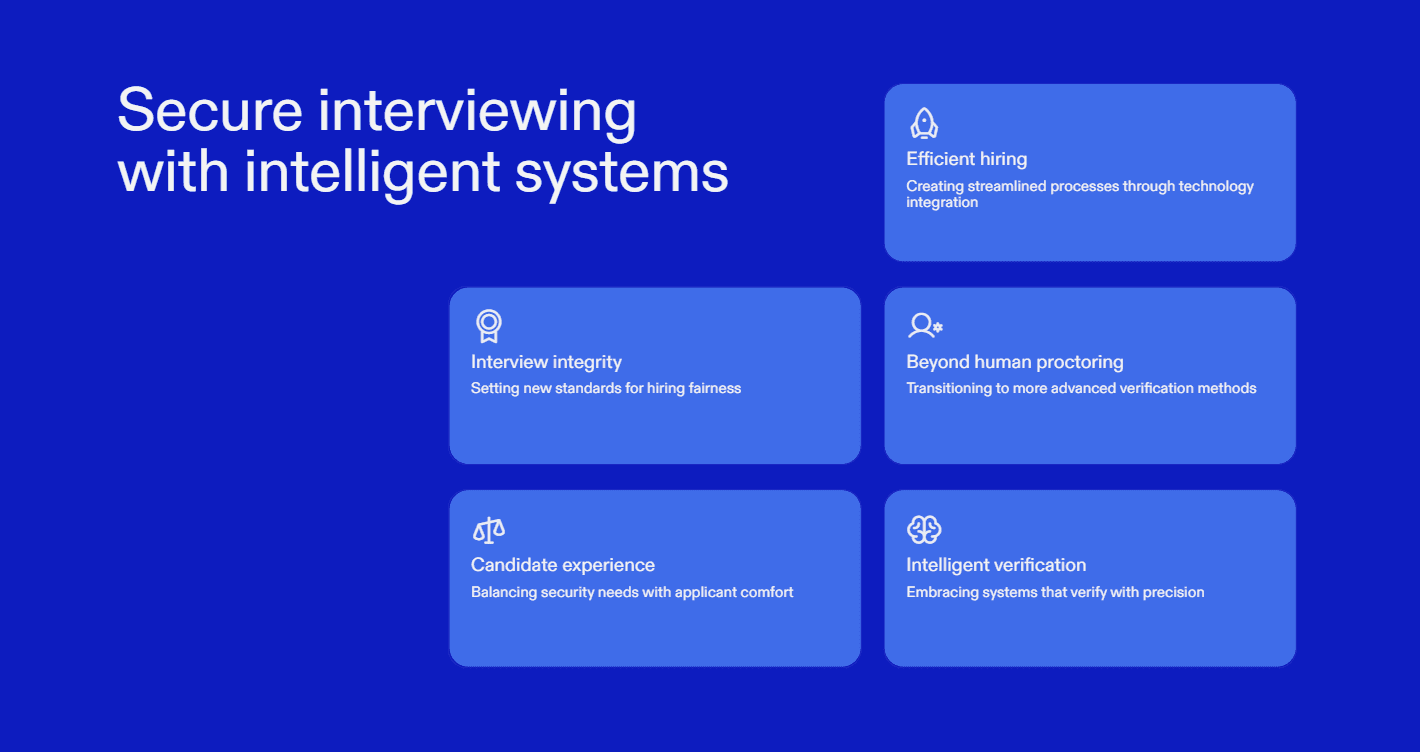
It is not about catching people. It is about protecting the integrity of the evaluation.
The Future of Interview Oversight Is Not Watching. It Is Understanding.
We are leaving the era of human proctors and entering the era of secure, intelligent interviewing.