Back to all blogs
Learn how AI-powered note-taking strengthens compliance and audit trails in hiring. Discover benefits, accuracy improvements, and how it reduces legal and documentation risks.

Abhishek Kaushik
Nov 24, 2025
TL;DR
AI-powered note-taking automates and streamlines interview documentation.
It provides an objective, consistent record for compliance, reducing human error.
Facilitates detailed audit trails, enhancing accountability and transparency.
Helps businesses meet legal requirements and retain critical HR audit data.
Automated records support compliance reviews and improve transparency in recruitment processes.
Platforms like Sherlock AI help recruiters maintain accurate interview documentation while strengthening hiring integrity.
Hiring interviews are a critical part of the recruitment process, but they often lack consistent documentation. Human recruiters, while skilled in judging candidates, are prone to missing key details or inadvertently introducing bias.
In this context, AI-powered note-taking tools are changing the game - offering accuracy, compliance, and improved auditability.
With AI note-taking, every step of the interview process is recorded in real-time, creating a comprehensive, objective, and easy-to-access documentation trail. But beyond simply tracking answers, these tools provide a valuable resource for compliance and auditing, ensuring that your hiring practices are both fair and transparent. As remote hiring and distributed interview panels become more common, AI driven documentation is becoming an essential part of modern recruitment workflows.
According to the SHRM’s 2025 report, 43 % of organisations used AI for HR tasks in 2025, up from 26 % in 2024, reflecting widespread adoption of AI to assist with compliance monitoring and audit-readiness during hiring.
Why Interview Documentation Is Critical in Modern Hiring
In modern hiring environments, interviews are not just conversations between recruiters and candidates. They are part of a structured decision making process that may later need to be reviewed during compliance checks, internal audits, or legal inquiries.
Proper interview documentation helps organizations maintain transparency and defend hiring decisions when necessary.
Below are the key reasons why interview documentation matters
1. Ensures transparent hiring decisions
When hiring decisions are documented clearly, organizations can demonstrate how each candidate was evaluated.
This includes:
The questions asked during the interview
Candidate responses and examples provided
Evaluation criteria used by the interview panel
Having this information recorded creates transparency and helps organizations maintain consistent hiring practices.
2. Supports legal and compliance requirements
Many organizations must comply with internal hiring policies and external employment regulations.
Proper interview documentation helps:
Demonstrate fair evaluation practices
Provide evidence during hiring audits
Support compliance with employment regulations
If hiring decisions are ever questioned, structured interview notes act as an official record of the evaluation process.
3. Improves collaboration among hiring teams
Hiring decisions often involve multiple stakeholders such as recruiters, hiring managers, and department leaders.
When interview documentation is available:
Hiring teams can review candidate responses together
Interview panels can compare evaluations across different rounds
Decisions become more data driven instead of opinion based
This improves the overall quality and fairness of hiring decisions.
How AI Note-Taking Improves Interview Documentation
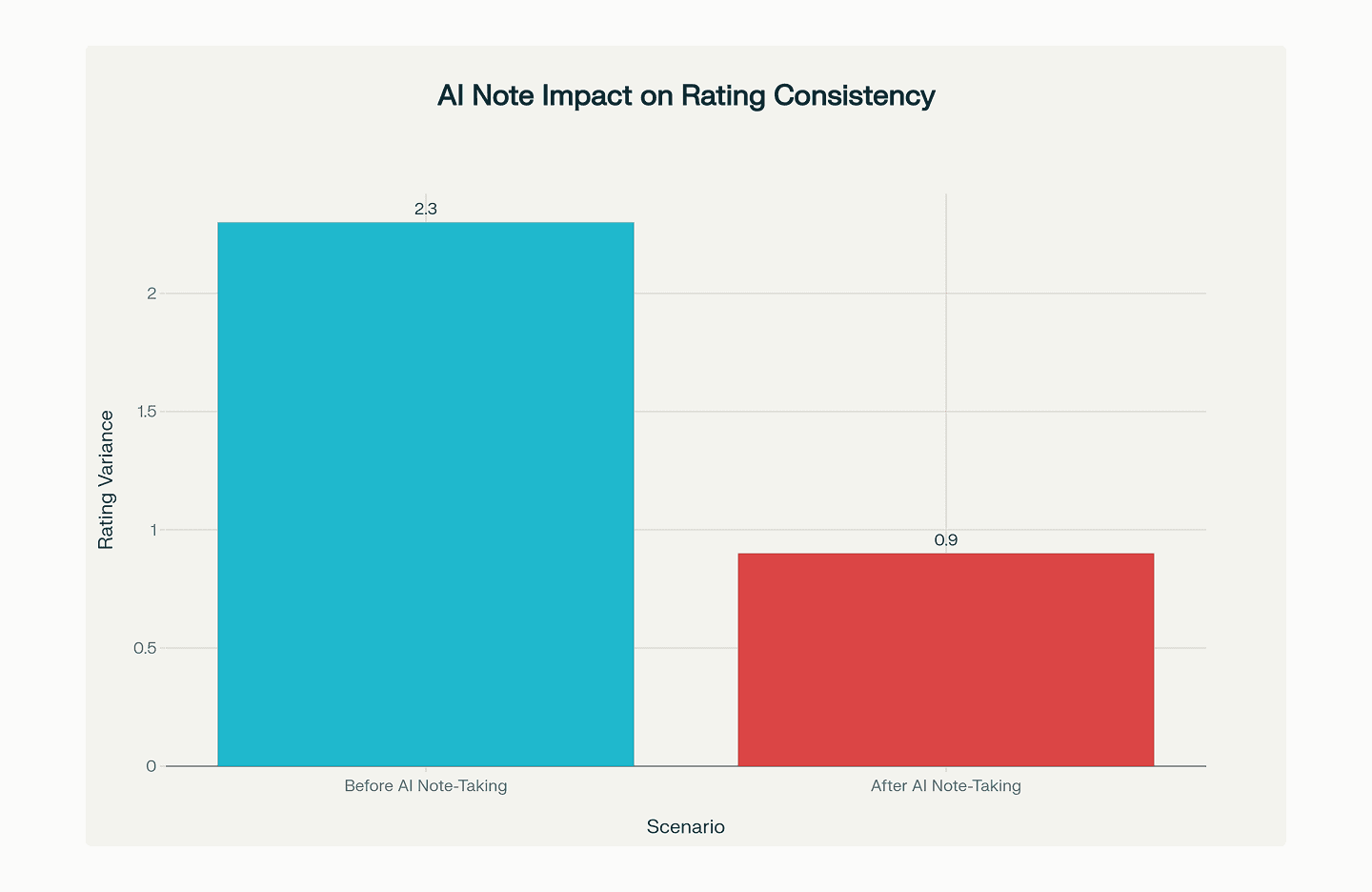
Manual note-taking during interviews can lead to missed details or biased interpretations. AI note-taking solutions use natural language processing (NLP) and speech-to-text technology to capture every word spoken during the interview, ensuring a consistent and objective record.
These AI systems automatically transcribe and summarize key responses, highlighting important areas such as skills, experiences, and cultural fit.
With the ability to store and analyze interview content, AI tools provide recruiters with a comprehensive record that goes beyond human notes, ensuring all candidates are evaluated on the same criteria.
Example Workflow of AI Powered Interview Documentation
Understanding the workflow of AI interview documentation helps illustrate how these systems support hiring teams.
Step 1: Interview begins
The candidate and interviewer join the meeting through a video platform such as Zoom, Microsoft Teams, or Google Meet.
Step 2: AI captures the conversation
AI tools record the discussion and generate real time transcripts.
These transcripts capture both questions and candidate responses.
Step 3: Key responses are highlighted
AI systems identify important responses related to:
technical skills
problem solving ability
past experience
behavioral competencies
This helps interviewers quickly review important moments from the interview.
Step 4: Interviewers add structured feedback
After the interview, recruiters and hiring managers review the AI generated notes and add their evaluations.
This may include:
scorecards
skill ratings
qualitative feedback
Step 5: Documentation is stored for audit trails
All interview records are securely stored within the hiring system.
This creates a long term record that supports compliance reviews and hiring audits.
Compliance Made Easier with AI Documentation
One of the main benefits of using AI in hiring interviews is compliance with employment laws. AI note-taking creates a transparent, accessible record that can be reviewed at any time. This is crucial for companies looking to maintain fair hiring practices and meet legal requirements under regulations such as GDPR, Equal Employment Opportunity (EEO), and others that mandate non-discriminatory hiring processes.
By storing interview data digitally, these tools create audit trails that ensure compliance is maintained throughout the recruitment cycle. These records can also be easily accessed if there is a need for review or verification, providing an extra layer of legal protection.
According to Deloitte’s “2025 Global Human Capital Trends” report, AI adoption in HR enables organizations to build transparent audit trails and automate compliance workflows, significantly enhancing confidence in meeting legal and regulatory requirements during hiring.
How AI Note Taking Facilitates Stronger Audit Trails in Hiring
In many industries, maintaining accurate documentation of hiring decisions is essential for compliance and internal governance. Organizations must be able to demonstrate how candidates were evaluated and what factors influenced the final hiring decision.
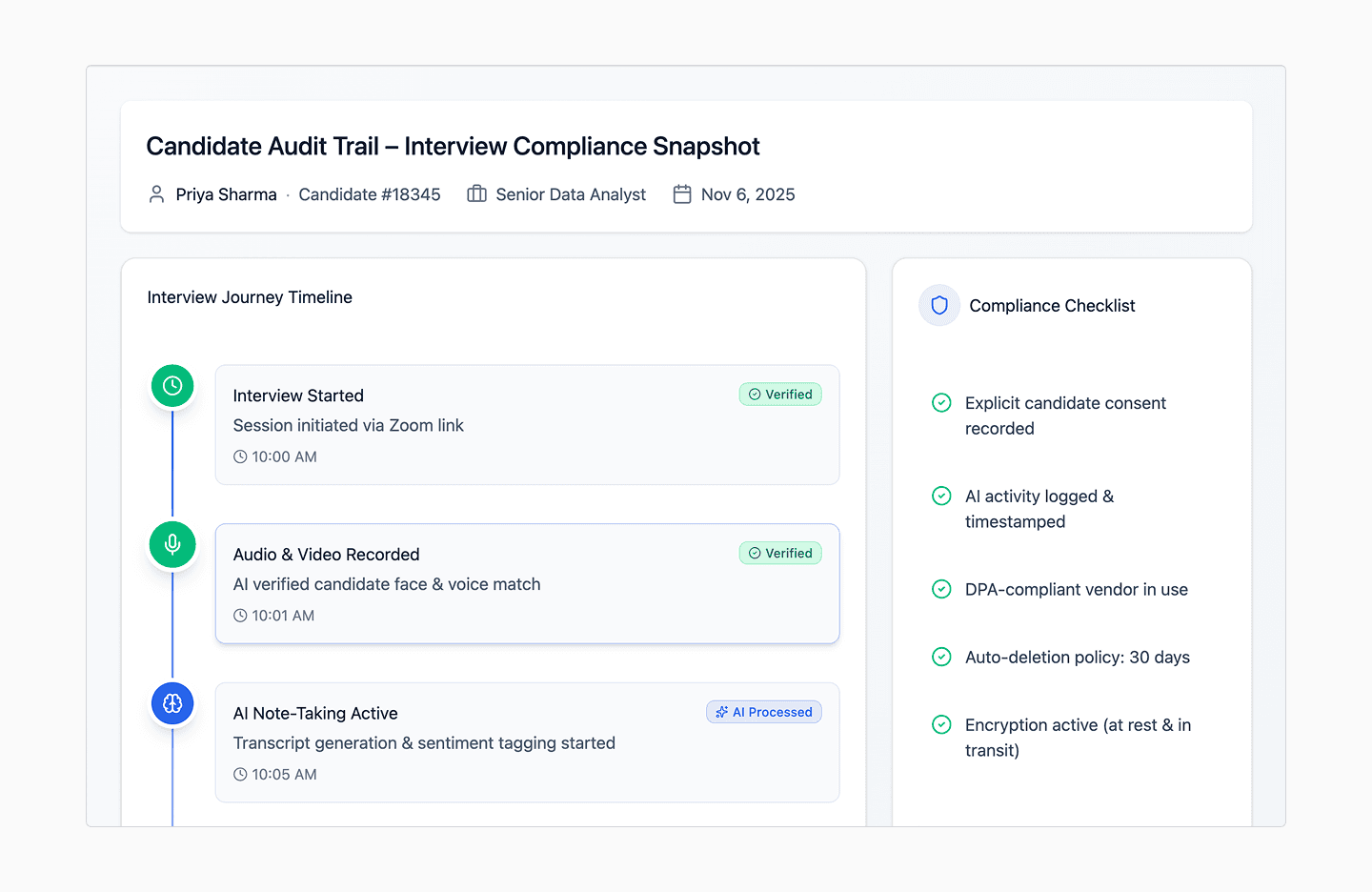
AI powered automated note taking tools help create reliable audit trails by automatically capturing and organizing interview documentation. Instead of relying on fragmented manual notes, companies gain access to structured records that clearly document the interview process.
Below are the key ways AI note taking strengthens hiring audit trails
1. Complete documentation of interview conversations
AI systems capture interview discussions in real time and generate detailed transcripts or notes.
This ensures that organizations can maintain records of:
Questions asked during the interview
Candidate responses and explanations
Follow up questions from interviewers
Capturing the full conversation helps create a transparent record of how each candidate was evaluated.
2. Timestamped interview records
AI documentation tools automatically record the timeline of interview activities.
These records may include:
Interview start and end times
Sequence of questions asked
Important moments during the conversation
Timestamped documentation helps auditors understand how the interview was conducted and reviewed.
3. Structured evaluation documentation
Audit trails become stronger when hiring decisions are linked to structured evaluation criteria.
AI generated interview notes can support this by documenting:
Skills or competencies discussed during the interview
Observations made by interviewers
Feedback captured in evaluation scorecards
This structured information helps organizations justify hiring decisions based on objective criteria.
4. Evidence of fair and consistent hiring practices
One of the most important purposes of an audit trail is to demonstrate fairness in hiring.
Detailed interview documentation allows organizations to show that:
All candidates were evaluated using similar interview frameworks
Decisions were based on documented responses and evaluations
Hiring teams followed established recruitment processes
This level of transparency helps organizations respond confidently to compliance reviews or internal hiring audits.
GDPR mandates that organizations collecting and processing candidate data must do so transparently, securely, and maintain records of processing activities. This inherently requires auditable workflows and documentation to prove compliance. AI note-taking tools can support these requirements by capturing complete, accurate digital records of interviews and hiring decisions, thereby facilitating the transparency and auditability that GDPR demands.
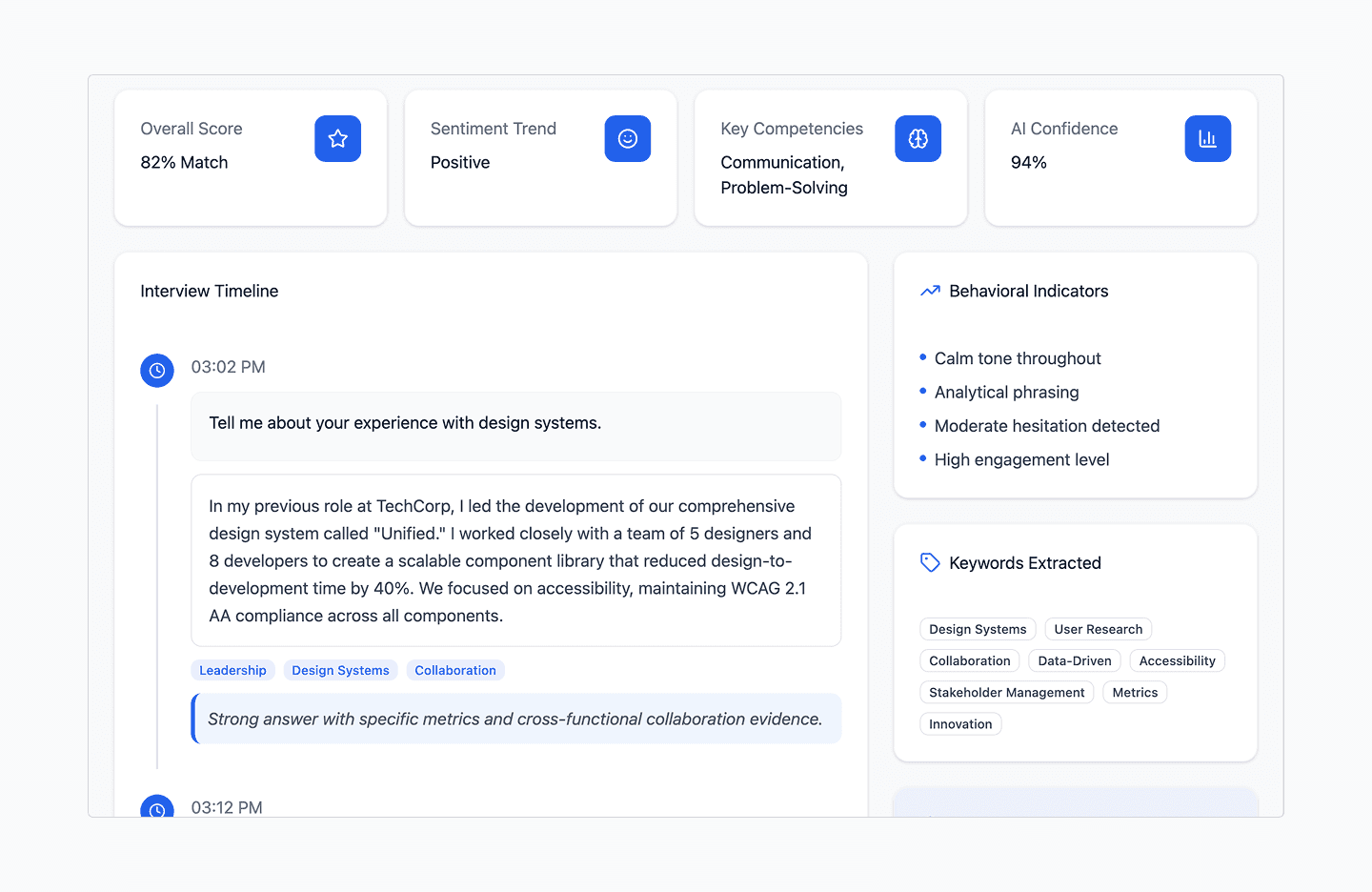
What an Audit Ready Interview Trail Should Include
An audit ready hiring process requires more than basic notes. Organizations must maintain a clear and traceable record of how each candidate was evaluated.
Below are the elements of a strong interview audit trail
1. Interview metadata
Basic interview information helps establish context for the evaluation.
This includes:
Date and time of the interview
Interview format such as video or phone
Names and roles of interview panel members
This information ensures that interview records are properly organized and traceable.
2. Interview questions and candidate responses
A complete record of questions and responses helps demonstrate that candidates were evaluated consistently.
Documentation should capture:
Questions asked during the interview
Candidate explanations and examples
Follow up questions asked by interviewers
This creates a transparent record of the evaluation process.
3. Structured evaluation criteria
Hiring decisions should be based on predefined criteria rather than subjective opinions.
Interview documentation should include:
Skill based evaluation categories
Rating scales or scorecards
Written feedback from interviewers
This allows hiring teams to justify decisions using consistent evaluation standards.
4. Interview transcripts or AI generated notes
Advanced hiring systems can generate detailed transcripts or structured notes during interviews.
These records help capture:
Full conversation details
Key technical or behavioral responses
Evidence supporting interviewer evaluations
Such documentation strengthens compliance readiness and improves review processes.
Read more: Transforming AI Interview Notes into Actionable Insights for Smarter Hiring Decisions
AI Note-Taking Enhances Accountability and Transparency
AI-powered documentation promotes greater accountability within recruitment teams. By automating the recording process, AI eliminates the potential for human error or bias during note-taking. This ensures that all data collected is accurate and unaltered.
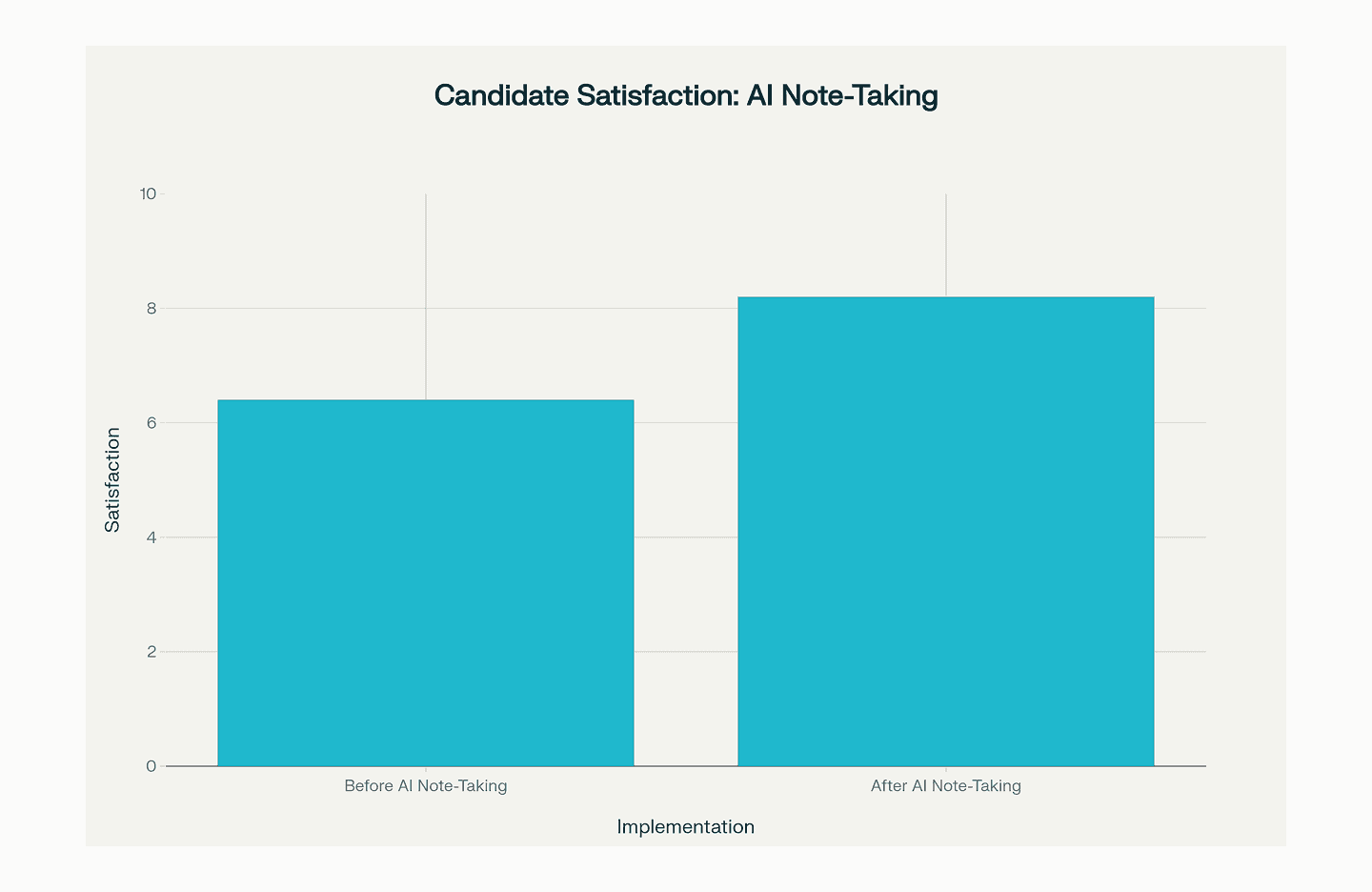
Moreover, it ensures transparency. Candidates and hiring managers can refer back to the AI-generated notes, ensuring that all decisions are based on the actual content of the interview, rather than subjective interpretation. This type of documentation can also help reduce interviewer bias, creating a more fair and consistent evaluation process.
This transparency is vital for trust-building with both candidates and regulators, demonstrating a commitment to fair, consistent hiring practices.
According to CareerPlug’s 2025 Candidate Experience Report, 66% of job applicants accepted a job offer due to a positive candidate experience.
How Sherlock AI Enables Intelligent Interview Note Taking
Modern hiring teams need more than basic interview notes. They require structured documentation that can support hiring decisions, improve collaboration, and maintain compliance records.
Sherlock AI provides an intelligent interview documentation layer that automatically captures and organizes interview insights. Instead of relying on manual note taking, recruiters receive structured and searchable interview records.
Below are the key capabilities of Sherlock AI note taking:
1. Real time interview transcription
Sherlock AI captures interview conversations and converts them into accurate transcripts.
This helps recruiters:
Document every question and candidate response
Review technical explanations shared during the interview
Avoid missing important details while taking notes
Because the system captures the full conversation, interviewers can focus on engaging with the candidate rather than writing notes.
2. AI generated interview summaries
After the interview is completed, Sherlock AI automatically generates structured summaries of the discussion.
These summaries highlight:
Key topics discussed during the interview
Important technical or behavioral responses
Notable examples shared by the candidate
This allows hiring teams to quickly review the most relevant insights from the interview without reading the entire transcript.
3. Structured documentation for hiring teams
Sherlock AI organizes interview notes into structured formats that are easy for hiring teams to review.
This documentation typically includes:
Candidate responses mapped to interview questions
Key skills demonstrated during the interview
Observations captured during the discussion
Structured documentation ensures that hiring teams evaluate candidates based on clear evidence rather than memory.
4. Interview records for compliance and audits
Sherlock AI stores interview documentation securely so that organizations maintain a clear record of hiring decisions.
These records support:
Hiring compliance reviews
Internal audit processes
Transparent decision making
Maintaining complete interview documentation helps organizations demonstrate that candidates were evaluated fairly and consistently.
5. Improved collaboration across hiring teams
Interview documentation generated by Sherlock AI can be easily shared with recruiters, hiring managers, and interview panels.
This enables teams to:
Review interview insights together
Compare candidates across interview rounds
Align on hiring decisions using consistent information
As a result, hiring decisions become more collaborative and data driven.
Conclusion
AI powered note taking is transforming how organizations document and evaluate hiring interviews. Instead of relying on fragmented manual notes, recruiters can now capture accurate interview records, structured feedback, and complete documentation of candidate interactions.
This level of transparency plays a critical role in modern hiring. As recruitment processes face increasing compliance requirements and legal scrutiny, organizations must be able to clearly demonstrate how candidates were evaluated and why hiring decisions were made. AI generated interview documentation creates reliable audit trails that support fairness, accountability, and consistent decision making.
Solutions like Sherlock AI help organizations strengthen this process by automatically capturing interview conversations, generating structured notes, and maintaining secure interview records that can support compliance reviews and hiring audits. By creating clear and traceable documentation, platforms like Sherlock AI help recruiters maintain confidence in their hiring decisions.
As hiring continues to evolve with remote interviews, distributed hiring panels, and data driven recruitment practices, structured interview documentation will become a foundational part of the hiring process. Organizations that adopt AI powered documentation solutions are building more transparent, compliant, and scalable hiring frameworks for the future.