Back to all blogs
Hiring fraud is rising with remote work and AI-driven recruitment.Learn common hiring fraud types, employer risks, and how Sherlock AI prevents costly mistakes.

Abhishek Kaushik
Mar 17, 2026
Hiring fraud has evolved rapidly in the age of remote work, global hiring, and AI-driven recruitment. What was once limited to fake resumes or exaggerated references has become a sophisticated threat involving identity theft, deepfake interviews, dual employment, and falsified credentials at scale. According to Gartner, by 2028 one in four candidate profiles could be fake if current trends continue.
For employers, hiring fraud is no longer just an HR issue it’s a business risk that impacts security, productivity, compliance, and brand trust.
In this guide, we break down what hiring fraud looks like today, the most common fraud tactics targeting employers, and how modern verification and screening tools help prevent costly hiring mistakes.
What Is Hiring Fraud?
Hiring fraud occurs when a candidate intentionally misrepresents their identity, qualifications, employment history, or work status to secure a job under false pretenses.
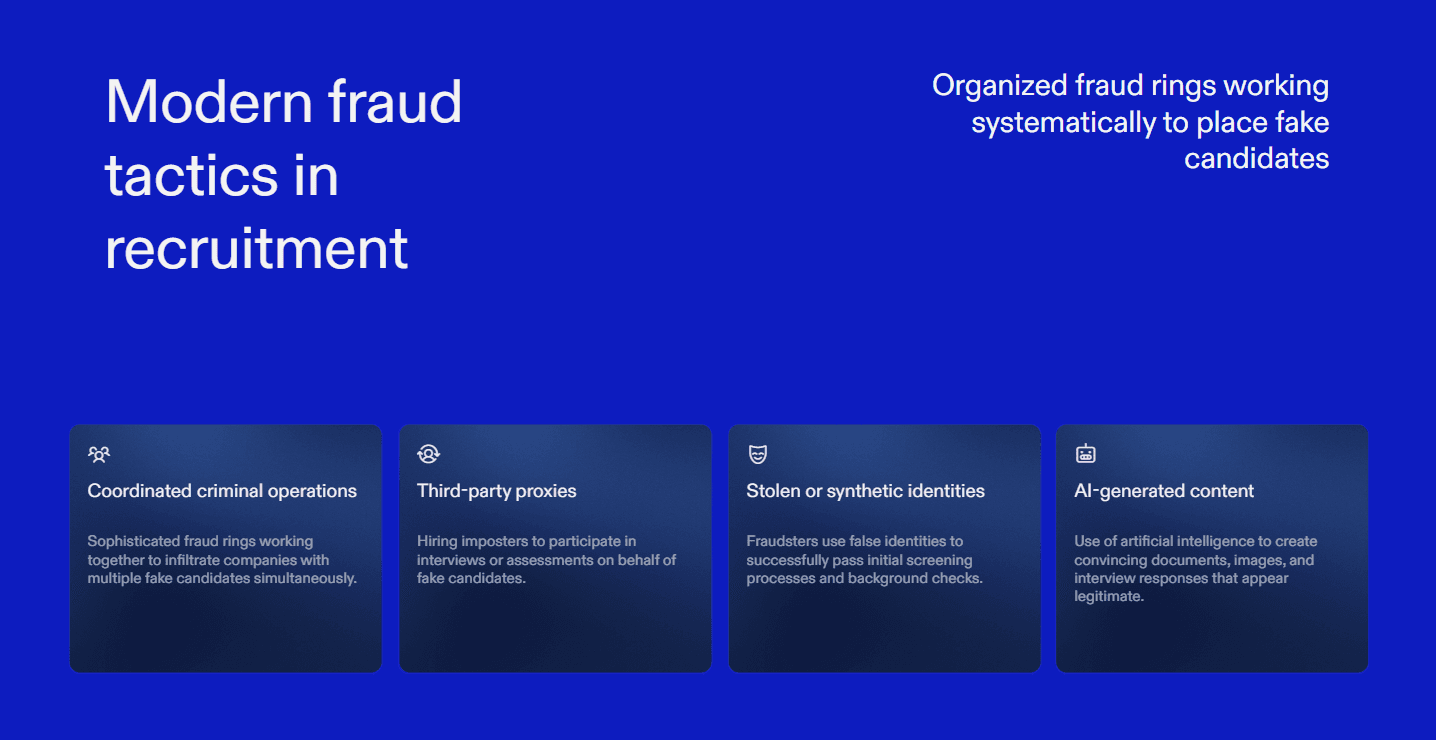
Unlike traditional resume embellishment, modern hiring fraud often involves:
Organized fraud rings
Stolen or synthetic identities
AI-generated documents and interviews
Third-party manipulation during recruitment
As hiring becomes more digital, fraudsters exploit gaps in identity verification, background checks, and remote onboarding processes.
Why Hiring Fraud Is Increasing in Modern Recruitment
Hiring fraud is no longer limited to isolated cases. It is increasing because modern recruitment systems prioritize speed, scale, and remote access, which creates gaps that fraudsters actively exploit. Below are the key factors driving the rise of hiring fraud today, along with clear explanations and real-world examples.
1. Remote-First Hiring Reduces Face-to-Face Verification
Remote hiring removes traditional trust signals such as in-person interviews, physical identity checks, and office-based onboarding. While video interviews are convenient, they make it harder to confirm whether the person being interviewed is the same individual who will ultimately perform the job.
Example:
A candidate performs extremely well during a video interview. After joining the company, their performance drops noticeably. A later investigation reveals that another person assisted during the interview or impersonated the candidate entirely, a tactic that is increasingly common in remote hiring.
2. High-Volume Recruiting Limits Manual Checks
When organizations hire at scale, recruiters must process large volumes of applications in short timeframes. As a result, manual verification of resumes, references, and employment history becomes difficult or is deprioritized altogether.
Example:
A company rapidly hiring customer support agents skips detailed reference checks to meet onboarding deadlines. Several hires are later found to have falsified employment histories, forcing the organization to restart the hiring process and absorb additional training costs.
3. Global Talent Pools Complicate Compliance
Hiring internationally introduces complex legal and regulatory requirements. Employers must evaluate different identity documents, education systems, and right-to-work regulations, which increases the risk of overlooking fraudulent or non-compliant documentation.
Example:
A candidate submits work authorization documents from another country that appear valid at first glance. During a compliance review, the documents are found to be invalid under local employment laws, exposing the employer to legal and financial risk.
4. AI Tools Make It Easier to Fake Resumes, References, and Interviews
Generative AI tools allow candidates to create highly polished resumes, fabricate work histories, and generate convincing reference responses. Some tools can even provide real-time assistance during virtual interviews, making it harder to distinguish genuine expertise from scripted answers.
Example:
A candidate presents an impressive technical resume and performs confidently during interviews. Once hired, they struggle with basic responsibilities, revealing that their experience was largely generated or exaggerated using AI tools.
5. Pressure to Hire Fast Lowers Verification Standards
Business demands often push hiring teams to fill roles as quickly as possible. In these situations, verification steps may be delayed or skipped entirely, increasing the likelihood that fraudulent candidates make it through the process.
Example:
A fast-growing startup urgently hires a senior engineer to meet a product deadline. Identity and background checks are postponed until after onboarding, only to uncover falsified credentials and misrepresented experience weeks later.
Common Types of Hiring Fraud Targeting Employers
1. Identity Fraud and Impersonation
Candidates apply using stolen, borrowed, or synthetic identities. In some cases, one person interviews while another performs the job.
Example:
A candidate passes a technical interview, but once hired, work quality drops sharply revealing that the actual employee is someone else entirely.
How to Prevent It:
Identity verification at application and onboarding
Live ID checks matched against government-issued documents
Continuous identity validation for remote roles
2. Fake or Inflated Employment History
Applicants fabricate past roles, employers, or job durations to appear more qualified.
Example:
A candidate claims experience at a well-known company that never employed them.
How to Prevent It:
Employment verification from authoritative sources
Cross-checking timelines and job titles
Automated background screening
3. Fraudulent References
Fake references created using burner emails, VOIP numbers, or friends posing as managers.
Example:
All references respond instantly with identical language and overly positive feedback.
How to Prevent It:
Independent reference verification
Domain-based email checks
Behavioral consistency analysis
4. Qualification and Credential Fraud
Degrees, certifications, or licenses are falsified or altered.
Example:
A candidate submits a digitally altered certificate from a recognized institution.
How to Prevent It:
Direct verification with issuing institutions
Credential databases and verification APIs
Tamper-detection on uploaded documents
5. AI-Generated Resumes and Interview Manipulation
Candidates use AI tools to fabricate experience, generate fake portfolios, or receive real-time assistance during interviews.
Example:
A candidate answers complex questions flawlessly but cannot perform basic tasks once hired.
How to Prevent It:
Skill validation beyond interviews
Identity-verified assessments
Pattern analysis across candidate data
6. Dual Employment Fraud
An employee secretly holds multiple full-time jobs, often violating contracts and impacting performance.
Example:
A remote hire works for two competing companies simultaneously.
How to Prevent It:
Employment cross-checks
Ongoing compliance monitoring
Clear contractual disclosures
7. Immigration and Right-to-Work Fraud
Candidates submit false work authorization or visa documents.
Example:
A forged work permit passes manual review but fails regulatory audits later.
How to Prevent It:
Digital right-to-work verification
Jurisdiction-specific compliance checks
Secure document validation
8. Recruitment Agency or Third-Party Hiring Fraud
Unvetted agencies submit fraudulent candidates or manipulate screening processes.
Example:
Multiple hires from the same vendor fail background checks post-offer.
How to Prevent It:
Vendor screening and audits
Independent verification outside agency workflows
Centralized candidate verification platforms
The Real Cost of Hiring Fraud
Hiring fraud is often viewed as an isolated HR issue, but its impact extends far beyond recruitment. A single fraudulent hire can expose an organization to financial loss, security risks, operational disruption, and long-term reputational damage. Below are the most significant ways hiring fraud affects businesses.
1. Data Breaches and Intellectual Property Theft
Fraudulent employees may gain access to sensitive systems, customer data, source code, or proprietary information. In some cases, individuals are placed intentionally to extract data or resell access.
Why it matters:
Once access is granted, damage can occur quickly and silently. Data breaches caused by internal actors are often harder to detect and more expensive to remediate.
Example:
An impersonated remote employee is given access to internal repositories and customer databases. Weeks later, confidential information appears on external platforms, leading to investigations and security overhauls.
2. Regulatory Penalties and Legal Exposure
Hiring someone with falsified work authorization, credentials, or compliance documents can violate labor laws, data protection regulations, or industry-specific requirements.
Why it matters:
Regulators hold employers accountable, even when fraud originates with the candidate. Penalties can include fines, audits, revoked licenses, or restrictions on future hiring.
Example:
A company unknowingly hires an employee without valid right-to-work documentation. During a regulatory audit, the violation results in fines and mandatory compliance reporting.
3. Loss of Customer Trust and Brand Reputation
When hiring fraud leads to service failures, security incidents, or public investigations, customers and partners lose confidence in the organization.
Why it matters:
Reputation damage is difficult to reverse. Trust, once lost, affects customer retention, partnerships, and future revenue.
Example:
A fraudulent hire in a customer-facing role mishandles sensitive client data. News of the incident spreads, causing customers to question the company’s hiring and security practices.
4. Reduced Team Productivity and Morale
Fraudulent hires often lack the skills or qualifications required for the role. Teams must compensate for poor performance, missed deadlines, or errors.
Why it matters:
High-performing employees become frustrated when they must cover for unqualified colleagues. This can lead to burnout, disengagement, and higher attrition.
Example:
A team spends months supporting a new hire who claimed advanced expertise but cannot perform core tasks. Project timelines slip, and team morale declines.
5. Expensive Rehiring and Replacement Cycles
Once fraud is discovered, the organization must terminate the hire and restart the recruitment process. This includes sourcing, interviewing, onboarding, and retraining costs.
Why it matters:
The total cost of replacing a fraudulent hire often exceeds the original hiring cost, especially for senior or specialized roles.
Example:
A company spends weeks onboarding a senior hire before discovering falsified credentials. The role must be refilled, delaying strategic initiatives and increasing recruitment expenses.
Best Practices for Preventing Hiring Fraud
Preventing hiring fraud requires a proactive and structured approach that spans the entire hiring lifecycle. As fraud tactics become more sophisticated, organizations must go beyond resume screening and interviews.
1. Verify Identity Early, Not After the Offer
Identity checks are often delayed until onboarding, after trust has already been established
This delay allows impersonation, falsified identities, and fake documents to go undetected
Early verification ensures the person applying is real and matches their submitted identity
Reduces time spent interviewing fraudulent candidates
Protects internal systems before access is granted
Why it works:
Stops fraud before it reaches critical systems
Prevents costly offer reversals and terminations later
2. Use Technology Built for Modern Fraud
Manual checks were designed for slower, in-person hiring environments
Fraudsters now use AI-generated resumes, fake credentials, and interview assistance tools
Human reviewers cannot reliably detect these tactics at scale
Automated verification tools analyze identity signals and document authenticity
Technology enables faster and more accurate fraud detection
Why it works:
Reduces human error and bias
Scales fraud prevention without slowing hiring
3. Standardize Verification Across Roles
Fraud is not limited to senior or technical positions
Any role with system access or internal visibility can be exploited
Inconsistent verification creates weak entry points
Standardized checks ensure every hire meets a minimum trust threshold
Verification depth can vary, but the baseline should remain consistent
Why it works:
Eliminates gaps caused by role-based assumptions
Creates a uniform and defensible hiring process
4. Monitor Beyond Day One
Some fraudulent hires behave normally during early employment
Fraudulent activity may begin only after access and trust are established
One-time onboarding checks miss delayed or evolving risks
Ongoing monitoring detects identity inconsistencies and compliance issues
Especially critical for remote and long-term roles
Why it works:
Reduces long-term exposure to fraud
Enables faster intervention before serious damage occurs
5. Centralize Hiring Data
Candidate data is often scattered across multiple hiring tools
Fragmentation makes patterns and anomalies harder to detect
Fraudsters exploit disconnected systems
Centralized data creates a single source of truth
Enables visibility across applications, roles, and hiring cycles
Why it works:
Improves transparency and oversight
Supports more informed and consistent hiring decisions
How Sherlock AI Helps Prevent Hiring Fraud
Sherlock AI is built to address the realities of modern hiring fraud by helping companies:
Verify candidate identity securely
Detect inconsistencies across applications
Reduce impersonation and document fraud
Strengthen trust in remote hiring
Scale verification without slowing hiring
By combining identity intelligence, verification workflows, and fraud detection, Sherlock AI enables teams to hire faster without compromising security or trust.
Final Thoughts: Hiring Faster Shouldn’t Mean Hiring Blind
Hiring fraud is no longer rare. It has become systemic, scalable, and increasingly sophisticated. As hiring processes grow more digital and remote, traditional safeguards are no longer enough to protect organizations from risk.
Companies that rely solely on resumes, interviews, and manual checks remain vulnerable to identity fraud, falsified credentials, and impersonation. The future of safe hiring depends on proactive verification, intelligent screening, and recruitment processes designed with fraud awareness at their core.
This is where platforms like Sherlock AI play a critical role. By enabling early identity verification, detecting inconsistencies across candidate data, and supporting secure, scalable hiring workflows, Sherlock AI helps organizations hire with confidence without slowing down growth.
Modern hiring requires modern protection. With the right verification foundation in place, teams can move fast while maintaining trust, compliance, and security at every stage of recruitment.