Back to all blogs
As AI reshapes hiring risks, explore the Top 10 Deepfake Detection Tools for Interviews in 2026 and how recruiters prevent impersonation and fraud.

Abhishek Kaushik
Jan 29, 2026
Deepfake technology has advanced rapidly, making fake videos, cloned voices, and AI generated identities harder to detect with the human eye. The amount of deepfake content circulating online is projected to grow from around 500,000 files in 2023 to an estimated 8 million by 2025, and this trend is only accelerating into 2026. In 2025 alone, deepfake fraud attempts surged thousands of percent as attackers embraced AI to scale deception across digital systems.
In 2026, deepfakes are no longer limited to social media manipulation. They are actively used in job interviews, remote hiring, executive impersonation, and recruitment fraud, making authentication and verification a top priority for security and talent teams. Deepfake fraud attempts spiked by over 3,000% in 2023, and deepfakes now account for about 6.5% of all reported fraud attacks globally.
Because of this shift, Deepfake Detection Tools have become a critical layer of protection for organizations conducting virtual interviews.
This guide explores the best Deepfake Detection Tools in interviews, explains why they matter in 2026, and shows how Sherlock AI is purpose built for interview specific deepfake detection.
What Are Deepfake Detection Tools?
Deepfake Detection Tools are AI powered systems designed to identify manipulated or synthetic media such as:
AI generated video faces
Voice cloning and synthetic speech
Identity swaps and impersonation
Real time AI assisted interview responses
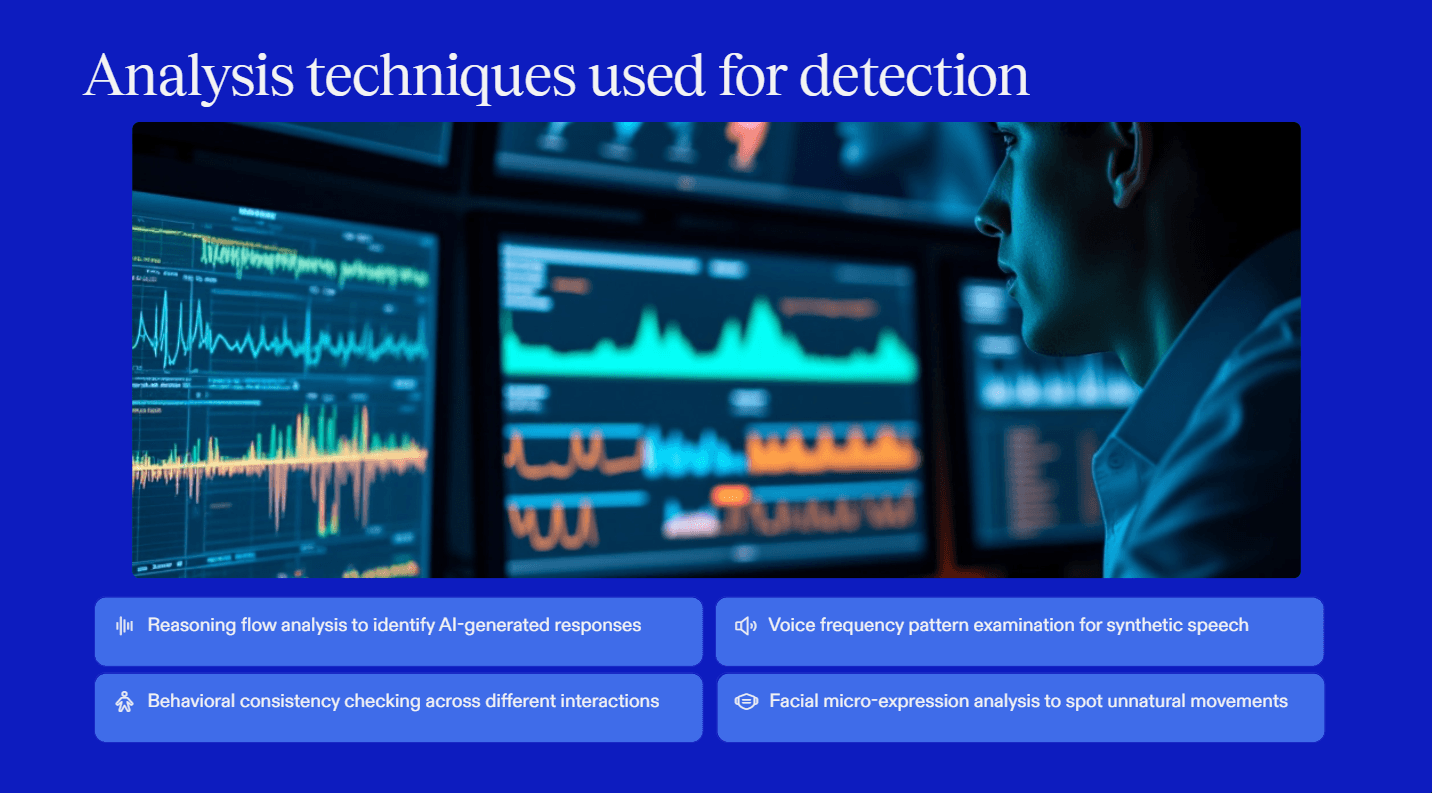
These tools analyze facial micro expressions, voice frequency patterns, behavioral consistency, and reasoning flow to determine authenticity.
In interview settings, deepfake detection must go beyond media analysis and verify whether the same real person is consistently present and responding genuinely.
Top 10 Deepfake Detection Tools for Interviews in 2026
Below are the most relevant Deepfake Detection Tools evaluated specifically for interview and hiring use cases.
1. Sherlock AI - Deepfake Detection for Interviews
Sherlock AI is purpose built to protect interview integrity by detecting deepfake usage, impersonation, and AI assisted responses during remote and hybrid hiring. Unlike general deepfake detectors that focus only on media authenticity, Sherlock AI evaluates the human authenticity of the candidate throughout the interview lifecycle.
Sherlock AI combines behavioral intelligence, identity verification, and reasoning analysis to surface risks that traditional tools and human interviewers often miss.

How Sherlock AI Detects Deepfakes in Interviews
Sherlock AI analyzes multiple authenticity signals simultaneously, including:
Behavioral consistency across interview rounds and formats
Reasoning flow to identify AI generated or scripted answers
Identity and interaction patterns over time
Sudden changes in communication style, confidence level, or expertise depth
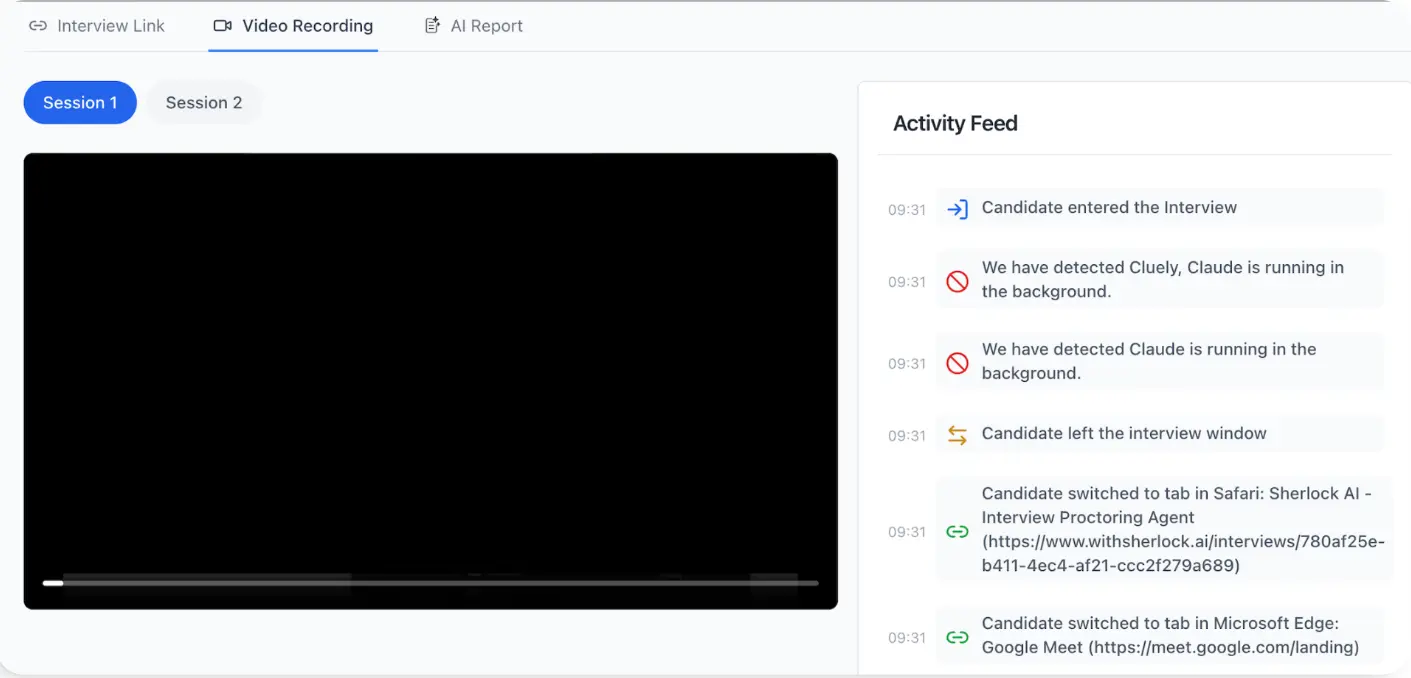
Indicators of proxy interviewing or real time external assistance
This multi layer approach allows Sherlock AI to detect not just fake media, but fake participation.
Key Features of Sherlock AI
Designed specifically for live and asynchronous interviews
Detects deepfake faces, voice manipulation, and identity swapping
Identifies proxy candidates by comparing behavior and interaction patterns across rounds
Flags AI generated, rehearsed, or externally assisted responses
Provides contextual and explainable risk insights rather than pass or fail decisions
Bias aware evaluation that avoids accent, appearance, or background based assumptions
Seamless integration with existing interview workflows
Scales across high volume remote hiring without degrading candidate experience
Sherlock AI focuses on one critical question that other tools miss. Is the same real human genuinely present and thinking independently throughout the hiring process?
Learn more at https://www.withsherlock.ai/
2. OpenAI Deepfake Detector
OpenAI’s deepfake detection capabilities are designed to identify AI generated content across text, image, and video formats. These tools are built on large scale foundation models that recognize patterns commonly associated with synthetic media.
OpenAI’s detector is often used in content moderation, research, and platform safety initiatives. It focuses on identifying whether content was generated or altered by AI systems.
Key Features
Detects AI generated text, images, and video
Uses foundation model based content analysis
Identifies synthetic media generation patterns
Supports large scale content authenticity checks
Continuously evolves with advancements in generative AI
3. Hive AI Deepfake Detection
Hive AI provides deepfake detection through scalable APIs that analyze images, videos, and audio for signs of manipulation. It is widely used in media moderation and digital safety workflows.
Hive AI enables organizations to automatically screen large volumes of recorded content for authenticity and potential manipulation.
Key Features
API based detection for image, video, and audio content
Fast analysis of recorded media
Scalable infrastructure for high volume processing
Supports automated content review workflows
Integrates with moderation and compliance systems
4. Sensity AI
Sensity AI focuses on deepfake threat intelligence and the detection of impersonation attacks. It is commonly used to monitor and analyze deepfake misuse targeting brands, executives, and public figures.
Sensity emphasizes understanding how deepfakes are created, distributed, and weaponized across digital channels.
Key Features
Detects facial manipulation and identity misuse
Monitors deepfake activity across platforms
Provides intelligence on impersonation campaigns
Supports brand and executive protection
Analyzes trends in synthetic media threats
5. Reality Defender
Reality Defender is designed to identify manipulated and AI generated audio and video in real time. It is used in scenarios where continuous media authenticity monitoring is required.
The platform focuses on detecting synthetic signals during live or recorded media playback.
Key Features
Real time detection of audio and video deepfakes
Supports streaming media analysis
Identifies synthetic visual and vocal patterns
Delivers fast authenticity assessments
Enables continuous media monitoring
6. Intel FakeCatcher
Intel FakeCatcher is a research driven deepfake detection system that analyzes physiological signals in facial videos. It focuses on detecting whether a video represents a real human by examining subtle biological cues.
FakeCatcher represents a hardware accelerated approach to deepfake detection.
Key Features
Analyzes subtle biological signals in facial video
Uses advanced processing techniques
Research backed detection methodology
Focuses on real human signal validation
Designed for high accuracy analysis
7. Deep Media DeepID
Deep Media DeepID specializes in detecting facial manipulation and identity spoofing in digital content. It is designed to verify whether a face in an image or video has been altered or synthetically generated.
The tool is commonly used for media verification and identity protection.
Key Features
Detects face swaps and synthetic facial content
Analyzes image and video authenticity
Identifies identity spoofing attempts
Uses AI driven facial analysis
Supports digital media verification workflows
8. AI Voice Detection Tools
AI voice detection tools focus on identifying synthetic or cloned speech generated by AI models. These tools analyze vocal characteristics to determine whether a voice is human or machine generated.
They are commonly used in voice based verification and security contexts.
Key Features
Detects voice cloning and synthetic speech
Analyzes pitch, cadence, and waveform patterns
Identifies AI generated audio signals
Supports voice authenticity verification
Useful for audio based interactions
9. Pindrop Security
Pindrop Security specializes in voice authentication and fraud detection. It is widely used in environments where voice is the primary interaction channel.
The platform uses machine learning to analyze voice signals and assess risk.
Key Features
Voice biometrics and authentication technology
Detects voice based fraud attempts
Analyzes audio signals for risk indicators
Uses machine learning driven verification
Supports secure voice interactions
10. Facia
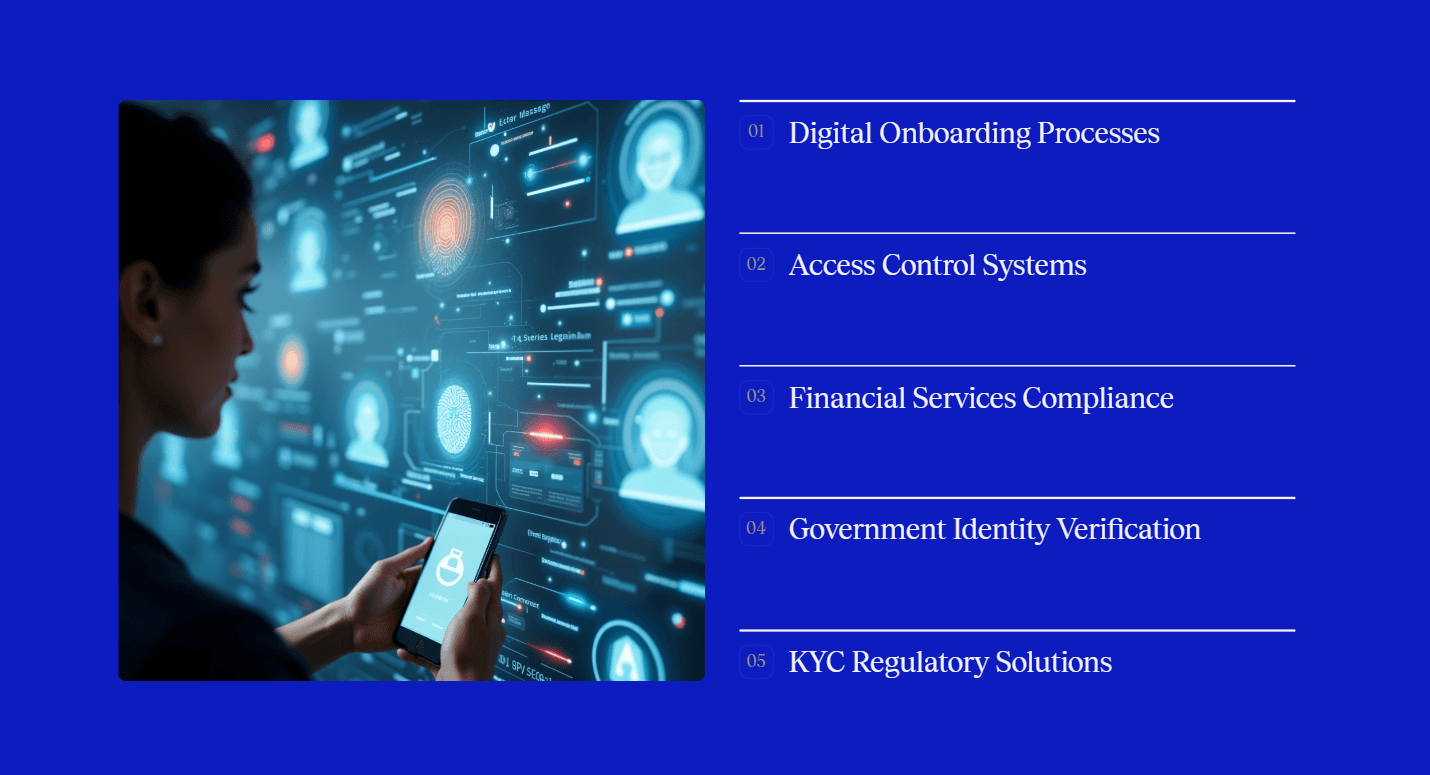
Facia provides facial recognition and liveness detection technology to verify whether a real person is present. It is commonly used for identity verification and access control.
Facia focuses on confirming human presence at the moment of verification.
Key Features
Facial recognition and identity verification
Liveness detection to prevent spoofing
Supports real time face authentication
Works across image and video inputs
Used for secure identity verification processes
Conclusion
Deepfake technology has fundamentally changed the risk landscape of remote hiring in 2026. Interviews are no longer just conversations. They are high value targets for identity manipulation, AI assisted responses, and proxy participation that can easily bypass traditional interview methods and manual review.
While many Deepfake Detection Tools focus on identifying manipulated video or audio, interviews require a broader and more continuous approach. Organizations must verify that the same real person is present across interview stages and that responses reflect genuine human reasoning rather than scripted or AI generated output.
Sherlock AI addresses this challenge by combining behavioral analysis, identity continuity, and explainable risk insights into a single interview focused platform. By strengthening recruiter decision making without compromising candidate experience, Sherlock AI helps organizations build secure, fair, and trustworthy hiring processes at scale.