Back to all blogs
Interview cheating is rising in video interviews. Learn common cheating methods, key risks, and how recruiters can detect and prevent interview cheating effectively.

Abhishek Kaushik
Mar 17, 2026
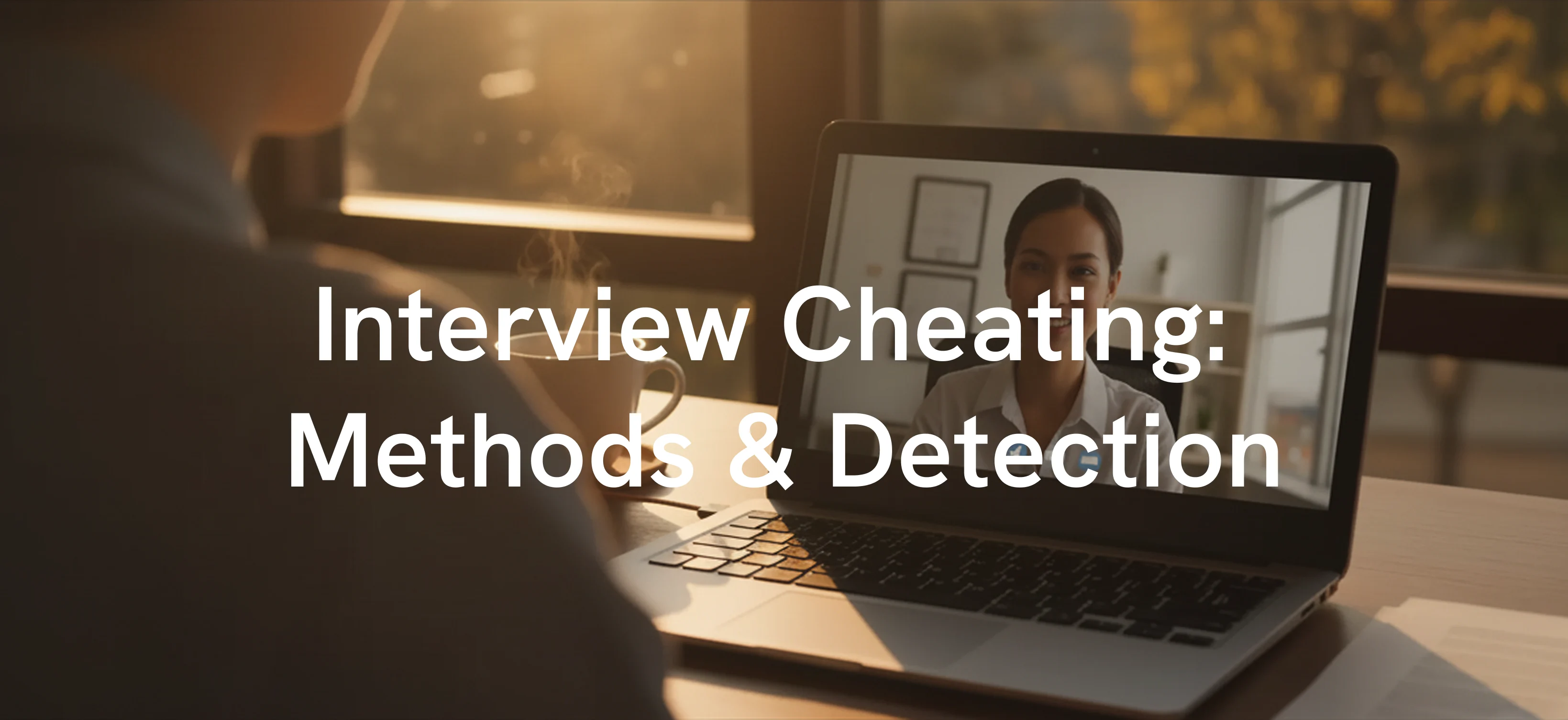
As interviews move online, cheating has become a serious challenge for hiring teams. Interview cheating refers to any attempt by a candidate to gain unfair assistance or misrepresent their identity or skills during an interview. Unlike resume exaggeration, interview cheating directly impacts real-time evaluation and leads to costly hiring mistakes. Broader studies show that 38 percent of candidates admit to lying during interviews, and 44 percent say dishonesty is acceptable behavior in the hiring process.
This article focuses only on interview-related cheating, how it happens, why it is risky, and how recruiters can detect and prevent it effectively.
How to Detect Cheating in a Video Interview
Detecting cheating in a video interview requires more than listening to what a candidate says. Recruiters must observe how candidates respond, behave, and interact throughout the interview to identify signs of external assistance or misrepresentation.
1. Observe Response Timing
Unusually long pauses before answering simple questions can indicate external help.
Example: When asked to introduce themselves or explain a familiar tool, the candidate pauses for several seconds before speaking, even though the question requires no complex thinking.
2. Check for Scripted or Generic Answers
Overly polished answers that lack personal context may suggest prepared or assisted responses.
Example: A candidate explains teamwork using generic phrases like “collaboration and synergy” but cannot describe a specific project they worked on.
3. Monitor Eye Movement and Screen Focus
Repeated glances away from the camera in the same direction may indicate reading prompts or using another device.
Example: The candidate consistently looks down to the right before answering technical questions, suggesting they may be checking notes or a second screen.
4. Evaluate Consistency Across Answers
Candidates who cheat often contradict themselves when asked follow up questions.
Example: A candidate claims deep experience with a tool but later struggles to explain how they used it in a real scenario.
5. Listen for Audio Irregularities
Unnatural pauses, delayed speech, or changes in tone may signal off screen assistance.
Example: The candidate starts speaking, stops suddenly, then continues with a more structured answer, as if waiting for guidance.
6. Watch for Visual Clues in the Environment
Small visual changes can reveal secondary devices or off screen activity.
Example: Reflections in glasses show text scrolling, or the candidate frequently shifts posture as if interacting with another screen.
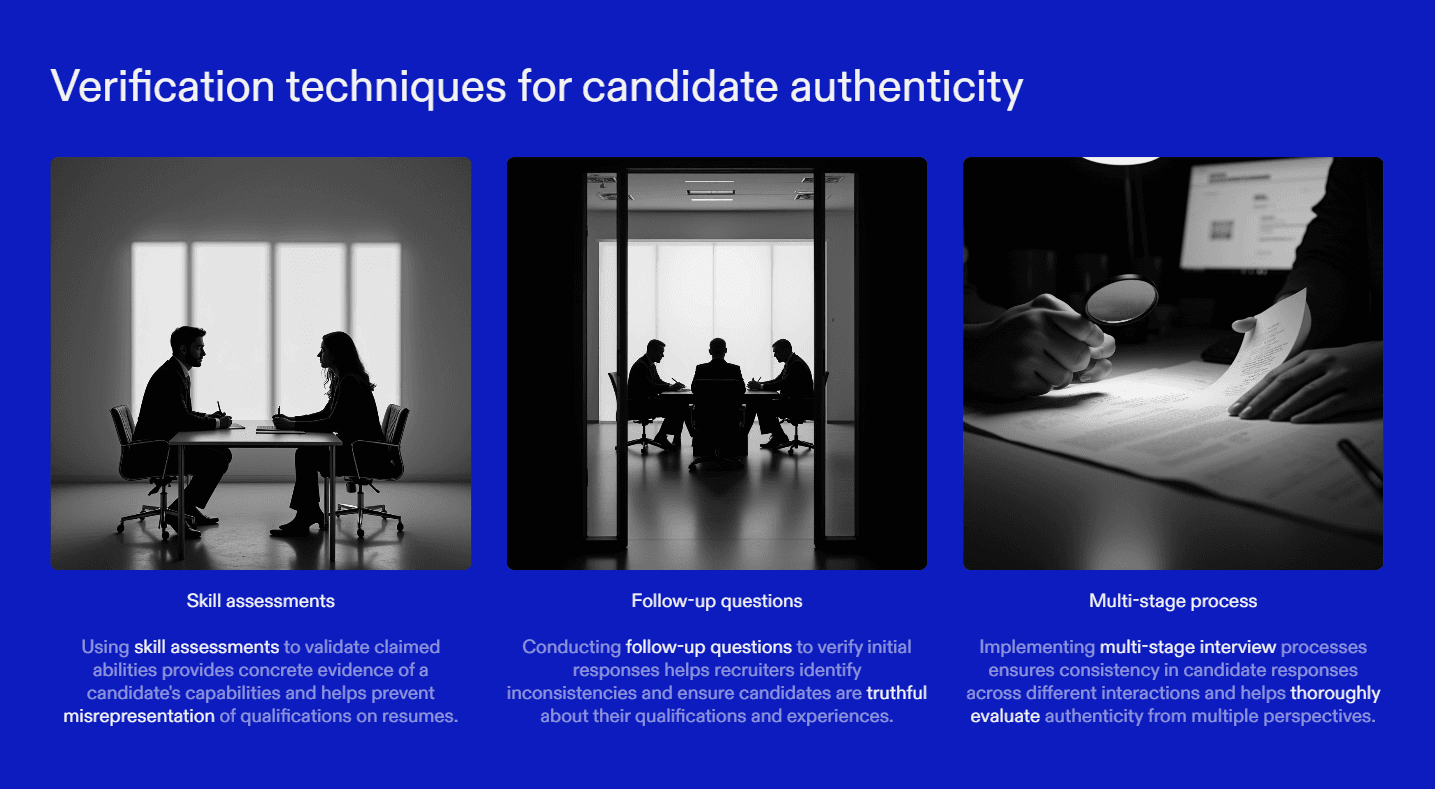
7. Ask Real Time Follow Up Questions
Spontaneous questions test genuine understanding.
Example: After a candidate explains a solution, ask them to adjust it for a different scenario. Cheating candidates often struggle to adapt.
8. Request Screen Sharing When Appropriate
Screen sharing helps verify that no external tools are being used.
Example: Asking the candidate to share their screen while explaining a concept often discourages AI tools or hidden prompts.
9. Ask for an Environment Check
A brief environment view reduces off screen assistance.
Example: Requesting a quick camera sweep of the room helps confirm no one else is present.
10. Assess Engagement and Natural Interaction
Genuine candidates show natural conversation flow and curiosity.
Example: Authentic candidates ask clarifying questions and respond naturally, while assisted candidates may sound cautious or disconnected.
Cheating During an Interview: How Common Is It?
Interview cheating has increased with remote hiring and the availability of real-time assistance tools. Candidates may feel less monitored in virtual environments, leading some to rely on external help.
Cheating is most often seen in early interview rounds, especially when interviews are unstructured or heavily focused on factual recall. Without proper controls, dishonest candidates can advance far into the hiring process.
How to Avoid Interview Cheating Using Technology
Technology can help reduce cheating when applied specifically to interviews.
1. Ask Dynamic and Role-Based Questions
Questions that require explanation, reasoning, or personal experience are harder to fake than memorized answers.
2. Limit External Tool Access
Restricting browser switching or screen activity during interviews reduces reliance on AI tools or online prompts.
3. Use Time-Bound Responses
Encouraging immediate responses discourages candidates from seeking external assistance.
4. Conduct Interviews in Multiple Rounds
Cheating becomes harder to maintain when candidates must perform consistently across different interview stages.
How Interviewers Can Spot Fakeness in Video Interviews
Interviewers play a direct role in detecting cheating during interviews.
1. Observe Eye Movement
Eye movement is one of the most telling indicators of interview fakeness. Candidates who frequently look away from the camera or repeatedly glance in the same direction may be reading from notes, prompts, or another screen. Fixed staring can also signal the use of on-screen scripts or teleprompters. Sherlock AI helps interviewers identify these patterns by tracking visual behavior consistently throughout the interview.
2. Listen Closely for Audio Delays and Irregularities
Delayed responses, unnatural pauses before speaking, or sudden changes in voice tone can suggest that a candidate is receiving external help. Background noises such as whispers or keyboard clicks may also indicate off-screen assistance. With Sherlock AI, interviewers gain additional context around response timing, making it easier to spot unusual audio patterns.
3. Ask Candidates to Share Their Screen
Requesting screen sharing during an interview is an effective way to reduce cheating. It allows interviewers to confirm that candidates are not using AI tools, search engines, or hidden prompts while answering questions. Sherlock AI supports screen visibility checks that help maintain interview integrity without interrupting the interview flow.
4. Request a View of the Interview Environment
A brief environment check can discourage the presence of off-screen helpers or secondary devices. Asking candidates to show their surroundings promotes transparency and sets clear expectations. Sherlock AI strengthens this step by ensuring that environment checks are consistent and documented across interviews.
Read More: Candidate Fraud in Hiring: How to Spot It and How Sherlock Helps?
Common Interview Cheating Methods Recruiters Should Know
Understanding common interview cheating methods helps recruiters identify risks early and protect the integrity of the hiring process. As interviews increasingly move online, cheating tactics have become more sophisticated and harder to detect without awareness and preparation.
1. Candidate Impersonation
Candidate impersonation occurs when someone other than the actual applicant attends the interview. This is often done by hiring a more experienced individual to represent the candidate during technical or skill-based interviews. Impersonation can be difficult to detect without identity verification or behavioral consistency checks, especially in early interview rounds.
2. Off-Screen Human Assistance
In this method, another person provides help during the interview without appearing on camera. Assistance may come through gestures, audio cues, or messaging platforms. Candidates using off-screen help may deliver strong answers but struggle when asked to explain their reasoning or respond to follow-up questions.
3. Secondary Device Usage
Candidates may use phones, tablets, or smart devices placed outside the camera view to search for answers or receive guidance. Frequent downward glances, unusual hand movements, or sudden pauses often accompany this behavior during interviews.
4. AI-Powered Answer Generation
Some candidates rely on real-time AI tools that generate answers as interview questions are asked. These responses often sound polished but lack depth or personal experience. When interviewers ask clarifying or scenario-based questions, candidates using AI-generated answers may fail to respond naturally.
5. AI Teleprompters
AI teleprompters display prepared responses on the candidate’s screen while maintaining camera focus. This makes detection more challenging, as eye contact may appear consistent. However, responses may sound scripted and lack adaptability when interview questions change unexpectedly.
6. Remote Desktop Control
Remote desktop control involves an external person accessing the candidate’s system to guide responses or type answers during the interview. This method is particularly difficult to identify without monitoring screen activity or noticing irregular cursor movements and delayed reactions.
Additional Tips for Interviewers to Identify Cheating
Even with strong interview processes in place, interviewers benefit from applying additional techniques that help confirm candidate authenticity. These practices strengthen decision-making and reduce the risk of advancing dishonest candidates.
1. Monitor Response Consistency
Consistency across answers is a strong indicator of genuine understanding. Candidates who rely on external help may give confident initial responses but struggle when asked to expand, clarify, or apply the same idea differently. Interviewers should revisit key topics later in the conversation to see whether explanations remain aligned.
2. Use Scenario-Based Questions
Scenario-based questions require candidates to think, reason, and explain decisions in real time. Unlike factual or memorized answers, scenarios reveal how candidates approach problems, communicate ideas, and adapt to new information. Candidates who cheat often find it difficult to respond naturally when faced with unfamiliar situations.
3. Communicate Interview Integrity Expectations
Setting clear expectations at the beginning of the interview reduces the likelihood of cheating. Informing candidates that interviews may include identity checks, screen visibility, or environment reviews encourages transparency. Clear communication also reinforces professionalism and fairness for all participants.
Why Preventing Interview Cheating Is Important
Preventing interview cheating is critical for maintaining hiring quality and organizational trust. When candidates misrepresent their skills during interviews, the impact extends far beyond the interview itself.
Hiring dishonest candidates often results in poor job performance, increased workload for teams, and higher turnover rates. These outcomes lead to wasted hiring efforts, lost productivity, and additional recruitment costs. Over time, repeated hiring mistakes can damage employer credibility and internal team morale.
By preventing interview cheating, organizations ensure that candidates are evaluated fairly and consistently. This leads to stronger hires, better team performance, and more reliable long-term outcomes.

Final Thoughts
Interview cheating continues to evolve as technology advances, but interview practices can evolve as well. Structured interviews, trained interviewers, and thoughtful use of interview integrity tools help organizations stay ahead of dishonest behavior.
Solutions like Sherlock AI support interviewers by providing visibility into candidate behavior, identity verification, and interview integrity signals without disrupting the candidate experience. When combined with human judgment, Sherlock AI helps teams make more confident and fair hiring decisions.
By prioritizing interview integrity and using the right technology, companies can consistently identify candidates who are not only qualified, but also authentic and trustworthy. This approach leads to stronger hires, better team performance, and sustainable long-term growth.